










Future belongs to regional alliances of states Analysis by Maxim Petrov
The principle of political realism determines to a great extent the actions of states. You cannot know what is going on in the mind of your neighbor when he is accumulating military and economic power within your borders. And even if you think you know, you cannot know what changes in his mind will occur in the future. This thesis is defended by the school of political realism, represented, for example, by the famous American expert on international relations John Mearsheimer, but another thing should be added to it: states and their unions compete for resources and markets. This has been the case for the last centuries, perhaps always. And so the formation on your borders of a powerful military bloc in which you yourself are not a member, or the strengthening of some state with a large army, population, and GDP there, is always a threat to you.
The expansion of any military bloc is at least a potential threat to a country, or rather to its ruling class (the richest individuals and companies, the most powerful officials and law enforcement officers) if the country is not a member of it.
NATO enlargement, oddly enough, has not been directed exclusively against Russia. The bloc's fourth enlargement took place in 1999 when Moscow was weak yet friendly to the West. This enlargement (it included Poland, Hungary, and the Czech Republic) was not so much directed against the Russian Federation at the time, but rather to contain a unified Germany. This aspect of international politics is extremely important and is rarely and little talked about.
It is interesting that Angela Merkel's government, which ran Germany for a long time, was ideally suited to the goals of Western elites. It almost destroyed the Bundeswehr (the German army was in a terrible state thanks to cuts in military spending) and implanted in Germany the ideology of German collective guilt: both factors were aimed at undermining the military and political power of a united Germany.
The fact is that the "rising of Germany from its knees" twice in the 20th century became a huge problem for other European powers and for the United States. NATO expansion was aimed at curbing this threat, like Germany, which integrated into NATO, was held back by a huge association of states, including traditionally wary Poland, which was constrained by the collective policy of the alliance (although Germany's economic power was growing at the same time).
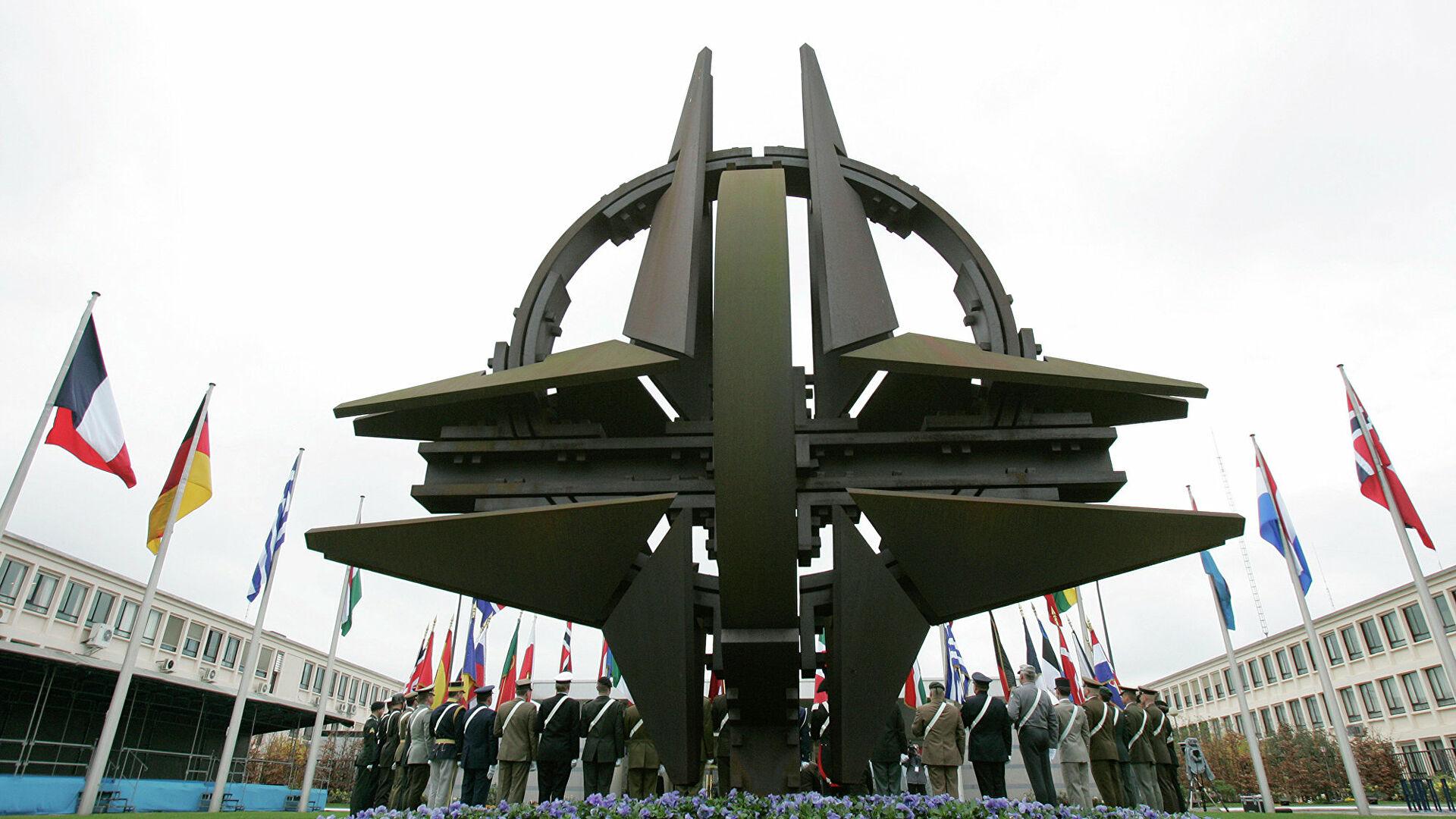
Today it has become obvious how different the interests of NATO member states are. Poland's ruling class in solidarity with Ukraine, the Baltic states, and, with British support, is talking about creating a new alliance. Poland is making great efforts to supply Ukraine with modern weapons, while Germany is doing everything it can (for now) to slow down or limit arms supplies to Kyiv. Berlin fears the emergence of a powerful military-political alliance of Eastern European states (under the aegis of the UK). But while NATO expansion was aimed not so much against Russia as to contain Germany's power, it was a threat to the Russian top brass.
Today the world is moving forward and the future belongs to regional alliances. We are already witnessing their formation. A commonwealth of Poland, Ukraine, and the Baltic states, closely allied to the British, is likely to emerge in Eastern Europe. This alliance will be aimed at containing Russia, but it will probably also limit the influence of Germany, Europe's most powerful economy.
The second military-political European center, the emerging alliance of Germany and France, will be wary of the former.
In Central Asia, some states will distance themselves from the Russian Federation (we are already seeing this in the case of Kazakhstan because any Russian patriot will remember that northern Kazakhstan is predominantly populated by Russians), leaning towards an alliance with Türkiye. It is worth paying attention to the Organization of Turkic States, which Türkiye is currently developing since we cannot exclude the future establishment of a military-political alliance on its basis. This alliance, in which Türkiye plays a leading role, will be aimed at curbing the influence of Russia and China in Central Asia.
The role of Britain is interesting. Prime Minister Boris Johnson, after his country's exit from the European Union, is trying to give a new impetus to British policy, including the creation of an alliance of Eastern European states under British auspices, and not excluding the close cooperation of this alliance with Türkiye. Such a project, aimed at deterring Russia, is designed at the same time to enhance the international prestige of the British.
The problems of interaction between alliances and blocs are fundamentally unsolvable and will always generate sharp conflicts until there is a qualitative change in the world - either states, corporations, and markets will disappear and will be replaced by something completely different (such as the association of self-governing autonomous worker councils dreamt up by the German social thinker Otto Rühle) or a single global state will be established. But until either of these happens, blocs of states will oppose one another. Government officials and country names will change, but the questions of principle will not disappear, nor will the forces governing the planet.







 editor@caliber.az
 +994 55 444-88-98
 Азербайджан, Баку, ул. Низами, 203, Af Business House, 5-й этаж