










New balance of power: Baku becomes key to peace in Middle East Article by EU Reporter
The EU Reporter recently published an article by Ukrainian political analyst Taras Kuzio, examining Azerbaijan’s pivotal role in promoting peace and stability across the Middle East. Caliber.Az presents its readers with the most telling parts of the piece.
"A rather strange appeal was recently published by former director of the US State Department, Josh Paul and the Armenian National Committee of America, signed by a long list of Palestinian and other organisations. The appeal did not praise peace coming to the Middle East, which has seen eight decades of conflict, but rather aggressively attacked Azerbaijan as unfit to be part of the planned 20,000-strong International Stabilisation Force (ISF).
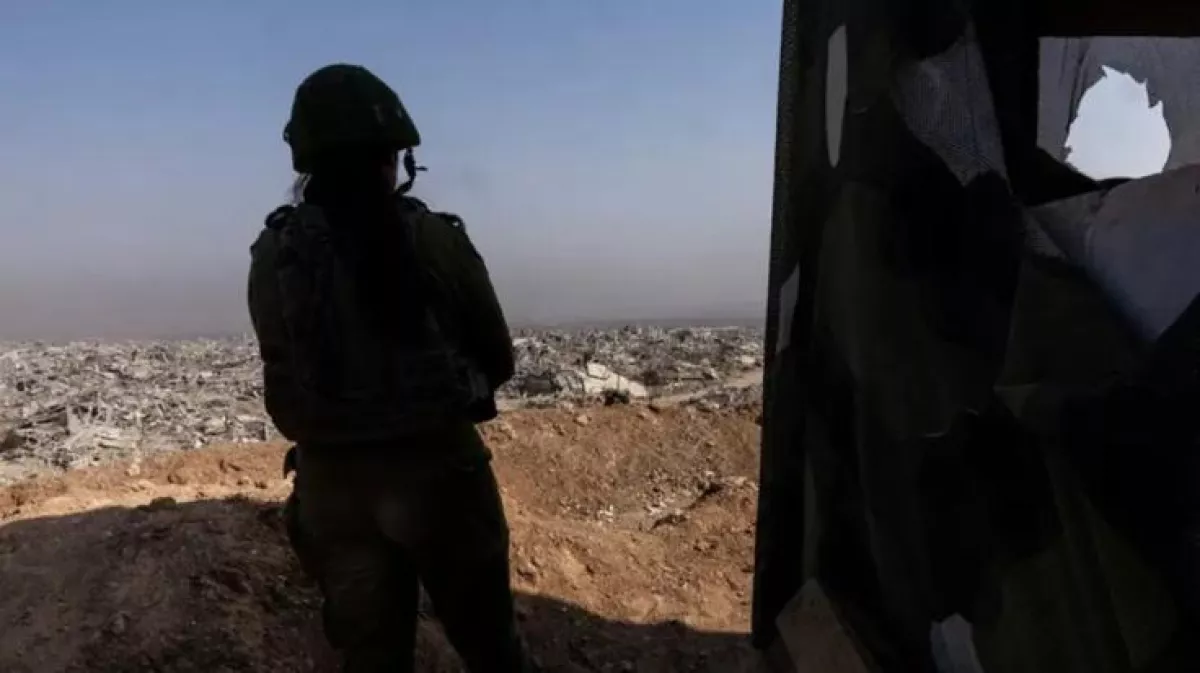
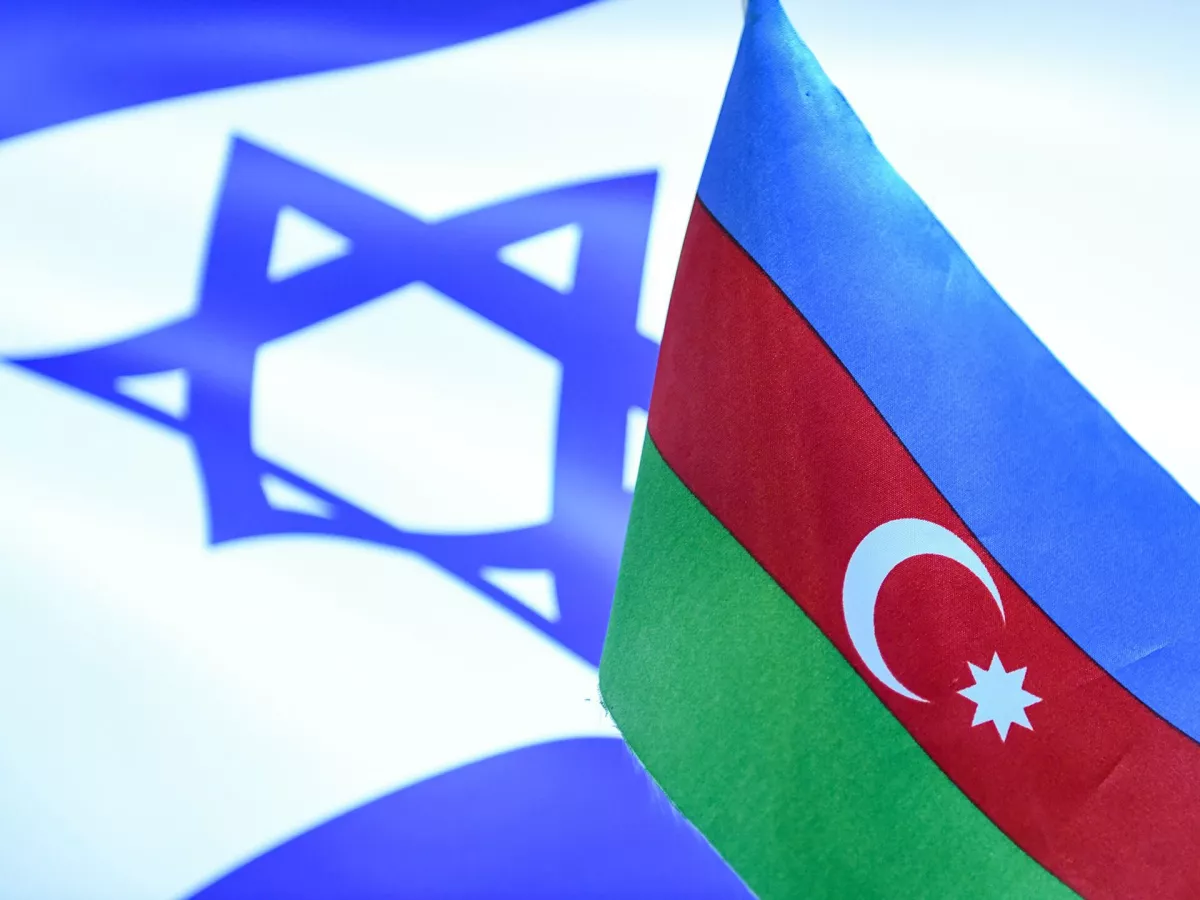
The appeal focused on Armenian grievances against Azerbaijan, which, of course, have nothing to do with Gaza or the Middle East. As a sovereign country, Azerbaijan can buy its military equipment from whichever country it wants – including from Israel. Azerbaijan has never questioned Armenia, for example, buying most of its military equipment from internationally sanctioned and pariah Russia. Additionally, it is unclear why Israel's purchasing 40% of its oil from Azerbaijan should have any bearing on Gaza or the Middle East.
The appeal in a one-sided manner condemns Azerbaijan for committing crimes against Armenians in Karabakh, and yet neither the UN nor any human rights organisation have published reports or released documentation upholding this. POWs have been exchanged by both sides. The appeal deliberately ignores Armenian ethnic cleansing and war crimes committed during the First Karabakh War from 1988 to 1994, and cultural destruction in the occupied Azerbaijani territories.
Armenia is bitter that Israel continues to refuse to recognise 1915 as a genocide. In addition, Armenian nationalists need to blame somebody for the collapse of Armenian dreams of a Greater Armenia after it was defeated in the Second Karabakh War in 2020 and lost control of Karabakh three years later. A final factor is Armenian envy at Azerbaijan’s rising stature and influence in the non-aligned countries and within the Turkic world.
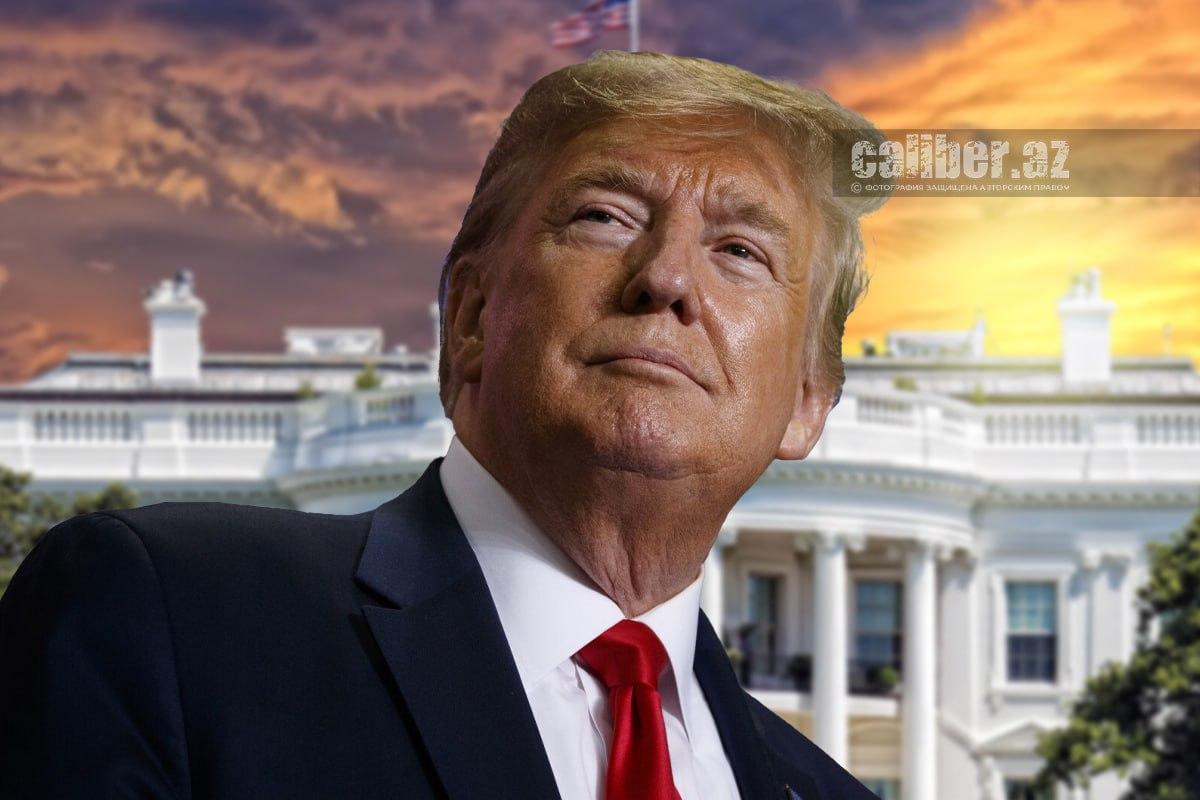
The Middle East has seen many peace plans fail, as it is the most difficult region in the world to seek an end to a deeply embedded religious and territorial conflict between Israel and the Palestinians. US President Donald Trump, to his credit, has been successful where previous US presidents have failed.
A 20-point peace plan for Gaza negotiated by Trump, the president's son-in-law Jared Kushner, special presidential envoy Steve Witkoff and former UK Prime Minister Tony Blair was signed on October 10. Three days later, Egypt hosted a Gaza Peace Summit attended by thirty countries that backed the peace plan.
The ISF would be modelled on the Multinational Force and Observers (MFO) in Sinai after the 1979 peace agreement between Egypt and Israel. Another example would be the United Nations Interim Force in Lebanon (UNIFIL), formed in 2006 to deal with the civil war in Lebanon.
With a UN mandate voted upon by UN Security Council resolution 2803, the ISF could act without being viewed as a UN peacekeeping force and would only deploy after the withdrawal of the Israeli Defence Forces.
The ISF would not be issued with heavy weaponry and would be issued with self-defence military equipment and armoured personnel carriers.
After Gaza and Hamas have been demilitarised, power will move to the Temporary International Transitional Authority, which has been dubbed the ‘Board of Peace’ headed by Trump. Other members of the ‘Board of Peace’ would include 7-10 Palestinian and international technocrats.
US President Trump has inserted himself in the Azerbaijani-Armenian conflict, which he wrongly claimed to have resolved, after negotiating the Zangezur Corridor and naming it the Trump Route for International Peace and Prosperity (TRIPP). A third example is found in the poorly drafted ‘peace plan’ to end the Russian-Ukrainian war.
The training of a new police force will be undertaken by the Civil-Military Coordination Centre based in Israel, north of Gaza. 200 US military personnel are already in place to assist in establishing the Centre. Egypt and Jordan, Israel and Gaza’s neighbours, will play a leading role in the Civil-Military Coordination Centre.
With its influence in the Middle East, its overthrow of the criminal Assad regime in Syria and large army, Türkiye is an important country to be included in the ISF. Trump backs Türkiye’s participation. Israel has protested, claiming Türkiye is a backer of Hamas, which is untrue; Iran provided financial support, military training and equipment.
Azerbaijan has stated its support for joining the ISF after a ceasefire has been implemented, where ‘there is a complete end to the fighting’. At the same time, Azerbaijan is refusing to participate in an ISF tasked with disarming Hamas. Baku’s stance is not unusual when the Ministry of Foreign Affairs stated, ‘We do not want to put our troops in danger.’ After all, the European ‘Coalition of the Willing’ are only willing to send a Reassurance Force to Ukraine after a ceasefire has been agreed between Russia and Ukraine.
Azerbaijan seeks to coordinate its participation in the ISF with the Organisation of Islamic Cooperation and the Arab League. In addition to Türkiye and Azerbaijan, the world’s largest Muslim country, Indonesia, Pakistan, Egypt and possibly Malaysia have agreed to participate in the ISF.
Saudi Arabia, the UAE and Qatar have declined to become involved but have instead offered financing and training. From the West, Canada and Australia have expressed an interest.
With the military defeat of Iran by Israel and the US and Trump’s personal engagement, there is - potentially - hope for peace in Gaza and an end to decades of conflict between Israel and the Palestinians. Secular Islamic countries such as Egypt, Türkiye, Azerbaijan and Indonesia are key to ensuring the success of the peace process, establishing security and creating a safe environment for Palestinians and a secure neighbourhood for Israel and Gaza’s other neighbours," Taras Kuzio wrote.
Editor's note: The author of this article, Taras Kuzio is a professor of political science at the National University of Kyiv Mohyla Academy







 editor@caliber.az
 +994 55 444-88-98
 Азербайджан, Баку, ул. Низами, 203, Af Business House, 5-й этаж