










South Caucasus: Missing link in Trump’s national security strategy Pentagon’s daily highlights Baku’s role
The US Department of Defence's daily Stars and Stripes paper has published an article by Russian foreign policy expert Stephen Blank on the US’s new National Security Strategy. Caliber.Az offers its readers an excerpt from the piece.
Editor’s note: The author, Stephen Blank, is a Senior Fellow at the Foreign Policy Research Institute. He is an internationally recognized authority on Russian foreign policy matters.
"The Trump administration’s new National Security Strategy [NSS] generated considerable controversy upon its release.
Critics say that the strategy proclaims the end of NATO and the almost 80-year-old US-European security ties. However, our primary focus here is a significant omission. The NSS failed to discuss the Caucasus and Central Asia.
Given the time President Donald Trump devoted to dealing with Azerbaijan and Armenia at the historic August 8 White House summit with President Ilham Aliyev and Prime Minister Nikol Pashinyan, who signed the Peace Declaration, the resounding lack of focus on this strategic area is concerning.
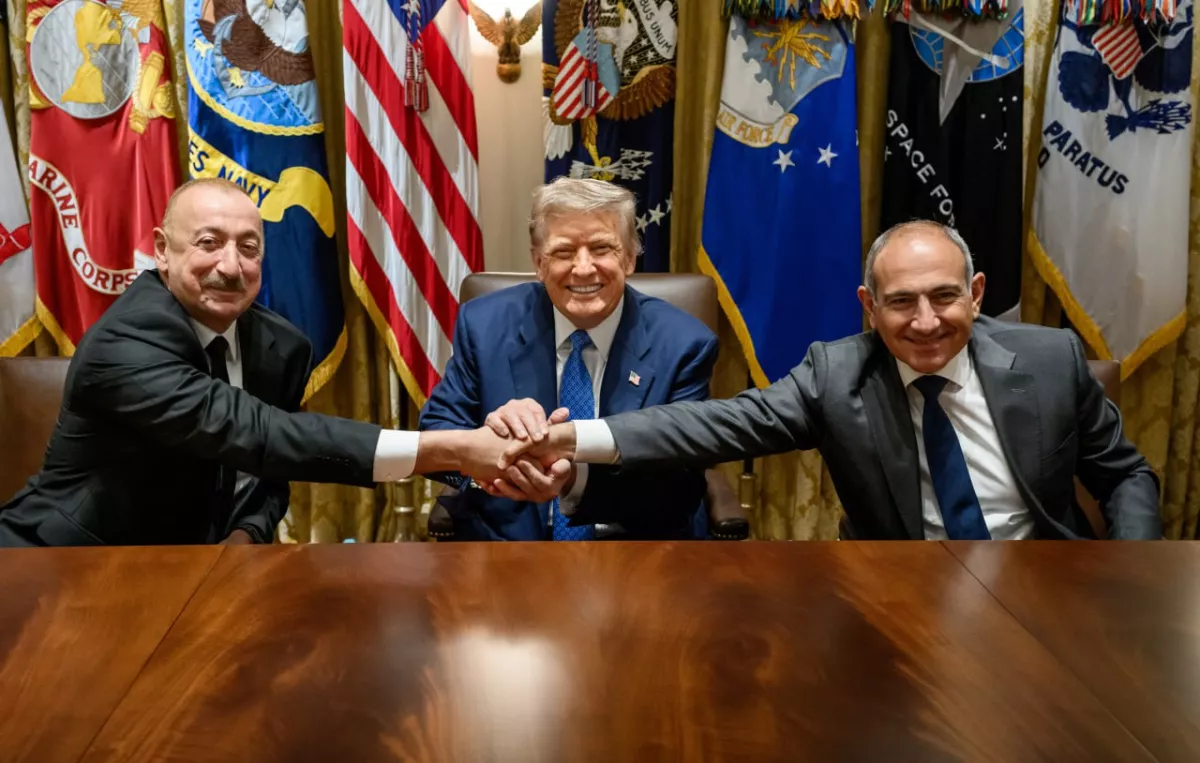
In the Caucasus, Trump achieved a significant milestone by moving Armenia and Azerbaijan closer to peace and establishing a permanent American presence through the creation of the Trump Road for International Peace and Prosperity (TRIPP).
Then came the more recent C5+1 summit in Washington, D.C., and the successful conclusion of major business deals with Central Asian governments, primarily the rising middle powers of Kazakhstan and Uzbekistan. Next, Azerbaijan joined the C5. This omission is even more striking and inexplicable given that at this meeting, Kazakhstan acceded to the Abraham Accords, Trump’s signal achievement in the Middle East.
In view of the effort the administration expended to bring about these impressive new beginnings and the strategic benefits that could accrue to the US from a lasting presence in Eurasia, the failure to mention this strategically important and resource-rich region betrays a serious strategic oversight by the NSS authors.
A consistent thread in Trump’s foreign policy has been the global campaign to secure safe and lasting US access to rare earths, which are vital to the functioning of our advanced weapons and defense industry. Kazakhstan and Kyrgyzstan are well known for their critical mineral resources, and it is unsurprising that Russia dominates the Kazakh market and China the Kyrgyz market for these essential raw materials. The countries of the Caucasus are also blessed with strategic minerals.
We should officially welcome the growing regional cooperation of the C6 and start helping them to address their truly pressing defense, security, water, education and environmental issues — some of which could present additional opportunities for American businesses.
We should have indicated our intentions to do so in the NSS. Policymakers must recognize the necessity of a comprehensive and strategic approach and not miss the substantial opportunities that can come our way as a result of the administration’s efforts.
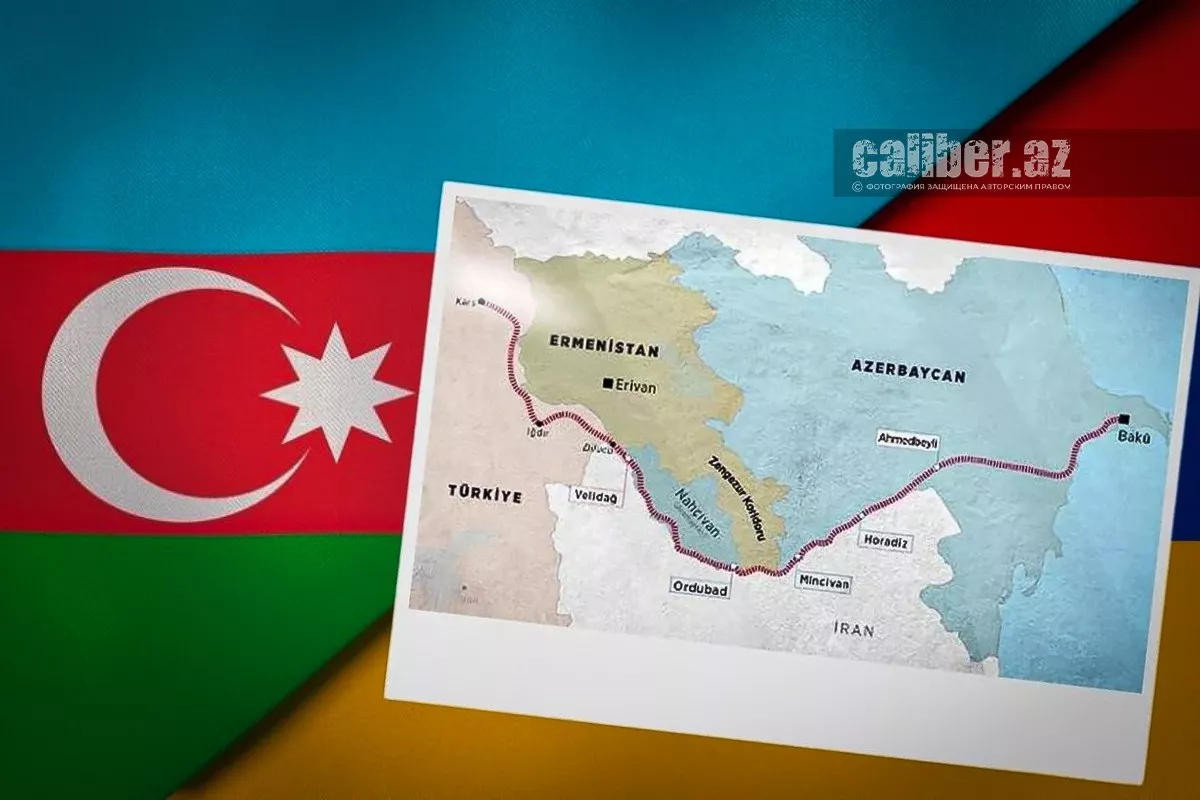
Similarly, there is no mention of the Caucasus despite the TRIPP and plans to start funding construction in 2026. Here again, the NSS’s silence is puzzling, particularly as the TRIPP represents another major administration achievement. Given the importance of the trade route through Zangezur connecting China and Central Asia to Europe through the Caucasus, the US silence here represents another missed opportunity.
The US now has a chance to support Armenia by bringing it out of economic dependence on Russia, as the European Union is doing. Washington can still do so without antagonizing Azerbaijan, as the EU did. More importantly, given Azerbaijan’s regional heft and strong ties to Israel and Turkiye, as well as its desire to work with Washington, the silence of the NSS again misses the occasion.
The NSS would have been a splendid opportunity for the administration to urge Congress to repeal Section 907 of the Freedom Support Act, enacted during the George H.W. Bush administration in 1992, that still bars US material support for Azerbaijan or its armed forces. Section 907 opens the door to competition over Azerbaijan to America’s friends and foes alike, as evidenced by the recent decision of the UK to allow weapons sales to Baku.
It is a legislative fossil, as is the Jackson-Vanik Amendment to the Trade Act of 1974 that penalized the USSR for blocking Jewish emigration. This legislation impedes Central Asian trade with the US, particularly with Kazakhstan and Uzbekistan. It is opposed by all the C5 governments, yet it remains on the books.
As the Trump administration can rally support in both the House and the Senate, the time to remove this legislative ballast is before the November 2026 elections.
The administration’s omission of any proactive diplomatic gestures to the Eurasian states was a strategic oversight. The opportunities overlooked here may not come again, at least for a long time. And the blunders made in the NSS may soon be exploited by our enemies. To paraphrase a quote often misattributed to the great French statesman and diplomat Talleyrand, ‘In world politics, too often a blunder is worse than a crime,’” the article reads.







 editor@caliber.az
 +994 55 444-88-98
 Азербайджан, Баку, ул. Низами, 203, Af Business House, 5-й этаж