










Baku and the Rothschilds: Achievements and architectural legacy. Part II A historical overview by Caliber.Az
Continued from Part I.
To lend the enterprise the appropriate status and create an impressive image, the Rothschilds needed a headquarters that would symbolise the wealth, influence, and success of its owners. This role was perfectly fulfilled by the majestic building located at the corner of Nizami and Murtuza Mukhtarov Streets (formerly Persidskaya Street) in Baku.
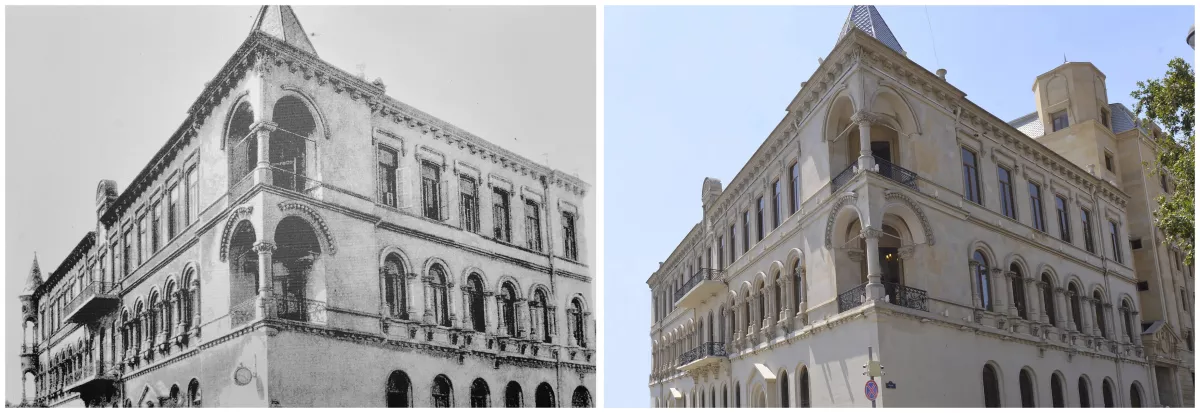
It immediately attracted attention with its monumental appearance. It was not merely a business centre — the building’s architecture spoke the language of ambition, confidence in the future, and the strength of entrepreneurial spirit. Every detail, the carefully designed façade, and the substantial investments emphasised the prestige of its owners and the grandeur of Baku’s oil-boom era, turning the structure into a true symbol of status, image, and progress.
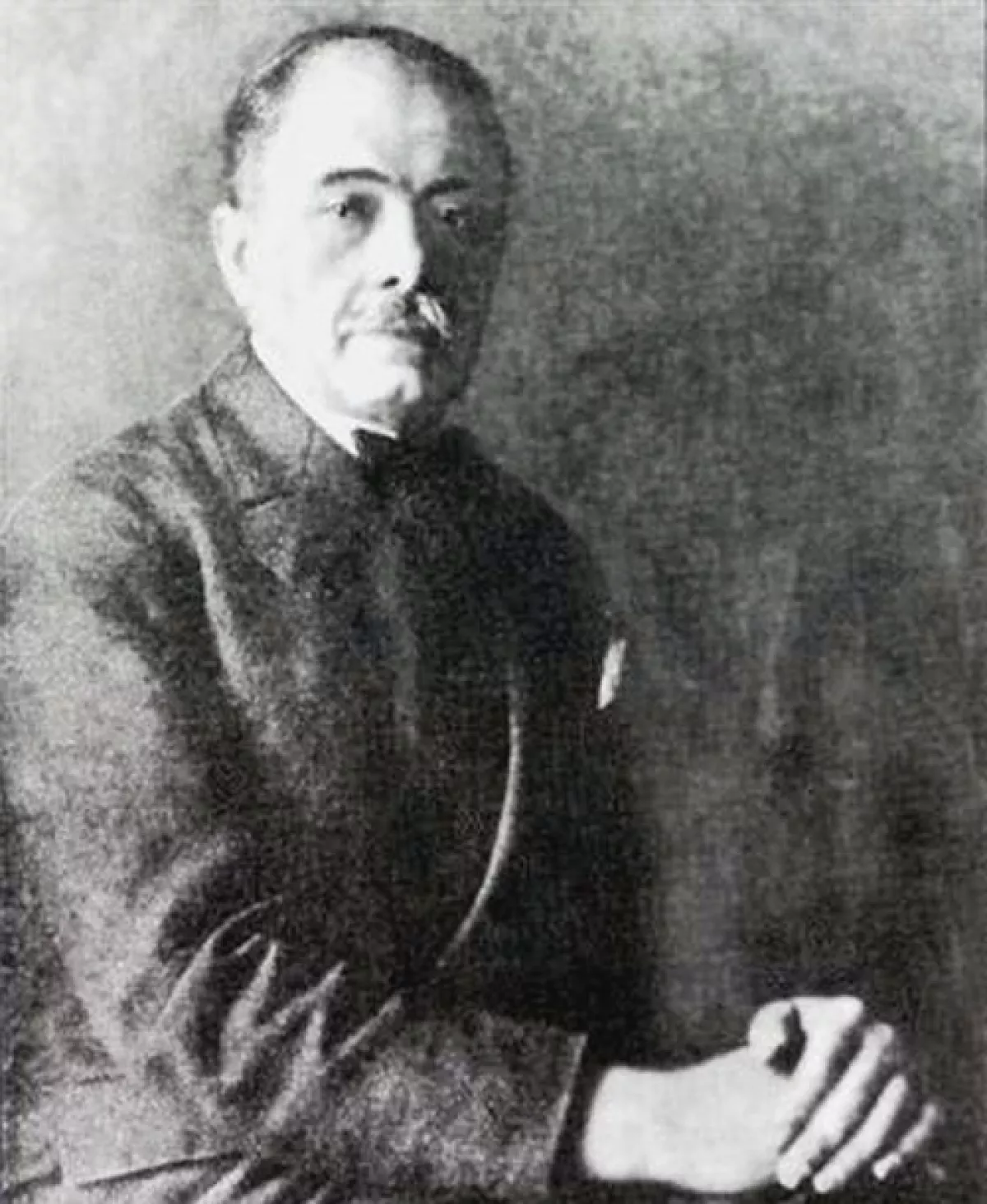
For the construction, the distinguished architect Kazimir Skurevich was invited, one of the figures who left a notable mark on Baku’s architectural history. He graduated from the Saint Petersburg Institute of Civil Engineers in 1894. Drawing on rich local traditions, Skurevich designed buildings that harmoniously blended with the climate and culture of the region. His works not only reflected the spirit of their time but also significantly influenced the architectural appearance of the city, shaping a cohesive style of urban development.
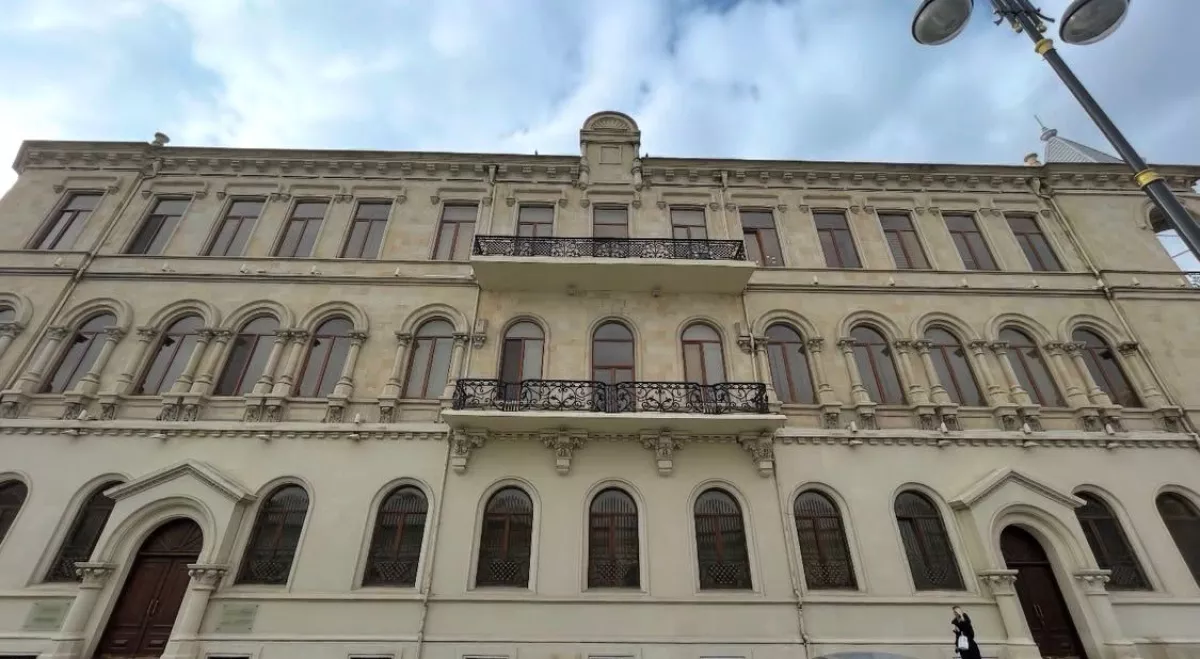
The building, constructed in 1899, is an important urban landmark due to its volumetric-spatial design and architectural expressiveness. Its austere and harmonious architecture is distinguished by magnificent proportions, the sculptural plasticity of its façades, and finely crafted details. The floor-by-floor division of the façade is emphasised by paired relief windows with artistic ornamentation inspired by the Romanesque style, while sculptural elements lend it refined elegance. The building’s composition, based on restraint and clarity of architectural masses, creates a picturesque volume that blends harmoniously into the surrounding urban landscape and retains its significance as an architectural monument.
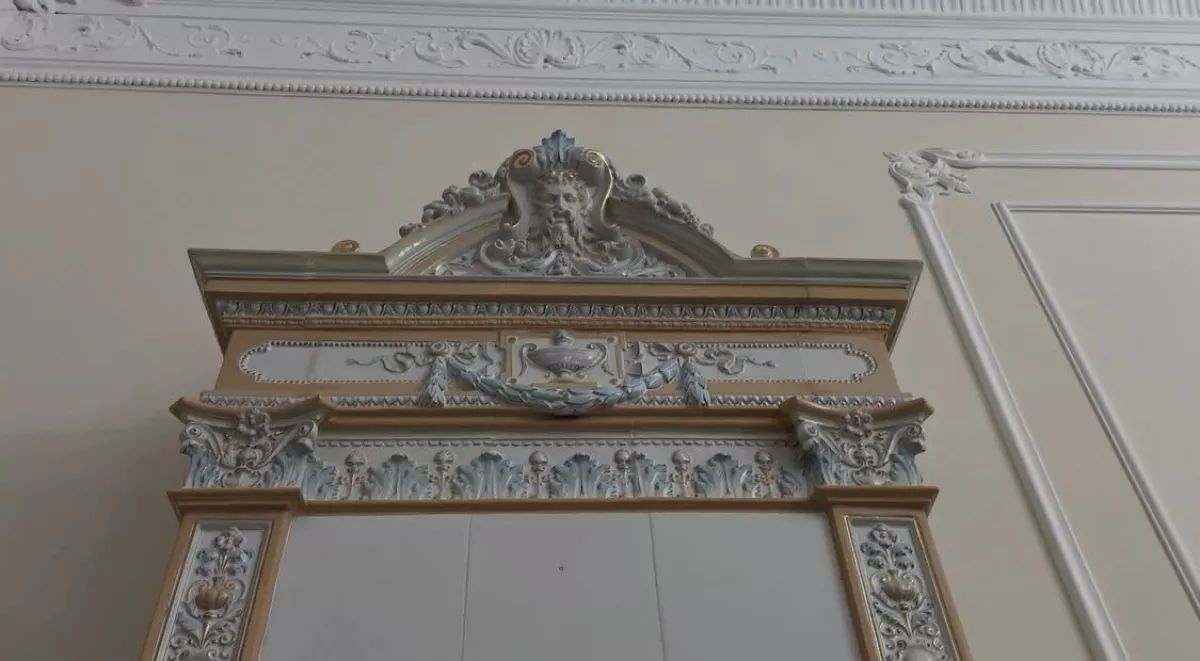
Particular attention should be paid to the building’s interiors, which have preserved their uniqueness and sophistication. Inside, one can see tiled fireplace stoves and magnificent stucco decorations that reflect the refined taste and craftsmanship of their creators. The façade is adorned with wrought-iron grilles and mascarons, emphasising its status and artistic value.
The three-story building, erected opposite the luxurious Alexander Nevsky Orthodox Cathedral, was immediately noticed and highly appreciated both by the Rothschilds and by the residents of Baku. It blended perfectly into the urban fabric and became one of the architectural landmarks of Baku at the time, despite its proximity to the cathedral, which overshadowed the surrounding buildings.
In 1912, the Rothschilds transferred all their enterprises in the Russian Empire to the British-Dutch concern Royal Dutch Shell. Later, the building housed the Consulate of the Netherlands.
In the 1930s, the structure was used as the Central House of the Peasant, which affected both its interior layout and external appearance. Unfortunately, during this period, a number of original decorative elements were lost, as they were considered excessively ornate and incompatible with the aesthetics of the worker-and-peasant style.
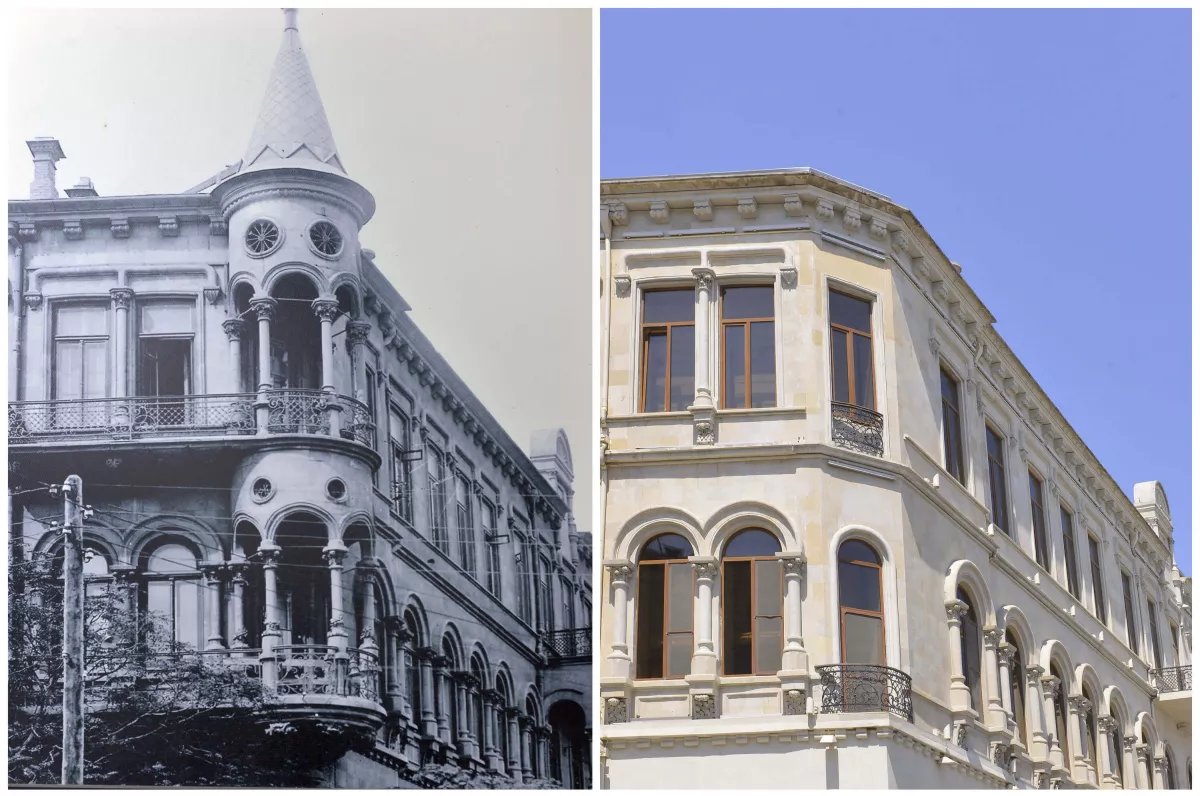
Among the lost details were an elegant rotunda tower, the design of the balcony above the main entrance on the side of Murtuza Mukhtarov Street (formerly Persidskaya Street), as well as other decorative elements that had previously given the building its distinctive expressiveness and architectural completeness. These alterations significantly changed the structure’s original appearance, partially depriving it of its historical and artistic vision.
Subsequently, the building housed the Supreme Court of the Azerbaijan SSR and later the Prosecutor General’s Office.
On December 5, 2003, the Museum of the History of the Prosecutor’s Office of the Republic of Azerbaijan was established in the administrative building of the Prosecutor General’s Office. The museum consists of five halls and presents the key stages in the development of the country and its legal system.

The first hall is dedicated to the 100th anniversary of Heydar Aliyev and reflects his life, state reforms, and achievements. The second hall presents exhibitions devoted to the election of Ilham Aliyev as President of the Republic of Azerbaijan on October 15, 2003, his large-scale activities as head of state, initiatives for the country’s socio-economic development, and its successful foreign policy.
This hall also features photographs related to the liberation of Azerbaijani territories during the Second Karabakh War and the “Great Return” programme.

Separate exhibitions are dedicated to the activities of the Heydar Aliyev Foundation. The third and fourth halls cover the history of the prosecutor’s office—from the period of the Azerbaijan Democratic Republic and Soviet rule to the modern era of independence—including reforms, international cooperation, and chronicles of the 44-day war. The museum plays an important role in studying, preserving, and promoting Azerbaijan’s legal heritage, allowing visitors to trace the historical evolution of state institutions and understand the significance of the prosecutor’s office in shaping the country’s modern legal system.
The building, once serving as the Rothschilds’ office, carefully preserves the spirit of the oil boom era and remains an important part of Baku’s historical heritage. This architectural masterpiece, protected by the state, continues to impress with its harmony, elegance, and monumentality. Its façades and proportions reflect the drive for progress and the ambitions of past eras. Every detail recalls a time when Baku was one of the world’s major centres of the oil industry. Today, the building remains one of the capital’s jewels, a symbol of historical memory and the enduring value of architectural art for future generations.
By Vahid Shukurov, exclusively for Caliber.Az







 editor@caliber.az
 +994 55 444-88-98
 Азербайджан, Баку, ул. Низами, 203, Af Business House, 5-й этаж