










Honouring Azerbaijan’s martyrs: 36 years since Bloody January
Today marks the 36th anniversary of the events of January 20, 1990, remembered in Azerbaijani history as the Bloody January Tragedy.
As Caliber.Az recalls, the fabricated Karabakh issue, reignited at the end of 1987, was aimed at undermining Azerbaijan’s territorial integrity, occupying its lands, and displacing hundreds of thousands of Azerbaijanis who lived in Armenia and the former Nagorno-Karabakh Autonomous Oblast. This conflict between the two former Soviet republics represented another stage in the systematic settlement of Armenians on Azerbaijani lands in the 19th–20th centuries, as well as the ethnic cleansing and genocide deliberately carried out against our people.
The direct or indirect support by the Soviet leadership for the territorial claims of the Armenian SSR against Azerbaijan, the separatism incited by radical Armenian nationalists, and the widespread violence against our compatriots—combined with the criminal indecision of Azerbaijan’s then-leadership and actions contrary to national interests—forced our people to rise in defence of the republic’s territorial integrity. This gave rise to a popular movement encompassing a broad social spectrum and laid the groundwork for its gradual transformation into a national liberation movement.
Frightened by the Azerbaijani people, who had loudly and passionately raised their voices for truth and justice and sought to break free from imperial chains, the leadership of the USSR resorted to a monstrous crime that, in effect, only hastened the collapse of the Soviet totalitarian regime.
On the night of January 19–20, 1990, by order of the General Secretary of the Communist Party of the Soviet Union, Mikhail Gorbachev, military units of the Ministry of Defence, the KGB, and the Ministry of Internal Affairs of the USSR were deployed in Baku and several districts of Azerbaijan. They carried out a violent crackdown on the civilian population—hundreds were killed, wounded, or went missing. Before the public was even informed of the imposition of martial law, soldiers ruthlessly killed 82 people and fatally wounded 20 more. In the days following the declaration of martial law, 21 people were killed in Baku, and another 8 were killed in districts and cities where martial law had not been declared—on January 25 in Neftchala and on January 26 in Lankaran.
As a result of the illegal military intervention in Baku and the surrounding districts, 147 people were killed, and 744 were injured.
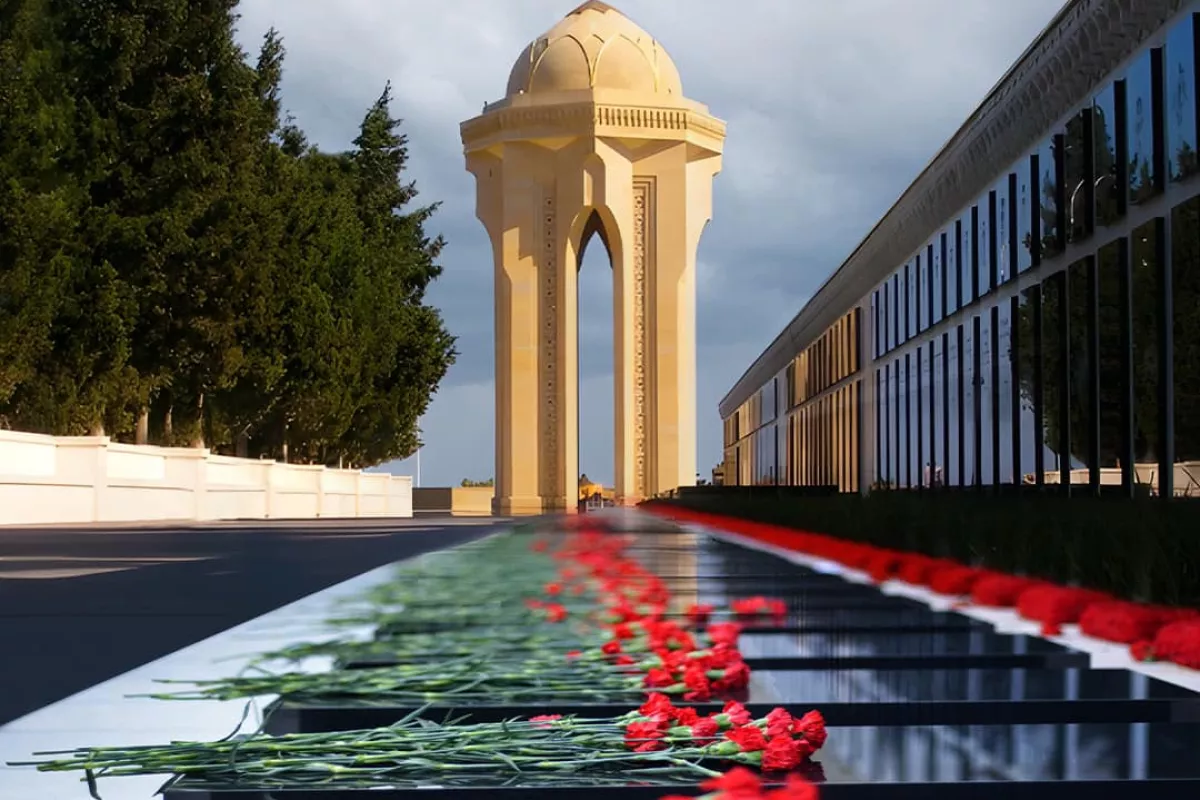
Among the dead were women, children, the elderly, medical workers, and law enforcement personnel. The illegal military intervention was also accompanied by mass arrests of civilians. In Baku and other cities and districts of the republic, 841 people were unlawfully detained, 112 of whom were sent to prisons in various cities across the USSR. Soldiers shelled 200 homes and 80 vehicles, including ambulances, and fires destroyed large amounts of both state and private property. A total of 150 people are officially recognised as martyrs of January 20 in Azerbaijan.
On January 21, the day after the bloody massacre, the great son of our people, Heydar Aliyev, arrived at the permanent mission of Azerbaijan in Moscow and issued a statement sharply condemning the USSR government and the incompetent leadership of Azerbaijan at the time.
The tragedy was not thoroughly investigated at the time and did not receive an adequate assessment within Azerbaijan. It was only several years later, under the initiative of National Leader Heydar Aliyev, that it received a political and legal evaluation at the state level.
In the decree of the President of the Republic of Azerbaijan “On Commemorating the 4th Anniversary of the January 20 Tragedy” dated January 5, 1994, the Milli Majlis (Parliament) of Azerbaijan was recommended to consider holding a special session related to the events of Bloody January. In its resolution of March 29, 1994, the Milli Majlis explicitly identified those responsible for the January 20 tragedy, classifying it as an act of military aggression and a crime committed by the totalitarian communist regime to suppress Azerbaijan’s national liberation movement and break the faith and will of its people.
On January 20, 1990, the movement for freedom and independence was brutally crushed. Yet the will of the people was not broken, and the national spirit remained unshaken. The sons of the homeland who sacrificed their lives during this massacre in defence of the nation’s interests—rising to the pinnacle of martyrdom through unparalleled selflessness—wrote a new, vivid chapter in the heroic history of our people.
With the historic victory achieved in the Patriotic War of 2020 under the leadership of President and Supreme Commander Ilham Aliyev, and with the full restoration of Azerbaijan’s territorial integrity and sovereignty following local counter-terrorist operations carried out by the Azerbaijani army in Karabakh on September 19–20, 2023, the souls of the martyrs of January 20 have finally found peace.







 editor@caliber.az
 +994 55 444-88-98
 Азербайджан, Баку, ул. Низами, 203, Af Business House, 5-й этаж