










Industry, energy, tourism: Karabakh unveils its potential Following President Aliyev’s visit
As part of the long-standing tradition during his visits to the regions of the country, President Ilham Aliyev participates in the inauguration and laying of foundations for infrastructure, industrial, and social facilities, and familiarises himself with the activities of industrial and agricultural enterprises. Over the past five years, the focus of state investments has shifted toward the revival of the Karabakh and East Zangezur economic regions, which have turned into massive construction sites.
This week, President Ilham Aliyev visited the Khojaly district, as well as the cities of Aghdam and Khankendi, where he took part in the commissioning of several industrial enterprises, a hotel, a substation, and educational institutions, and also observed the development of the resettled communities.
The key objective of the “First State Program for the Great Return to the Liberated Territories of Azerbaijan” is the restoration of Azerbaijani cities and villages, the construction of housing and social facilities, as well as transport, energy, and utility infrastructure, and the commissioning of industrial clusters, commercial, and service enterprises. According to the Center for Analysis of Economic Reforms and Communications (CAERC), the volume of funds allocated under the “Great Return” program for reconstruction in the liberated territories has reached 21.5 billion manats ($12.6 billion). Moreover, in the near future, investment under this program is expected to approach around 30 billion manats ($17.6 billion).
Notably, alongside state budget allocations, Azerbaijani businesses are investing in the economies of Karabakh and East Zangezur through public-private partnerships, while entrepreneurs from Turkey, CIS countries, and other friendly nations are also being drawn in. These investments are supporting the development of industrial and service enterprises and the creation of new jobs in the territories liberated from occupation — a key factor in enabling the swift return of former internally displaced persons.
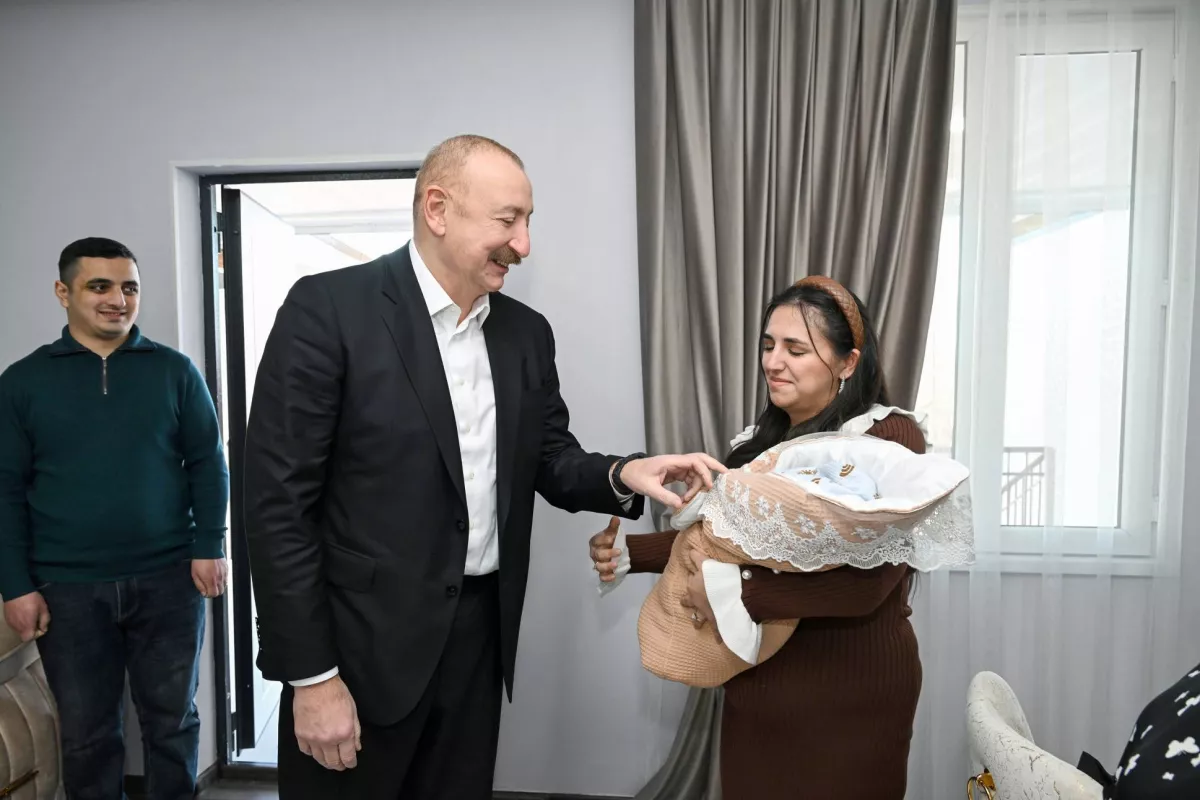
A vivid example of the effectiveness of the reconstruction efforts carried out over the past five years was President Aliyev’s visit to the Karabakh economic region, where he met with residents of the Karkijahan settlement in the city of Khankendi and reviewed the construction work completed there.
“I congratulate you on your return to your native land after 34 years [...] all former displaced persons are gradually returning to their ancestral lands, including today to the settlement of Karkijahan. This return process continues, and today the ‘Great Return’ Program is the most successfully implemented return program on a global scale,” President Ilham Aliyev said during his meeting with the residents of Karkijahan.
The head of state visited this settlement in October 2023 and at that time ordered the renovation of homes, the school, and the implementation of other necessary infrastructure projects. Before the occupation, the settlement was home to 1,796 Azerbaijanis—355 families—but in late 1991, Karkijahan was burned down by Armenian forces. The settlement was liberated in 2023 as a result of an anti-terrorist operation, and currently 674 families, a total of 2,531 residents, are registered there.
According to Elchin Yusubov, the special representative of the president for the city of Khankendi, as well as the Aghdara and Khojaly districts, renovation work in the settlement began in May 2025. At present, there are 33 residential buildings and 1,037 private houses, of which 790 are partially suitable for living. By the end of this year, 40 homes are planned to be renovated, and in 2026, 280 more.
The settlement has had its electricity and gas lines restored, an underground fibre-optic cable installed, street lighting provided, and roads asphalted. Additionally, a 60-place nursery-kindergarten and a full secondary school with 624 student places have undergone major renovation.
Alongside the restoration of residential and social infrastructure, transport and energy facilities, and the development of educational and tourism clusters in the territories liberated from occupation, private investment is helping to create the industrial foundation of the region, aimed at providing employment for the growing number of returnees.
In this regard, reconstruction work is progressing rapidly in the cities of Aghdam and Khankendi, where energy infrastructure facilities are also being developed. In particular, on December 23, the head of state participated in the inauguration of the 110/35/10-kilovolt closed-type Khankendi-1 electrical substation.
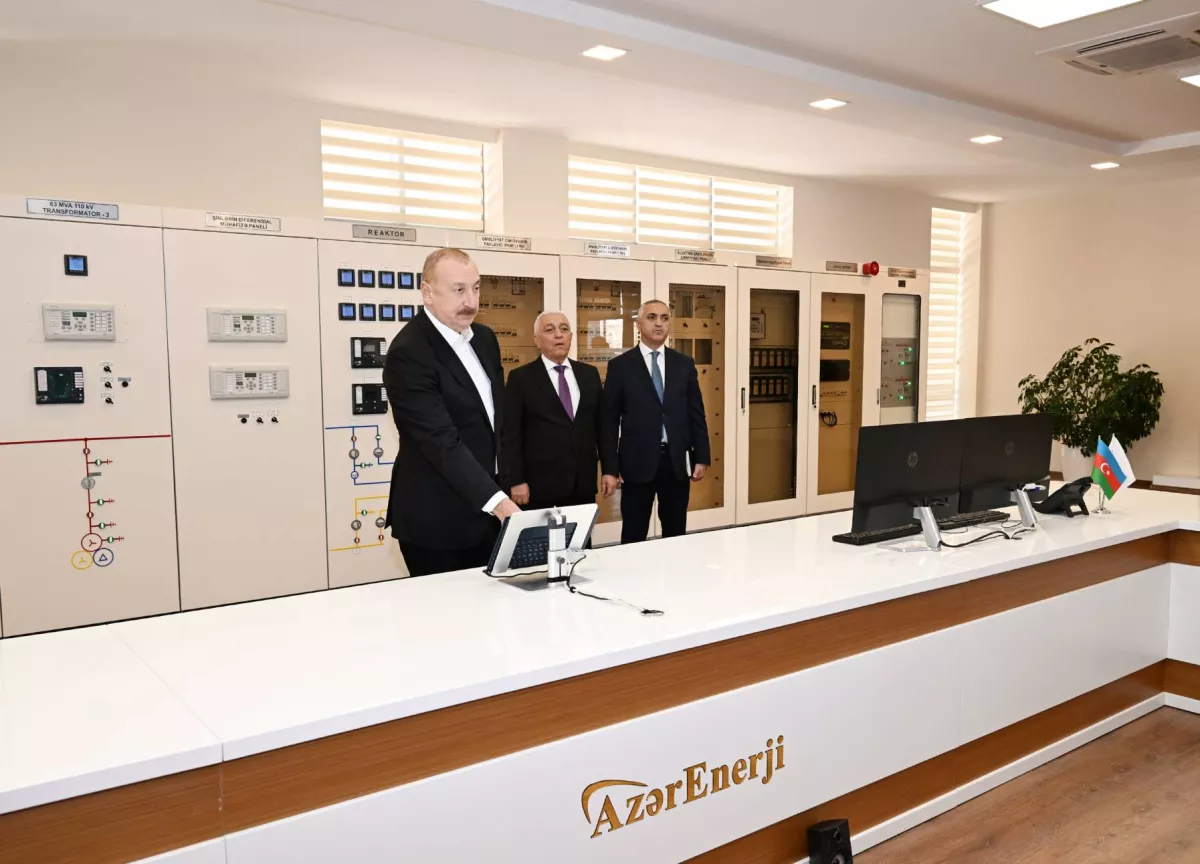
To connect the city and surrounding areas to the national power system, a high-voltage transmission line 11 km long has been laid from Shusha to Khankendi across difficult mountainous and forested terrain. At this first closed-type substation in the region, a modern microprocessor-based digital control centre (micro-SCADA) has been established, enabling real-time monitoring, management, and tracking of high-voltage power lines and equipment.
Baba Rzayev, Chairman of the Board of Azerenergy OJSC, who participated in the commissioning of the facility, noted that over the past five years, transmission lines totalling 1,000 km in Karabakh and East Zangezur have been connected in sequence with 12 new and modernised substations, creating a two-tiered circular power supply system at 330 kV and 110 kV. This ensures that, in the event of a failure in any direction, electricity will be supplied automatically and uninterrupted from the opposite direction.
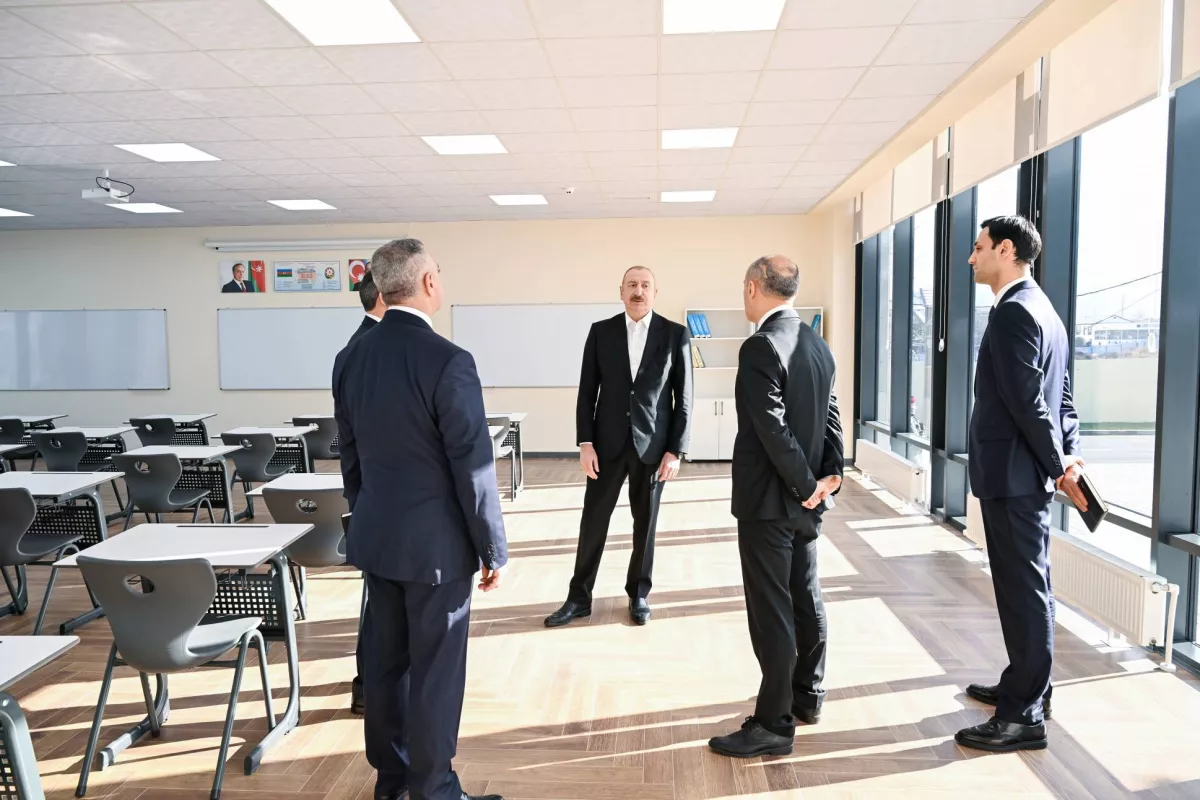
Notably, Khankendi is not only becoming a key hub of the Karabakh power system but is also gaining status as a major educational centre for the entire region. Just over a year has passed since the opening of Karabakh University on September 20, 2024, and the head of state took part in the inauguration of the new Faculty of Business and Economics building. The educational facility includes 40 classrooms, computer laboratories, a library, reading and assembly halls, specialised offices, and meeting rooms, providing all the necessary infrastructure for teaching and research.
On the same day, the President of Azerbaijan laid the foundation for the Faculty of Engineering building at Karabakh University. The new facility will be constructed according to modern standards and commissioned within a short timeframe. It will house classrooms, laboratories, a library, and create research and innovation spaces to train highly qualified specialists.
In Karabakh, alongside the development of infrastructure, industrial potential is growing dynamically, with Aghdam leading in this direction. The Aghdam Industrial Park currently hosts 32 enterprises, involving 27 resident companies and five non-residents. Investors have already contributed 142 million manats ($83.5 million) to the industrial park, creating around 970 permanent jobs. Production in the park includes wallpapers, footwear, communication and signalling equipment, microprocessor centralisation systems, medium- and low-voltage installations, monoblock concrete transformers, electric vehicle chargers, and more.
The number of industrial enterprises in Aghdam continues to grow. On December 23, the head of state participated in the commissioning of a factory producing metal power line poles based on Chinese technology. The newly built Construction LLC plant has an annual capacity of 7,200 tonnes, with products intended for both domestic demand and export.
On the same day, the foundation was laid for Saloglu Qarabağ LLC, a furniture manufacturing enterprise in the industrial park. The factory will produce various types of living room and bedroom sets, upholstered furniture, and metal furniture fittings. The production process will utilise Turkish, German, and Chinese technologies, with an annual capacity of 4,000 furniture sets and 6,000 units of metal furniture fittings.
An industrial cluster is also being developed in the Khojaly district, particularly in the village of Ballija, where Accurate Az LLC has established a factory for the production of office furniture and accessories. During the commissioning ceremony, the head of state was informed that using Turkish, Swiss, German, Italian, Chinese, and Japanese equipment, the factory will annually produce 240,000 units of office furniture in 20 varieties and 4 million furniture accessories. It is expected that 60% of the products will be exported, while 40% will be supplied to the domestic market.
Notably, once these three enterprises reach full production capacity, around 550 permanent jobs will be created in the area, bringing the total number of workers in the Aghdam Industrial Park to over 1,500.
Another important business sector in the Karabakh region is tourism, for which a robust hotel infrastructure is being developed. In particular, in the Shusha, Lachin, Kalbajar, and Tartar districts, tourist and balneological facilities have been under construction for several years.
The work has been most intensive in Shusha, where three hotels — Qarabağ Hotel, Avan Shusha Plaza Hotel, and Kharibulbul Hotel — have been restored and are operational. Additionally, small boutique hotels, guesthouses, and hostels are planned in the city and its outskirts, and construction of the high-end five-star Qarabağ Zafar hotel complex will begin soon.
Recreational development is also progressing in other districts. This year, hotels Bulud, Safali, Shafag, Yurd, and Gizil Gül opened in Khankendi, Khodjavand Hotel in Khodjavand, and Aghdara Hotel and Riverside Hotel in Aghdara. Meanwhile, in Lachin, Lachin Hotel & Resort was inaugurated, Shusha’s hotel cluster welcomed Yasemen Hotel, and Aghali Hotel was commissioned in the Zangilan district.
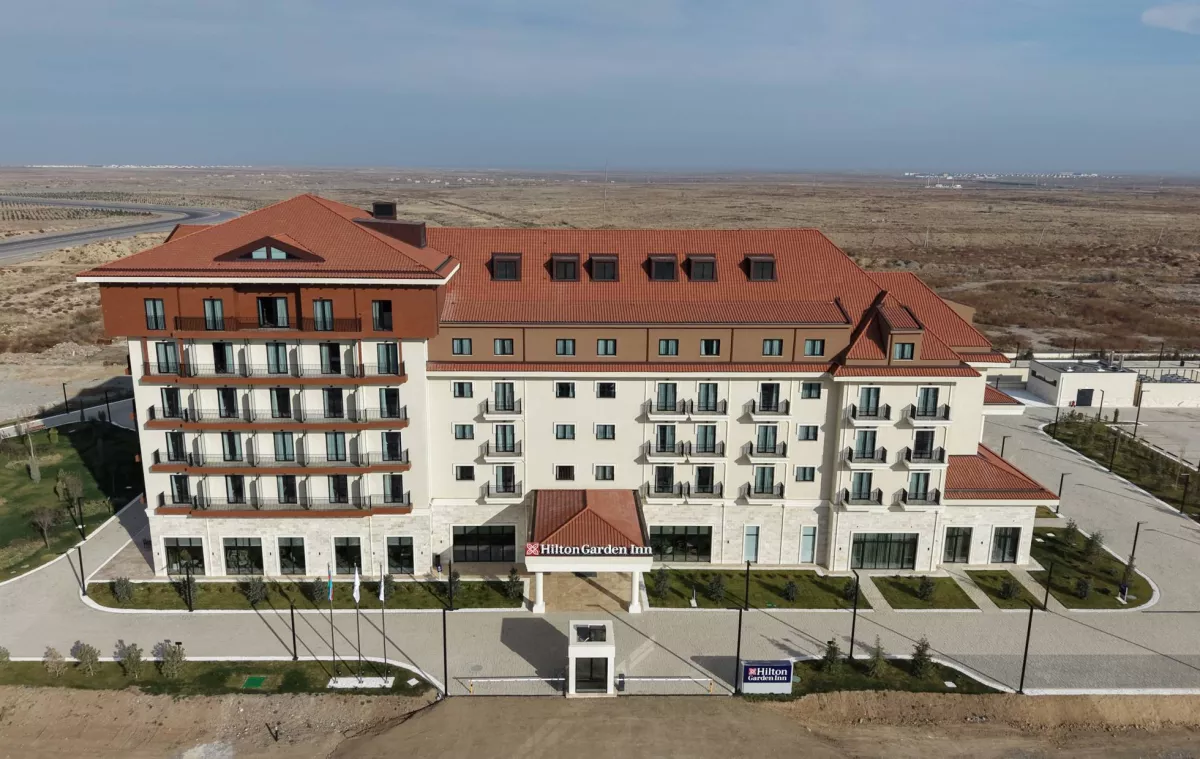
Azerbaijan is making efforts to attract international hotel brands to the Karabakh region. On December 23, in Aghdam, the head of state participated in the opening of the region’s first such facility — the Hilton Garden Inn Aghdam.
The new hotel is located near the Aghdam railway and bus terminal complex, the Aghdam Mugham Centre, the Aghdam Industrial Park, and other social infrastructure facilities. Spread over two hectares, the hotel consists of three buildings — two, six, and seven stories high — offering 287 guest places across 127 rooms of various classes. The hotel also features a restaurant, dining area, conference hall, event hall, banquet hall, indoor swimming pool, and gym, with 120 staff employed to manage rooms and other hotel services.







 editor@caliber.az
 +994 55 444-88-98
 Азербайджан, Баку, ул. Низами, 203, Af Business House, 5-й этаж