










Caspian in retreat: A growing crisis for the region Analysis by Khazar Akhundov
The Caspian Sea has been steadily losing water for nearly a quarter of a century, with the decline accelerating noticeably in recent years. Climate change — including rising temperatures and shifting wind patterns — as well as human activity, such as declining inflows from the major rivers of the Caspian basin, are among the key drivers of this trend. Beyond environmental damage and biodiversity loss, the shrinking sea is creating serious challenges for navigation and reducing the profitability of shipping, as vessels are increasingly forced to operate with reduced cargo loads. These issues, along with the need for greater cooperation among the Caspian littoral states, were highlighted at the Fourth Climate Week of the UN Framework Convention on Climate Change (CW4), currently underway.
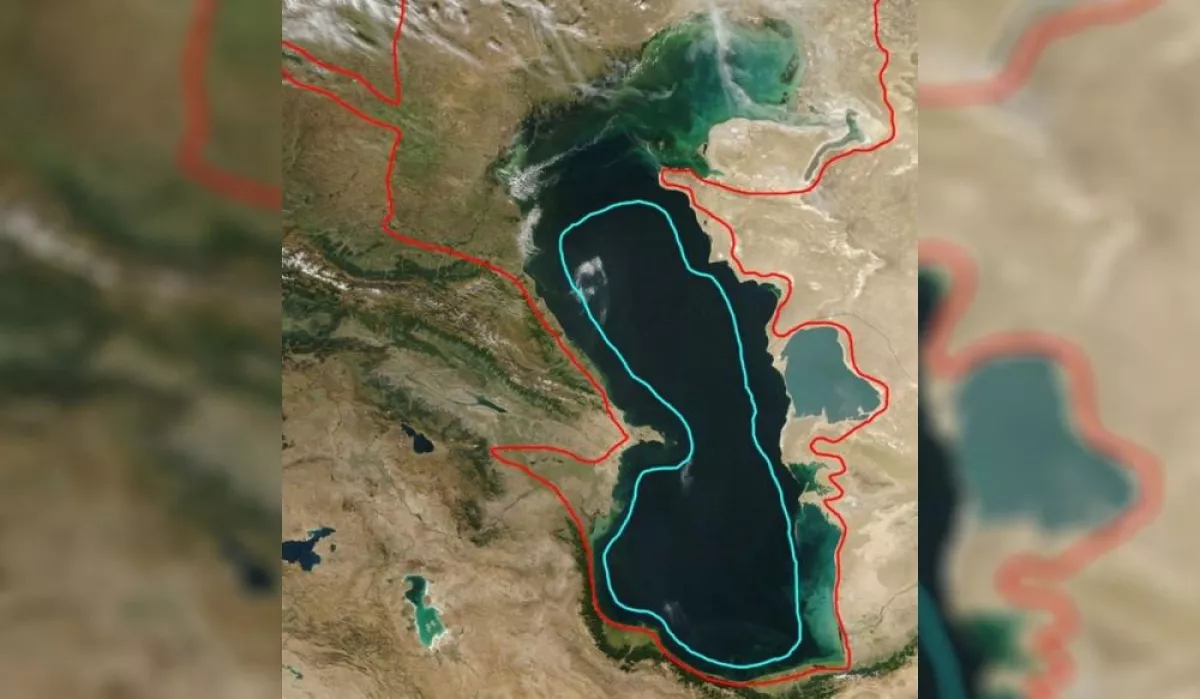
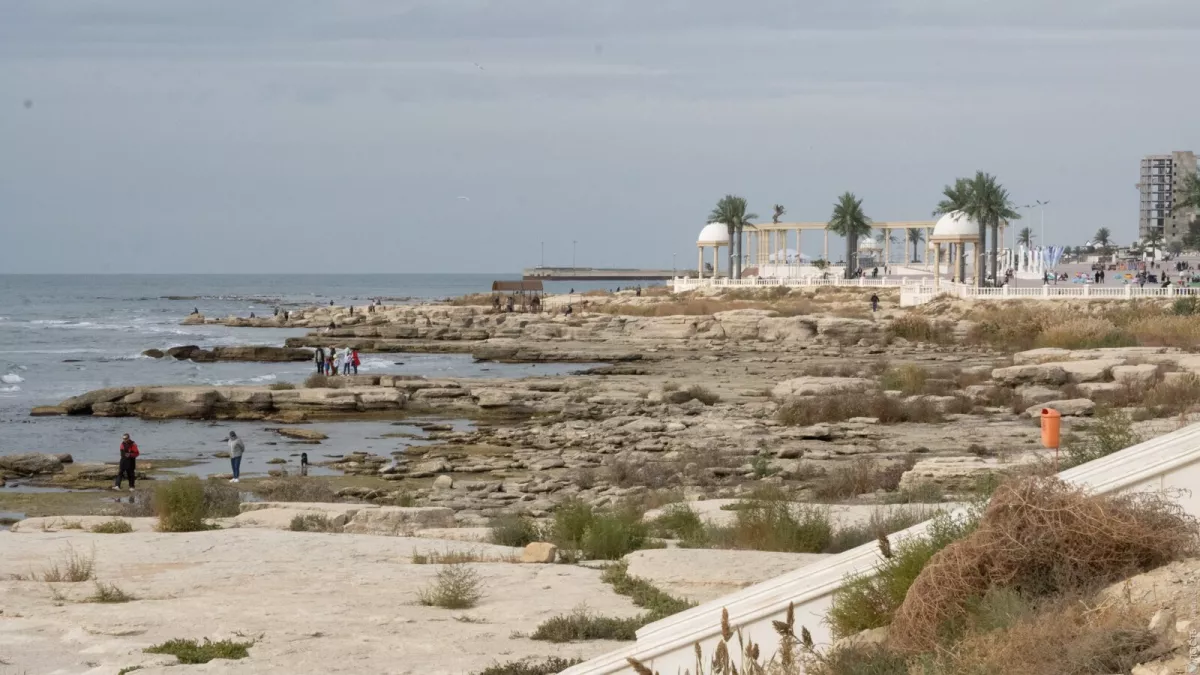
Since 1996, the level of the Caspian Sea has fallen by more than 2.3 meters, and the decline is continuing. The main reason is a growing imbalance in the sea’s water budget. As a closed body of water, the Caspian depends primarily on river inflows to replenish its water. In recent years, however, more frequent droughts, higher evaporation rates, and insufficient replenishment from precipitation and river runoff have accelerated the decline.
In addition to global climate trends and the natural cyclical fluctuations that have historically affected the Caspian’s water level, human activity and infrastructure are also contributing to the problem. One of the main factors is the regulation of the Russian Volga River through an extensive network of hydraulic infrastructure. The Volga accounts for around 85% of the Caspian’s total river inflow. Nine major reservoirs were built along the river during the Soviet period, while in recent years the Volga has also faced substantial water withdrawals for agriculture and public water supply. Similar pressures from excessive water abstraction have affected the Ural and Kura rivers, two other major waterways feeding the Caspian basin.
A regional crisis demands a united response
“For our region, the decline of the Caspian Sea is becoming more alarming, with each passing year, affecting ecosystems, communities, navigation, and economic activity [...] Azerbaijan has worked to bring this challenge higher on the regional and international agenda and to strengthen dialogue among the Caspian and littoral states,” said Mukhtar Babayev, Representative of the President of Azerbaijan for Climate Affairs, at the opening ceremony of CW4.
The situation makes joint discussions, scientific research, and coordinated action by all five Caspian littoral states increasingly urgent. There is no time to lose, according to Saida Safayeva, Head of the Sustainable Development Centre at the Institute of Advanced International Studies (IAIS), who participated in the forum. She stressed the need to expand and accelerate scientific research aimed at protecting the Caspian Sea.
“The Aral Sea and the Caspian Sea are different water systems, but they are connected through the broader water dynamics of Central Asia. This is where climate change, water-resource management, desertification, ecosystem degradation, and socioeconomic vulnerability intersect,” Safayeva noted.
She stressed that the tragedy of the Aral Sea should serve as a warning, highlighting the importance of taking preventive measures, strengthening monitoring, and acting before the situation becomes irreversible.
A similar position is shared by Simonetta Siligato, Director of the Austria Multi-Country Office of the UN Office for Project Services (UNOPS): “Institutions are needed to improve the exchange of data and knowledge, as well as ensure sustainable financing, so that regional cooperation becomes an integral part of the practical management of the Caspian Sea. To achieve the desired impact, this process must involve not only government institutions, but also research institutes, international financial organisations, local communities, and the private sector.”
The expert noted that, through UNOPS, a project titled Blueing the Caspian Sea is being implemented in Azerbaijan jointly with the World Bank and with co-financing from the Global Environment Facility (GEF). A common scientific knowledge base is also being developed in Kazakhstan and Turkmenistan to support joint planning.
“However, if we truly want to understand what is happening, we need to share data, interact, and develop joint plans,” Siligato said, emphasising the need to establish comparable monitoring systems, shared databases, and information-sharing platforms at the regional level.
The need to accelerate collective action in the Caspian region was a recurring theme in the remarks of most participants at the panel session “Climate change challenges on the inland water bodies: Caspian Sea case.” Experts believe that if negative scenarios materialise, the countries of the region could face dramatic changes in the coming decades, directly affecting infrastructure, ports, transport, local economies, and people’s livelihoods.
Further shallowing also poses direct threats to ecosystems. For example, sturgeon are losing up to 45% of their summer and autumn habitats and are being deprived of their traditional spawning grounds, while risks to the Caspian seal population are also increasing.
The most pessimistic scenario was outlined by Sadig Gurbanov, Chairman of the Milli Majlis Committee on Natural Resources, Energy and Ecology. According to him, if the water level continues to fall to minus 30 meters, the sea could retreat 4–5 kilometres from the coastline in Nabran and Shabran, 10–12 kilometres in the Sangachal-Alat area, and 2–3 kilometres in the Lankaran-Astara area of Azerbaijan’s coastal waters over the long term.
It is hoped that such a tragic scenario can be avoided — both through the onset of a natural counter-cycle that would raise the sea level and through agreements among the countries of the region to increase the discharge of freshwater into the Caspian, particularly from the Volga basin. Notably, monitoring data from the past three years indicate some slowdown in the rate of decline: while the annual drop peaked at 25–30 centimetres, the figure has recently remained in the range of 17–20 centimetres.
Azerbaijan bets on deeper navigation channels
In any case, forum participants are convinced that some of the problems caused by the shallowing of the sea require urgent solutions today. “The sustained decline in the level of the Caspian Sea in recent decades is no longer a forecast for the future but an observable reality,” said Rauf Hajiyev, Deputy Minister of Ecology and Natural Resources of the Republic of Azerbaijan. “The shallowing of the Caspian could have a serious impact on the lives of coastal communities, cities, infrastructure, transport, port operations, and economic activity in coastal areas as a whole.”
In particular, as Alakbar Azizli, Director of Sustainable Development and Emissions Management at Azerbaijan Caspian Shipping Company (ASCO), noted, the shallowing is creating new challenges for shipping: “If the water level continues to fall, we will have to not only deepen channels but also extend piers. Under these circumstances, ensuring navigational safety is particularly important for us as a shipping company: we are revising navigation charts and promptly informing captains about the necessary changes.”
According to the director, the falling water level is directly affecting the cargo capacity of the merchant fleet. In particular, one of ASCO’s ferries can currently carry only 80% of the cargo volume it previously transported from Kazakhstan. This results in financial losses not only for ASCO but also negatively affects the routes of the Middle Corridor and the customers who use them.
The situation is no less challenging for support vessels: tugboats, supply vessels, and geological survey vessels are experiencing difficulties approaching berths at offshore oil and gas platforms. There are also risks associated with submerged drilling rigs and pipelines, as falling water levels increase the risk of damage to vessel hulls in collisions with such structures.
However, overall, the negative processes affecting the Caspian have a relatively limited impact on Azerbaijan. Thanks to systematic dredging and maintenance work to keep the Alat port basin operational, navigation channel depths have generally been maintained at 6.9–7 meters. Similar dredging operations have also been carried out at the Dubendi marine oil terminal, while conditions remain stable at the dry cargo port in the Zigh Spit area, which was commissioned in March 2010.
Meanwhile, Azerbaijan Caspian Shipping Company (ASCO), part of AZCON Holding, successfully completed dredging work last July in the waters and approach channel of the Baku Shipyard. The work covered an area of 80,000 square meters, bringing the overall depth of the water area to 9 meters.
Kazakhstan and Russian ports operating at partial capacity
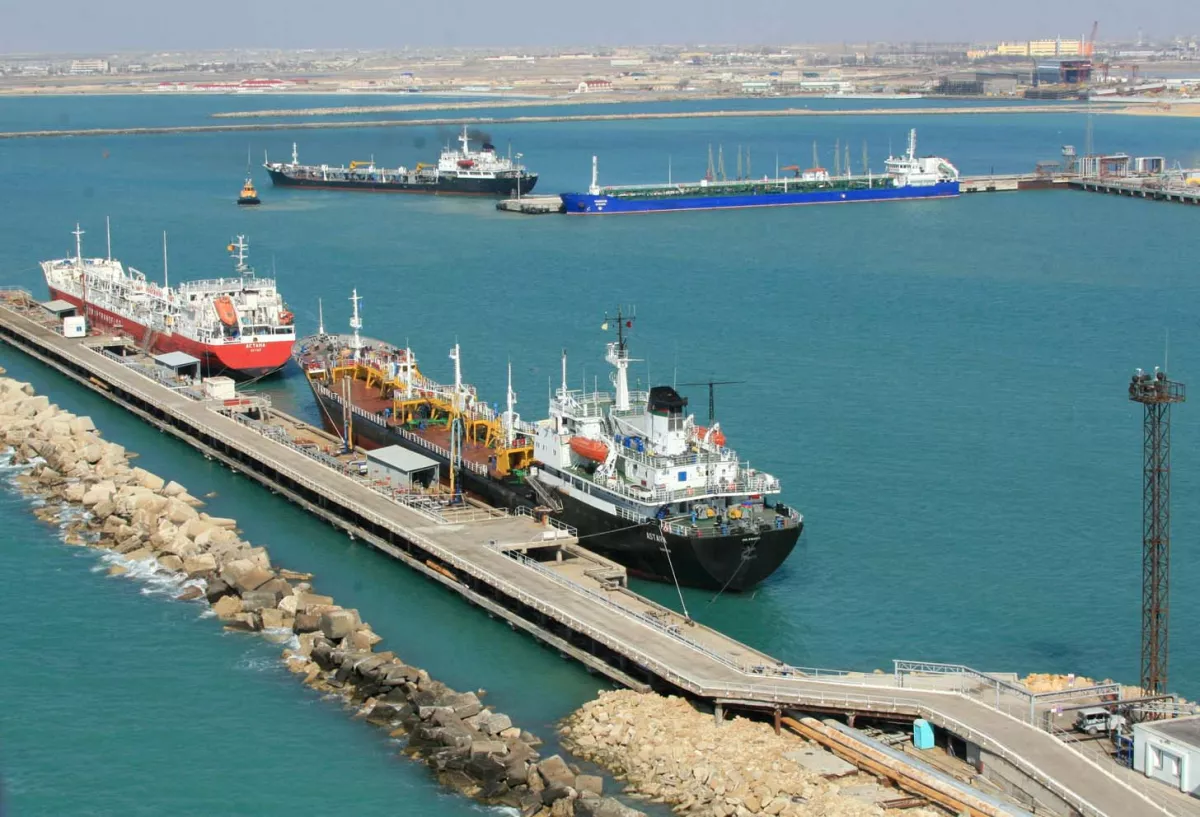
At the same time, the shallowing of the Caspian is having its most noticeable impact on ports in Kazakhstan and Russia. In recent years, the navigational conditions at Kazakhstan’s ports of Aktau and Kuryk have deteriorated significantly: around three years ago, depths in their waters and approach channels stood at 4.9 meters, compared with a regulatory requirement of 6.11 meters, meaning vessels there can be loaded to no more than 75% of their deadweight capacity.
At the Port of Aktau, oil tankers and dry cargo vessels are being underloaded due to the falling sea level. In particular, tankers capable of carrying 12,000 tons of oil can now take on no more than 10,000 tons, while dry cargo vessels are typically unable to load 300–400 tons below their maximum capacity.
A similar situation is being observed at the Russian ports of Olya, Astrakhan, and Makhachkala. In recent years, Russia has been carrying out dredging work on the Volga-Caspian Sea Shipping Canal (VKMSС), which runs through the shallow part of the delta in the Astrakhan region, to ensure the passage of vessels with a draft of 4.5 meters or more.
All dredging and infrastructure expansion work at Caspian ports needs to be accelerated as much as possible. Moreover, according to Wang Runze, Programme Manager at the UN-Habitat office in Azerbaijan, countries in the region need to introduce adaptive and forward-looking spatial planning. This would make it possible to take into account the location of roads, drainage systems, utility networks, and other infrastructure when developing measures to protect coastal areas and water resources.







 editor@caliber.az
 +994 55 444-88-98
 Азербайджан, Баку, ул. Низами, 203, Af Business House, 5-й этаж