










Beijing – Astana – Baku: How a new Eurasian logistics axis is taking shape Analysis by Teymur Atayev
A wide-ranging interview with Kazakh President Kassym-Jomart Tokayev by Xinhua highlighted a special format of mutual understanding between Astana, Beijing and Baku.
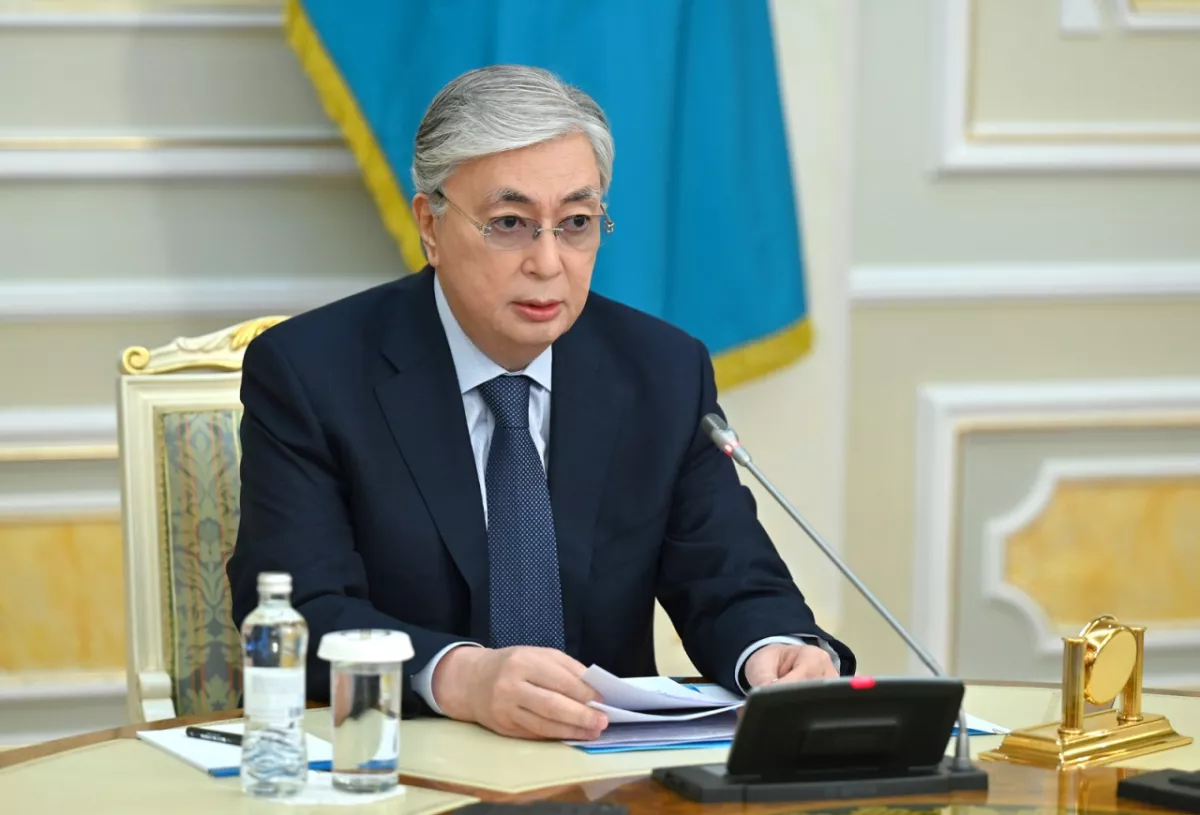
The interview covered key aspects of relations between Kazakhstan and China, but one of President Kassym-Jomart Tokayev’s main focuses was the transport and logistics dimension across the Eurasian space, where a new regional architecture is taking shape.
Emphasising the comprehensive nature of the two countries’ strategic partnership, Tokayev highlighted the importance of developing the Belt and Road Initiative, the Trans-Caspian International Transport Route (TITR), also known as the Middle Corridor, the construction of new railway lines, the expansion of logistics infrastructure and the modernisation of border crossing points. According to him, these processes are shaping a new configuration of transport links between Asia and Europe.
The Kazakh president described the development of the country’s transport and logistics potential as a strategic priority, placing particular emphasis on the Middle Corridor as a crucial link between China and Europe. He identified increasing the route’s competitiveness as a shared objective for Beijing and Astana.
These priorities are particularly significant against the backdrop of political and economic turbulence that is contributing to the emergence of new elements in global geopolitics.
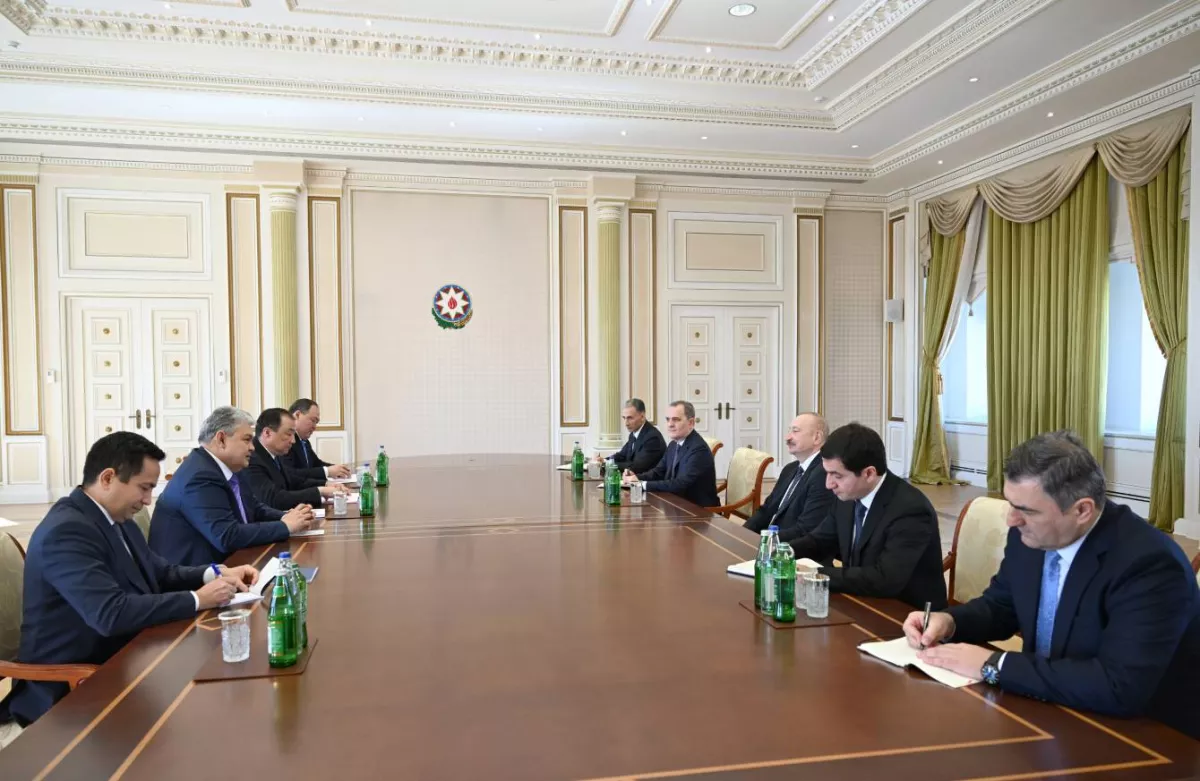
In this context, it is worth recalling a recent statement by Azerbaijani President Ilham Aliyev that Central Asia and Azerbaijan constitute a single geopolitical and geo-economic region with enormous growth potential. It is also telling that in April this year, the Azerbaijani leader met with two Kazakh ministers at the same time — the ministers of foreign affairs and transport. The meeting noted the successful development of bilateral relations in the political, economic, transport and logistics, investment and energy sectors, including green energy. The sides also reaffirmed their mutual understanding on projects involving the Middle Corridor, the Trans-Caspian Green Energy Corridor and a fibre-optic cable line.

In other words, the TITR is viewed as part of a broader network of regional initiatives. This was also evident during the Azerbaijani president’s visit to Georgia, when President Ilham Aliyev drew a political and economic line from the Baku–Tbilisi–Ceyhan oil pipeline to the Southern Gas Corridor, on the basis of which, as he put it, “we also built transport corridors along these routes, and work is currently underway to expand them”. In particular, the Middle Corridor, which also runs through Georgia, has become a key transport artery for us, and additional efforts are being made to expand it.
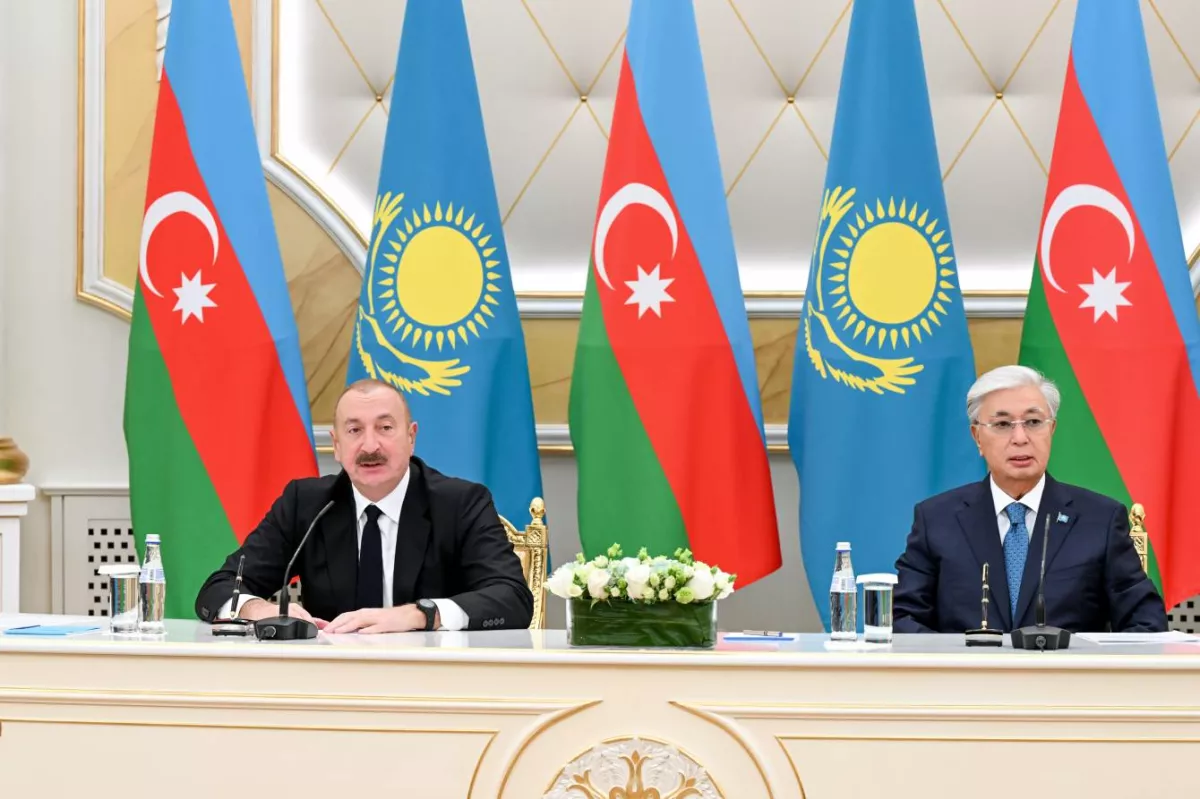
Regarding the special format of relations between Baku and Astana, it is worth noting that, according to President Ilham Aliyev, our peoples are bound by centuries-old friendship and brotherhood rooted in shared origins and spiritual and cultural ties. This provides a solid foundation for interstate relations.
Against this backdrop, active interaction between the two countries is taking on significant geopolitical importance. At the current stage of history, with new transport routes opening and projects aimed at strengthening Eurasian connectivity being implemented, the South Caucasus and Central Asia are becoming increasingly interconnected and often function as a single geographical space.
The relationship between Azerbaijan and China deserves particular attention in this context. As President Ilham Aliyev has noted, following his state visit to China in 2025 and the signing of the Declaration on Comprehensive Strategic Partnership, there has been a significant intensification of cooperation in all areas: political, economic and transport. An increasing number of Chinese companies are operating in Azerbaijan, some of which are making major investments while others are participating in infrastructure projects. At the same time, a new chapter has opened in bilateral cooperation in the defence sector, and Baku is interested in further developing military-technical cooperation.
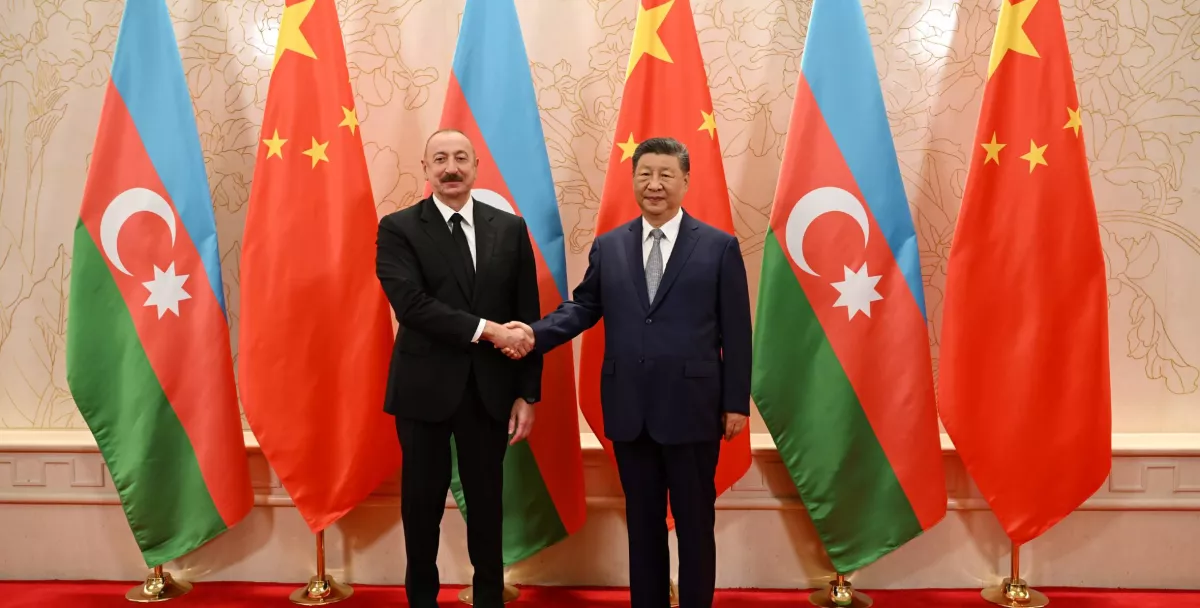
As for the Middle Corridor, President Ilham Aliyev noted the growing volume of cargo travelling from China through Azerbaijan and to Azerbaijan. In response, Baku is nearly doubling the capacity of its commercial seaport, primarily in anticipation of new cargo volumes from China and the countries of Central Asia. At the same time, this geopolitical and geographical space is characterised not only by a positive history of relations but also by well-developed multilateral cooperation among the countries located along the route. The head of state particularly stressed that relatively little time passes between political decisions being taken at the leadership level and the implementation of concrete projects.
In a joint statement on establishing comprehensive strategic partnership relations, Baku and Beijing expressed their readiness to regard each other as priority, reliable and mutually beneficial strategic partners, continuously strengthen political mutual trust, enhance mutual support and develop comprehensive cooperation for the benefit of the peoples of the two countries.
The document also highly praised the agreement between the governments of the two countries on international multimodal transport, while China expressed its readiness to cooperate with Azerbaijan and other countries along the route in developing safe and efficient express routes between China and Europe and back.
Thus, the China–Kazakhstan–Azerbaijan triangle is acquiring significant geopolitical importance, becoming one of the driving forces behind the Middle Corridor and a new logistics axis linking Asia and Europe.
The plans of China’s Lianyungang megaport are also telling in this regard. The port has proposed introducing an integrated management model for the Lianyungang–Khorgos–Aktau–Baku route, which would link the ports and railways of the three countries into a single digital network using AI and Big Data to optimise customs and transit procedures.
Thus, the China–Kazakhstan–Azerbaijan triangle is emerging as a stable geostrategic and geo-economic hub, not only linking the eastern and western parts of Eurasia but also gradually extending beyond this geographical space.







 editor@caliber.az
 +994 55 444-88-98
 Азербайджан, Баку, ул. Низами, 203, Af Business House, 5-й этаж