










Corruption as a weapon against Ukraine NYT investigation deals blow to Zelenskyy’s reputation
Reports on corruption can take many forms. Some expose isolated schemes, while others reveal deeper, systemic problems. But some investigations make it impossible to dismiss corruption as merely a collection of mistakes or abuses by individual officials. The New York Times’ investigation into Ukraine’s defence procurement system appears to fall into this category.
According to the US newspaper, Ukraine may have lost out on approximately $1.2 billion worth of military equipment in 2024 alone as a result of fraud, embezzlement and mismanagement. After examining audit reports, government documents and individual contracts, NYT journalists reached conclusions that go well beyond the familiar narrative of “isolated shortcomings.”

The problem, the investigation suggests, is not simply that some military supplies were purchased at inflated prices. More troubling is the fact that the procurement system allegedly continued to operate under questionable practices even after auditors had raised concerns. Intermediary schemes, contracts with unscrupulous companies, deliveries of defective ammunition, and repeated orders from firms with questionable track records — according to the NYT investigation, these may represent not isolated incidents but a recurring pattern.
That is the most alarming aspect of the findings. Military aid to Ukraine is not an abstract financial figure. It takes the form of missiles, artillery shells, drones, air-defence systems, armoured vehicles and communications equipment — assets that directly affect the country’s ability to fight.
Against this backdrop, $1.2 billion in potential losses is a staggering figure. It represents weapons and equipment that could otherwise have reached the battlefield, ammunition that could have been used against Russian forces, and potentially life-saving equipment for Ukrainian soldiers.
During wartime, corruption in defence procurement is no longer merely an economic or criminal matter. It becomes a national security issue — and, ultimately, a matter of life and death.
The story of Turkish aviation rockets illustrates this approach. According to the investigation, Ukraine signed a contract with a Czech intermediary to supply 70mm unguided aircraft rockets, even though more favourable offers were available on the market, including directly from the manufacturer. At the same time, the Turkish manufacturer had warned the Ukrainian side in advance that it would be unable to supply the requested quantities. Nevertheless, the agreement was signed.
As the NYT notes, the rockets were purchased without convincing evidence that they had undergone the necessary testing. As a result, one of the munitions exploded inside the launch tube, seriously damaging a Ukrainian Mi-8 helicopter. A criminal investigation was launched into the incident, making it impossible to dismiss what happened as merely a routine bureaucratic oversight.
When a state purchases weapons while ignoring warnings from the manufacturer and sends untested munitions to the front, the price is paid not only in millions of dollars, but also in human lives.
Such cases are not isolated. According to the journalists, seven of the ten largest contractors of Ukraine’s Ministry of Defence received new orders despite having failed to fulfil previous obligations or facing criminal investigations involving their executives.
Auditors identified transactions involving 18 companies that had repeatedly violated the terms of previous contracts. Six of them had failed to fulfil a single contract, yet the state continued to do business with them. In one case, a contractor failed to deliver 600 specialised drones, providing the military with not a single aircraft. The company subsequently received another contract — this time for 1,950 drones — of which it delivered only 50 on time.

Each of these episodes raises serious questions. For a long time, criticism of the Ukrainian leadership remained an extremely sensitive issue in American political and media circles. After the outbreak of the full-scale war, Kyiv was viewed in Washington primarily as a bulwark against Russian aggression, and any public criticism could be interpreted as playing into Moscow’s hands. For this reason, the American establishment preferred to focus on military support, while relegating the issue of domestic corruption to the background.
However, the situation is changing. And it is not changing because corruption has suddenly emerged. It has existed for a long time. What is changing is the perception of what is happening in Ukraine, because the scale of the problem is becoming too large, and the number of scandals too significant, to continue treating them as isolated incidents.
When Ukrainian journalists or opposition figures raise concerns about corruption, such statements can still be dismissed as part of domestic political infighting. But when the same facts are reported by The New York Times, it becomes a direct signal to the American public and taxpayers. They are left with a simple question: How effectively are the tens of billions of dollars in aid being spent? And the answers contained in the documents published by the newspaper provide little reason for optimism.
Notably, The New York Times investigation was published on September 6, the same day that US President Donald Trump’s special representatives, Steve Witkoff and Jared Kushner, arrived in Kyiv. The article’s political resonance was therefore inevitable: as the American audience followed the visit, one of the country’s leading media outlets put the effectiveness of Ukraine’s military procurement system under the spotlight.
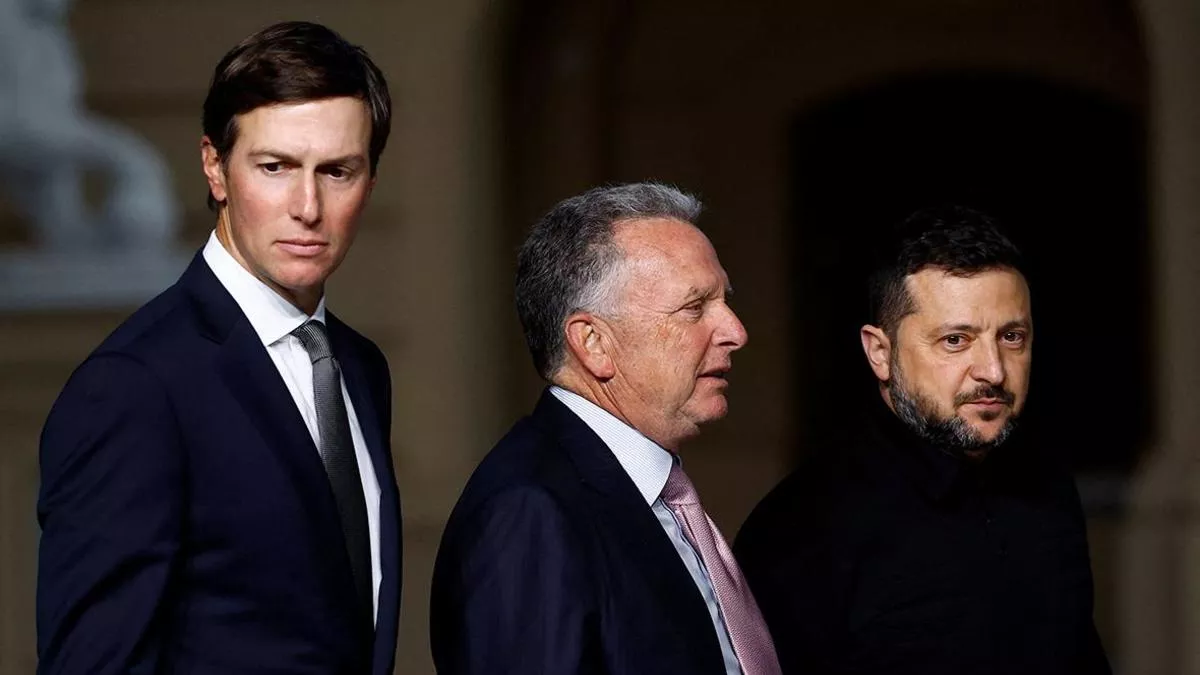
For Kyiv, this created an extremely difficult information environment. As American envoys arrived to discuss the prospects of the conflict and possible scenarios for ending it, leading US media were simultaneously reminding the public of Ukraine’s systemic domestic problems. It is no longer possible to separate these issues in the public discourse.
Moreover, the NYT publication came against the backdrop of a series of high-profile anti-corruption cases inside Ukraine, including “Midas,” “Forrest Gump” and “Carthage.” Each has its own specifics and suspects, but together they paint a troubling picture of a state in which corruption risks are not confined to the periphery but extend to the highest levels of government and public administration.
It is becoming increasingly difficult to explain these problems to the American public as merely a “legacy of the past.” The issue is a system that continues to reproduce itself even amid a full-scale war. And this is becoming one of the key challenges facing Volodymyr Zelenskyy and his team.







 editor@caliber.az
 +994 55 444-88-98
 Азербайджан, Баку, ул. Низами, 203, Af Business House, 5-й этаж