










Legacy of landmines: Azerbaijan seeks international solidarity Analysis by Teymur Atayev
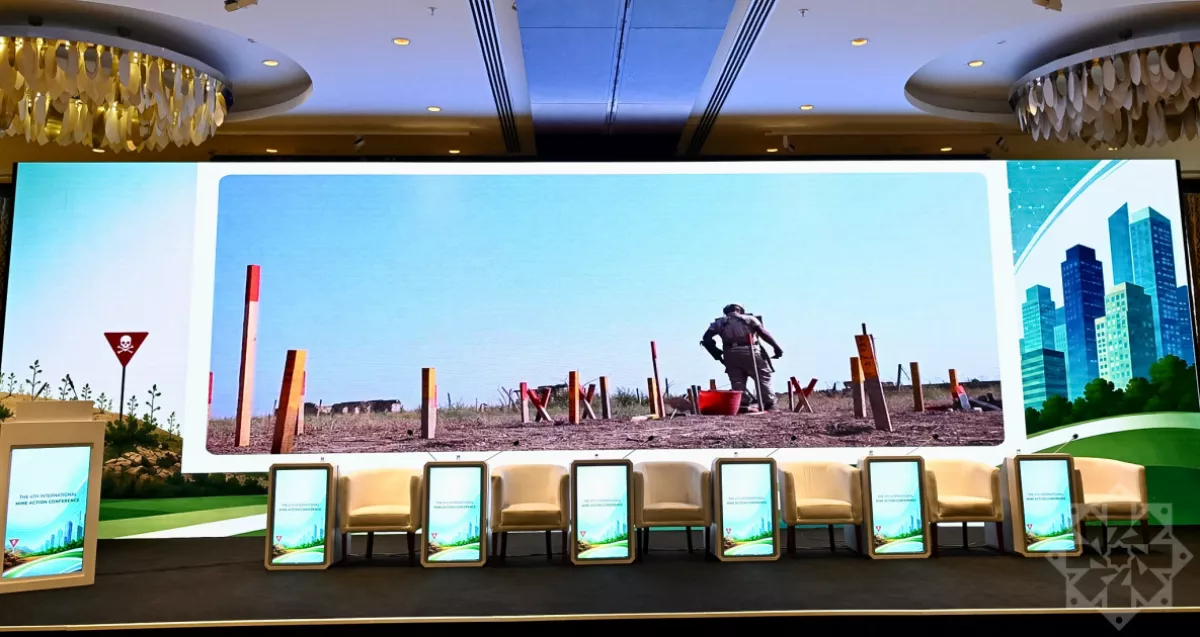
Addressing the 4th International Conference on Mine Action, President Ilham Aliyev once again emphasised that landmines and unexploded ordnance remain a serious threat to human life and continue to impede the reconstruction of Azerbaijan’s liberated territories. After nearly three decades of occupation by Armenia, Azerbaijan has become one of the world’s most heavily mine-contaminated countries. Landmines continue to hamper reconstruction and delay the return of formerly displaced Azerbaijanis to their ancestral homes.
The head of state had previously said that following the liberation of the territories, “We were shocked by the scale of destruction in the formerly occupied territories.” He noted that Armenia had deliberately destroyed and looted Azerbaijani cities and villages, dismantling them stone by stone, while cultural and religious sites, including mosques, were also desecrated and plundered.
In this sense, the destruction went far beyond physical damage to buildings and infrastructure. It amounted to what can be described as urbicide, culturicide, and ecocide—the systematic destruction of urban environments, cultural heritage, and the natural environment in the occupied territories. Some 60,000 hectares of forests were destroyed, cut down, and removed, while the soil and rivers were polluted and contaminated.
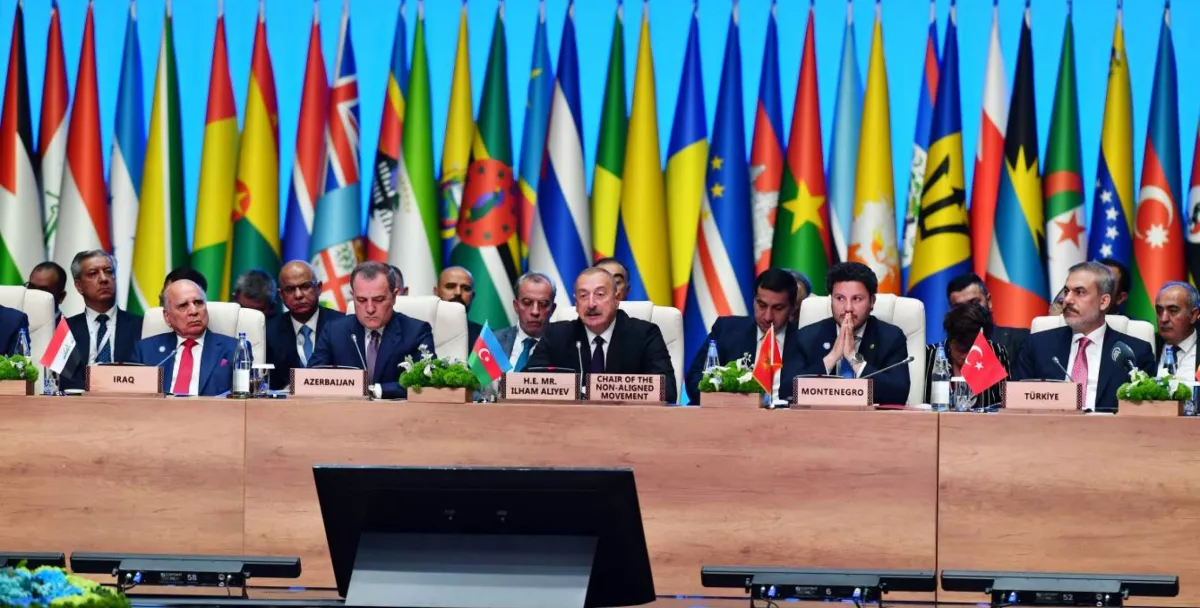
Alongside this, describing landmines as “another negative consequence of the Armenian occupation,” the President stated that Azerbaijan is among the ten most heavily mined countries in the world. As he elaborated, every mine explosion in the liberated territories is a continuation of the long list of war crimes committed by Armenia. Moreover, the landmine problem represents a violation by Armenia of the fundamental human rights of the Azerbaijani people.
Furthermore, even after its capitulation, Armenia continued to smuggle landmines into Azerbaijan’s Karabakh region, up until the establishment of the Lachin border and customs checkpoint. After these mines were discovered, the relevant Azerbaijani authorities demonstrated them to representatives of the Russian peacekeeping contingent and the Russian-Turkish Monitoring Centre, calling for immediate action. The most important detail was that the mines had been manufactured in Armenia in 2021. This means they were transported to the Karabakh region after the Second Karabakh War with the sole purpose of carrying out terrorist attacks against Azerbaijan.
The presence of landmines, of course, slows down the process of reconstruction and the return of formerly internally displaced persons to the liberated territories. In this regard, as President Ilham Aliyev noted, Baku established a separate national Sustainable Development Goal (SDG) on humanitarian demining. Moreover, in support of humanitarian demining efforts worldwide, Azerbaijan has proposed launching an 18th SDG dedicated to mine clearance.
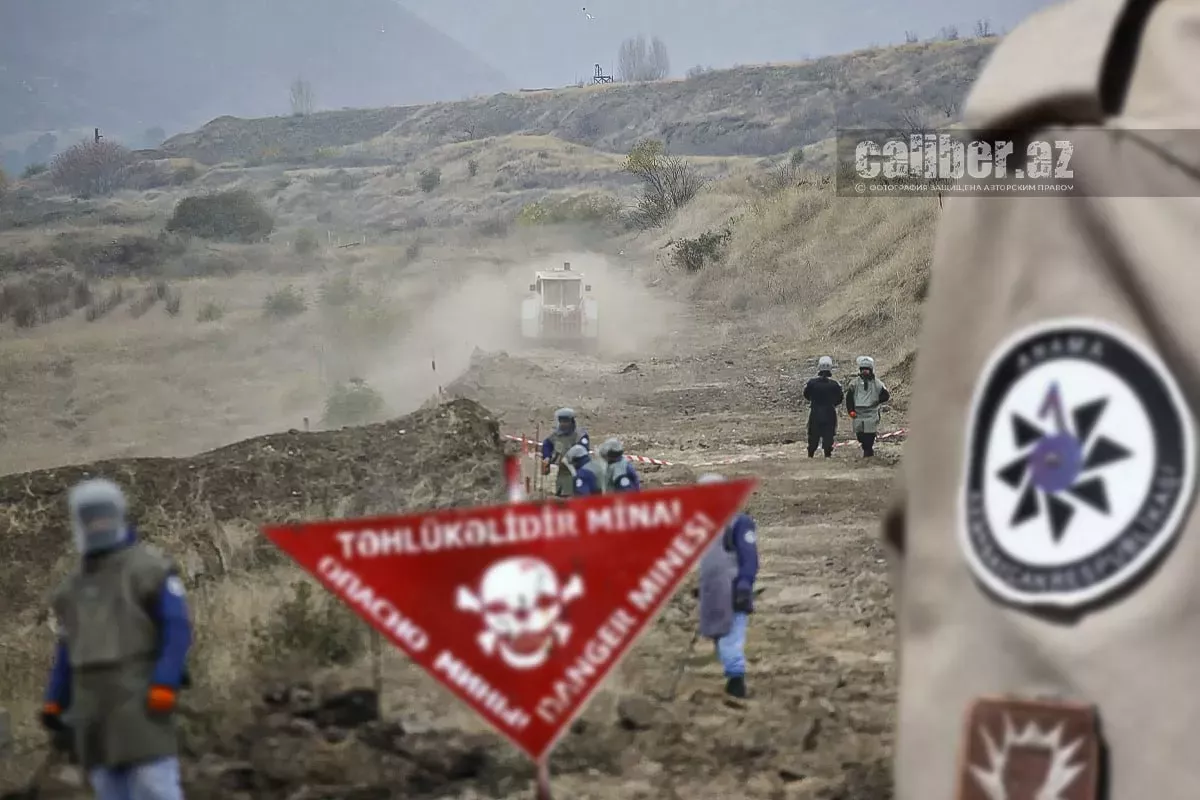
The Armenian side continues to claim that it handed Azerbaijan 972 maps of mined areas that had previously been under occupation in 2021. However, it is now widely known that, according to an analysis by specialists from the Azerbaijan Mine Action Agency (ANAMA), many of these maps proved to be inaccurate, unreliable, and incomplete. For example, the accuracy of the maps for the Aghdam, Fuzuli, Jabrayil, and Zangilan districts was only 25%. In this regard, Lee Woodyear, a representative of the United Nations Mine Action Service (UNMAS), says that military personnel compile such maps to determine the precise locations of mines after hostilities have ended. At the same time, he attempts to put the situation, so to speak, in a more nuanced light, pointing out that under wartime conditions, “ it's difficult to expect high accuracy from those who plant explosive devices” when they are under severe stress.
The Armenian Foreign Ministry, meanwhile, claims that Azerbaijan is constantly drawing the attention of the international community to the mine problem. For instance, the issue of landmines and unexploded ordnance in Azerbaijan’s liberated territories was discussed in 2024 at the 20th International Mine Action Symposium held in Cavtat, Croatia.
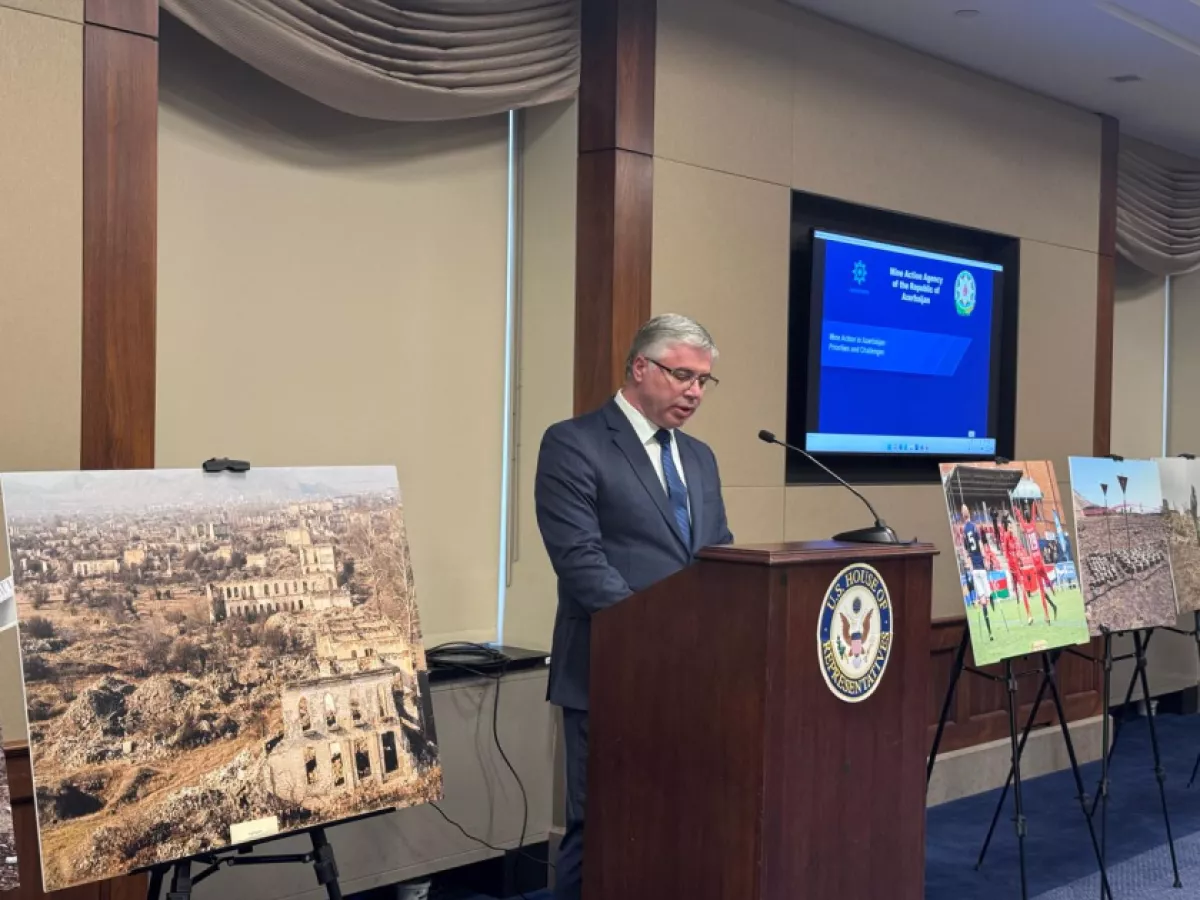
In 2025, the conference and photo exhibition “Demining in Azerbaijan: Priorities and Challenges” was held at the U.S. Congress. Azerbaijan’s mine problem was also discussed at the Hudson Institute in Washington.
In May this year, as part of the 13th session of the World Urban Forum (WUF13), participants also examined the critical role of humanitarian demining efforts, particularly highlighting how landmines both slow the reconstruction of the country’s territories liberated from occupation and pose serious risks to public safety. Accordingly, as part of the implementation of the “Great Return” programme, demining activities have been fully integrated into urban planning, reconstruction, and development processes.
The point, however, is that, as President Ilham Aliyev pointed out recently, no settlement can be fully rebuilt, no school or hospital can operate safely, no family can return with dignity, and no economic activity can develop sustainably “unless the land is free from mines and explosive remnants of war.”
Since the end of the Patriotic War, 437 Azerbaijani citizens have become victims of accidents involving landmines and unexploded ordnance, including civilians, military personnel, demining specialists, journalists, and people involved in reconstruction efforts. Of these, 73 were killed, and 364 sustained serious injuries. To date, nearly 300,000 hectares of land have been cleared, with 260,147 landmines and unexploded ordnance items detected and neutralised. This work is helping transform areas that were once highly dangerous into places where people can live, work, receive an education, and pursue their opportunities within a relatively short period of time.
Against this backdrop, in his recent address, the president expressed confidence that the 4th International Conference on Mine Action would become a valuable platform for open dialogue, the exchange of experience, and the development of practical cooperation. According to a number of analysts, discussions at the Baku platform will contribute to strengthening international mine-action standards, promoting innovation, supporting the safe reconstruction of cities, and advancing our shared goal of building safe, sustainable, and resilient communities.
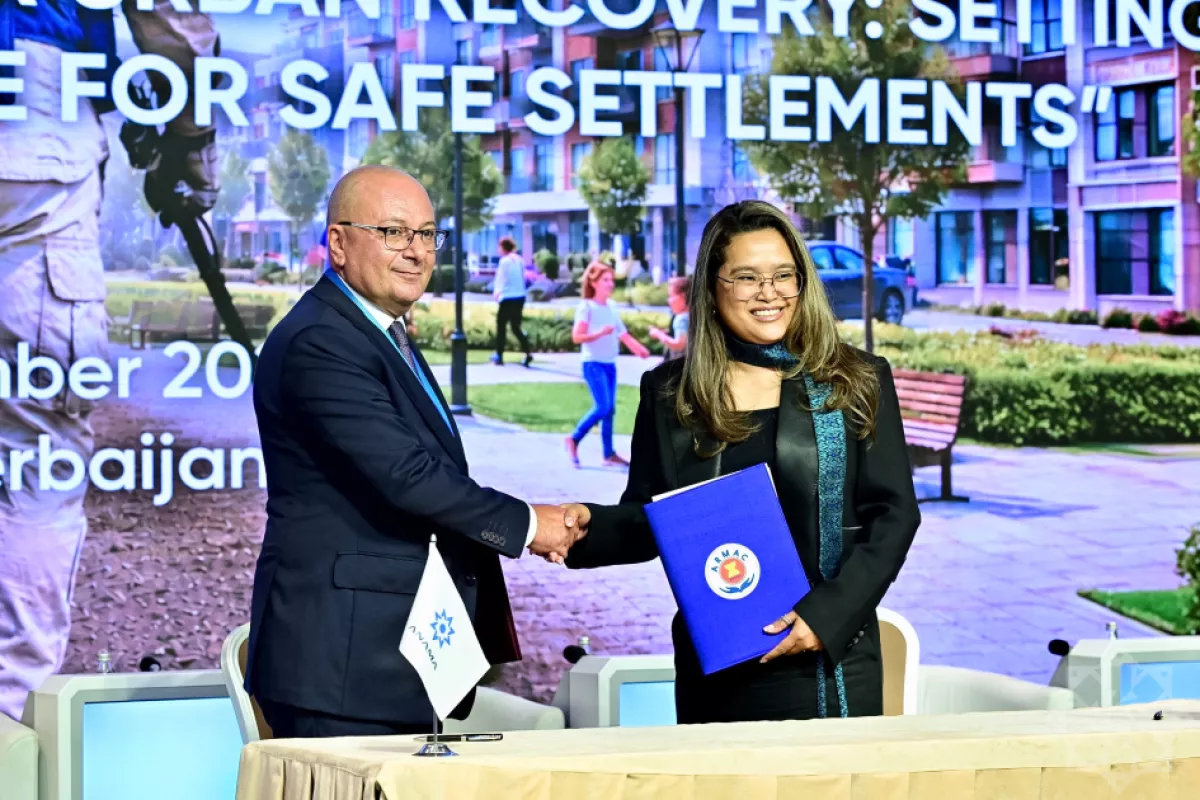
On the sidelines of the event, ANAMA and the ASEAN Regional Mine Action Centre (ARMAC) signed a Memorandum of Understanding on cooperation in humanitarian demining.
Against this backdrop, President Ilham Aliyev noted that Azerbaijan is shouldering the main burden of both humanitarian demining and the broader process of reconstruction and rehabilitation in the liberated territories using its own national resources. He stressed that the scale of mine contamination, the urgency of reconstruction, and the humanitarian importance of a safe return require broader and more practical support from the international community.
It remains to be hoped that the relevant international organisations and states will heed President Ilham Aliyev’s message, delivered yesterday to the participants of the mine-action conference, and respond by strengthening international solidarity in addressing the mine problem.







 editor@caliber.az
 +994 55 444-88-98
 Азербайджан, Баку, ул. Низами, 203, Af Business House, 5-й этаж