










Baku steps up climate action: Azerbaijan’s renewable energy and green corridor push Khazar Akhundov’s analysis
As COP31 approaches, Baku is taking stock of the global climate agenda and stepping up its efforts to advance the energy transition. Azerbaijan has emerged as one of the Caspian region’s leading proponents of the global shift toward cleaner energy and is rapidly expanding its renewable energy sector.
The country demonstrated its commitment to the international climate agenda at the 2024 UN Climate Change Conference, COP29, in Baku. Since then, Azerbaijan has continued to advance a range of international initiatives aimed at turning climate commitments into tangible “green” projects while providing broader support to developing countries.
At the same time, Baku is promoting major cross-border “green” energy corridors designed to export renewable electricity to Türkiye and the European Union, further positioning Azerbaijan as an emerging hub in the regional clean-energy transition.
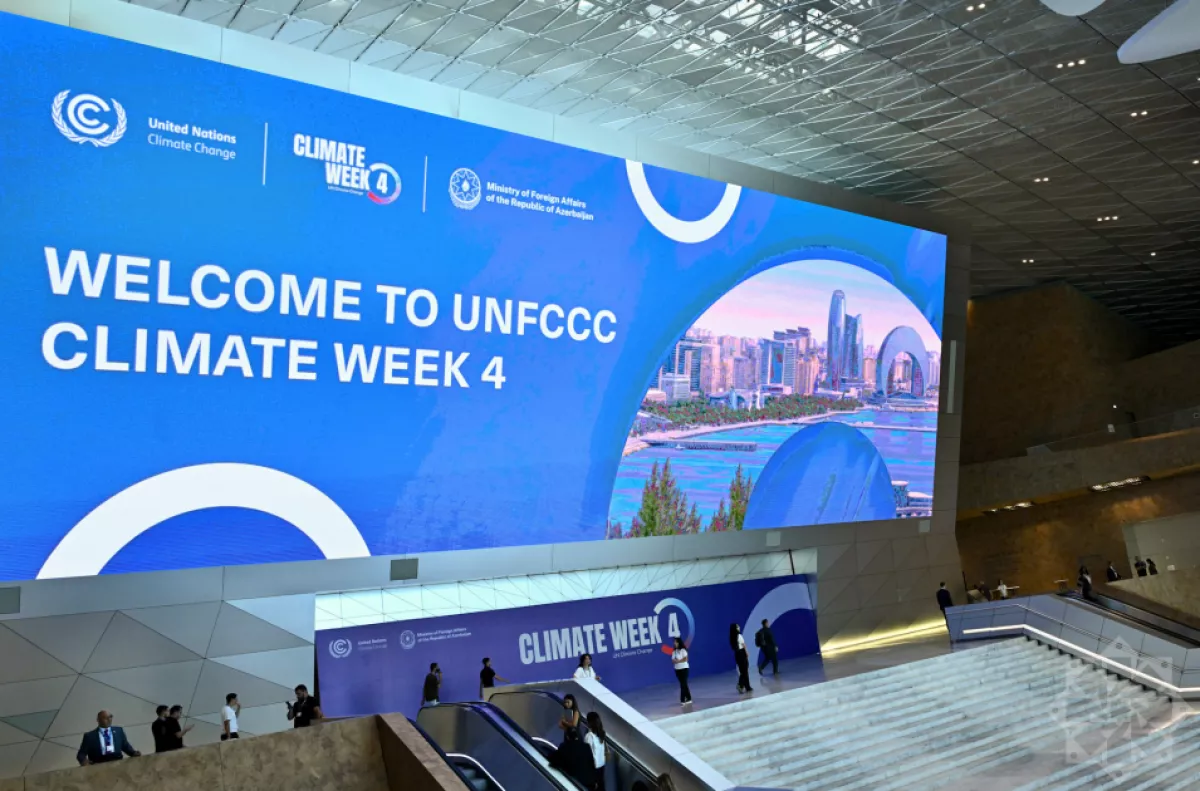
These and other key issues were discussed in Baku ahead of the fourth Climate Week of the UN Framework Convention on Climate Change (CW4), held with the direct support of Azerbaijan’s Ministry of Foreign Affairs. The event brings together representatives of government institutions from several countries, international organisations, the expert community, financial institutions, the private sector and civil society.
From September 7 to 11, participants are taking part in a series of sessions, panel discussions and other events as part of Baku Climate Action Week, focusing on climate finance, sustainable development and ways to accelerate tangible action in these areas.
From negotiations to action
For Azerbaijan’s Deputy Foreign Minister and COP29 Lead Negotiator Yalchin Rafiyev, this is among the most pressing challenges facing the global climate agenda today. He argues that the new climate cycle should move beyond lengthy negotiations over abstract commitments and place greater emphasis on implementation, with accessible and adequate financing serving as a key condition for turning climate pledges into concrete action.
“The climate process must increasingly move from endless negotiations over commitments to their actual implementation, and new nationally determined contributions (NDCs) should no longer be viewed solely as statements of ambition. NDCs should increasingly become comprehensive investment plans and a clear implementation process, linking national goals with specific policies, technologies, infrastructure and financing,” Rafiyev said.
He separately stressed that the upcoming UN COP31 conference in Türkiye should make a significant contribution to accelerating this long-awaited transition. According to him, the new climate finance goal is based on the commitment agreed in Baku at COP29 — to provide at least $300 billion annually by 2035, alongside parallel efforts to scale up financing to $1.3 trillion.
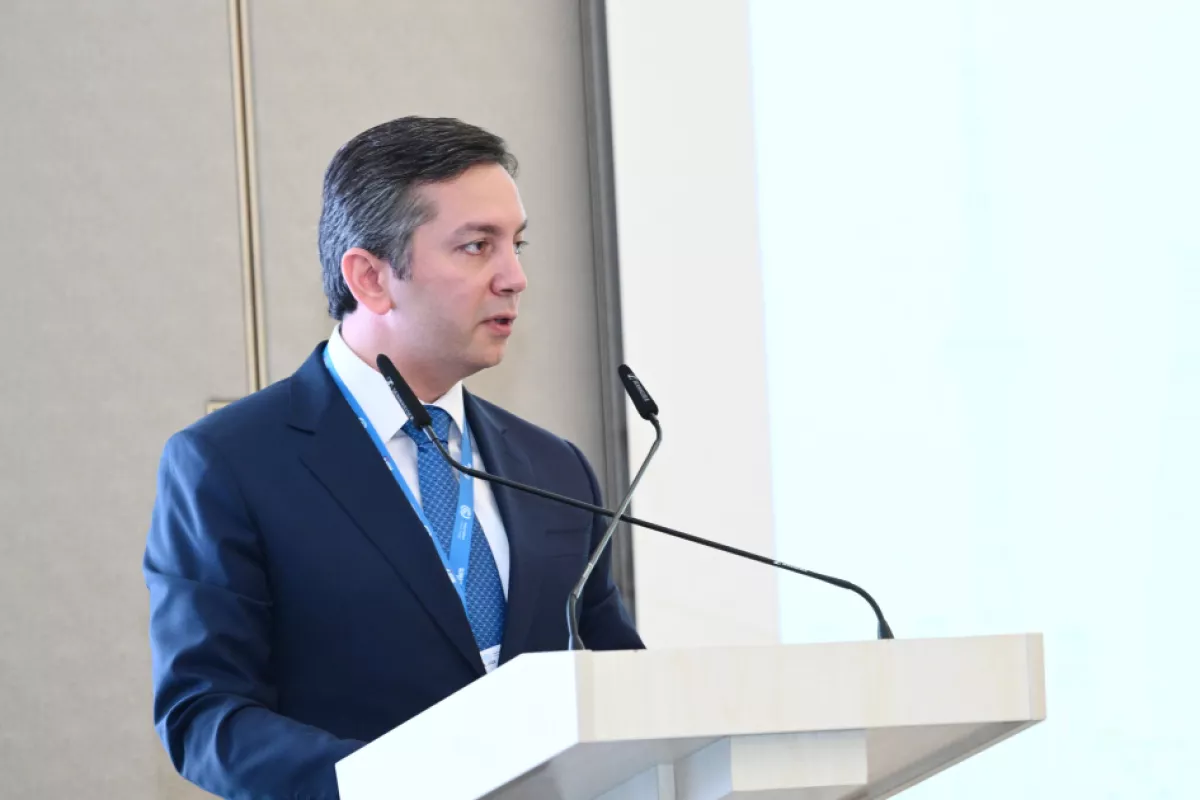
Small island developing states and African countries are in urgent need of substantial financial and technical support, and this important issue will certainly be included on the COP31 agenda, along with a dedicated support package, according to another participant in the Baku forum, Fatma Varank, COP31 Director-General and Deputy Minister of Environment, Urbanisation and Climate Change of Türkiye.
She said that a new Bridge mechanism is currently being actively developed to help developing countries effectively achieve their electrification targets in the industrial, transport and building energy-efficiency sectors. The six-country pilot project is expected to be officially presented in New York in the near future.
Among Türkiye’s other major initiatives is a gradual increase in the global level of electrification to 35% by 2035.
“Azerbaijan continues to play an extremely important role in global climate action. Following COP29, the country continued to act as a reliable partner within the Belém Process and is now successfully maintaining this fruitful cooperation ahead of COP31 in Antalya, which deserves the highest recognition,” said Patricia Scotland, a member of the UK House of Lords and former Secretary-General of the Commonwealth.
In her view, maintaining a multilateral approach and coordinated joint action by different countries is critical to effectively addressing climate challenges. She added that the ongoing event in Baku provides an exceptionally useful platform for planning concrete steps in this direction.
Renewable energy as a strategic priority
Equally important discussions at CW4 are focusing on the development of “green” energy. The International Renewable Energy Agency (IRENA), in particular, has identified tripling global renewable energy capacity by 2030 as a key priority of the energy transition.
“In 2025, a record 692 GW of renewable energy capacity was added worldwide. By the end of the year, renewables accounted for 49% of the world’s total installed power generation capacity and 85% of all newly added generation capacity. This rapid expansion is already delivering tangible practical results,” Francesco La Camera, Director-General of the International Renewable Energy Agency (IRENA), said at the opening ceremony of the forum in Baku.
According to IRENA’s official calculations, operational renewable energy capacity helped avert an enormous $480 billion in fossil fuel costs and prevented 8.4 gigatonnes of CO2 emissions in 2025 alone.
“Our shared priorities are to triple renewable energy capacity, double the annual rate of energy-efficiency improvements by 2030, and accelerate investment in electricity grids, energy storage systems and sustainable fuels,” the IRENA Director-General emphasised.
Notably, the full implementation of IRENA’s renewable energy capacity expansion programme has been incorporated directly into Azerbaijan’s strategic plans for the development of the country’s energy sector as a whole. In recent years, Azerbaijan has succeeded in attracting hundreds of millions of dollars in foreign investment for large-scale renewable energy generation projects and is now actively participating in international initiatives to develop modern infrastructure for electricity exports.
This includes successful partnerships with a significant number of specialised companies from the Gulf region, China, Türkiye and Europe. Large solar power plants (SPPs) and wind power plants (WPPs) are being built across Azerbaijan with direct financial and technical support from Saudi Arabia’s ACWA Power and the UAE’s Masdar, as well as through direct investments by BP and Nobel Energy.
By 2027, total investment in the construction of 10 solar and wind power plants is expected to exceed $2.7 billion, while the country’s power system is projected to gain an additional 2 GW of generation capacity.
Azerbaijan has designated the Karabakh and East Zangezur economic regions, along with the Nakhchivan Autonomous Republic, as priority areas for “green” energy development. For Karabakh and East Zangezur, energy specialists at Azerbaijan’s Ministry of Energy, with the support of Japan’s renowned energy consultancy TEPSCO, have already developed a comprehensive concept and detailed action plan, both of which are now being actively implemented. Over the past five years alone, small hydropower plants, including diversion and dam-based facilities, with a combined capacity of nearly 310 MW have been commissioned across the Karabakh region.
Baku accelerates renewable generation and energy corridors
“By the end of 2026, Azerbaijan expects wind power generation to increase nearly sixfold, while solar power generation is projected to rise by more than 26%. By the end of 2027, around 2 GW of solar and wind capacity is planned to be integrated into the electricity grid, enabling annual emissions to be reduced by 2.4 million tonnes,” Azerbaijan’s Energy Minister Parviz Shahbazov said in his address at the opening of the CW4 forum.
According to Shahbazov, alongside the implementation of solar and wind projects with a combined capacity of around 8 GW, Azerbaijan is systematically upgrading its electricity grid, deploying energy storage systems, enhancing the flexibility of its power system and developing new cross-border electricity interconnectors.
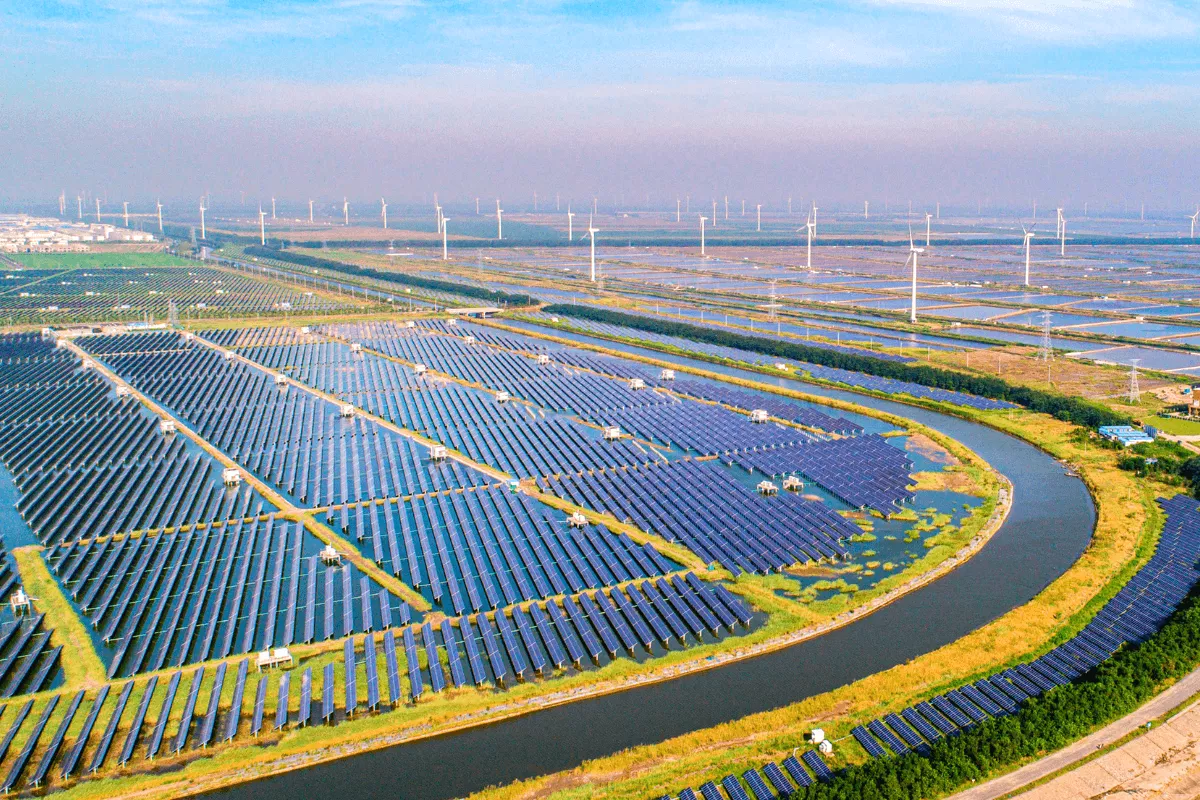
Overall, the available renewable energy sources are making a significant contribution to reducing natural gas consumption at the country’s thermal power plants. In addition, “green” energy is set to be actively used to develop energy-intensive segments of the IT sector, including ensuring the uninterrupted operation of data centres. In turn, the natural gas saved through this process is planned to be directed to external markets.
Azerbaijan is also a key initiator of a project to transmit “green” energy to energy-deficient parts of Europe. Notably, during COP29 in Baku, a landmark agreement was signed with Kazakhstan and Uzbekistan on integrating their power systems to facilitate the export of clean energy.
“Starting in 2032, Azerbaijan will fully operationalise two green energy corridors. Another strategic priority for us is to enter international markets with green energy by developing regional and interregional connectivity,” Energy Minister Shahbazov emphasised. “The feasibility study for the Caspian–Black Sea–Europe Green Energy Corridor project, involving the 3,900 MW Black Sea Energy cable, is already turning these plans into a practical reality.”
The first phase of this corridor, as well as the Central Asia–Azerbaijan Green Energy Corridor, is expected to become operational from 2032. At the same time, concrete steps are being taken to develop new green energy corridors towards Türkiye and Europe via Georgia, the Zangezur Corridor and Azerbaijan’s Nakhchivan region.







 editor@caliber.az
 +994 55 444-88-98
 Азербайджан, Баку, ул. Низами, 203, Af Business House, 5-й этаж