










Six signatures, one agenda Armenian Caucus in Congress targets Baku — and Trump
A whole package of anti-Azerbaijani amendments has been introduced in the U.S. House of Representatives to the FY2027 defence budget bill and related appropriations legislation — six separate proposals bearing the signatures of six congressmen.
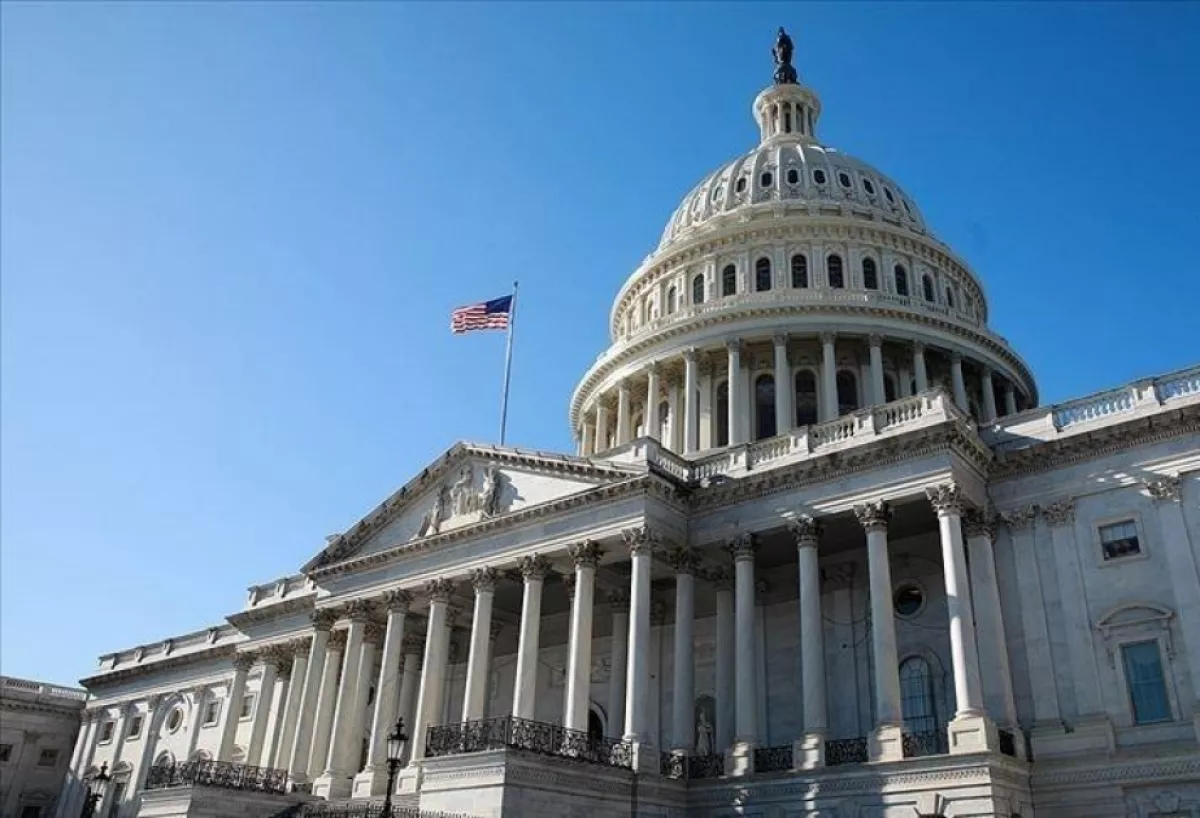
The names of their authors are all too familiar: Frank Pallone and Gus Bilirakis, co-chairs of the Congressional Armenian Caucus; its vice-chair, Brad Sherman; as well as Gabe Amo, Jim Costa, and Darrell Issa. While the amendments differ in detail, they converge on the same core demands: the “release of Armenian hostages and prisoners of war illegally held by Azerbaijan”, the withdrawal of Azerbaijani forces from what they describe as “sovereign Armenian territory”, recognition of the “right of return for Armenians displaced from Karabakh”, “guarantees for Armenian heritage”, restrictions on the U.S. president’s authority to waive Section 907, and, in Issa’s case, the establishment of a sanctions mechanism targeting Azerbaijani officials.
It is a catalogue of demands being imposed on the victor on behalf of the defeated party — and in a form that suggests not an independent legislative initiative, but the execution of a political agenda drafted elsewhere.
All three major Armenian lobbying organisations in the United States — the Armenian National Committee of America, the Armenian Assembly, and the Armenian Council — issued near-simultaneous statements welcoming the amendments and personally thanking their sponsors for their leadership in defending Armenian interests. These messages read less like expressions of support and more like reports on a completed assignment: here are our allies in Congress, and here are the measures they have introduced on our behalf. When a lobbying organisation publicly praises a congressman for a particular amendment, it effectively reveals where the initiative originated. In this case, the six lawmakers appear not as independent authors of a political position, but as its executors — a fact the lobbyists themselves make little effort to conceal, because within their own framework such influence is viewed as an achievement.
For added emotional impact, the lobby groups have also chosen what they regard as a symbolic date — the approaching 1,000th day of detention of former leaders of the separatist regime and other separatists. In their narrative, it is framed as “1,000 days of suffering for the innocent.” Left out of the picture is the fact that these individuals were convicted by Azerbaijani courts on specific criminal charges, including war crimes committed against civilians. The substitution is simple yet effective: judicial proceedings against separatists are repackaged as a humanitarian drama about hostages, while the round-number anniversary provides a convenient media hook. This is not an exercise in presenting facts; it is an exercise in shaping symbols, aimed at an audience unlikely to examine the details.
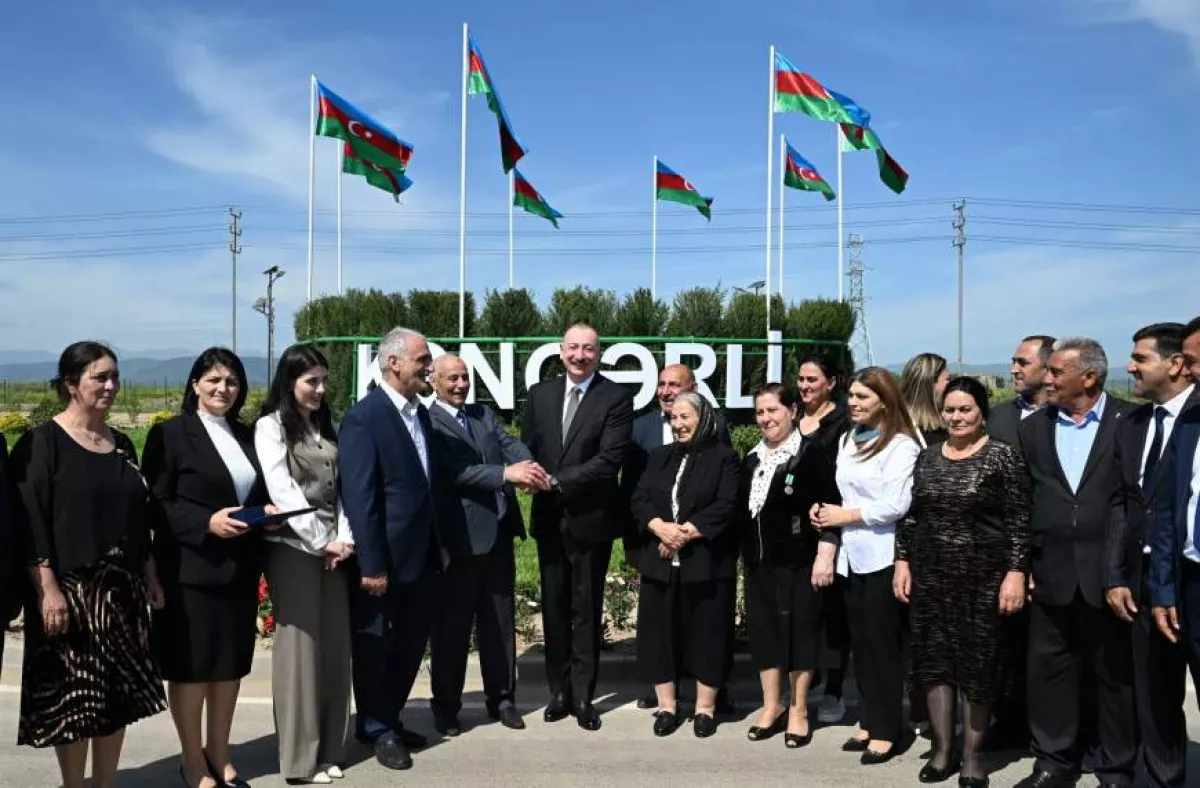
A closer look at the amendments reveals that their provisions describe not reality, but its inverted reflection. The demand for the withdrawal of Azerbaijani troops from “sovereign Armenian territory” is directed at a country whose forces are deployed within its own internationally recognised borders. The call to recognise a “right of return to Karabakh” is addressed to Baku at a time when Azerbaijan itself is implementing the “Great Return” programme for its population that was forcibly displaced from the region. The demand to guarantee the protection of Armenian heritage is levelled against a state that is restoring monuments in Karabakh after decades during which many sites suffered deliberate destruction under occupation. Each provision rests on a disputed premise, and the entire structure is built upon that foundation — which is precisely why it struggles to withstand scrutiny when confronted with the facts.
Yet the most significant aspect of this story is not the questionable logic of the individual demands, but the real target of the entire package. Formally, the amendments are directed against Azerbaijan; in practice, they challenge the foreign-policy course of the U.S. administration itself. President Trump has presented peace in the South Caucasus as one of the major achievements of his foreign policy. On August 8, 2025, in Washington, in the presence of the U.S. President, the President of Azerbaijan, and the Prime Minister of Armenia, the “Agreement on the Establishment of Peace and Interstate Relations between the Republic of Azerbaijan and the Republic of Armenia” was initialled. On the same day, Donald Trump also signed a memorandum suspending the application of Section 907 of the Freedom Support Act.
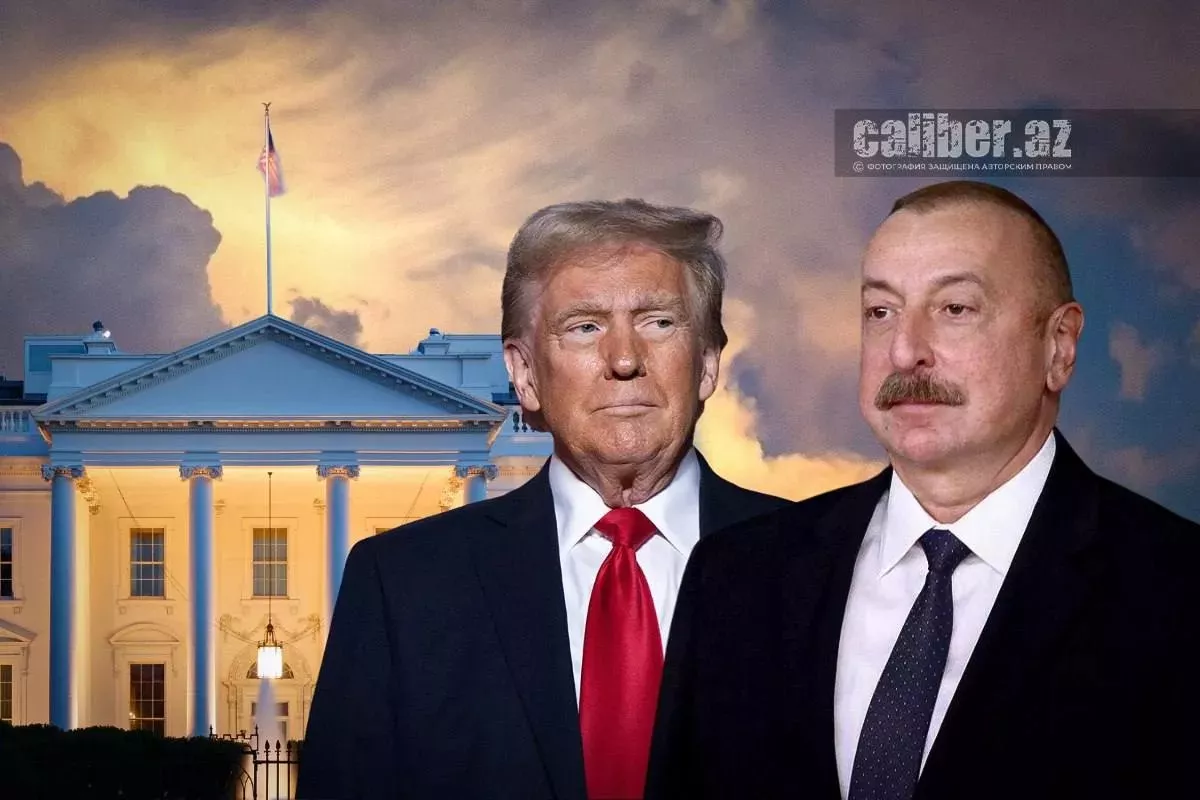
In effect, the calls to reinstate the full force of Section 907 and surround Azerbaijan with new political conditions amount to a direct repudiation of the President’s decision. The group of congressmen behind these amendments — six lawmakers long associated with the Armenian lobby’s agenda — is, in essence, mounting a challenge to the White House, seeking to use Congress to reverse a policy already determined at the highest level. This contradiction is significant both in itself and as a broader indicator. Several of the amendment sponsors have previously criticised the Trump administration on a range of issues, making their current initiative part of a wider pattern of political opposition.
In the case of Azerbaijan, however, this challenge takes on a particularly revealing character, because the interests of the lobby come into direct conflict with what many in Washington regard as core U.S. strategic interests. The United States has an interest in a stable South Caucasus. It values Azerbaijan as an energy partner and as a regional counterweight to Russian and Iranian influence. The proposed amendments pull in the opposite direction: they risk complicating relations with a key partner, creating additional obstacles to the peace process, and opening space for precisely those actors whose influence Washington has long sought to limit in the region. In pursuing a symbolic political victory, the lobby is, in effect, working against the longer-term strategic objectives of the United States itself.
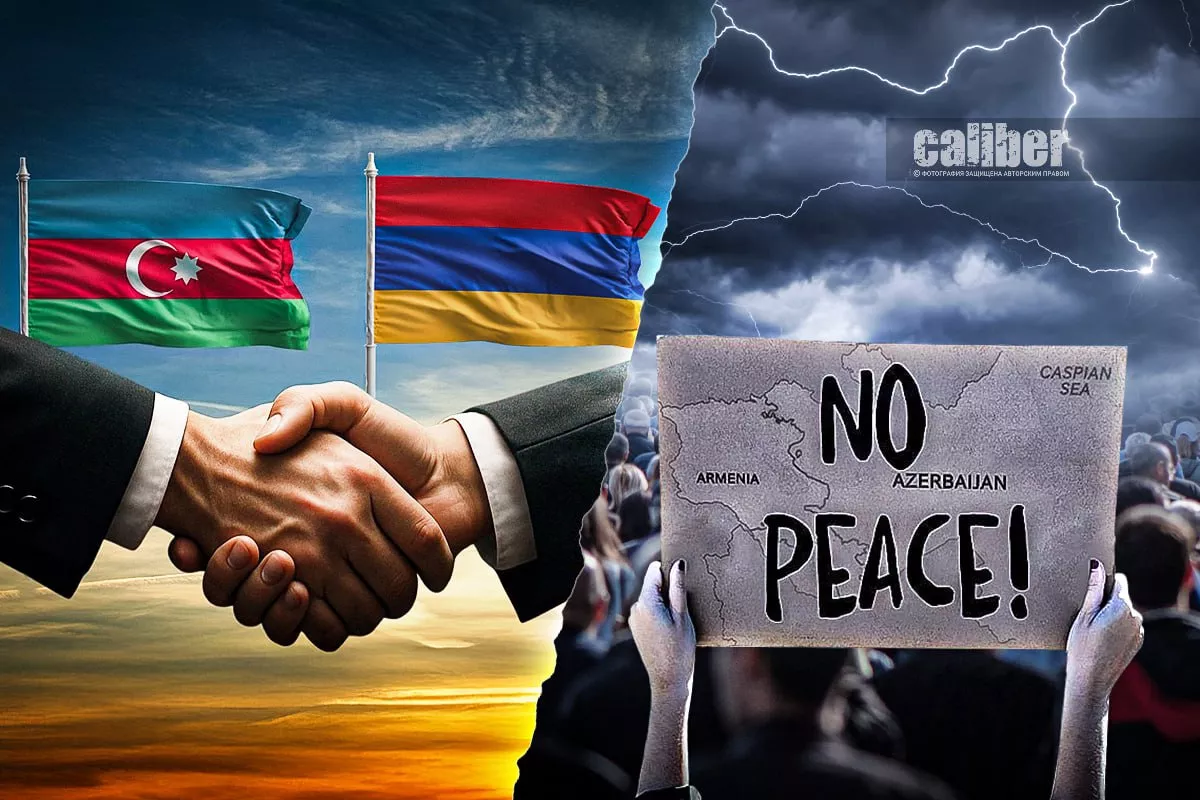
The paradox is that these initiatives are also damaging to Armenia itself, on whose behalf they are formally advanced. By sustaining expectations within Armenian society that are detached from realistic compromise, the lobby helps entrench a narrative of unyielding confrontation at a moment when Yerevan, through direct dialogue with Baku, is moving towards normalisation. Each such amendment sends a signal to Armenia’s revanchist fringe that the struggle continues and that there are political forces in Washington prepared to endorse it. In the long term, this is not support for Armenia, but a mechanism that locks it into the position of a perpetually aggrieved party, unable to build normal relations with its neighbours. Friends of this kind can prove more costly than declared adversaries.
The practical outcome of all six amendments is largely predictable. Some may be filtered out by the House Rules Committee before reaching a vote; those that do advance are likely to face the position of the White House, making it highly unlikely that any of them will survive the full legislative process or materially constrain the administration. Their true purpose lies not in legislation, but in signalling: they function as a ritual performed annually by lobbying structures and their allied lawmakers to demonstrate activity and deliver proof of engagement to their sponsors.
A year ago there was a similar package of amendments, the year before that — another one, and the same scenario keeps repeating with no visible outcome. The only thing that changes is that each year the gap between these ritualised gestures and the actual realities in the South Caucasus becomes more and more evident. Baku has restored its territorial integrity, initialled a peace agreement, and shifted relations with Washington onto a pragmatic presidential track — while a group of congressmen continues to introduce amendments about an “occupation” that no longer exists, and about “return” to a place to which entirely different people are already returning.







 editor@caliber.az
 +994 55 444-88-98
 Азербайджан, Баку, ул. Низами, 203, Af Business House, 5-й этаж