










Switzerland to open secret files on Nazi war criminal Mengele PHOTO
Switzerland’s Federal Intelligence Service has agreed to open long-sealed files related to Nazi war criminal Josef Mengele, following years of refusals, though no timeline for their release has been announced.
Mengele, an SS doctor at Auschwitz known as the “Angel of Death,” fled Europe after World War Two using Red Cross travel documents obtained under a false identity. He later lived in South America, where he died in 1979 without ever being arrested or tried.
Speculation about his possible presence in Switzerland has persisted for decades. Historian Regula Bochsler uncovered evidence suggesting Mengele may have planned a return to Europe after an international arrest warrant was issued in 1959. Austrian intelligence warned Swiss authorities in 1961 that he could be travelling under an assumed name and might be on Swiss territory. Around the same time, Mengele’s wife rented an apartment in Zurich.
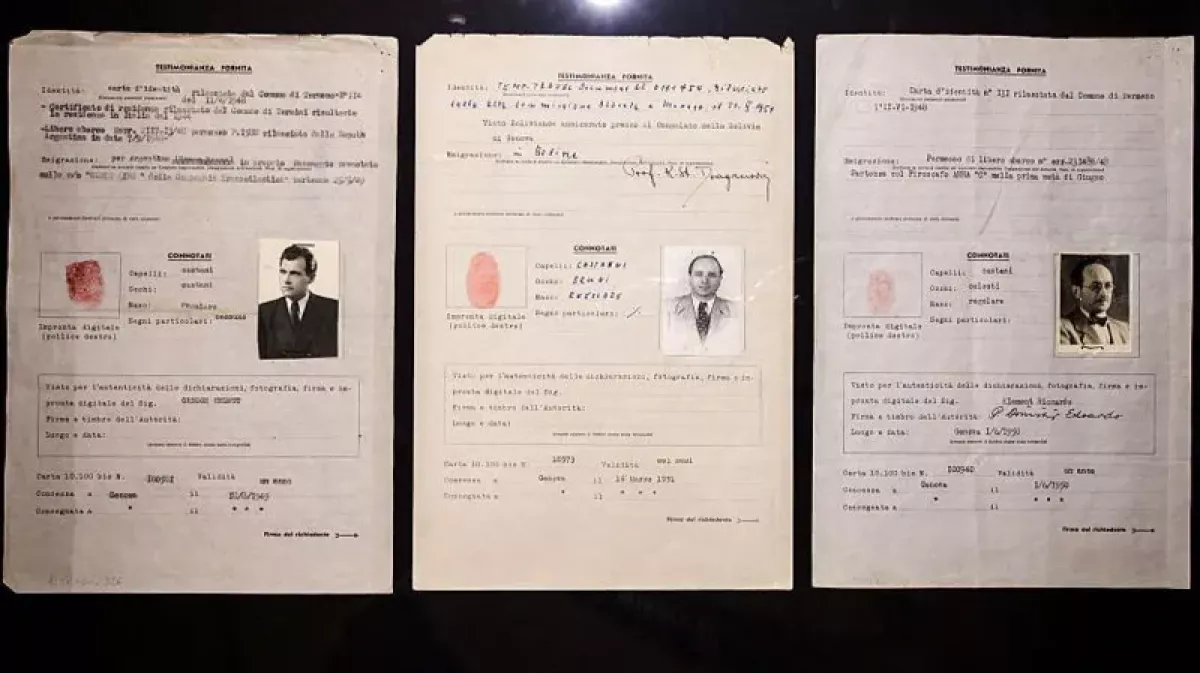
The International Committee of the Red Cross office in Genoa issued these passports in false names for Nazi war criminals (from L to R) Josef Mengele, Klaus Barbie and Adolf Eichmann
“There seems to be evidence Mengele was planning a trip to Europe in 1959,” Bochsler said. “Why did Mrs Mengele rent an apartment in Zurich?”
Zurich police placed the apartment under surveillance, noting Mrs Mengele accompanied by an unidentified man, though his identity was never confirmed.
Efforts to access federal files were repeatedly denied, with authorities sealing them until 2071 on national security grounds. Historian Gérard Wettstein challenged the decision in court, calling it excessive secrecy. “As long as they are closed until 2071, it fuels conspiracy, everyone says ‘they must have something to hide’,” he said.
Following the legal challenge, the intelligence service said access would now be granted “subject to conditions and requirements yet to be defined.”
Some historians doubt the files will resolve the mystery. Sacha Zala said he is “absolutely sure there is nothing relevant about Mengele,” suggesting the secrecy may instead relate to foreign intelligence contacts. Others argue the case highlights broader tensions between transparency and national security in Switzerland.
“Maybe we will never get to the real truth,” Wettstein said. “We will never know if he was here or not… but maybe we can have at least a clearer idea.”
By Tamilla Hasanova







 editor@caliber.az
 +994 55 444-88-98
 Азербайджан, Баку, ул. Низами, 203, Af Business House, 5-й этаж