










Azerbaijan: The rising keystone of US Eurasian strategy Article by Forbes
The American magazine Forbes has published an article by Kamran Bokhari examining Azerbaijan’s role in the new U.S. National Security Strategy (NSS). Caliber.Az presents its readers with the most telling parts of the piece.
Editor’s note: Kamran Bokhari is a Senior Director at the New Lines Institute.
"The 2025 National Security Strategy clearly articulates a new U.S. geostrategic paradigm centred on both 'burden-sharing and burden-shifting'” with allies and partners in regions whose geopolitics directly intersect with American strategic interests.
The South Caucasus is distinctive in this regard, functioning as a geopolitical fulcrum at the intersection of multiple, and in some cases overlapping, global strategic theatres. Within this context, Azerbaijan has emerged as a rising middle power positioned to assume greater responsibility for security across its strategic environment.
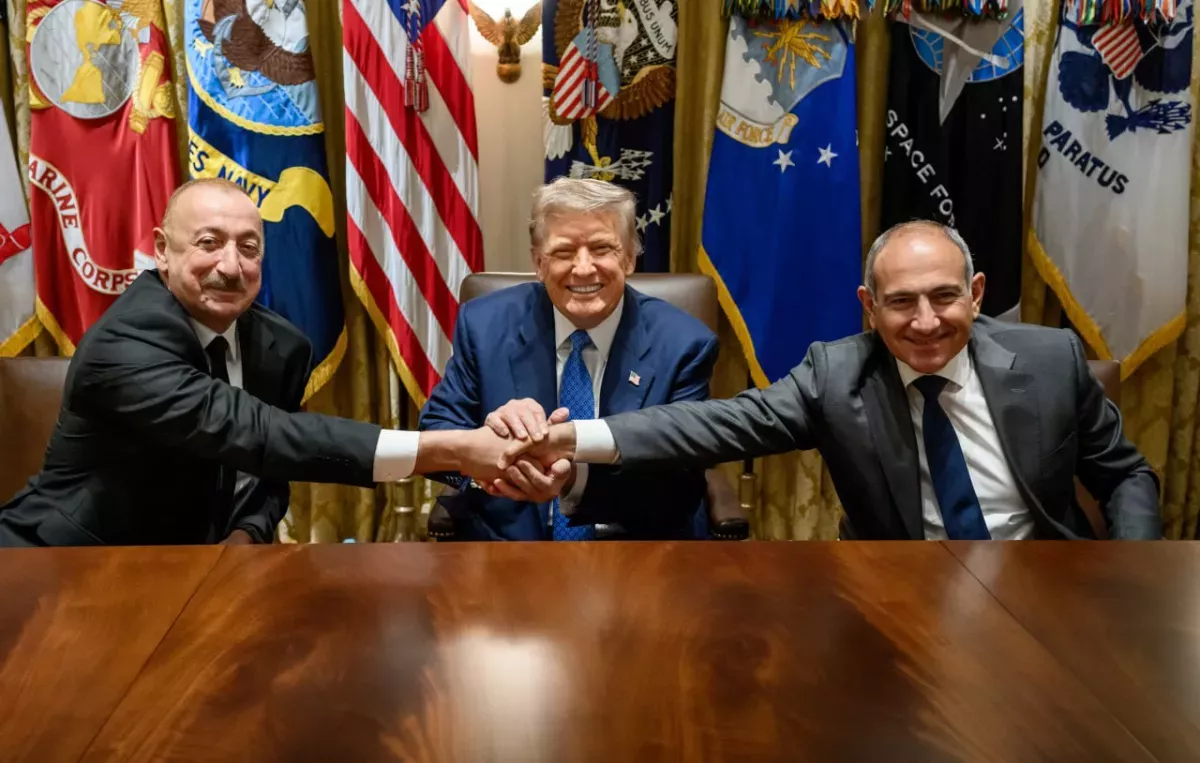
South Caucasus is also rich in strategic minerals, a priority for the Trump Administration. The White House would therefore be well advised to build upon the Trump Route for International Peace and Prosperity (TRIPP), reaffirming and operationalising the commitment it made in August.
Azerbaijan’s Minister of Energy Parviz Shahbazov visited Washington on December 12–13, where he met with members of the U.S. House of Representatives and representatives of the U.S. Chamber of Commerce, underscoring the expanding economic and political dimensions of bilateral engagement. U.S. Representative Anna Paulina Luna (R-FL) introduced H.R. 6534 on December 9, legislation to repeal Section 907 of the 1992 Freedom Support Act and remove long-standing statutory restrictions on direct U.S. government assistance to Azerbaijan. Earlier in the month, Azerbaijan’s Prosecutor General, Kamran Aliyev, led an official delegation to Washington, holding meetings with senior U.S. officials across the Justice Department, the FBI, the State Department, and the Office of the Attorney General, signalling deepening institutional dialogue beyond the defence and energy spheres.
After eight decades of an expansive grand strategy that positioned the United States as a net security provider nearly everywhere in the world, the 2025 National Security Strategy advances the argument that not all regions carry equal strategic weight for American interests. From this perspective, a calibrated retrenchment from the Eastern Hemisphere, Eurasia in particular, is a strategically rational adjustment rather than an abrupt disengagement. In this framework, the United States retains a supportive and enabling role, backing allied leadership rather than serving as the default first responder.
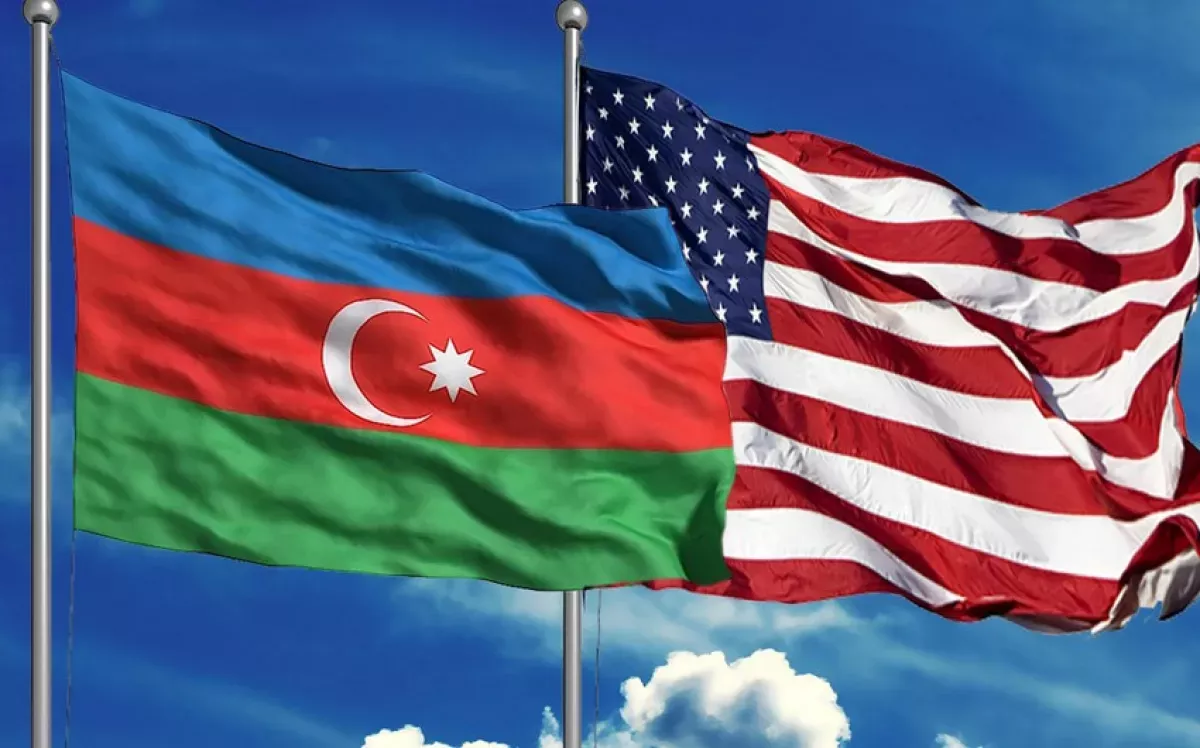
What this recalibration does is afford the United States the bandwidth needed to act strategically, where it can play a role that others can’t. The South Caucasus is a critical node in Eurasia that warrants greater attention from Washington. In this region, which until very recently was part of the Kremlin’s sphere of influence, Azerbaijan is a dominant player.
As a transcontinental state bridging Western Asia and Eastern Europe, the country occupies a strategic position across multiple regions highlighted in the National Security Strategy released by the Trump White House on December 5. It is uniquely positioned as the only country with substantial borders with both Russia and Iran, placing it at the intersection of two of Washington’s principal geopolitical challengers.
Our most formidable challenger, China, is in fact strategically eyeing Azerbaijan. For Beijing, Baku is central to the Belt and Road Initiative, serving as a stable trans-Caspian transit hub that links the world’s second-largest economy to Europe while reducing reliance on vulnerable maritime chokepoints. It was thus good to see the Trump Administration’s decision to advance the TRIPP framework. This move reflects an effort to leverage Azerbaijan’s geography to establish a durable U.S. strategic foothold in the Eurasian interior.
Checking China in practice requires a deeper U.S. push into Central Asia, and Azerbaijan has emerged as a pivotal springboard for positioning Washington in a region that sits at the intersection of all three of America’s principal adversaries. This logic aligns squarely with the 2025 National Security Strategy’s emphasis on preventing the rise of any power capable of achieving regional or global dominance.
The significance of Azerbaijan’s role was institutionalized at the Seventh Consultative Meeting of Central Asian Heads of State in Tashkent on November 16, 2025, when leaders invited Baku to join as a full member, transforming the C5 into the C6. This move formally acknowledged the emergence of a unified trans-Caspian economic and geopolitical space — one that enhances regional connectivity and strategic optionality.
Azerbaijan serves as a key access point for the critical minerals of Kazakhstan and Uzbekistan. Its pipelines, ports, and land corridors make it a linchpin for resilient supply chains, directly supporting the 2025 National Security Strategy’s call to “maintain secure and reliable supply chains and access to critical materials.” Closer relations with Azerbaijan can ensure uninterrupted transport of energy and minerals essential for both industry and defense.

Linking Azerbaijan to Western markets strengthens Europe’s access to energy and critical minerals. By enhancing transport corridors through the South Caucasus, the U.S. can diversify supply chains and mitigate the risk of disruption from Russian actions. Azerbaijan’s role as a transit hub for Caspian resources allows the U.S. to deepen diplomatic engagement in Eurasia while fostering regional stability.
By deepening security and economic ties with Azerbaijan, the U.S. can limit Iran’s ability to project power into the South Caucasus and the broader region, while creating conditions conducive to expanding “the Abraham Accords to more nations in the region.
Azerbaijan is well-positioned to assume primary responsibility for security in the South Caucasus.
It can help Washington manage key adversaries, provided the U.S empowers Baku and consolidates its nascent peace process with Armenia. Ensuring the repeal of the obsolete Section 907 will be a key pre-requisite for this partnership. By supporting Baku through commercial incentives, technology sharing, and defence cooperation, the U.S. can strengthen regional stability, expand economic connectivity, and mitigate potential conflict,” Bokhari writes.







 editor@caliber.az
 +994 55 444-88-98
 Азербайджан, Баку, ул. Низами, 203, Af Business House, 5-й этаж