










Baku hosts presentation on Armenian diaspora’s role in Middle East
A presentation of the book “The Armenian Diaspora in the Middle East: Historical, Religious, Political, Cultural, Media, Educational, and Social Activities” was held in Baku, highlighting the multifaceted influence of Armenian communities across the region.
Authored by Lala Khalilzada, an expert at the Centre for Analysis of International Relations (AIR Centre), the study examines the activities of the Armenian diaspora in five Middle Eastern countries: Lebanon, Palestine, Syria, Egypt, and Jordan, providing a comprehensive analysis of their historical, political, and cultural engagement, Caliber.Az reports per local media.
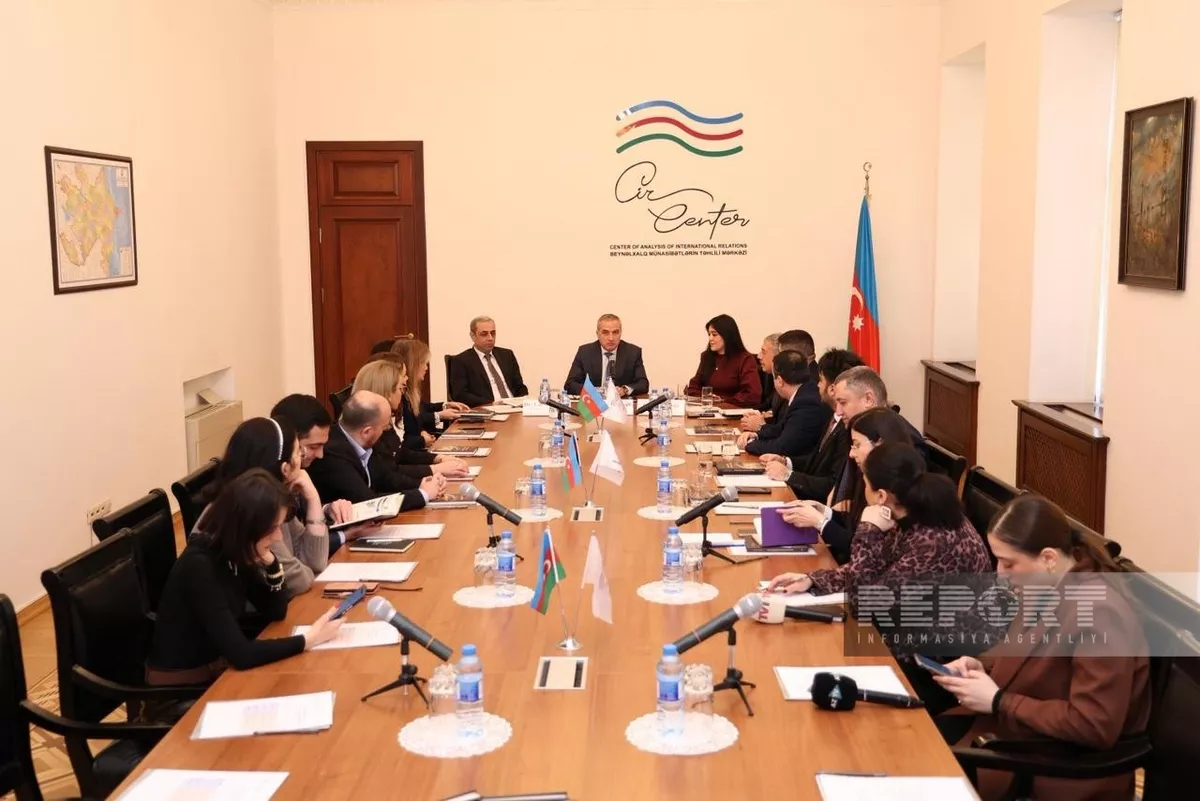
Farid Shafiyev, Chairman of the AIR Centre, emphasized Azerbaijan’s pursuit of peace with Armenia while noting the significant role of the diaspora in Armenian domestic politics. He stated:
"Upcoming elections, a potential referendum, and the border delimitation process are key issues. In Armenia, some forces oppose the policies of Prime Minister Nikol Pashinyan, and the diaspora’s role in the country’s internal political processes is extremely important."
Javid Valiyev, an AIR Centre board member, highlighted the diaspora’s historical use by third-party actors. He explained that during the Cold War, Armenian communities strengthened their positions through interactions with both the United States and the USSR.
"When the interests of third parties waned, the diaspora faced regional realities alone. This is why the diaspora opposes the normalization of Azerbaijani-Armenian relations," Valiyev said.
The author of the book emphasized that the research drew on sources in Arabic, Turkish, English, Russian, Armenian, German, and French, allowing for a nuanced understanding of the diaspora’s influence. The study also examines recent developments in the Middle East and their impact on Armenian communities in the region.
A major focus of the book is the media activity of the Armenian diaspora. The study analyzes books, journals, and newspapers published in Arabic-speaking countries, as well as information campaigns conducted during the Karabakh War aimed at Arab audiences, including the dissemination of materials on the so-called “Armenian genocide.”
By Vafa Guliyeva







 editor@caliber.az
 +994 55 444-88-98
 Азербайджан, Баку, ул. Низами, 203, Af Business House, 5-й этаж