










Baku’s architectural character: The House of Vahab Manafov A historical overview on Caliber.Az
The architectural appearance of Baku has taken shape over many centuries, incorporating buildings from different eras—from medieval structures to residential houses of the early twentieth century and contemporary developments. This diversity of historical layers has created a unique urban environment in which each building reflects the spirit of its time and the artistic preferences of its era.
A special place within this multi-layered architectural landscape is occupied by Icherisheher—the city’s historic heart, renowned for its distinctive architecture and unique atmosphere. It is here that the continuity of architectural forms and traditions can be observed most clearly. One characteristic example of residential architecture of its time is the House of Vahab Manafov, which represents an important part of Baku’s architectural heritage.
The House of Vahab Manafov, located among the narrow lanes of Icherisheher, is a characteristic example of late nineteenth–early twentieth-century residential architecture, combining elements of local building traditions with European decorative styles. Its façade is constructed from carefully dressed Baku limestone, renowned for its plasticity and durability. The stone masonry emphasises the monumentality of the structure, while decorative details lend it artistic expressiveness.
The central section of the façade is accentuated by a massive wooden door adorned with deep carved ornamentation. The ornamental system is based on repeated geometrised vegetal motifs, reflecting the influence of Eastern decorative traditions. Above the second-floor windows, an expressive bas-relief depicts two lions facing one another, separated by a stylised floral element.
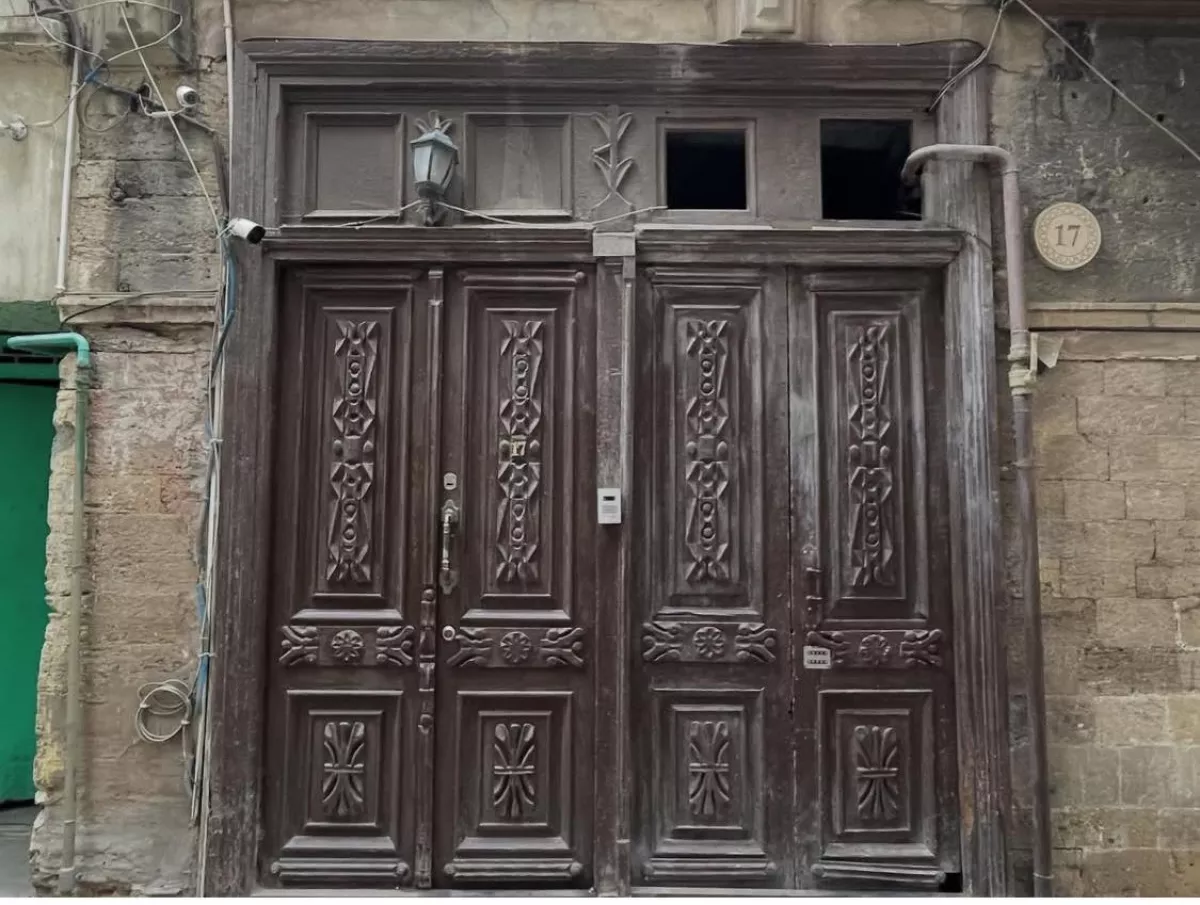
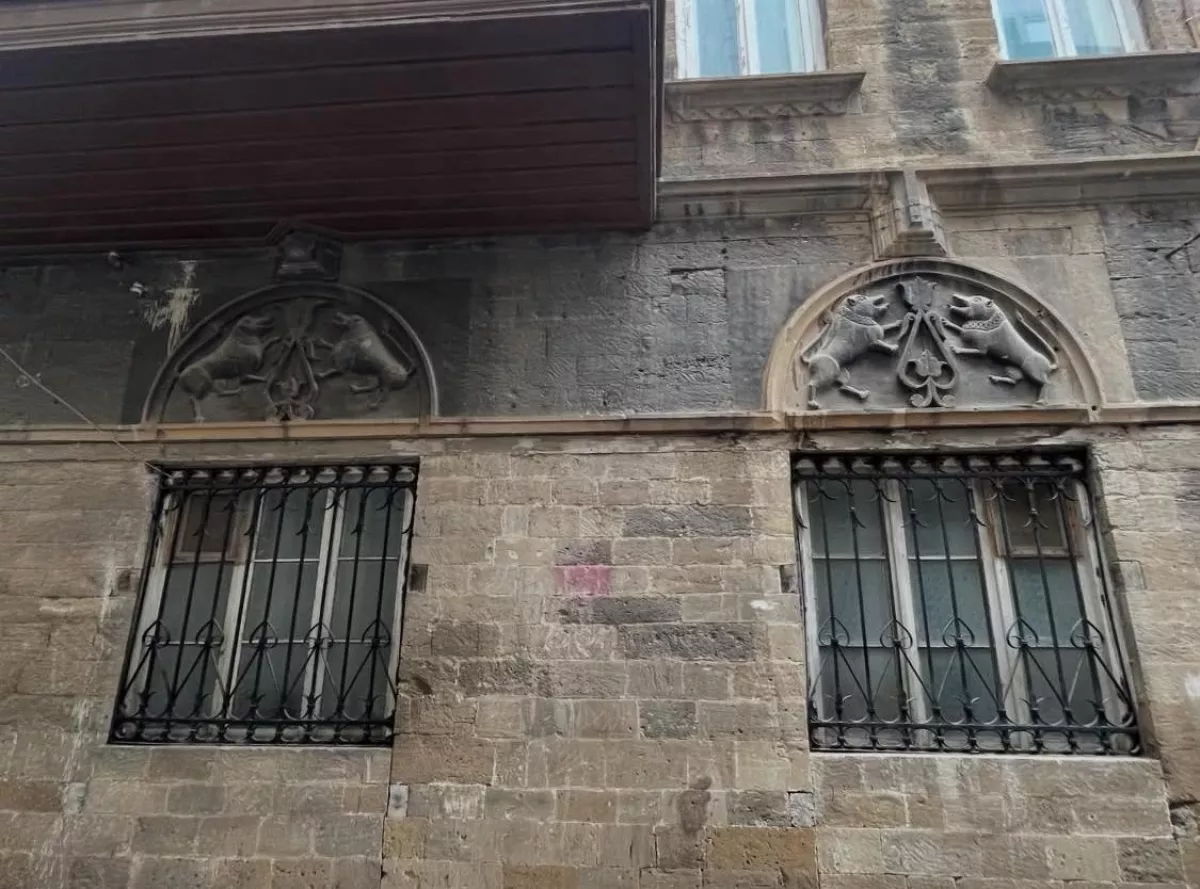
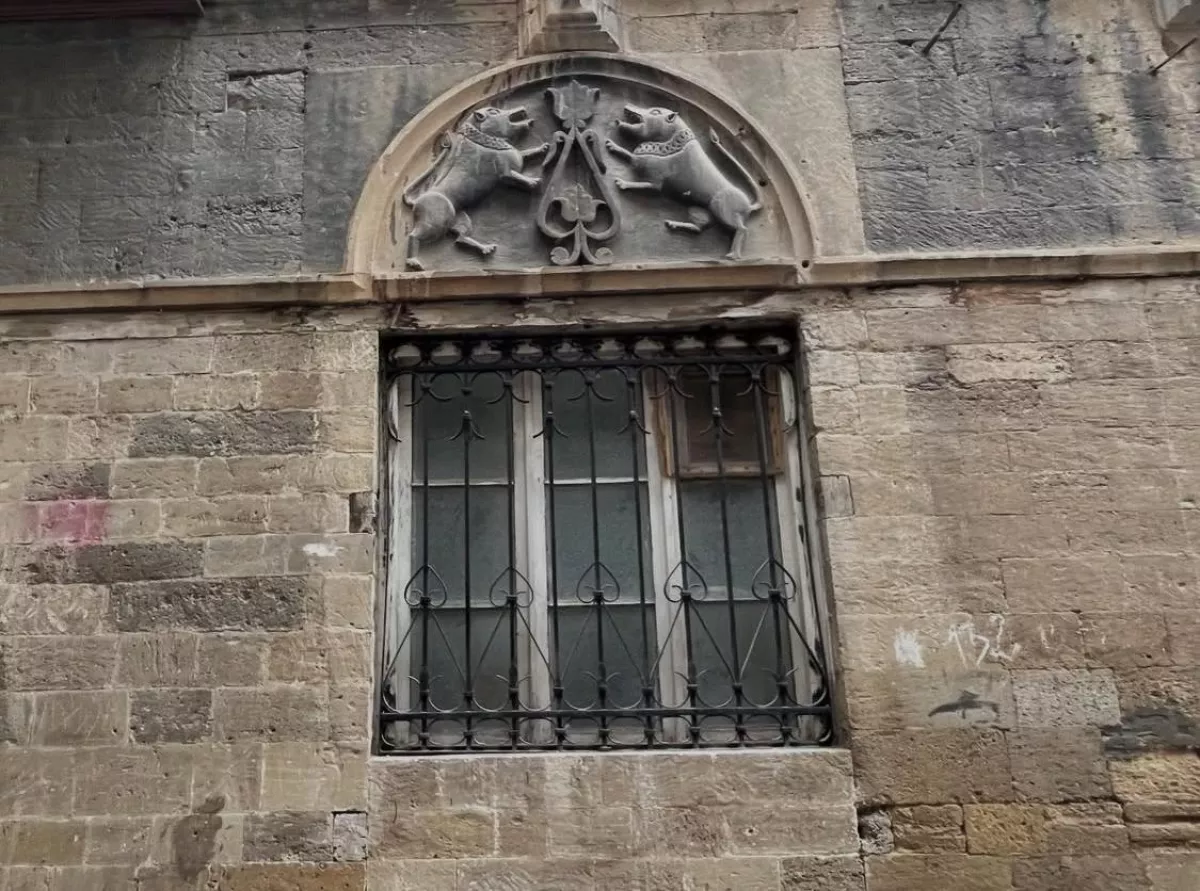
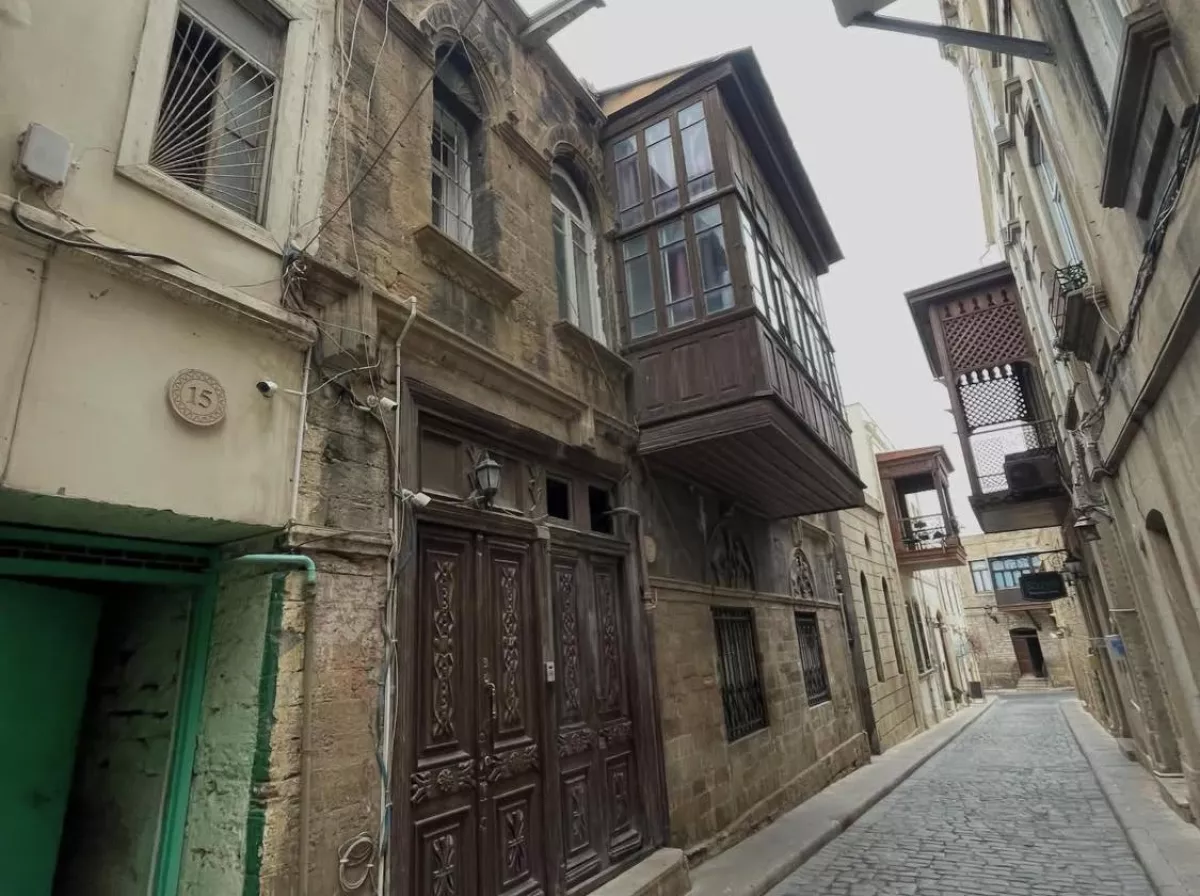
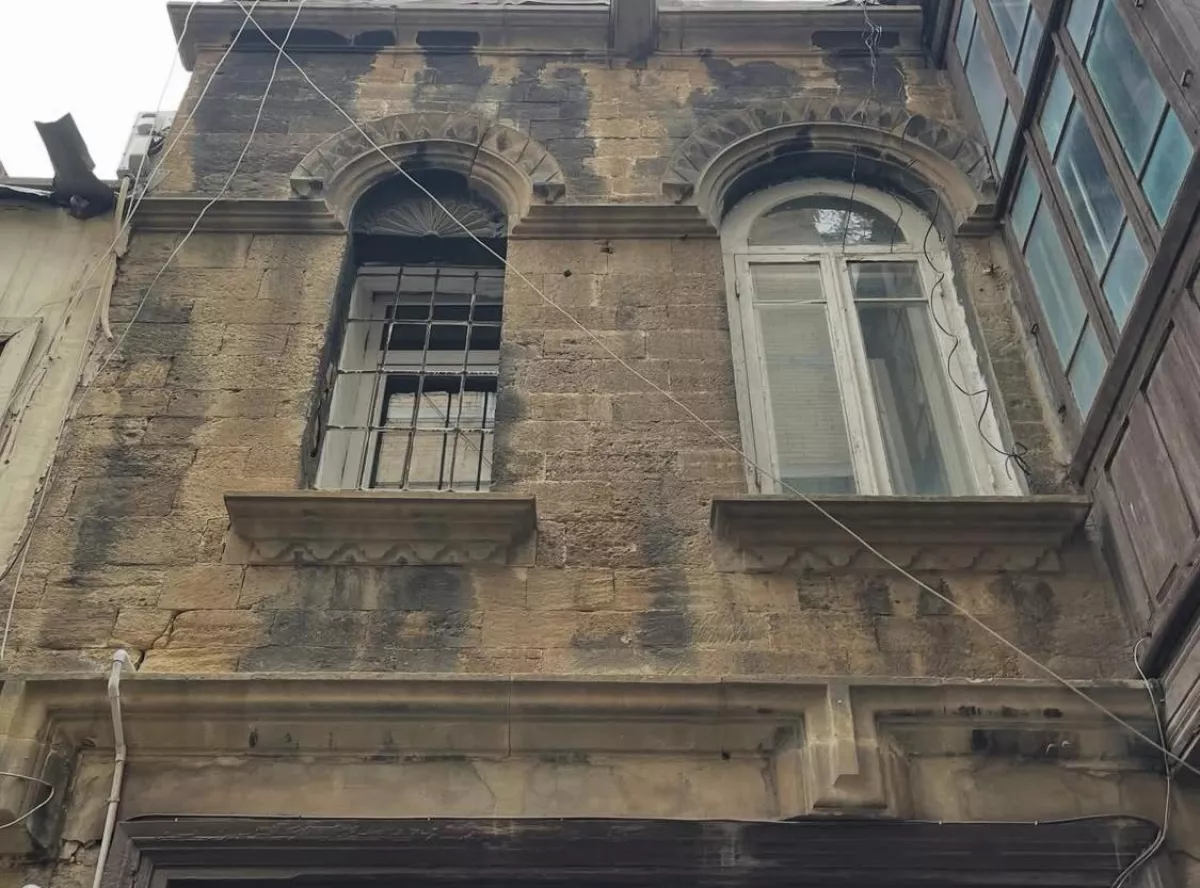
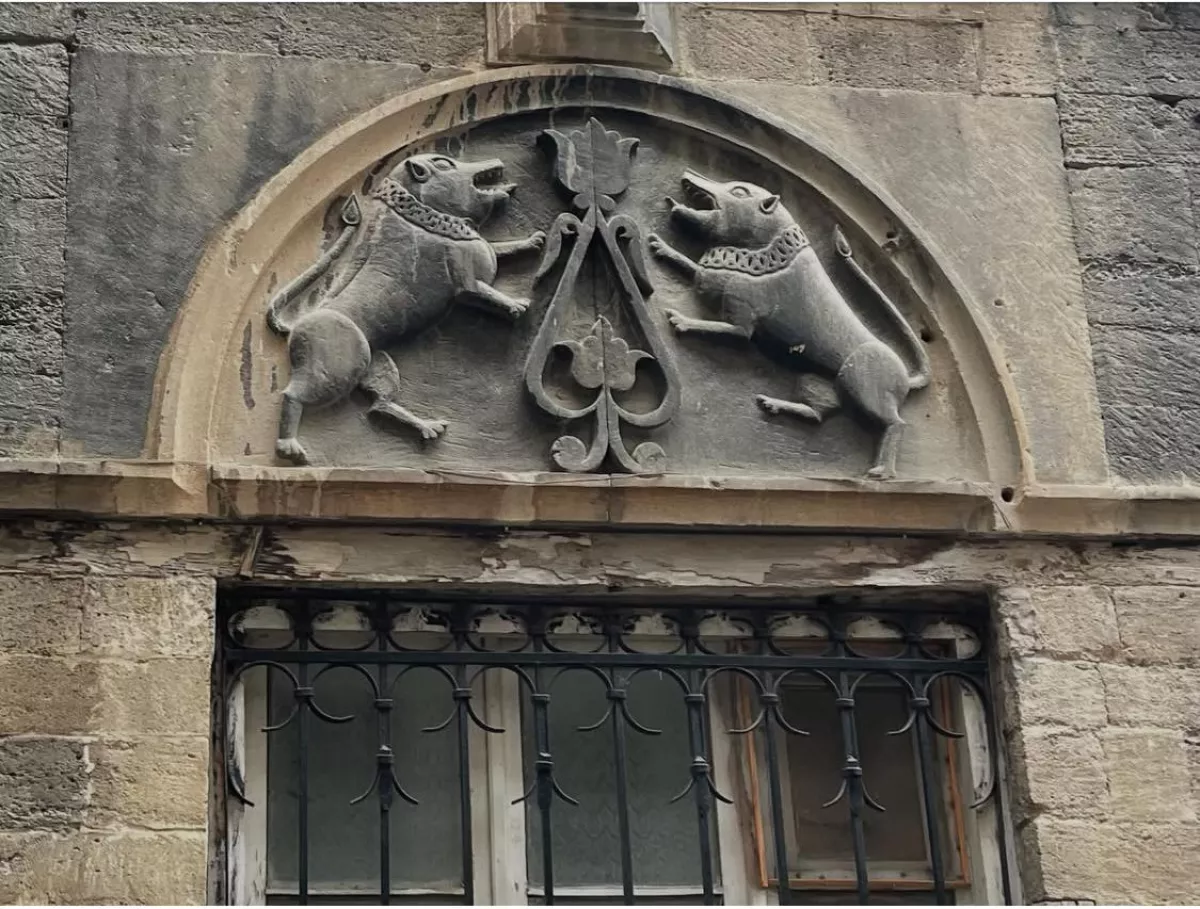
Such iconography is rare in Baku’s urban architecture and is likely to carry symbolic meaning: lions traditionally symbolised the strength of a family, the protection of the home, or indicated the social status of its owner. An important element of the façade’s sculptural composition is the projecting balcony volumes, made of wood and executed in the technique of glazed shushaband. The overall composition of the house demonstrates a synthesis of local traditions and borrowed motifs, reflecting the era of the oil boom, when a new aesthetic of the urban environment was taking shape in Baku.
The House of Vahab Manafov is a vivid example of how architecture serves as a bearer of cultural memory. It clearly illustrates how local construction techniques harmoniously combine with decorative borrowings from European styles, creating a unique artistic synthesis. Such monuments make it possible to trace the historical and cultural transformations of the city, capturing the spirit of the oil-boom era and the ambitions of the urban elite. They shape a holistic image of historic Baku, creating the distinctive atmosphere of the old city, where every building tells its own story. These houses become not merely architectural objects, but important symbols of the capital’s cultural identity and historical continuity.
By Vahid Shukyurov, exclusively for Caliber.Az







 editor@caliber.az
 +994 55 444-88-98
 Азербайджан, Баку, ул. Низами, 203, Af Business House, 5-й этаж