










Baku – Washington’s quiet leverage in Middle East Article by The National Interest
The National Interest has published an article on Azerbaijan's role in the United States’ Middle East policy. Caliber.Az offers its readers some excerpts from the piece.
Editor’s note: The article is written by Kamran Bokhari, senior director at the New Lines Institute for Strategy & Policy in Washington.
“One month into President Trump’s second term, I argued in “The US Geostrategy and the Old World Order” that the United States had begun a historic recalibration of its foreign-policy doctrine. I noted that shifts of this magnitude rarely proceed smoothly, producing a turbulent transition as institutions, alliances, and assumptions resist change. While instability is inherent to systemic realignment, addressing new threats with outdated frameworks is increasingly untenable and risky.
America’s approach to Middle East diplomacy
For the United States to pursue a geostrategy of global management through burden-sharing and burden-shifting, Washington must first resolve legacy conflicts that limit flexibility. The Middle East remains the most complex, with the Trump Administration focusing on the Board of Peace approach centered on Gaza.
The initiative aims to end a regional war and build a coalition to assume long-term security, stabilization, and reconstruction responsibilities.
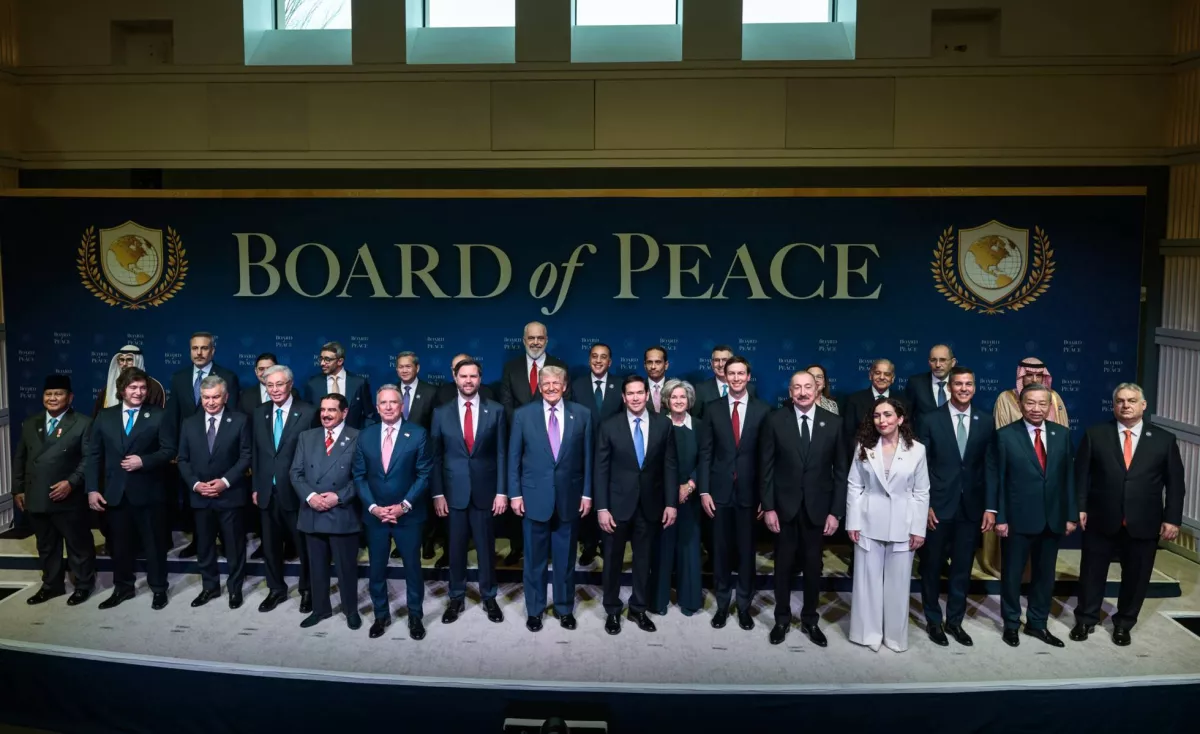
Yet developments within and about Iran could complicate the plan, potentially requiring support from states beyond the region—most notably Azerbaijan.
Operationalizing this approach requires careful diplomacy with key regional players, particularly Türkiye, Saudi Arabia, and Israel, as well as the United Arab Emirates, Qatar, Egypt, and Jordan. Resolving conflicts among them helps align allies capable of assuming most security and stabilization responsibilities.
Türkiye and Saudi Arabia are central to this approach, ideally coordinated with Israel. Yet diverging Turkish and Israeli interests, Saudi Arabia’s retreat from normalization efforts with Israel, and Saudi-UAE divergence complicate a coherent regional strategy. The regional calculus is further complicated by Iran’s geopolitical fragility.
Reconciling Türkiye and Saudi Arabia with Israel while managing tensions with Iran will require skillful statecraft from the Trump administration. Azerbaijan is well-positioned to assist due to its unique diplomatic ties. It maintains close relations with Türkiye, the UAE, and Israel, while also engaging Saudi Arabia. Washington can leverage Baku as a key intermediary to coordinate regional actors.

Azerbaijan has already demonstrated both the intent and capability to act as a strategic intermediary in the Middle East. It has hosted deconfliction talks between Türkiye and Israel, underscoring its readiness to bridge regional divides. Baku has also served as a conduit between Israel and the new regime in Syria, exemplified by Ahmed al-Shara’s visit to Baku. Its participation in the Board of Peace further highlights the country’s growing diplomatic importance.
What Azerbaijan brings to the peace table
An unparalleled combination of geographic, historical, and sociopolitical factors confers exceptional leverage on Azerbaijan. Vice President JD Vance’s Feb. 10–11 visit to Baku advanced US geostrategy by formalizing Azerbaijan’s role in regional stabilization. The two countries signed a Strategic Partnership Charter, committing to enhanced maritime security and economic connectivity.
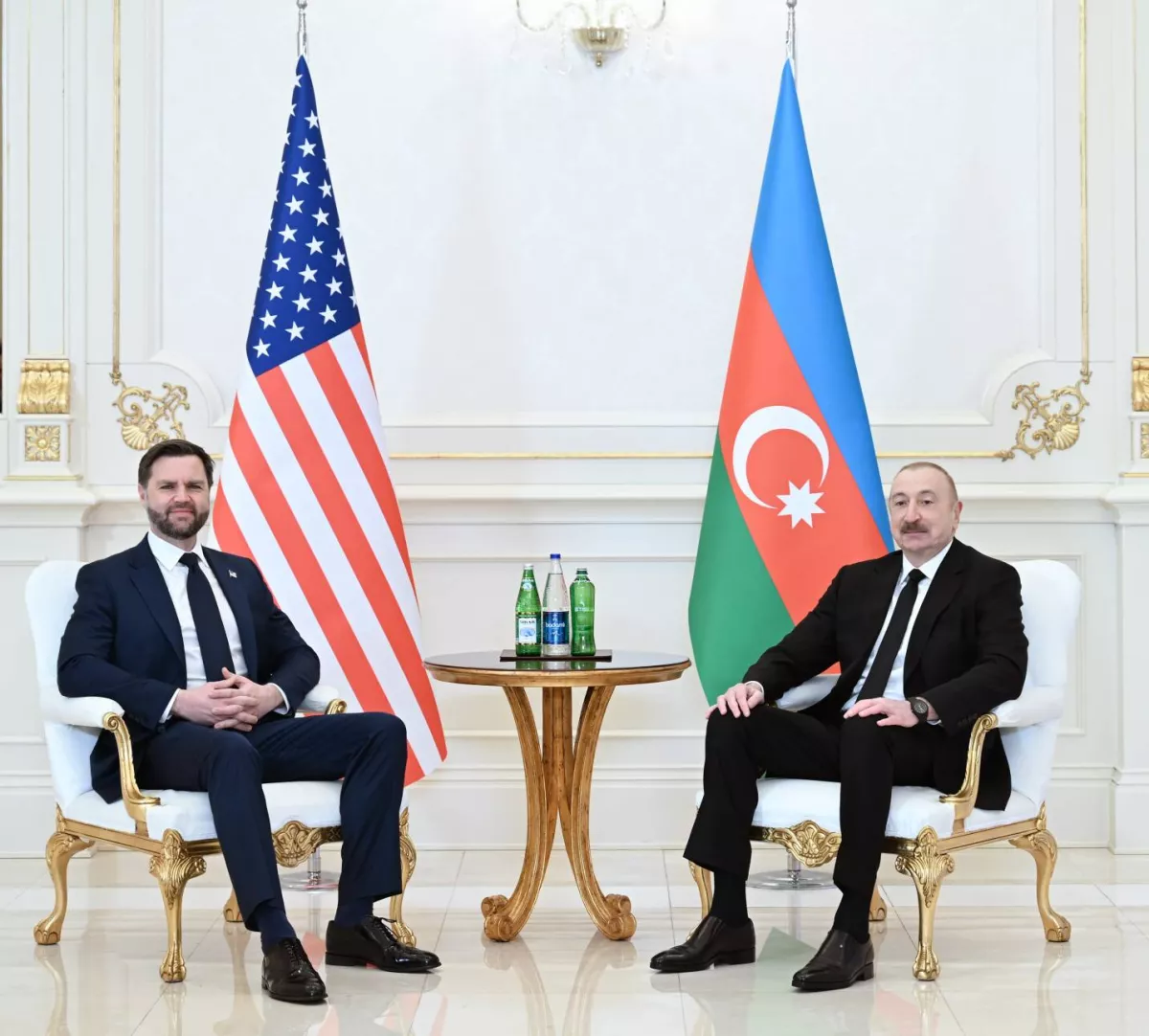
The visit underscores Baku’s strategic value as US lawmakers consider repealing Section 907 of the 1992 Freedom Support Act. Originally enacted during the Armenia-Azerbaijan war, 907 is now largely obsolete following the 2020–23 conflict and the August 2025 peace deal brokered by the Trump administration.
It remains a barrier to expanding American-Azerbaijani ties envisioned in the Strategic Charter signed by Vance.
The Armenian National Committee of America’s (ANCA) effort to preserve the restriction is increasingly anachronistic and counterproductive to the very community it seeks to serve. Overcoming Cold War–era constraints is essential for Washington to operationalize its new geostrategy in the Middle East and West Asia,” Bokhari writes.







 editor@caliber.az
 +994 55 444-88-98
 Азербайджан, Баку, ул. Низами, 203, Af Business House, 5-й этаж