










TRIPP: Iran's pressure, Armenia's fears Article by the Israeli BESA Center
The Begin-Sadat Center for Strategic Studies (BESA) has published an article on the geopolitical tensions between Iran, Armenia, and Israel. Caliber.Az presents adapted version of the piece.
A working visit to Israel by Armenian Deputy Foreign Minister Vahan Kostanyan on November 27 triggered a sharp reaction in Iran. Particular concern was caused by the fact that Israeli media placed special emphasis on the topic of the “Trump Corridor,” or, as it is called in Azerbaijan, the Zangezur Corridor, which would create a route from Central Asia to Europe bypassing Iran and Russia. Armenian officials have now been forced to justify themselves, demonstrating a still-persistent vassal loyalty.
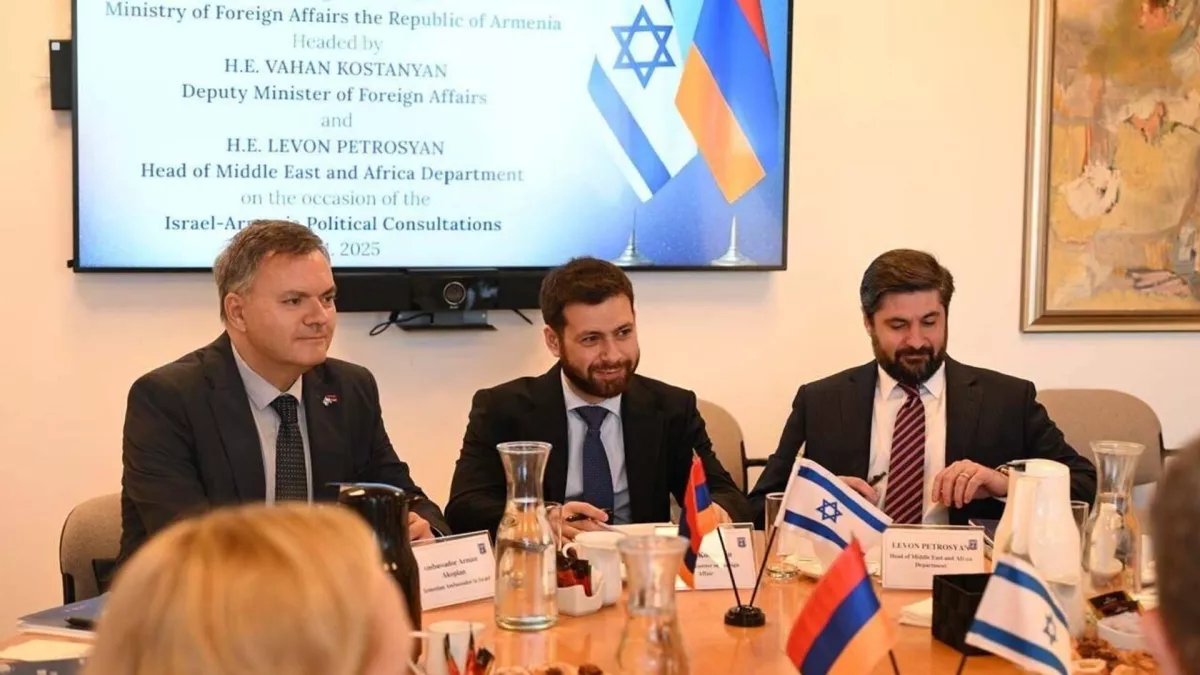
Iran’s reaction to Armenia’s recent diplomatic signalling toward Israel and the West reveals deep strategic anxiety rooted in geography, regime security, and long-standing regional red lines. The visit by Kostanyan, although framed in Yerevan as a limited diplomatic engagement, was perceived in Tehran as part of a broader and dangerous trajectory: Armenia’s gradual drift away from exclusive dependence on Iran and Russia and toward Western and Israeli political networks.
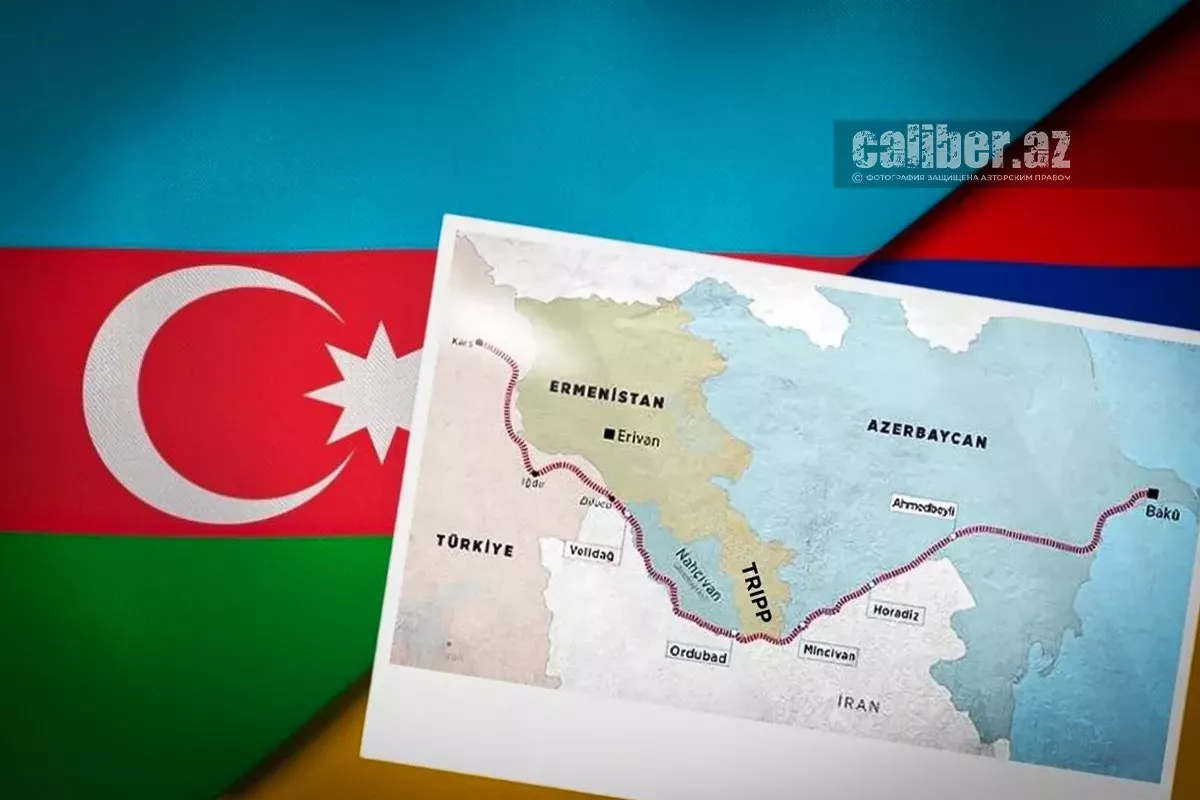
For Iran, Armenia occupies a uniquely sensitive position, as it is considered a vital geopolitical asset. It is a buffer preventing the emergence of a corridor linking mainland Azerbaijan to Nakhchivan. Any Armenian realignment that weakens Tehran’s influence in the region triggers concern.
Iranian media commentary following Kostanyan’s visit to Israel was quite telling. Outlets such as Tehran Times, Eghtesad, Tabnak, and Mehr News explicitly linked Armenia’s outreach to Israel and the West with the threat of the Trump/Zangezur Corridor. In Iranian strategic thinking, this corridor is not merely a transport project. It is viewed as an existential threat that could sever Iran’s direct access to Armenia, reduce Tehran’s leverage in the Caucasus, and facilitate the strengthening of Israel, Türkiye, and West. Behind closed doors, Tehran has aggressively pushed Yerevan to publicly reaffirm loyalty and restraint. Below are given a few examples.

The Mehr news agency described the concerns surrounding Kostanyan's visit as follows: “During a recent meeting between Armenia’s Deputy Minister of Foreign Affairs and the Director General of the Ministry of Foreign Affairs of the Zionist regime, the parties discussed cooperation in the fields of high technology, medicine, agriculture, and tourism. These are precisely the areas that Israel typically uses as instruments of soft, long-term influence.”
As a rule, projects in these areas involve a prolonged presence of experts, the formation of institutional networks, stable contacts, and the creation of new communication channels. In a number of countries, such mechanisms have served as a foundation for intelligence, economic, or political penetration.
After military defeats in 2020 and 2023, Armenia is seeking alternatives to its foreign policy pillars. This structural need turns Israel into a “window of interaction.” The deeper Armenia's cooperation with the Jewish state becomes in sensitive areas, the further Yerevan moves away from its traditional foreign policy orientations.
After the military defeats of 2020 and 2023, Armenia is searching for alternatives to its traditional foreign policy pillars. This structural need turns Israel into a “window of opportunity” for Yerevan. The deeper Armenia’s cooperation with Israel becomes in sensitive areas—from agriculture and healthcare to education and crisis management—the further Yerevan moves away from its traditional foreign policy alignments.
The Tabnak agency, linked to former IRGC commander-in-chief Mohsen Rezaei, hinted at possible Iranian countermeasures: “The TRIPP initiative has also affected Iran’s usually calm relations with its neighbor Armenia. Although Armenia seeks to reduce Iran’s concerns, its consent to the creation of a U.S.-managed corridor in such close proximity to the heart of Iran inevitably generates tension. [..] Iran is assessing its future options, which may include covert efforts to slow the construction of this corridor or extensive use of diplomatic consultations with Armenia.”
Similar hints were also made in the Tehran Times newspaper: “Without doubt, the central focus of Kostanyan’s talks with Israeli officials concerned the ‘Trump Route,’ otherwise known as the Zangezur Corridor… Engaging in direct consultations with Israel, without sufficient regard for Tehran’s considerations, signals Yerevan’s prioritization of foreign policy alignment with the West and the United States. Kostanyan’s trip, in fact, offers a clear picture of Armenia’s foreign policy trajectory: a country that, in pursuit of economic and geopolitical goals, does not place Iran’s security concerns at the forefront, while simultaneously seeking to expand the influence and support of external partners. Consequently, this move could intensify regional tensions and further complicate the security balance in the Caucasus.”
Tasnim News, one of the IRGC’s principal media outlets, published an extensive interview with Armenia’s ambassador to Iran, Grigor Hakobyan: In particular, it stated that “relations between Armenia and Iran have always been distinguished by such a quality of mutual respect, trust, and good-neighborliness that gives them unique value in the region. […] Throughout this entire process Yerevan has remained faithful and committed to an atmosphere of friendship and mutual trust, has officially taken into account Tehran’s vital interests, and has conducted active negotiations on ongoing developments at various levels.”
Armenia’s behavior reflects its constrained position rather than ideological alignment. Given limited trust in Russia and only nascent Western support, Yerevan cannot afford open confrontation with Iran. Apologetic messaging toward Tehran following the Israel visit underscores Armenia’s fear of Iranian retaliation—whether through economic pressure, diplomatic obstruction, or covert destabilization.
In sum, Iran’s fear is not about a single diplomatic visit. It is about losing strategic depth in the South Caucasus. Any Armenian move toward Israel or the West, however symbolic, is interpreted in Tehran through the lens of regime security and encirclement. The TRIPP/Zangezur Corridor remains the focal point of this anxiety, and until that issue is definitively resolved, Iran will continue to pressure Armenia to remain firmly within Tehran’s geopolitical comfort zone—even as Armenia quietly searches for alternatives.







 editor@caliber.az
 +994 55 444-88-98
 Азербайджан, Баку, ул. Низами, 203, Af Business House, 5-й этаж