










Baku, Nobel, and oil: A forgotten hydrotechnical legacy Historical insight on Caliber.Az
The oil boom of the late 19th and early 20th centuries fundamentally transformed Baku, turning it from a small town on the Caspian into one of the world’s major industrial centres. Here, oil was not merely a natural resource but a driving force behind economic, engineering, and cultural development, shaping the city’s character and historical destiny. Baku quickly assumed a unique position in the global oil industry, becoming the beating heart of the sector and a strategic pillar of the Russian Empire’s industrial power. It was here that cutting-edge ideas converged, technological innovations were implemented, and principles were developed that would later define the course of global oil production. The city attracted entrepreneurs, engineers, and investors from around the world, becoming a unique space where industry, science, and architecture evolved in close interaction.
On the Absheron Peninsula during this period, hundreds of engineering solutions were implemented, many of which were far ahead of their time. An extensive infrastructure for oil extraction, processing, and transportation was being developed, requiring not only technical skill but also systematic thinking. Baku became a laboratory of industrial modernity, where oil dictated a new rhythm of life, and industrial facilities gradually acquired the features of an independent architectural language.
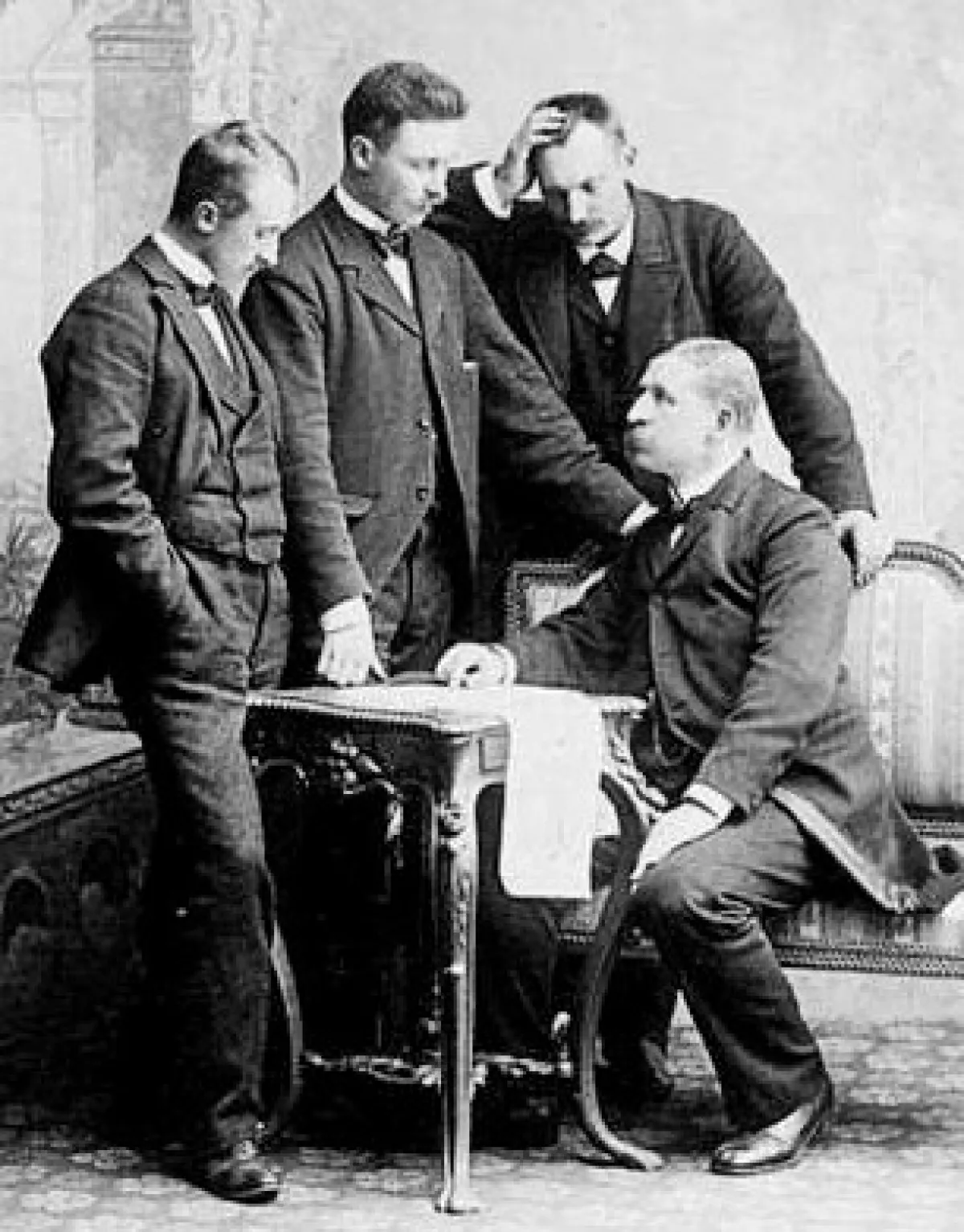
Among those who played a key role in this process, the Nobel brothers hold a special place — members of the famous dynasty firmly embedded in world history. Their activities on the Absheron Peninsula covered the entire oil production cycle — from extraction and processing to storage and transportation. The Nobels were pioneers in creating the world’s first oil tanker, constructing pipelines, and implementing a comprehensive, scientifically grounded approach to industry development. Working across different sites on Absheron, they established a network of production facilities that combined advanced engineering solutions with a high standard of construction.
One such — today little-known but truly unique — facility was a hydraulic engineering structure in the village of Ramana.
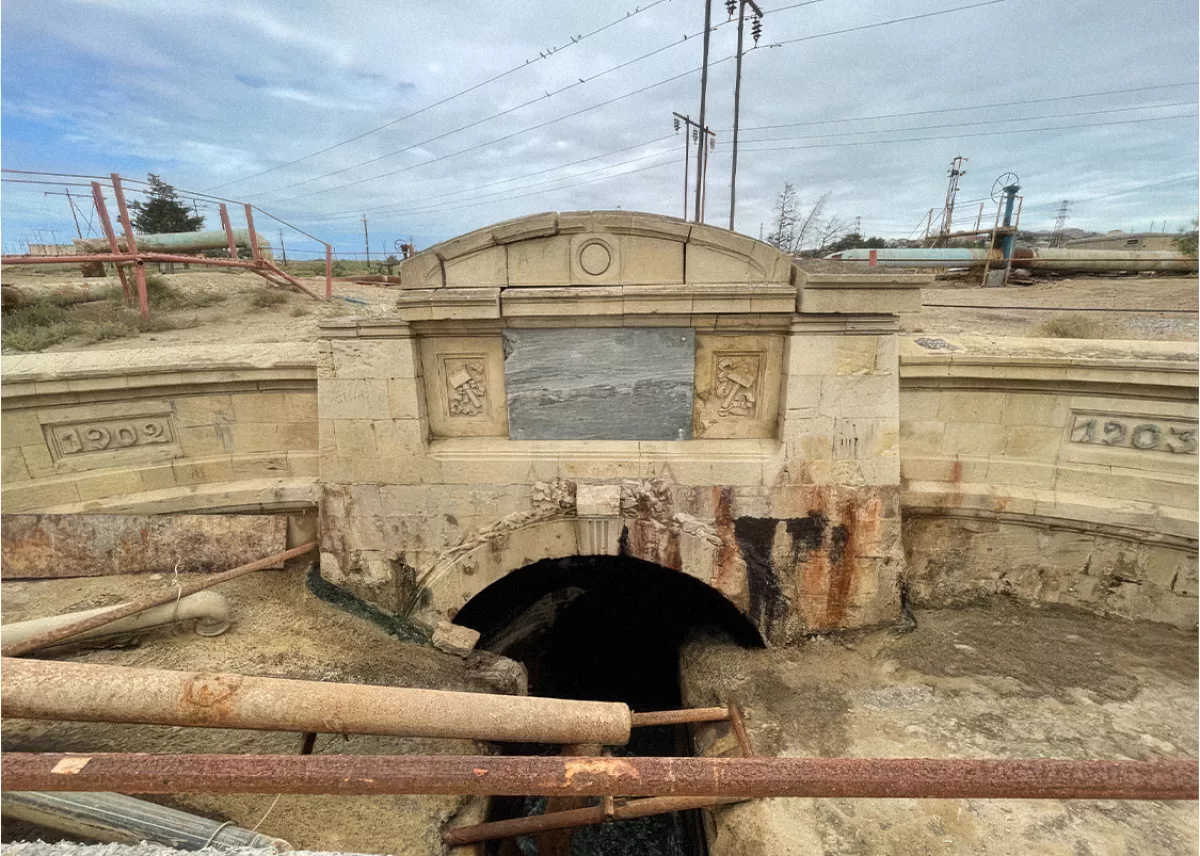
A large and technically sophisticated engineering complex, whose construction began in 1902 and was completed by 1903, became one of the notable achievements of its time. It was designed to receive, purify, and drain technical, rain, and formation waters that inevitably accompanied oil production. Before entering the hydraulic system, the water underwent multi-stage treatment: mechanical impurities settled out, and oil fractions and contaminants were separated. The purified water was then directed through an underground tunnel into a channel and finally discharged into the Caspian Sea.
For the early 20th century, this was an exceptionally complex engineering structure, reflecting a high level of technical thought and a deep understanding of hydraulic processes. It performed a key function in ensuring the safety and stable operation of Ramana’s oil infrastructure, providing controlled water drainage and reducing the anthropogenic impact on industrial facilities and the surrounding environment.
The architectural design of this hydraulic facility represents a rare and extremely valuable example of the synthesis of utilitarian engineering and artistically considered industrial architecture of the early 20th century. Its portal entrance is conceived as a monumental stone composition, with clearly defined symmetry and a meticulously detailed façade.
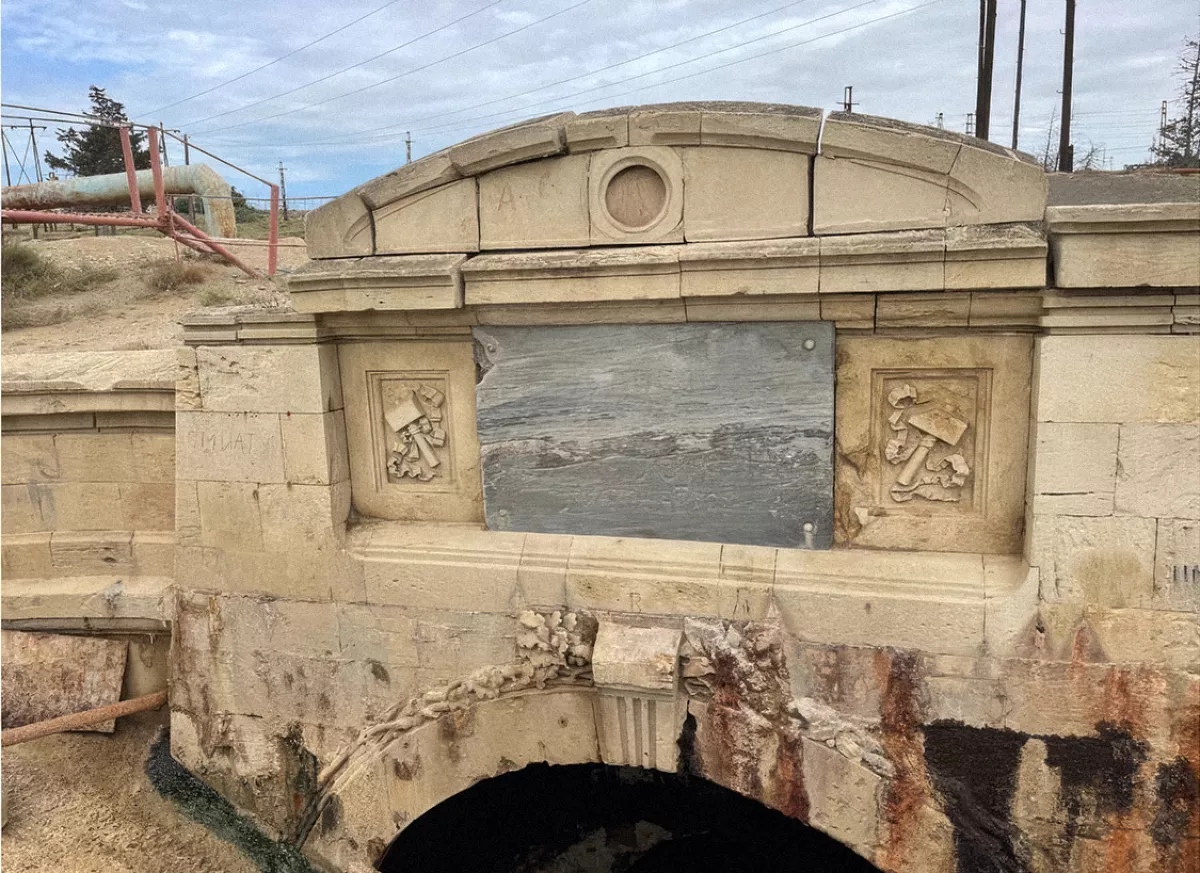
At the centre stands a rectangular granite slab with an engraved inscription, indicating the facility’s affiliation with the Nobel brothers and the years of its construction, giving the structure the character of a kind of memorial to the industrial era. On either side of the slab are relief emblems — stylised hammers or sledgehammers set within decorative cartouches — emphasising the facility’s functional purpose while simultaneously elevating the labour of engineers and workers to the level of artistic expression.
The lower part of the façade features the arched tunnel opening, constructed in massive stone masonry with a pronounced archivolt. Decorative vegetal motifs are used around the keystone and along the edges of the arch, resembling the plasticity of late Neoclassical and early Modernist ornamentation. The ornamental detailing softens the strictness of the engineering structure, creating a rare sense of sculptural expressiveness in a technical object. The use of natural stone, the high quality of surface finishing, precise alignment of elements, and carefully considered proportions all testify to the maturity of early 20th-century architectural and construction practices. Even the marks of time — streaks, oil deposits, oxidation, and natural erosion — are perceived not as losses but as an authentic “patina of the era,” enhancing the historical and artistic value of the site.
This facility is seen not merely as an infrastructure element for the treatment and drainage of formation and technical waters but as a fully-fledged monument of industrial architecture. It vividly demonstrates that engineering thought, functionality, and aesthetics were regarded as a unified system. Such structures helped shape the distinctive visual and cultural language of early 20th-century Baku’s oil industry — a city where even the hidden processes of extraction were granted architectural dignity and symbolic resonance.
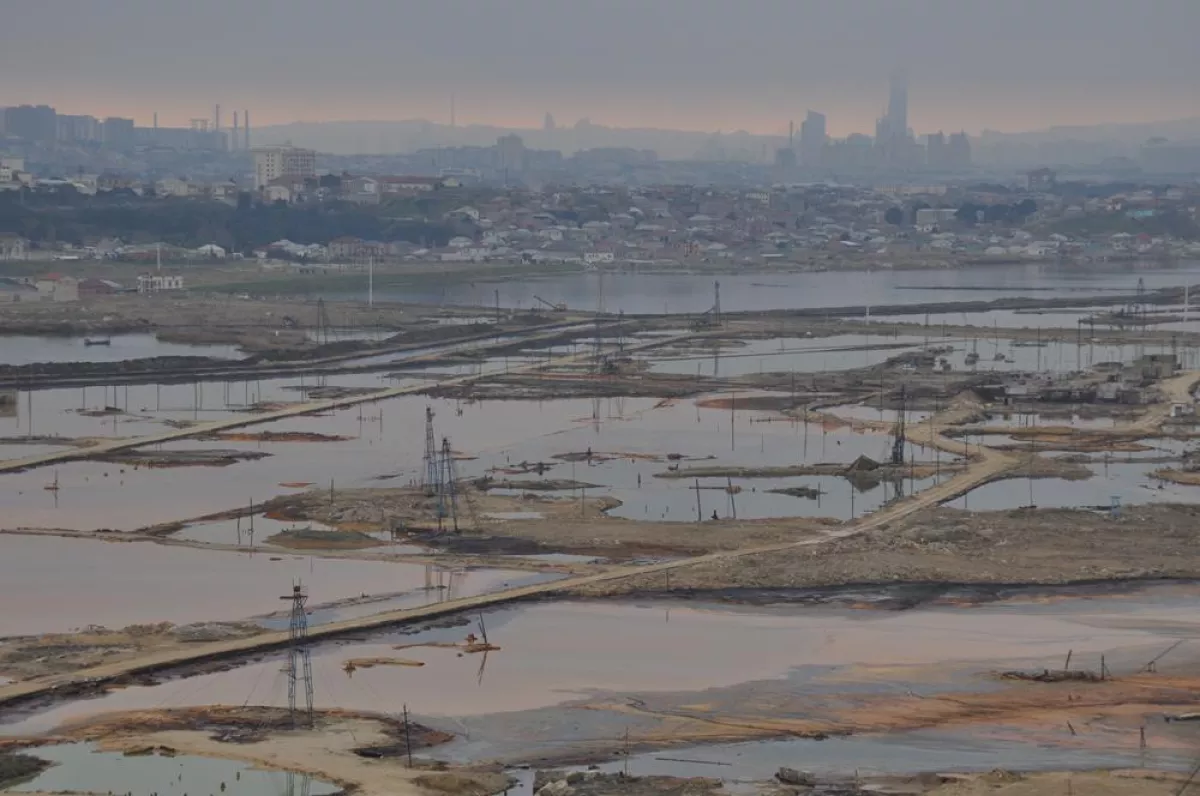
Equally remarkable is that this water collector has survived to the present day and continues to function, requiring virtually no major repairs or interventions. This vividly illustrates the philosophy of the Nobel brothers, for whom an engineering structure had to be reliable, functional, and designed for long-term use. They truly built “for centuries” — even when it came to technical infrastructure.
Today, this collector remains one of the rare surviving testaments in Azerbaijan to the great oil era. It unites history, technology, architecture, and cultural memory, serving as a reminder of a time when Baku was a stage for global experimentation, bold engineering solutions, and genuine industrial heroism. It is yet another striking chapter in the country’s chronicle — an oil-rich, engineering-driven, and truly heroic one — deserving careful study, preservation, and reflection.
By Vahid Shukurov, exclusively for Caliber.Az







 editor@caliber.az
 +994 55 444-88-98
 Азербайджан, Баку, ул. Низами, 203, Af Business House, 5-й этаж