










Between war and peace: How Minsk is responding to Kyiv’s new demands Analysis by Limansky
President Volodymyr Zelenskyy has put forward new demands to Belarus, while President Alexander Lukashenko has embarked on a major overseas trip. What should be expected next?
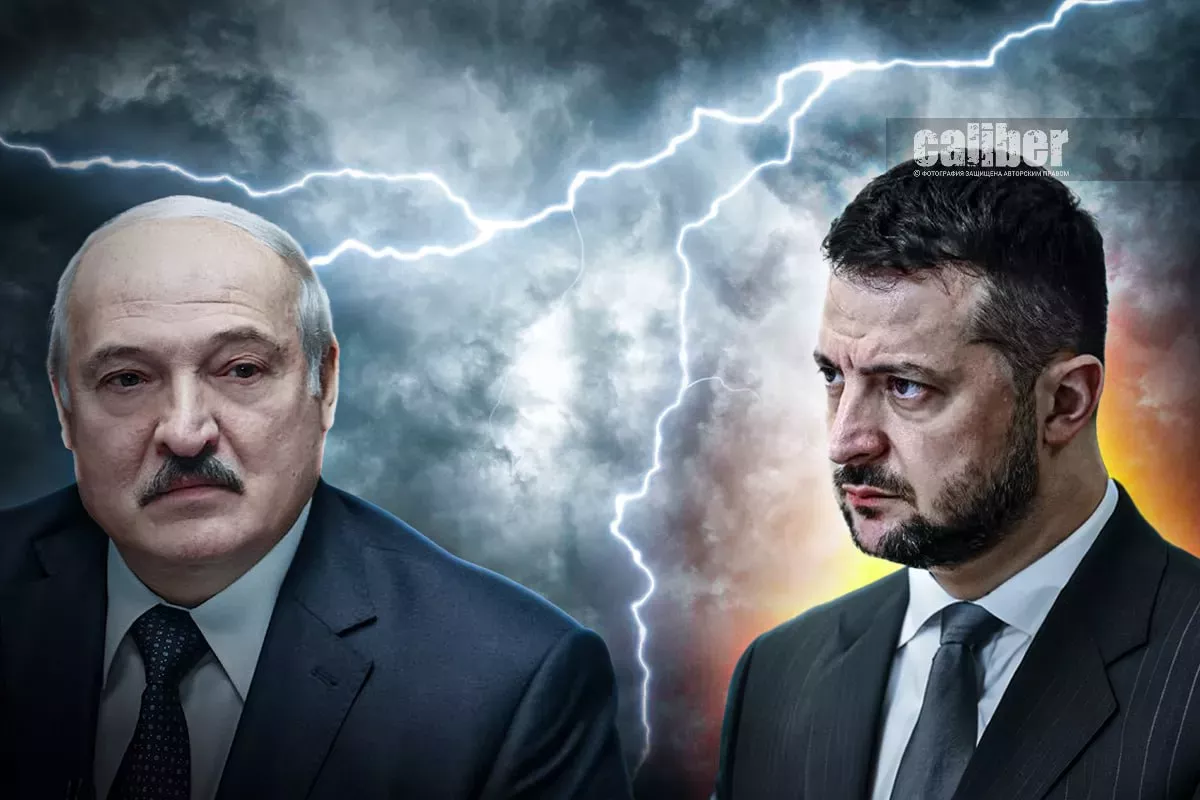
The storm of war and aggression raging around Belarus now threatens to draw this peaceful country into its deadly vortex. Minsk, however, is making desperate efforts to prevent being directly pulled into the conflict.
"Peace and only peace"
On June 19, Ukrainian President Zelenskyy issued an ultimatum to Belarus. His main demand was that Belarus disable certain relay transmitters allegedly used to guide Russian drones (UAVs). “Otherwise we will do it ourselves,” Zelenskyy warned. The deadline for complying with the ultimatum was Friday, June 26. A tense atmosphere spread across Belarus.
However, on June 24, Zelenskyy stated that the relay transmitters had been switched off. According to the Ukrainian president, it was unclear whether the equipment had been dismantled, but it had already stopped operating on Monday, June 22. At the same time, Zelenskyy continued to insist that the equipment be removed, saying, “we are working on it.”
The Ukrainian side has not presented any objective evidence that such relay transmitters exist or that they are being used by Russian drones. Belarusian authorities have also not officially confirmed their existence.
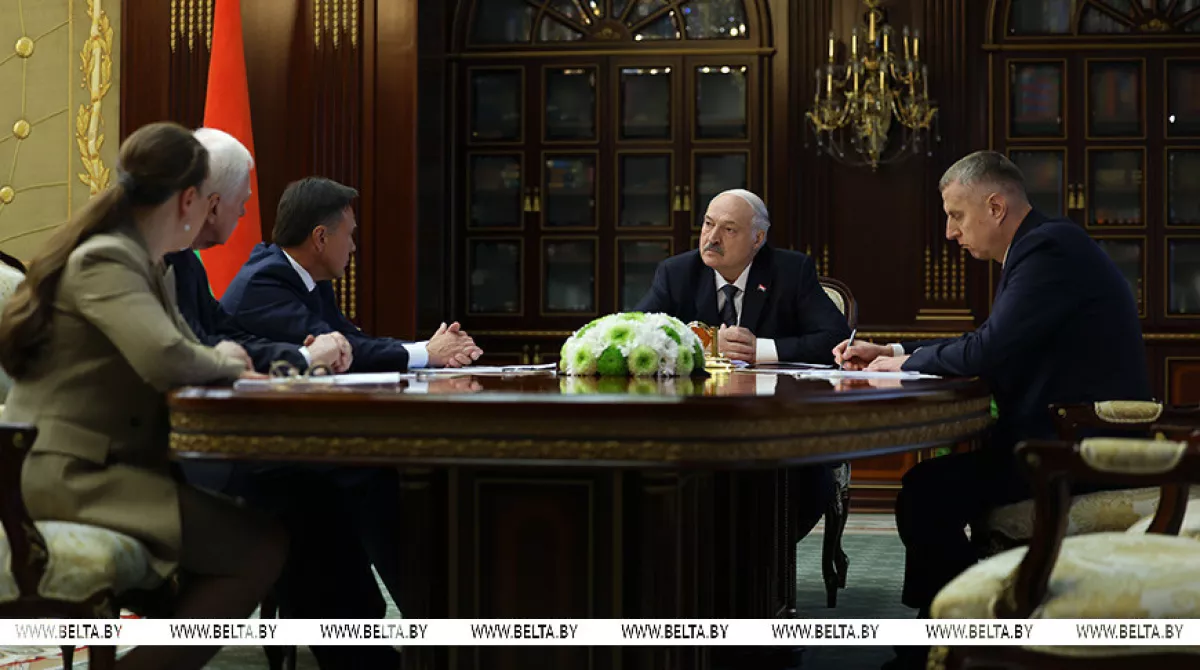
On the eve of the ultimatum’s expiration, on June 25, Alexander Lukashenko said that he had recently held contacts with representatives of Volodymyr Zelenskyy.
“Not long ago, representatives of Zelensky were right here. I told them directly: 'Guys, convey this to your president: if he thinks he can speak to us like that and try to drag us into a war, he must understand that the nature of the war will change instantly. This war will be completely different,’”
At the same time, the Belarusian leader once again stressed that he supports a swift peaceful settlement of the conflict.
“Peace and only peace,” the Belarusian president said.
Lukashenko also noted that he considers a war with Ukraine impossible because, on the other side of the border, Belarus is facing ordinary tractor operators, dairy workers, and labourers who have been mobilised into Ukraine’s territorial defence forces. In his view, they do not want to fight Belarus.
“We also do not want to fight against Ukrainians,” Lukashenko said.
Lukashenko then made an unexpected announcement, saying that he had ordered the Belarusian border to be reopened for residents of Ukraine’s border regions. Before the war, Ukrainians frequently travelled to neighbouring areas of Belarus’s Gomel and Brest regions to gather mushrooms and wild berries, which helped supplement their often difficult financial circumstances.
The Belarusian side’s proposal to resume this seasonal foraging practice is presented as a well-timed initiative. The decision to reopen the border is described as further refuting accusations that Belarus intends to enter the war against Ukraine and as seriously improving Lukashenko’s image among Ukrainians.
Before the outbreak of the war in Ukraine, Lukashenko was widely popular among many Ukrainians, and Belarus was often regarded by ordinary Ukrainian citizens as a model of order and social justice. Belarus’s Ministry of Foreign Affairs has already officially proposed to Ukraine the introduction of a simplified seasonal border-crossing procedure for Ukrainian citizens.
Contempt for the West
The dismantling of the relay transmitters was not the only condition set by Zelenskyy. On June 19, he also demanded that Belarus stop supplying fuel from its oil refineries to Russia, as well as end industrial cooperation with Russia that has military significance. Unlike the relay transmitters, however, Zelenskyy did not threaten to "take out" the oil refineries. Nevertheless, in the context of the overall tensions and the threats previously voiced by some Ukrainian military officials and politicians, many experts began speaking about possible drone and missile strikes on oil refineries and other facilities in Belarus.
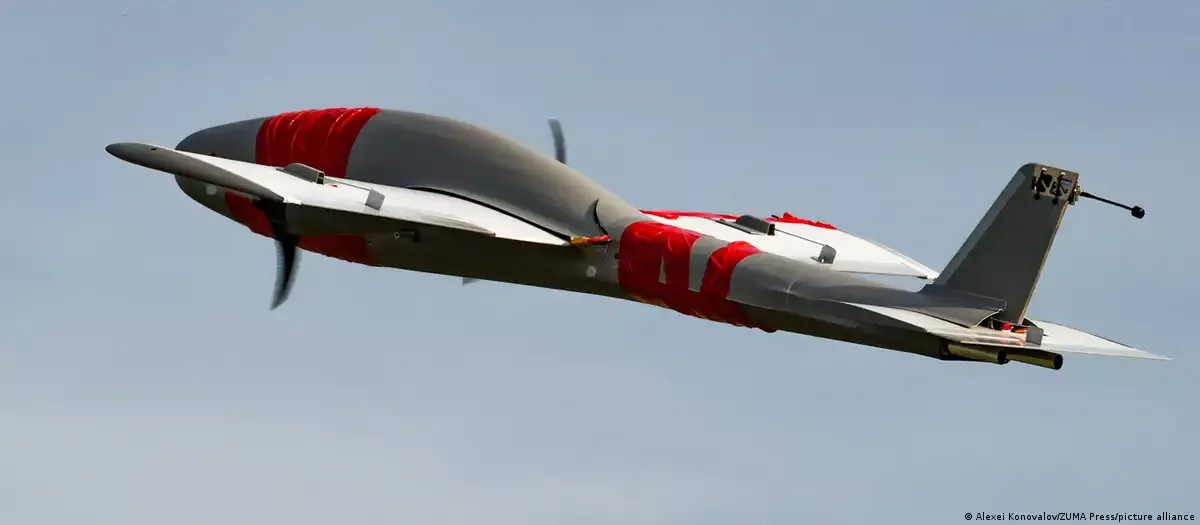
After the relay transmitters stopped operating (did they exist at all?), Volodymyr Zelenskyy put forward new demands. On June 25, the Ukrainian president demanded that Belarus stop developing certain military border infrastructure. According to Ukrainian intelligence, Belarus is supposedly building new roads in five directions: Kobrin–Kovel, Ivanovo–Manevychi, Luninets–Sarny, Rechytsa–Korosten, and Gomel–Chernihiv. In addition, fuel and ammunition depots are being created. At the same time, as in the case of the relay transmitters, the Ukrainian side has not provided any specific data or objective monitoring materials.
One can only assume that this refers to lateral roads running along the border. However, if their construction is indeed underway, such logistics are purely defensive in nature. From a military standpoint, such roads would only be needed for the rapid redeployment of forces to reinforce a particular section in the event of an incursion from Ukraine.
Almost simultaneously, the administration of Ukraine's Chernihiv region announced plans to evacuate residents from 14 villages located at the junction of Belarus' Gomel region and Russia's Bryansk region, starting on July 1.
At the same time, the State Border Guard Service of Ukraine reported that no buildup of troops has been observed on the Belarusian side of the border. Only the rotation of units that have long been stationed there has been recorded.
An unexpected response to Zelenskyy's new demands also came from Germany. The German left-wing newspaper Junge Welt wrote: "The President of Ukraine is employing a tactic that may seem all too familiar from history: Nazi Germany presented one ultimatum after another to Czechoslovakia and Poland in 1938 and 1939 in order to maintain constant pressure and justify its already planned aggression. Zelenskyy appears to be confident that he enjoys the tacit support of his Western sponsors for his risky policy of escalation toward Belarus, and may even be encouraged by them to pursue it."
The author of the article believes that the main objective of drawing Belarus into the war is to overthrow the government of Alexander Lukashenko. In the author's view, pushing for another war demonstrates the West's complete disregard for the Ukrainian people, despite its hypocritical desire to see them become part of the "European family."
Using the full potential
The president of Belarus then departed on an extended foreign trip. Opposition media outlets immediately began accusing Lukashenko of allegedly "fleeing the country." It soon became clear, however, that the extensive tour had been planned well in advance. The Belarusian leader did not cancel his important trips because of threats from the Ukrainian side.
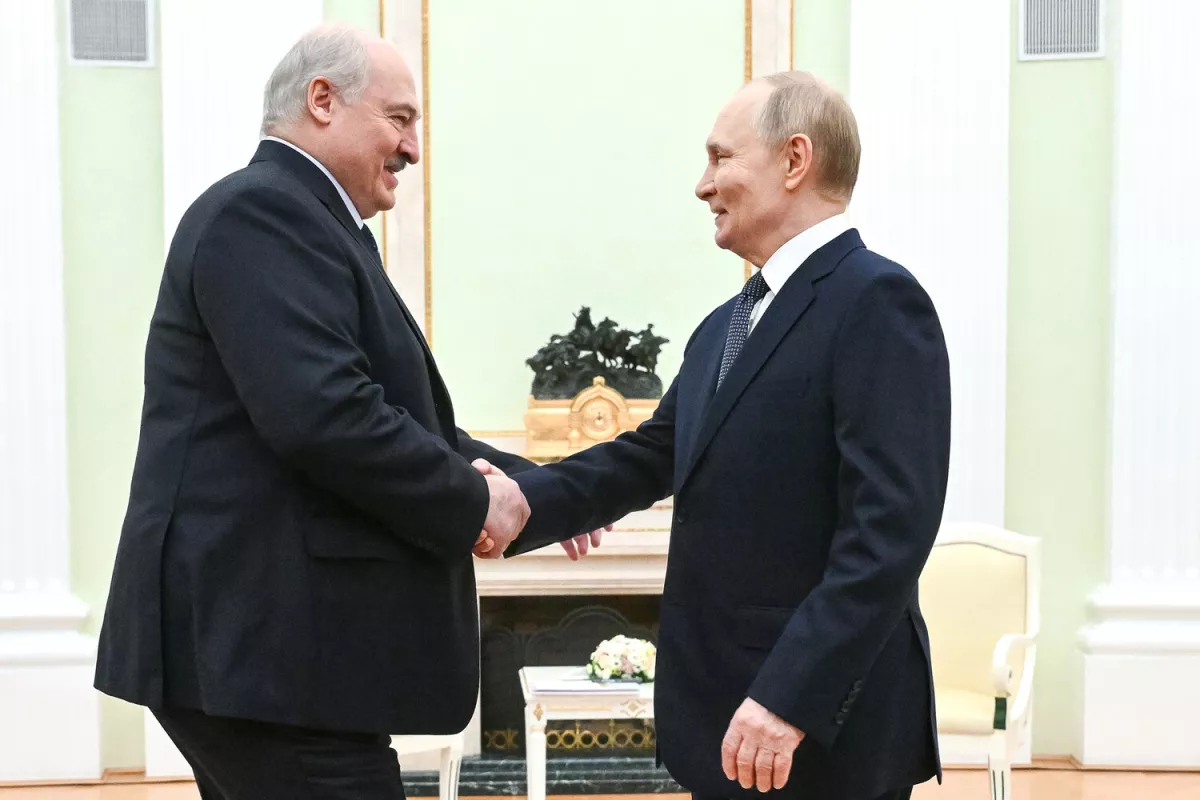
On June 27–28, an informal meeting between Alexander Lukashenko and Vladimir Putin took place. In many respects, it was unusual and remains shrouded in secrecy.
First, the meeting was held in Valdai, where Putin does not usually receive political leaders.
Second, it was announced in advance that no communiqué would be issued following the meeting. There are not even any photographs from the meeting. Russian presidential press secretary Dmitry Peskov only stated that, alongside economic and other issues, the discussions covered the situation in Ukraine and "attempts to provoke Belarus."
On June 28, Vladimir Putin stated that Alexander Lukashenko "is not panicking because of Volodymyr Zelenskyy's reprimands." At the same time, Kyiv's attempts to draw Belarus into the military conflict are causing serious concern in Minsk.
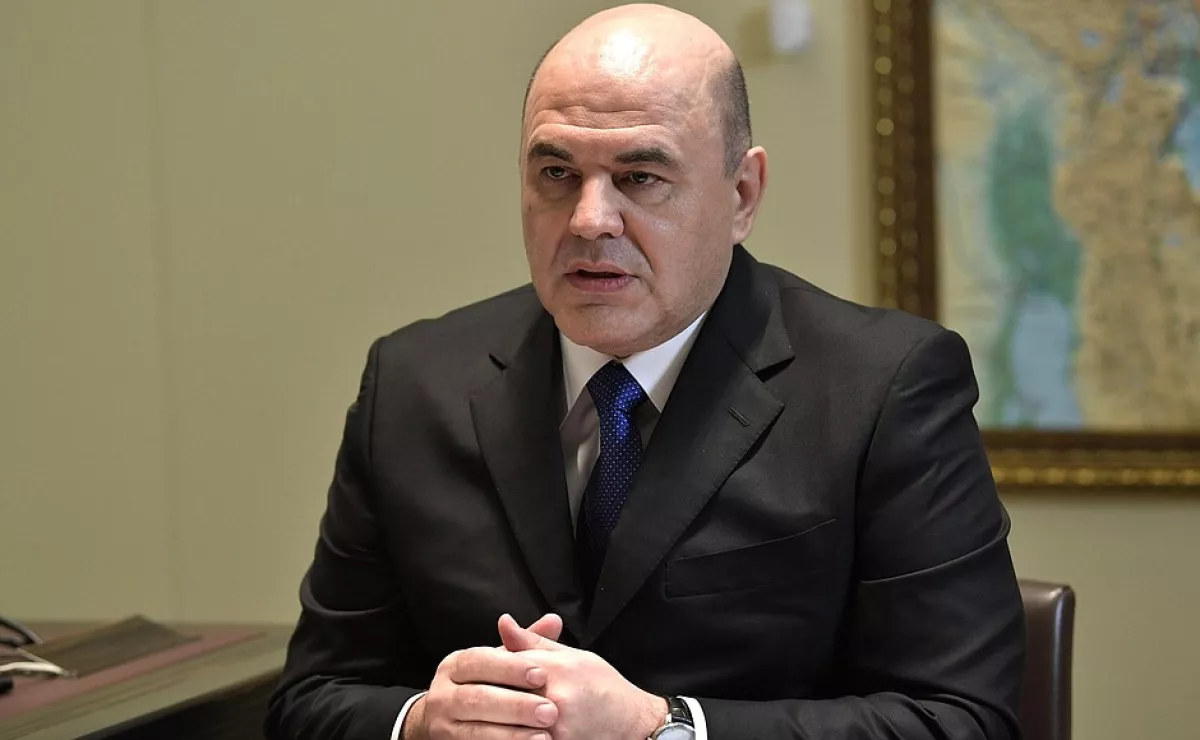
On the second day, Russian Prime Minister Mikhail Mishustin took part in the meeting, which may indicate that the economic costs Belarus could incur in the event of an escalation of the confrontation with Ukraine were discussed.
Naturally, the closed-door meeting gave rise to numerous rumours and speculation. Belarusian opposition figures were quick to claim that Putin was allegedly pressuring Belarus to enter the war.
Alexander Friedman, a historian and liberal commentator living in Germany, citing a German television channel, claimed that Lukashenko may have brought Putin some kind of proposal from Zelenskyy during the meeting in Valdai. Peskov denied that any message from the Ukrainian president had been delivered to Putin. On June 28, Putin also stated that he did not agree with Ukraine's proposal to limit military operations to only four regions.
A number of Russian radicals, in turn, have criticised Alexander Lukashenko for his unwillingness to enter the military conflict with Ukraine. Populist politician Igor Skurlatov even went so far as to state that Alexander Lukashenko should either be replaced or forced to take part in the so-called "special military operation" (SMO). According to Skurlatov's "sources," during the meeting in Valdai, the Belarusian president once again refused to participate in the war against Ukraine.
Skurlatov had previously called for the use of nuclear weapons in Ukraine, incited hatred against migrants, and has a reputation not only as a right-wing populist but also as an agent of Ukraine's Center for Information and Psychological Operations (CIPSO).
It may appear that radical supporters of escalation on both sides have, as if on cue, launched a campaign aimed at drawing Belarus into the war.
According to other reports, the meeting in Valdai focused on a package of effective and robust response measures to be implemented in the event of aggression against the Republic of Belarus and the Union State of Russia and Belarus.
“Iron friends”
On June 29, Alexander Lukashenko arrived in China on a working visit. He was welcomed at the airport with a guard of honour and a red carpet. The president of Belarus met with Chinese President Xi Jinping, including over a family-style meal, which reflects a particularly high level of personal trust. This was Lukashenko's 17th visit to China.
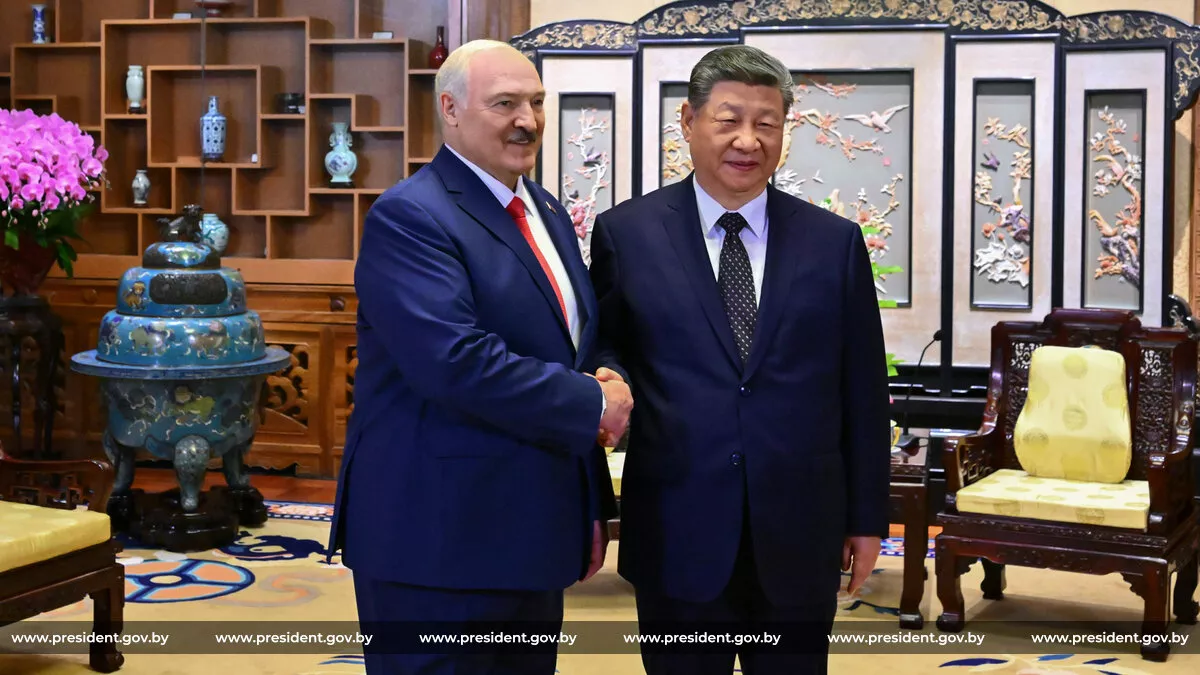
In his characteristic Eastern style, President Xi described China and Belarus as "iron friends." This vivid metaphor aptly characterises the special relationship that has developed between Lukashenko and Xi Jinping. According to the Chinese leader, the strategic cooperation between Minsk and Beijing is currently at its peak. In addition, Comrade Xi made a highly significant statement that China "supports Belarus in safeguarding its national sovereignty, independence, and territorial integrity." In the current complex international environment, these words from the Chinese leader carry considerable weight.
"I feel at home here," Lukashenko said after visiting Peking University. However, in addition to issues of economic, educational, and other forms of cooperation, the Belarusian leader's visit also included discussions on regional security and reducing military tensions.
The years 2026 and 2027 have been designated as the Years of Industrial Cooperation between China and Belarus. One of the priorities of this industrial partnership is the development of unmanned aerial vehicles (UAVs). China and the People's Liberation Army (PLA) have achieved tremendous progress in the development and deployment of unmanned aerial systems, including those incorporating artificial intelligence.
Alexander Lukashenko warmly thanked the president of China, stating that he had done even more for Belarus than had been expected.
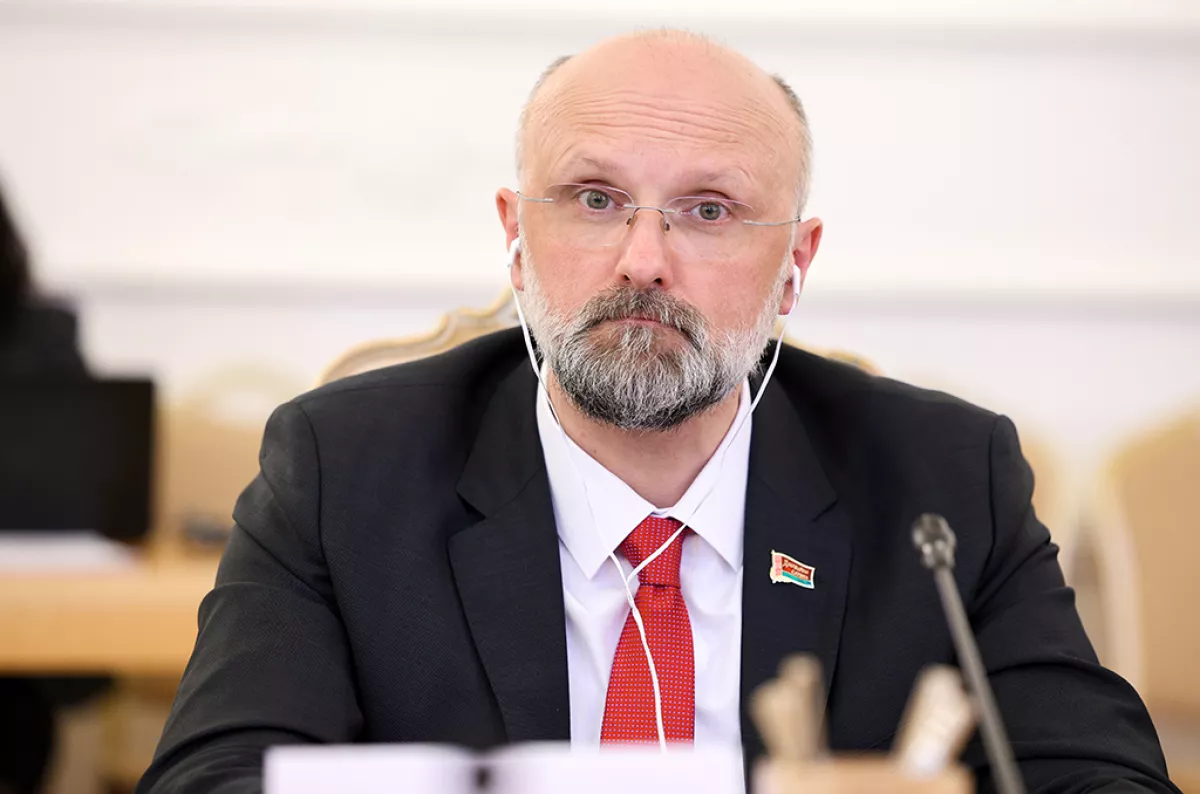
On June 29, Deputy Foreign Minister Igor Sekreta stated that if the border were crossed, Belarus would respond "using our full potential."
Belarus today serves as an important "gateway" of the Great Silk Road on the borders of the European Union. For Minsk, Beijing's support for its peaceful policy of non-participation in the military conflict in Ukraine and for the swift resolution of the crisis through negotiations is of paramount importance.
Independent experts believe that an effective means of influencing Kyiv could also be restricting supplies of Chinese components for drones and other dual-use products.
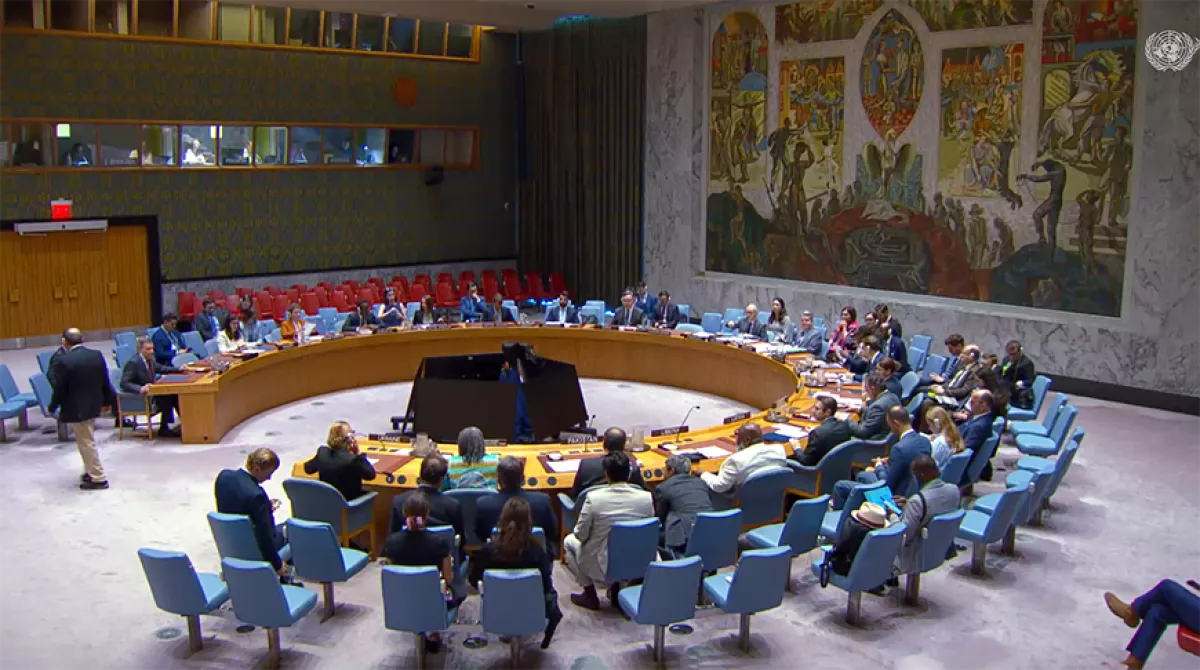
Also on June 29, at Minsk's initiative, a meeting of the UN Security Council was convened to discuss the attack on a bus carrying Belarusian children in Russia's Bryansk region.
Sun Lei, Deputy Permanent Representative of China to the United Nations, expressed sympathy for the Belarusian side and stated during the meeting: "In such conflicts, there are neither winners nor losers. Conflicts solve no problems."
The Chinese representative called on both sides to sit down at the negotiating table as soon as possible and do everything possible to eliminate the root causes of the conflict between Russia and Ukraine.
There is an opinion that Zelenskyy initiated the escalation in relations with Belarus for the sake of publicity and to boost his approval ratings. However, this is unlikely to be the case, as a war with Belarus is not popular either among the Ukrainian public or within the Ukrainian military. Most likely, the task of escalating the situation was assigned to him by the West's "hawks," especially given the peacemaking role that Belarus seeks to play today and which could become even more significant in post-war Europe.
At the same time, through their aggressive rhetoric and threats, the authorities in Kyiv are themselves presenting an unfavourable image to a significant part of the international community. Belarus, meanwhile, remains firmly committed to its longstanding position—peace, and only peace. However, should its independence be threatened, it is prepared to deliver the strongest possible response.
Meanwhile, Alexander Lukashenko's working trip to Southeast Asia continues. He is expected to visit Indonesia, Myanmar, and possibly Vietnam in the near future.







 editor@caliber.az
 +994 55 444-88-98
 Азербайджан, Баку, ул. Низами, 203, Af Business House, 5-й этаж