










Crisis at full speed: What is destroying Germany's automotive industry? Analysis by Limansky
On July 3, protests against wage cuts by Mercedes-Benz took place in Germany. In July, the overwhelming majority of the corporation's employees will not receive the monthly bonus, which amounts to up to 18 per cent of their salary. In protest, tens of thousands of people took to the streets of Berlin, Düsseldorf, Hamburg, Bremen, and other cities.
In the longer term, four Volkswagen plants in Germany are also at risk of closure, which could result in the loss of 120,000 jobs. Another leading automaker, BMW, has announced plans to lay off 5,000 employees, while Bosch Mobility, the largest developer of automotive technologies, has reported losses for the first time since the global financial crisis of 2008–2009.
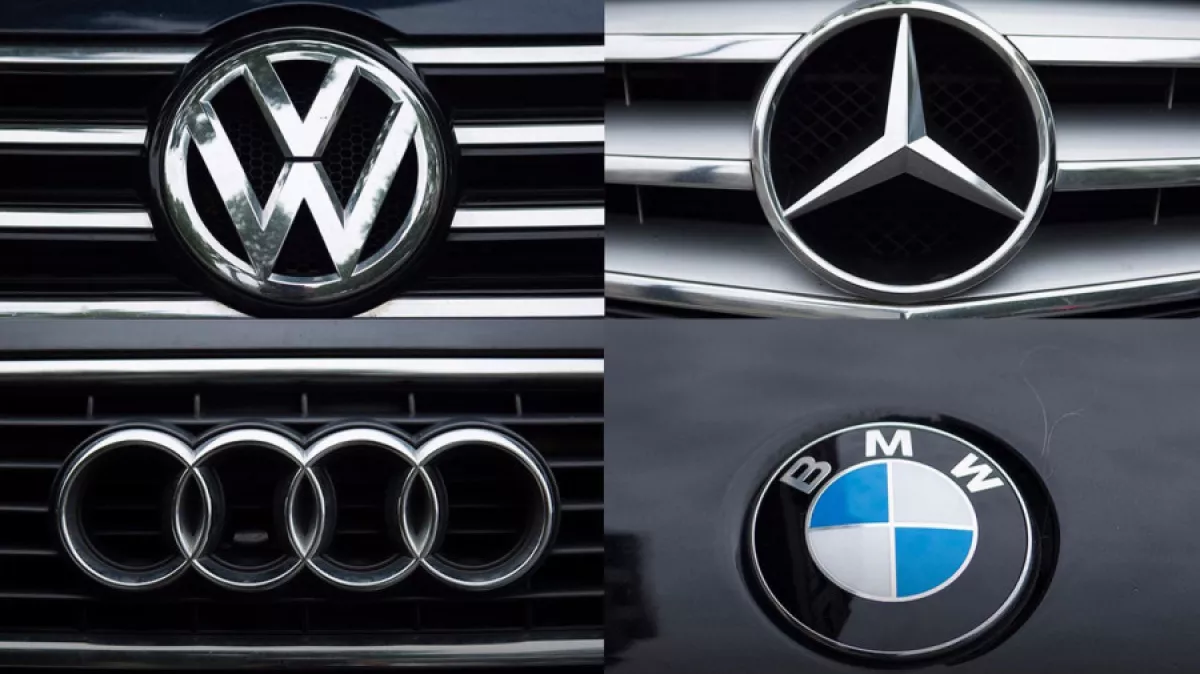
The entire German industry has been hit by a deep crisis, but the automotive sector has suffered the most, and the situation in this key branch of German manufacturing continues to deteriorate. In particular, 19,000 employees were laid off in 2024, while in 2025 more than 50,000 people, or 7 per cent of the industry's workforce, lost their jobs. This is more than in any other sector. Experts are already warning of a possible "deindustrialisation" of Germany in the near future.
It is true that in 2026 Volkswagen managed to improve its sales performance by 3 per cent in Western Europe and by 5 per cent in Central and Eastern Europe. However, the company experienced a significant decline in the Chinese market, with sales falling by 26 per cent, despite launching new German electric vehicle models manufactured directly in China. In particular, in 2024 the Chinese market accounted for one-third of the German automotive industry's total profits.
Overall, Volkswagen's global deliveries declined by 6 per cent. Moreover, there is currently no certainty that, once the planned production at the plants in Zwickau, Emden, Hanover, and Neckarsulm is completed, the company will be able to launch the production of new models. At the same time, Volkswagen's management has stated that the company's very existence could be at risk.
So far, company owners have been following the classic approach—cutting staff. In 2024, analysts at Deutsche Bank noted that while vehicle production had fallen by 23 per cent, the workforce had been reduced by only 8 per cent. In 2026, Volkswagen has already planned to eliminate 50,000 jobs. Moreover, journalists from Bild obtained an internal confidential company document Target Model 2030, according to which up to 70,000 additional jobs could be cut.
In addition, the company's cost-cutting measures include reducing spending on the development of new models by €50 billion, which, in turn, will lead to a 50 per cent reduction in its model lineup (excluding China). How such a limited choice will affect consumer interest in Volkswagen and, ultimately, its profitability is a rhetorical question. Audi is also facing a difficult situation: its sales have fallen by 19 per cent in China and by nearly 17 per cent in the United States and Canada. Despite a 4 per cent increase in sales in Germany, Audi's global deliveries have declined by 7 per cent overall.
The market is like a battlefield
Who has dealt such a heavy blow to Germany's automotive industry, renowned for its quality and legendary vehicles? As the statistics above show, much of the answer lies in competition from China. While German automakers have recently regained some ground in European car markets, they have suffered a major setback in China.
There are many objective reasons behind the dominance of Chinese products, including automobiles, and it appears that the triumphant advance of goods bearing the "Made in China" label can no longer be stopped—at least not through fair competition.
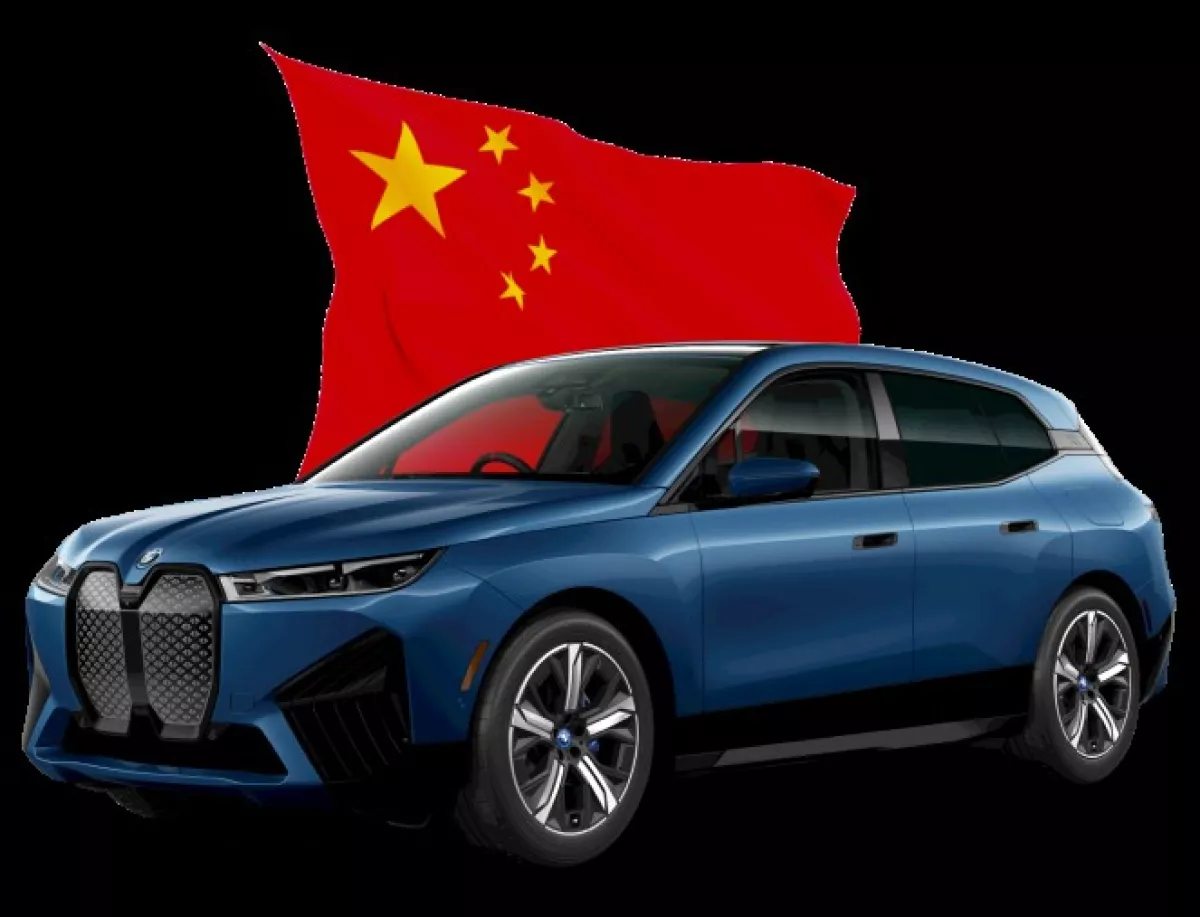
At the same time, the modest increase in sales of German cars in European markets may also be linked to the EU's introduction of high tariffs on electric vehicles from China, as well as the imposition of "minimum" prices on them (which, in reality, increase their cost), and other similar measures. However, the German automotive industry's relative success in Germany and across the EU is once again under threat.
By the end of 2026, the Chinese company BYD is expected to launch its plant in Szeged, Hungary, and it is already actively expanding its dealership network in Germany. Measures to counter this development are being taken, but they are not based on economic competition. In effect, a campaign has been launched to discredit BYD, accusing it of violating the rights of workers employed at its production facilities, among other allegations.
German automakers are also facing weak market demand, as the economic crisis of the capitalist economy is, in classical terms, a self-perpetuating cycle. Wage cuts and layoffs in one sector inevitably reduce consumers' purchasing power in another. As a representative of the German Association of the Automotive Industry (VDA) previously stated, "the overall difficult economic situation is affecting consumer spending and leading to comparatively weak demand for passenger cars."
The automotive industry is also facing serious challenges as a result of the stricter EU CO₂ emissions requirements promoted by the Green parties and the associated fines, while the costly transition to electric vehicle production has become a heavy burden for many companies.

Undoubtedly, Germany's economy has also been dealt a significant blow by the abandonment of cheap Russian energy resources, but this is neither the only nor the main factor behind the downturn. A whole range of factors has contributed to the rising cost of German products and the weakening of their competitiveness, including the trade war with the United States.
In 2024, Volkswagen sold 380,000 new vehicles in the United States, accounting for 8 per cent of its global sales. However, in April 2025, the United States imposed a 25 per cent tariff on imported automobiles, including German-made vehicles, as well as those produced in Mexico. Given that the United States accounted for the largest share of Germany's new car exports—13 per cent—this dealt a severe blow to German automotive companies.
Special programs aimed at reducing car use may also have contributed to the worsening situation. In 2025, up to half of employers provided their employees with public transport passes or company-sponsored bicycle rental schemes. Nevertheless, surveys show that the overwhelming majority of Germans still prefer to travel by car or motorcycle.
Reducing working hours instead of jobs
There is also an alternative perspective: the current situation in the German automotive industry is, above all, a crisis of jobs rather than of profits. Since 2020, the number of employees in the automotive and related industries has declined by 60,000, yet, according to some reports, the combined profits of Volkswagen, Mercedes-Benz, and BMW have risen to €50 billion, while their retained earnings have reached €250 billion.
For several years, the German automotive industry viewed the transition to electric vehicles as the solution to its problems. However, it is now becoming clear that electromobility alone neither solves environmental issues nor guarantees the preservation of jobs.
Against this backdrop, during the most recent elections, parties such as the CDU/CSU, the FDP, the Sahra Wagenknecht Alliance (BSW), and the Alternative for Germany (AfD) questioned the complete phase-out of internal combustion engines. Left-wing politician Sahra Wagenknecht expressed the most radical view on the matter: "The arrogance of climate policy underlying the decision that European electric vehicles will save the planet's climate has not improved air quality in either Dhaka or Delhi... The ban on internal combustion engines must be lifted."
A further proposed solution lies in the militarisation of Germany's economy. Katharina Hölzle, Director of the Institute of Human Factors and Technology Management at the University of Stuttgart, argues that the need for rearmament in response to the "Russian threat" is creating new employment opportunities, as the new factories currently being opened in Germany are primarily in the defence industry.
At the same time, there are alternative approaches to transforming the automotive industry that take into account both environmental concerns and the interests of employees. These include shifting production toward alternative forms of transportation, such as cargo bicycles, or reducing working hours instead of cutting jobs.
Overall, preserving this traditionally leading sector of the German economy requires a comprehensive approach. However, an essential prerequisite, according to this view, is abandoning Brussels' dominance in favour of Germany's national industry and its workforce.







 editor@caliber.az
 +994 55 444-88-98
 Азербайджан, Баку, ул. Низами, 203, Af Business House, 5-й этаж