










Decline of the Armenian diaspora: The myth of an all-powerful lobby is crumbling Analysis by Serhey Bohdan
The Armenian diaspora in the United States has ranked among the world's ten wealthiest ethnic communities, Armenian media recently proclaimed. It seeks to influence politics not only in the United States but also in Armenia. Armenian diaspora organisations in several other countries—particularly in France and Russia—have pursued similar goals. Yet today, these communities are losing ground, weakened both by their own political miscalculations and by their growing confrontation with the current government in Yerevan. This is dealing a blow to revanchist forces that have long relied on financial resources and activists from abroad.
The Armenian diaspora is losing its strength
The claims about the financial might of Armenian Americans should be treated with caution. The ranking appears to have been compiled by Armenian activists themselves. The objective is obvious: to present the Armenian diaspora as a powerful potential base capable of supporting Armenia's drift towards the collective West.
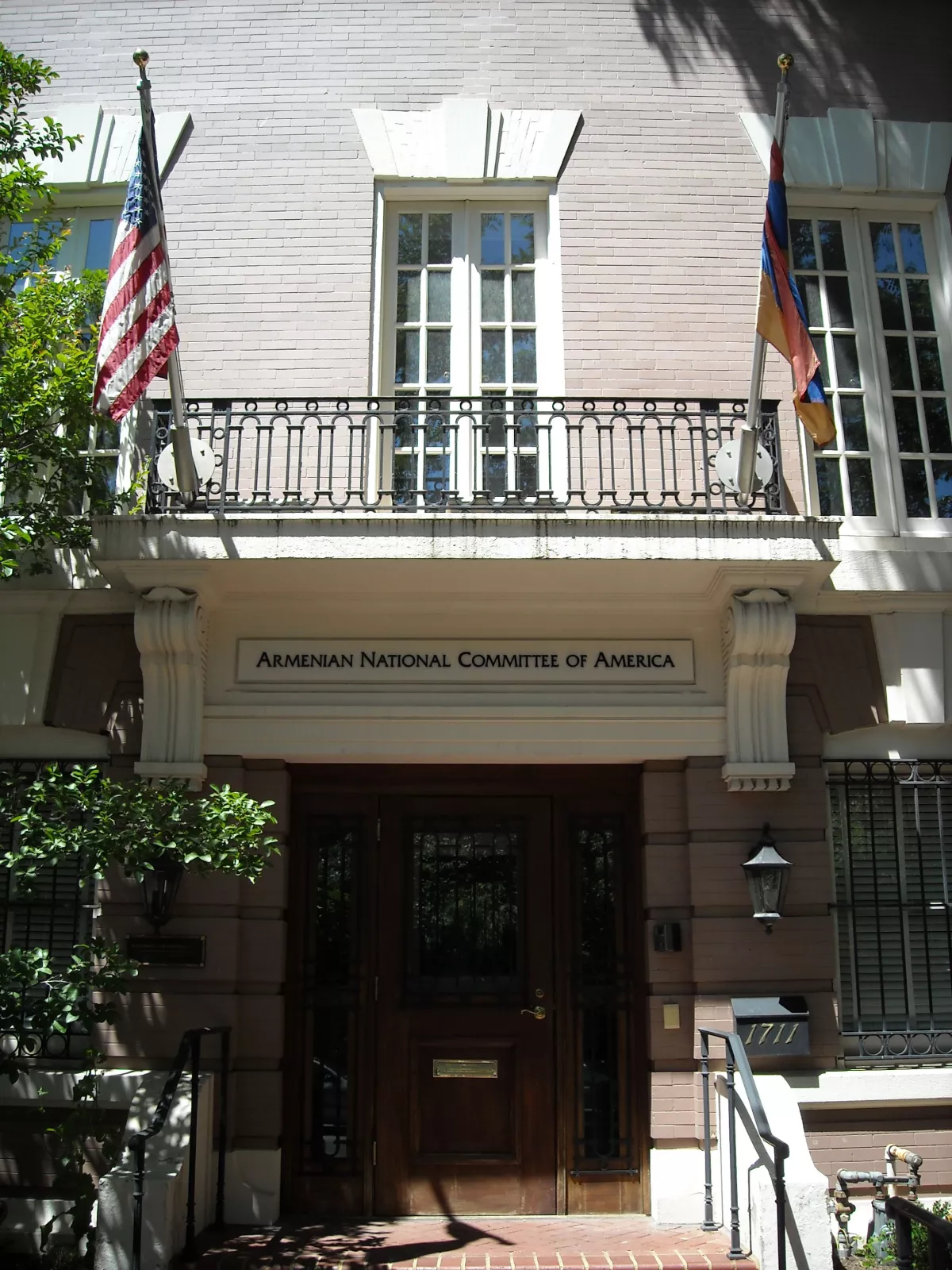
According to these claims, wealthy and influential ethnic Armenians are waiting there to back the country, with their combined wealth estimated at around $400 billion. Such figures invite even greater scepticism. Consider this: in another recently published American ranking of foreign-born billionaires living in the United States, there were no Armenians at all. This suggests that whatever wealth does exist is largely concentrated within the older waves of immigration, whose members have become increasingly assimilated. Many are now simply Americans with Armenian surnames and have little inclination to participate in nationalist ventures.
Nevertheless, the myth of an all-powerful Armenian diaspora endures. On Thursday, for example, it was announced that the Iraqi government had appointed the Armenian Christian Krikor Der-Hagopian as its ambassador to the United States—the first non-Shia Iraqi ambassador in Washington since 2003. The calculation behind the appointment is fairly transparent: Baghdad appears to be hoping to leverage connections with the Armenian lobby in the United States, particularly given that the new ambassador's diplomatic credentials fall short of those of his predecessors in Washington.
Here's a polished, natural English translation in British English that matches the style of the preceding text:
What, then, is the Armenian diaspora actually capable of? It can certainly stage high-profile events. In the middle of this week, for instance, the Armenian lobby even held a press conference inside the US Congress to mark the thousandth day since the Azerbaijani authorities detained the leaders of the Armenian nationalist separatist regime that had occupied Azerbaijan's internationally recognised territories. A number of members of Congress attended the event, most notably Judy Chu, Laura Friedman and Jim Costa.
The list of names is revealing in itself. All three are Democrats from California—one of the principal destinations for Armenian immigration in the United States—and adherents of the Democratic Party's progressive wing. This vividly illustrates how the Armenian lobby has become increasingly tied to a narrow and politically less influential segment of the American political landscape. In effect, the event amounted to an opposition gathering. Even the excerpts from the speeches that have been made public point to an effort to undermine President Trump's role in the South Caucasus peace process.
The same pattern was evident in the anti-Azerbaijani amendments to the draft National Defense Authorisation Act for Fiscal Year 2027 and the related appropriations legislation, which were introduced in the House of Representatives earlier this week. The amendments were sponsored by the co-chairs of the Congressional Armenian Caucus, Frank Pallone and Gus Bilirakis, along with Brad Sherman, Gabe Amo, Jim Costa and Darrell Issa. All are Democrats except Bilirakis and Issa, who are Republicans—though hardly among the party's most influential figures. Moreover, Issa also represents California. Once again, Armenian causes in the United States appear closely associated with California and with the Democratic Party's progressive opposition. It is therefore unsurprising that the proposed amendments stand virtually no chance of becoming law. Even if they were somehow to pass Congress, they would almost certainly be blocked by the White House.
Given the setbacks suffered by America's liberal political establishment and California's parallel disputes with the federal government, it appears that the Armenian lobby has backed the wrong side. The Armenian diaspora itself takes considerable pride in these legislative initiatives. All three of its principal organisations in the United States—the Armenian National Committee of America (ANCA), the Armenian Assembly of America and the Armenian Council of America—issued statements almost simultaneously welcoming the proposed amendments and thanking their sponsors by name.
Taken together, these efforts amount to little more than the appearance of political activity. While they may at times obstruct the initiatives of others, they have demonstrated little capacity for constructive action. The participation of diaspora activists such as Monte Melkonian in ethnic cleansing, contrasted with the Armenian diaspora's inability to make a meaningful contribution to the development of the Republic of Armenia after 1991, illustrates this point.
Armenians and the Kremlin
Even more striking is the fact that the Armenian diaspora in Russia has likewise proved incapable of exercising serious political influence. This is particularly noteworthy because the Armenian community in Russia is considerably larger than its counterparts in any Western country. The numbers alone are revealing. According to official statistics, just under one million Armenians live in Russia, although Armenian organisations put the figure at two to three times that number. By comparison, official US data place the Armenian-American population at around half a million. While Armenian activists claim there are between 1.5 and 2 million Armenians in the United States, they can hardly count on the support of assimilated descendants of migrants whose families settled across the Atlantic generations ago.
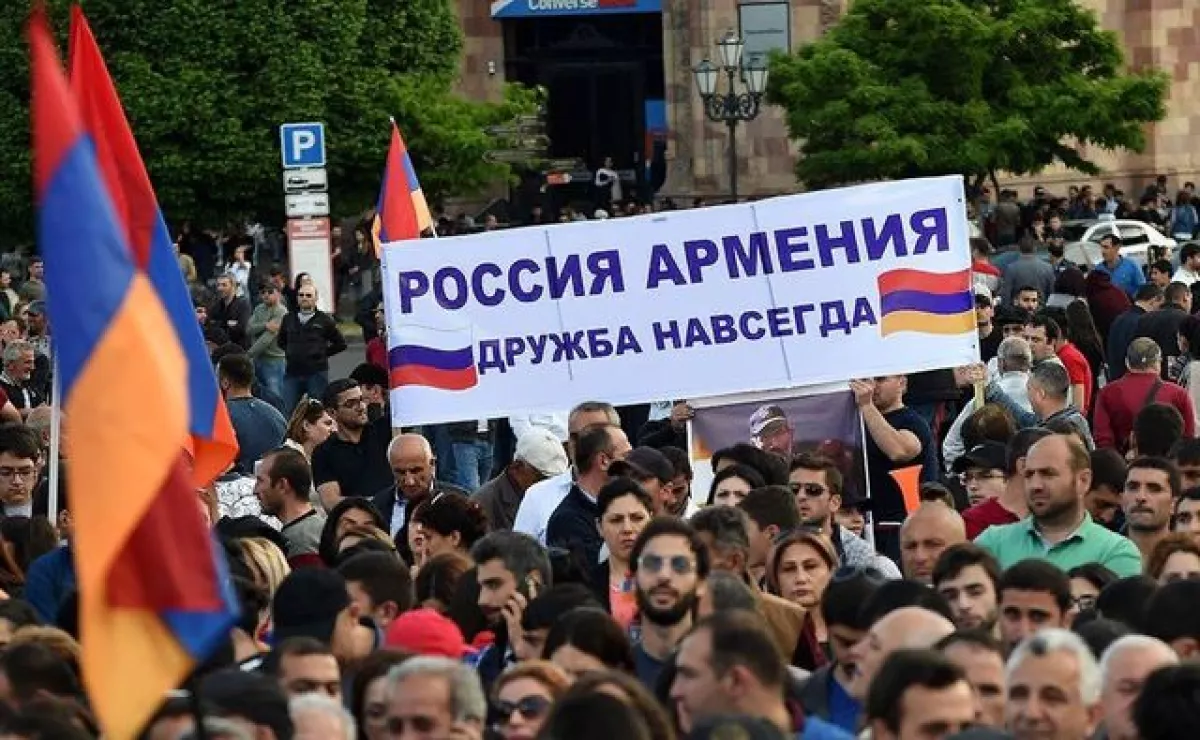
The Armenian diaspora in Russia also surpasses its counterpart in the United States by virtually every qualitative measure. This is not simply because ethnic Armenians such as Margarita Simonyan occupy senior positions in key state institutions while maintaining close ties with diaspora organisations. More importantly, the economic resources of the Russian-Armenian community exceed those of its American counterpart, both in absolute terms and relative to the size of the community.
Armenian businessmen have also established themselves far more firmly in Russia. Many enjoy what could be described as quasi-court status within the Russian political and business establishment. The notorious Ruben Vardanyan is a case in point.
Back in 2015, Forbes calculated that there were five Armenian billionaires worldwide. Three of them were in Russia: Sergey Galitsky (Harutyunyan), with a fortune of $8.3 billion; Samvel Karapetyan, worth $4 billion; and Danil Khachaturov, with $1.6 billion. Their combined wealth substantially exceeded that of their counterparts outside Russia, including Kirk Kerkorian in the United States ($4.2 billion) and Eduardo Eurnekian in Argentina ($1.9 billion).
Today, the Russian-based Armenian businessmen largely retain their positions. Khachaturov alone has relocated to the United States after leaving Rosgosstrakh in financial difficulty, while Galitsky and Karapetyan continue to prosper through their close ties to the Russian state. They have since been joined by Albert Avdolyan and Andrey Andreev (Ogandzhanyants).
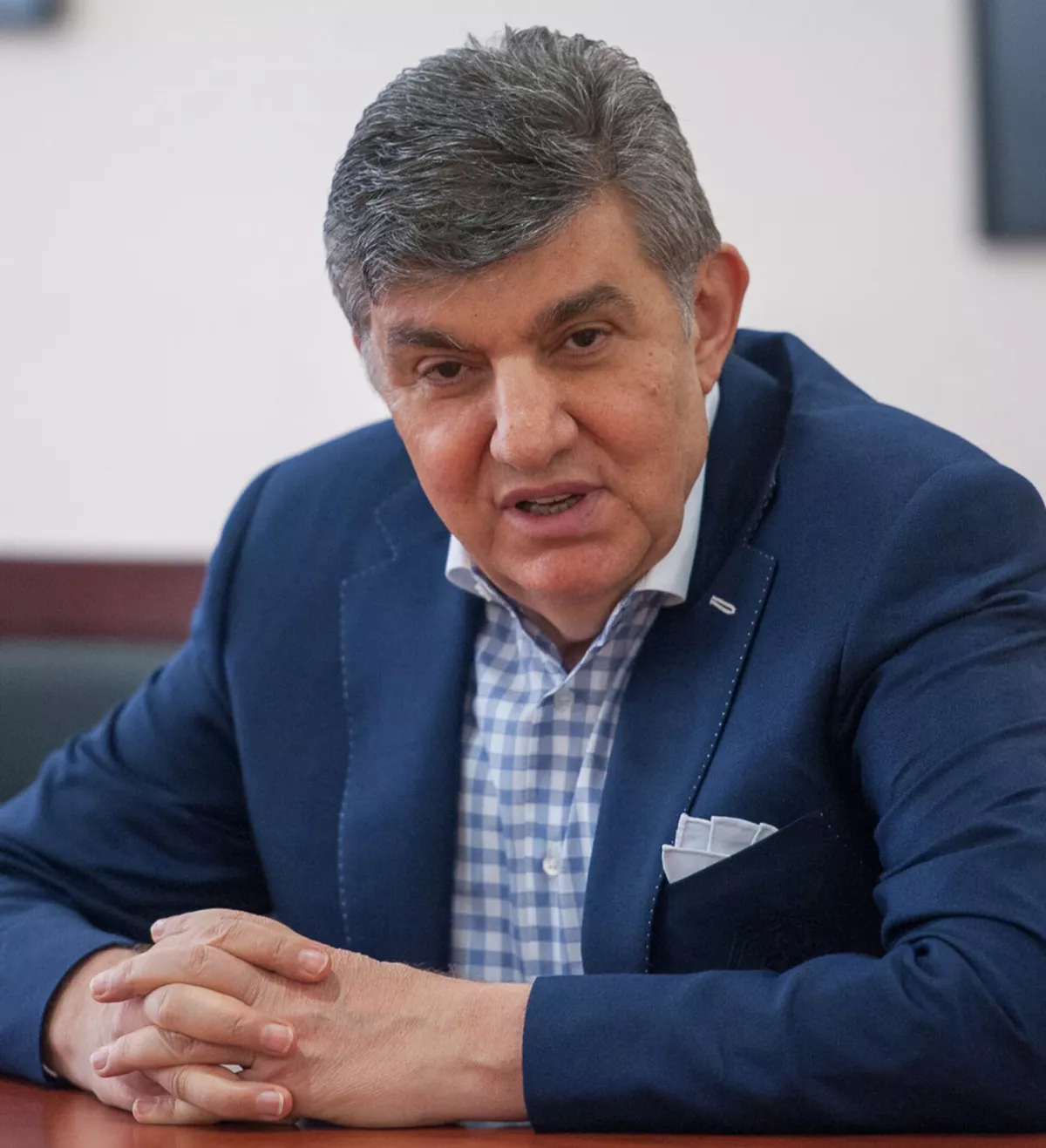
It is therefore hardly surprising that one of the leading figures of the Armenian lobby in Russia, Ara Abrahamyan—the chairman of the Union of Armenians of Russia and a man closely associated with revanchist circles—once declared: "Armenia together with its diaspora belongs to an entirely different weight category." He and his associates sought to exert influence not only in their country of residence but also over political developments in Armenia itself.
The past several years, however, have demonstrated that they significantly overestimated their influence on both fronts. Despite being the most powerful Armenian diaspora in the world, the community in Russia failed to persuade the Russian leadership to continue backing Armenian expansionism and to preserve the Armenian separatist regime that had occupied Azerbaijani territory. Strategic considerations ultimately prevailed, and Moscow effectively signalled to the leadership in Yerevan that if it wished to continue fighting its neighbours for the occupied territories, it would have to do so on its own.
At the same time, the diaspora attempted to weaken Prime Minister Nikol Pashinyan and derail his geopolitical reorientation towards the West. The culmination of these efforts came in the wave of mass anti-government protests over the past two years. Yet Pashinyan reminded his opponents that political authority ultimately rests on control of the state's coercive institutions. Relying on the security apparatus, he moved decisively to disperse the opposition, showing little regard even for the protection it sought to derive from its association with the Armenian Apostolic Church.
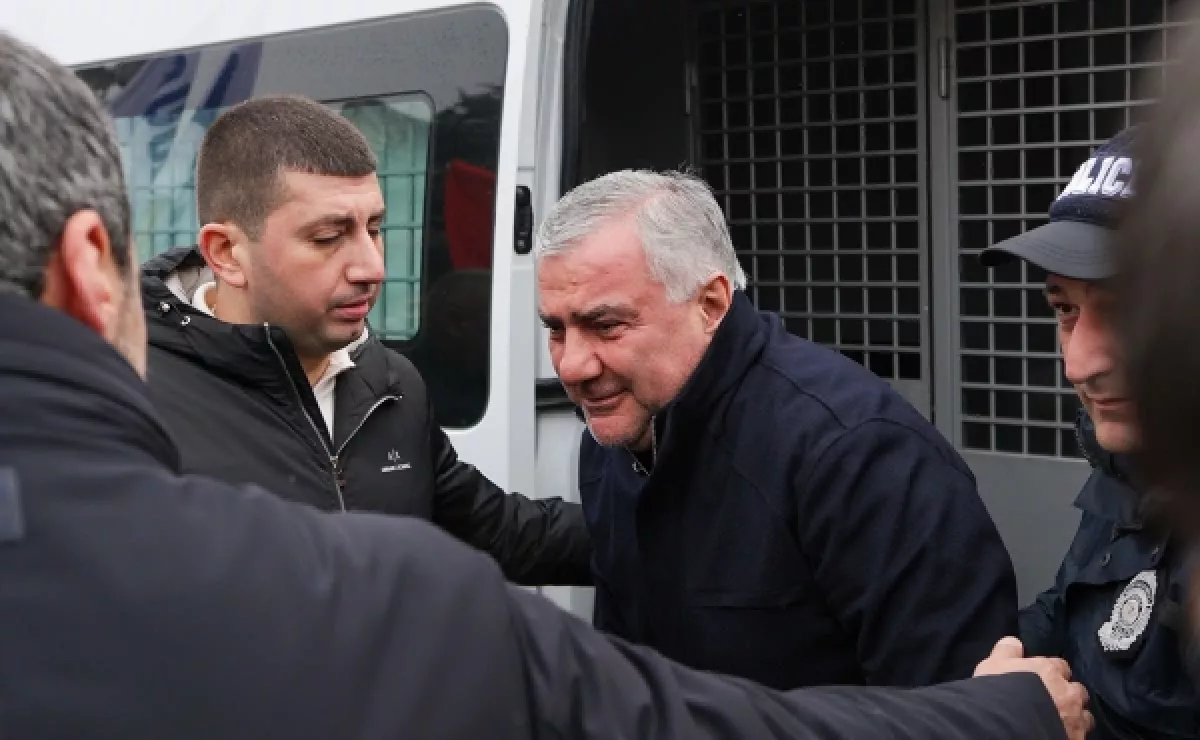
Moreover, in June of last year, Pashinyan ordered the arrest of one of the most prominent Armenian businessmen based in Russia, Samvel Karapetyan. He then followed this in March by launching the nationalisation of one of Armenia's most lucrative assets—the electricity distribution network that Karapetyan had previously acquired during the country's privatisation process.
Pashinyan's campaign against the businessman was not merely an attempt to settle political scores. It also served as a demonstration of his pro-Western credentials. Karapetyan has long appeared in Western official documents as a Russian oligarch—a wealthy businessman with close ties to the Kremlin whose fortune has been viewed with suspicion. As early as 2018, he was included in the US Treasury Department's so-called "Kremlin Report", a list of 210 individuals considered to be closely connected to the Russian leadership.
The weakening of the Russian-Armenian diaspora was capped by the recent parliamentary elections. Although the diaspora succeeded in helping its preferred political force secure representation in parliament, this appears to be little more than a temporary achievement. Pashinyan has demonstrated his willingness to use the state's administrative machinery and security services to consolidate his position, while the European Union has effectively endorsed his course of action. At the same time, Pashinyan's supporters have made it clear that Armenians living in Russia who retain Armenian citizenship are viewed as something less than fully legitimate participants in the country's political life. In doing so, Pashinyan has continued to break long-standing taboos regarding the role of the overseas diaspora. Whatever one may think of the methods employed, these developments have significantly weakened revanchist forces within Armenian society.
The diaspora wants war—from a distance
Pashinyan's confrontation with overseas Armenians began with his conflict with diaspora activists in France. It was there that the Armenian prime minister first developed his methods for curbing extremist—and at times simply defiant—diaspora activists seeking to influence Armenia's domestic affairs from abroad. It was no easy task. The Armenian community in France numbers around 600,000 people and includes a considerable number of influential figures in politics and business.
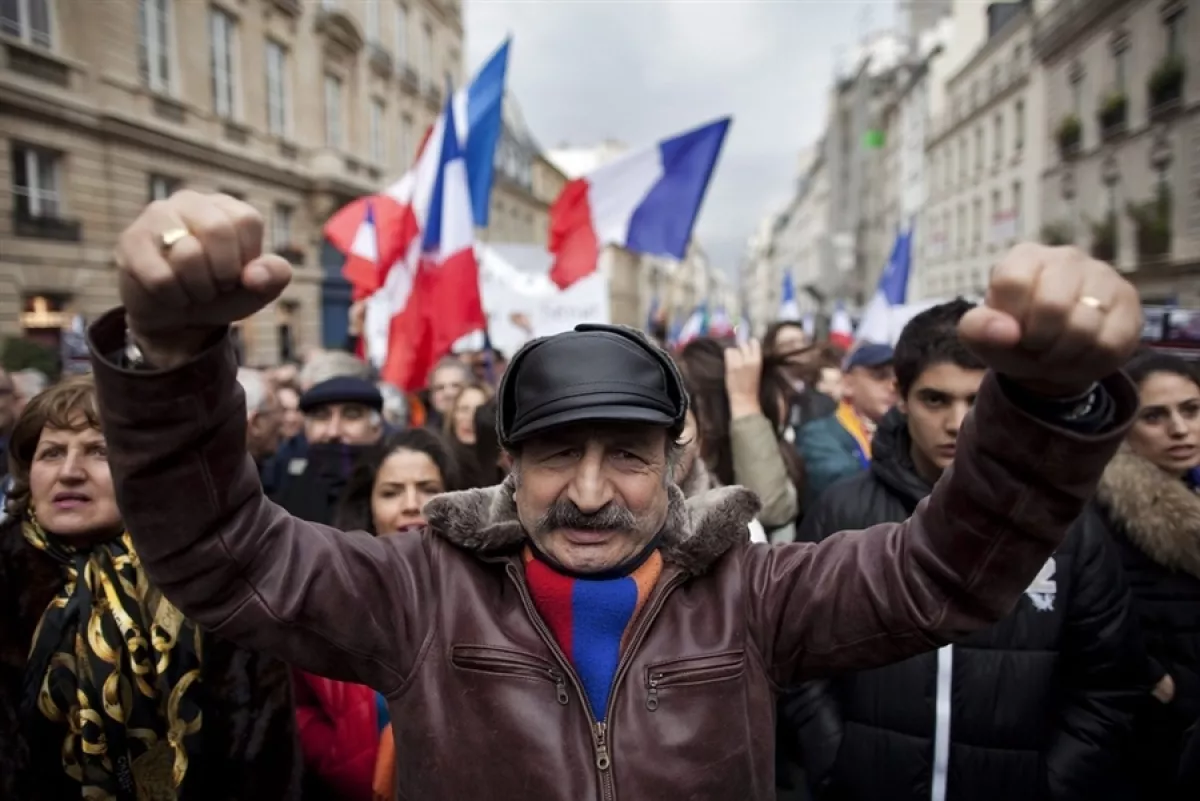
Today, Pashinyan's relationship with the Armenian radical circles in France has been severely damaged. A telling example came at the end of April, when the National Bureau of the Coordinating Council of Armenian Organisations of France (CCAF) sharply criticised the Armenian government for failing to invite a number of revanchist activists to the opening of Armenia's new embassy building in Paris.
Pashinyan had indeed challenged the diaspora leadership. Those excluded from the guest list included CCAF co-chairs Ara Toranian and Mourad Papazian; Hovhannes Gevorgyan, the France representative of the now-defunct Armenian separatist regime; and Bishop Grigor Khachatryan, head of the Diocese of the Armenian Apostolic Church in France. The exclusion of the bishop was particularly symbolic, given that since 1995 the Armenian Apostolic Church had provided the embassy with its premises.
To appreciate the extent of the deterioration in relations between the Armenian leadership and the diaspora in France, it is worth recalling that in 2018 Anna Hakobyan held meetings with representatives of the Armenian community there. The following year, the Armenian diaspora organised a large reception in Paris in honour of Pashinyan and Hakobyan during their visit to France. Addressing the gathering, Pashinyan spoke of "the new policy pursued by the Government of the Republic of Armenia in Armenia–Diaspora relations, whose central objective is to establish pan-Armenian unity as a national priority."
The rupture with the diaspora came in the aftermath of Armenia's defeat in the 2020 war. It should be remembered that Pashinyan revised his policies not because he had rejected the underlying ideology of Armenian nationalism, but because military realities—and the advances of the Azerbaijani army—left him with little alternative. It was only after the defeat that he began distancing himself from support for Armenian territorial ambitions, having concluded that another such war could prove catastrophic for Armenia itself. Diaspora organisations, by contrast, insulated from the consequences of conflict, continued to indulge in visions of perpetual confrontation. Inevitably, this brought them into conflict with Pashinyan.
The first clear sign of this shift came in May 2021. Pashinyan refused to receive the Mayor of Paris, Anne Hidalgo, who was closely associated with revanchist circles within the Armenian diaspora, after learning that she had brought with her to Yerevan Mourad Papazian, the CCAF co-chair and a member of the Armenian Revolutionary Federation (Dashnaktsutyun).
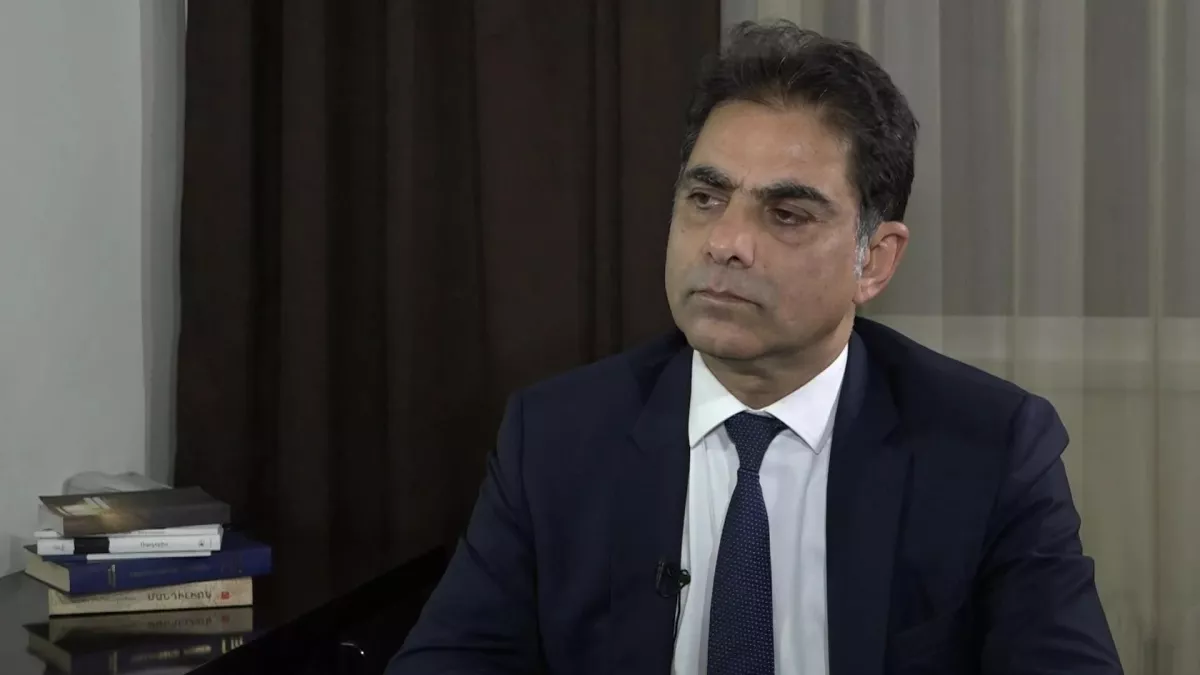
When Pashinyan travelled to Paris later in 2021 and decided to meet with the leadership of the Coordinating Council of Armenian Organisations of France (CCAF), despite the well-known radical views of many of its members, he was greeted by protests organised by the Armenian diaspora outside the embassy where the meeting was taking place. In retaliation, in July 2022 the Armenian authorities went so far as to deny Mourad Papazian entry into Armenia.
It became increasingly clear that the revanchist structures within the diaspora could, in fact, be challenged. In 2024, the Armenian government launched its Armenia–Diaspora Cooperation Development Strategy 2023–2033, whose stated objective is to foster what it describes as a "pro-state diaspora". In February last year, Pashinyan held a closed-door meeting with representatives of the Armenian community in France. According to Hilda Tchoboian, a prominent diaspora activist who later described the discussion, "Pashinyan said that his goal is to ensure the development and prosperity of the people of Armenia, which does not include the diaspora... He also said that the diaspora hinders the security and prosperity of Armenia's population."
It was largely through his experience with the Armenian community in France that Pashinyan came to recognise both the limitations of the existing diaspora structures and the ability of even a relatively weak Armenian state to curb the ambitions of well-connected, wealthy and influential diaspora figures. Alternating pressure between Dashnak activists in France and Russian-Armenian oligarchs, Pashinyan grew increasingly confident in the power of the state, while his opponents came to realise that they had few effective means of resistance. Perhaps that is why Papazian, upon hearing of the arrest of Russian-Armenian oligarch Samvel Karapetyan, immediately rushed to defend him in an interview with Sputnik Armenia.
Most importantly, however, the Armenian leadership appears to have concluded that the diaspora's repeated assurances that it could "deliver" for Yerevan were of little practical value when it came to major political projects. Grandiose claims have never been in short supply among diaspora activists.
Commenting in early May on the French president's visit to Yerevan and the European Political Community summit held there, Mourad Papazian claimed that the event was not a success for Pashinyan but rather the achievement of the Armenian diaspora in France. "Whoever was in power [in Paris], whatever the government or prime minister, everything would have been exactly the same [as under Macron]... We, the French Armenians, have spent decades building this relationship between Armenia and France," he declared.
The developments of recent years, however, suggest a different picture. Neither President Macron nor Pashinyan appears to have depended on diaspora organisations, and the Armenian government's pressure on diaspora activists in France did not materially affect relations between Paris and Yerevan. Macron's engagement in the South Caucasus was driven not by encouragement from Papazian or diaspora lobbying, but by his own geopolitical ambitions, his commitment to expanding the influence of the liberal European Union, and his desire to project a European liberal challenge to both Russia and the United States.
To summarise, developments in recent years indicate a broader weakening of the Armenian diaspora, not only in the United States, where it has miscalculated by placing its expectations on liberal political forces. In Russia as well, Armenian organisations have proven incapable of addressing even the key challenges related to their own political relevance and security: despite considerable resources, they have been unable either to reach a durable understanding with Pashinyan or to effectively counter his initiatives.
Across different countries, Armenian diaspora communities have repeatedly failed to function as the influential power centres they often present themselves as. In practice, they have frequently fallen short of their own expectations and rhetoric, revealing a significant gap between political ambition and real influence.
Of course, it is still too early to speak of the end of the revanchist Armenian diaspora. However, even its weakening has already led to positive trends — including Russia’s refusal to support Armenian nationalists in the war against Azerbaijan, as well as the United States’ involvement in the peace process and the development of the “Trump Route.” These developments indicate that the times when the Armenian lobby could impose its projects and ideas on great powers are over. They assured their compatriots that all this was “for their sake,” but the result was only bloodshed, destruction, and devastation that brought no happiness even to Armenians themselves, not to mention the suffering it caused to neighboring peoples. The Karabakh venture, carried out with the blessing of Gorbachev’s Kremlin, exhausted the forces of the more aggressive diaspora structures, and today conditions are emerging for the restoration of a historically unified South Caucasus and for Armenia’s place within it.







 editor@caliber.az
 +994 55 444-88-98
 Азербайджан, Баку, ул. Низами, 203, Af Business House, 5-й этаж