










Diaspora versus the state: Armenian lobby ties Yerevan's hands Article in Jewish News Syndicate
The Israeli newspaper Jewish News Syndicate has published an article devoted to the difficult Armenian-Israeli relations and the negative influence of the Armenian lobby on Yerevan's politics. Caliber.Az presents an adapted version of the piece.
Editor's note: The author of this article, Michael Borodkin, is an analyst at the Jerusalem Institute for Strategy and Security (JISS) specializing in Iran.
Armenia’s post-war reality is defined by a brutal paradox. At the very moment the state requires maximum diplomatic flexibility to survive, some of its most influential advocates abroad are pushing a course that narrows Yerevan’s options. For a small country caught in the tectonic shifts of the Caucasus, the widening gap between Armenia’s elected leadership and the Armenian National Committee of America (ANCA) in Washington is no longer a purely internal dispute. It has become a strategic liability. The cost is strategic, not symbolic. It can distort Western policy signals and complicate Armenia’s relations with partners, including Israel, at precisely the moment Armenia needs more room to manoeuvre, not less.
The core tension is the difference between statecraft and identity politics. Diaspora communities have every right to lobby, advocate and mobilize. The problem begins when a lobby presents itself, implicitly or explicitly, as a substitute for the state’s national interest. That becomes especially damaging when the lobby’s rhetoric, shaped by maximalist narratives and moral absolutism, diverges from the hard choices faced by a government that must pay the real price of conflict, isolation and economic vulnerability.
In that environment, foreign policy becomes less a tool of survival and more a stage for symbolic battles. This is the trap.
While Armenia’s government seeks workable frameworks, diaspora lobbying has often moved in the opposite direction, treating complex geopolitical tradeoffs as moral betrayals. That difference becomes especially visible in the group’s posture toward the State of Israel. Over the years, ANCA has repeatedly framed the Jewish state as Azerbaijan's key ally in the Karabakh conflict. During the 2020 fighting, ANCA’s appeals urged Israeli officials to halt defence exports to Baku. In late 2025, the organisation tried to pull the Gaza debate into the Caucasus file, claiming that Azerbaijan was allegedly invoking the Palestinian issue to “whitewash its own violence.”
By framing Israel as a permanent enemy, the lobby leaves Yerevan with fewer tools to build the partnerships it needs. It also sends confusing signals to policymakers trying to understand what Armenia actually wants. The consequences are not theoretical. When localized disputes are elevated into international crises, they do more than generate headlines. They create friction that Armenia can ill afford. The attempt to turn municipal and legal disputes in Jerusalem’s Armenian Quarter into high-profile diplomatic causes is a case in point. Instead of strengthening Armenia’s position, they make compromise and cooperation politically harder.
The most strategically significant hot spot is the agreement reached by Armenia and Azerbaijan on the creation of the Trump Route (TRIPP). For Yerevan, transport connectivity and de-escalation of the conflict are not slogans, but tools to reduce dependence on Russia and limit Iran's ability to profit from regional paralysis. However, for diaspora activists who adhere to the logic of endless struggle, such frameworks are assessed not in terms of practical expansion of sovereignty, but through the prism of idealized moral templates. However, the region is not governed by templates, but by levers of influence, corridors, energy flows, and the ability to avoid isolation.
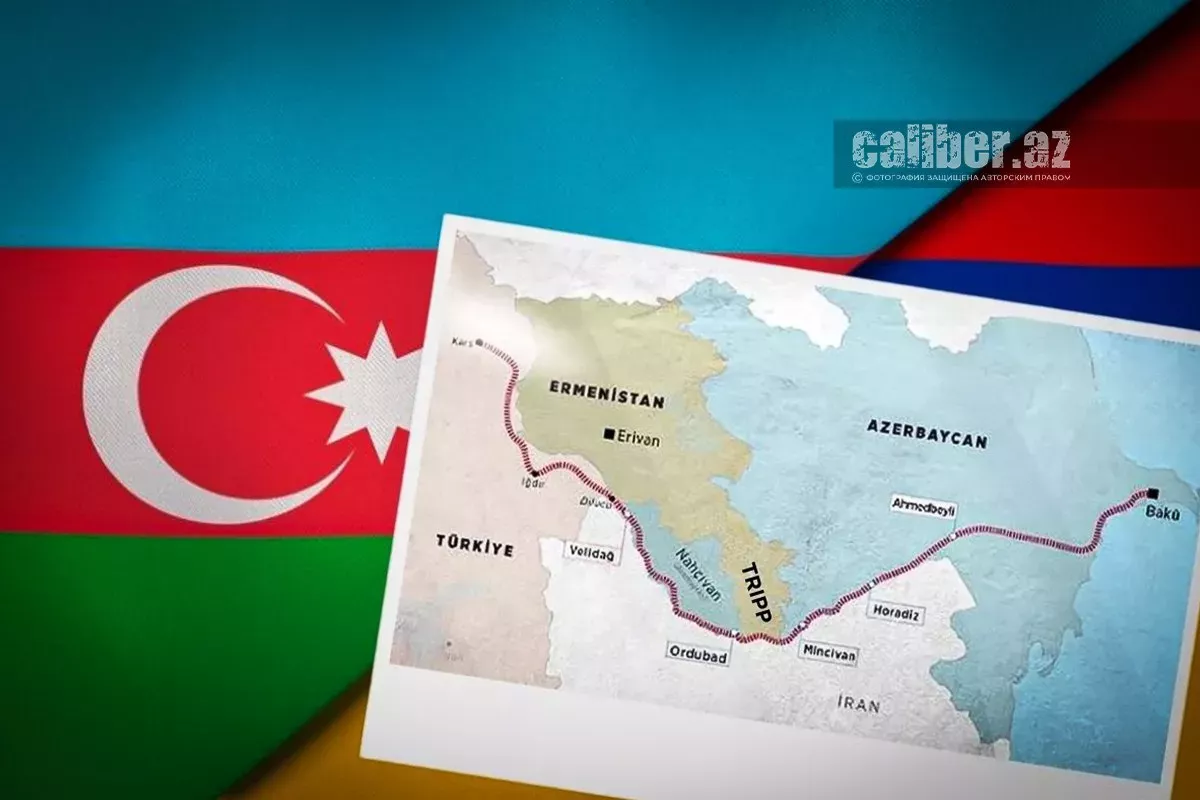
This is why diaspora obstruction carries a larger risk. It can pull Armenia out of alignment with broader Western goals in the Caucasus—goals that, however imperfectly, seek to reduce Russian and Iranian influence through normalization, connectivity and stability. If Armenia is seen in Washington as internally fragmented or strategically unreliable, it weakens Yerevan’s ability to secure meaningful Western support.
Armenia’s internal volatility makes this danger even sharper. The protests and polarization of recent years underscore how contested Armenia’s direction has become. Russia has every incentive to exploit internal fractures to preserve influence as its leverage erodes. Iran benefits whenever Armenia remains dependent and the region remains unstable. In that context, diaspora pressure that hardens maximalist positions may unintentionally reinforce the very dynamics that keep Armenia weak.
This is not a call to silence the diaspora. It is a call to recalibrate. Armenia’s leadership must make it clear that foreign policy is made in Yerevan, not outsourced to organizations with independent agendas. And at the same time, policymakers in Washington and Jerusalem should distinguish between lobby rhetoric and the strategic needs of the Armenian state. Washington should treat ANCA as a domestic pressure group, not as a credible proxy for Armenian state policy. U.S. and Israeli policymakers should engage Yerevan directly and stop allowing maximalist advocacy campaigns to set the agenda or manufacture diplomatic crises.
To survive in the 21st-century Caucasus, Armenia needs realism, not performative outrage. If the gap between diaspora passion and state pragmatism continues to widen, Armenia risks becoming a hostage to its own narrative, losing its future in an attempt to litigate its past.







 editor@caliber.az
 +994 55 444-88-98
 Азербайджан, Баку, ул. Низами, 203, Af Business House, 5-й этаж