










Does Armenia choose NATO weapons? Moscow is losing its tools of influence
Armenia is going to cooperate with France in defence and armament issues. Deputy Minister of Defence Karen Brutyan headed to Paris to discuss the issue. This is an evident challenge to Moscow. At the very least, this proves that Armenia is not satisfied with the actions of its main military partner - Russia. At the most, it proves that Russia is clearly losing the tools to influence Yerevan, which is clearly seeking to get out of Moscow's eyesight.
Meanwhile, weapons and their production are probably one of the areas that Moscow has made key in its relations with its partners. And it even tried to add this into a maximally interdependent scheme by creating the CSTO bloc. Armenia with the 102nd Russian military base in Gyumri has always been considered a priority partner of Moscow and periodically underwent a stage of partial rearmament - instead of obsolete weapons, Moscow used to supply something new. At least for the amount of several millions of dollars, with a deferred favourable credit - you will return it when you can, they say.
After the capitulation of Armenia in December 2020, Moscow kept delaying the provision of more weapons to Armenia, apparently fearing that these could be misused by a not always intelligent Yerevan and thus destroy Russia's peacemaking efforts in the South Caucasus. As before, Russia was unable to find a common language with Armenia for a more banal reason: they were unable to come to an agreement about payment, because the Armenian army needed not just "please" itself with new weapons, but was to be completely rearmed, to nearly 95% of its capacity.
Finally, the game was over. The Russian-Ukrainian war finally killed Yerevan's plans in this regard. It has become clear that the Russian Federation simply has no weapons for Armenia now - its stockpiles are almost completely depleted during the war. Moreover, something happened that is impossible to imagine even in the most terrible Armenian dream: a certain part of the military equipment from the 102nd Russian military base in Gyumri was transferred to the Ukrainian fronts. Although this fact was concealed by the Russian side in every possible way, there are eyewitnesses confirming the participation of weapons with the markings of the Russian Gyumri base in the battles in Ukraine.
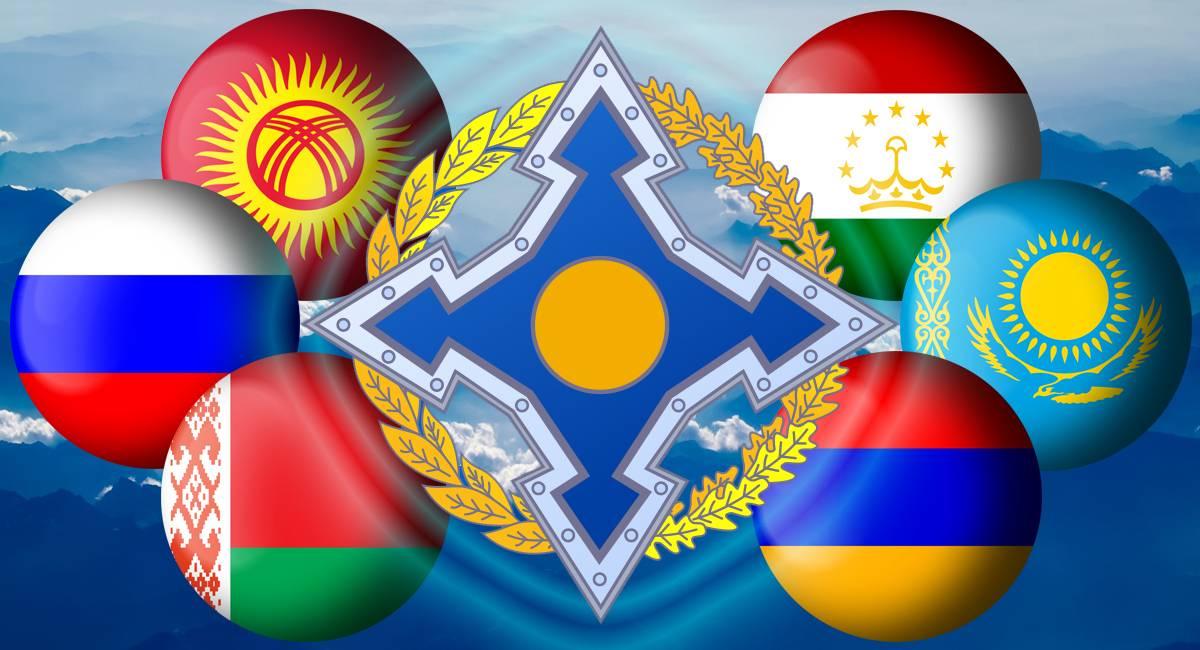
Pashinyan's trip to Moscow for the CSTO summit in May resulted in a very high-profile scandal: Pashinyan accused the CSTO of hypocrisy and unwillingness to help Armenia during the 44-day war. In fact, this was his reaction to Moscow's refusal to rearm Yerevan.
The question "what's next?" has become quite acute for Yerevan. Therefore, Armenia's intention to cooperate with France in the defence sphere is clearly linked to some lucrative offers from Paris. It does not really matter what kind of weapons it will be. Small arms or something bigger. It is important that Russia's military partner wants to buy weapons from Moscow's current adversary. And with this very purpose the delegation headed by the Deputy Defence Minister of Armenia Karen Brutyan is in Paris, where, besides negotiations, it takes part in the international exhibition of arms "Eurosatory-2022". The exposition is being held at the Paris Nord Villepinte exhibition centre from June 13 to 17. "Eurosatory-2022" is considered the world's largest international exhibition of land and air defence and security weapons. But no one has invited Russia there...
This fact is a serious image loss for Moscow, forcing the CSTO countries to think twice. After all, France is a representative of NATO, which is an opposite structure to the CSTO. And in the light of today's reality, this looks almost identical to the well-known situation with Türkiye, which, being a NATO member, decided to buy Russian S-400. And Russia needs to do something about it, otherwise, the loss of Moscow's authority in the community of EAEU and CSTO countries is obvious. And the Armenians are not working for anything, they want to see a specific return from Moscow. This is their nature, and the Kremlin has trained them for many years practically at the level of conditioned reflexes.
But now nothing fuels these reflexes, and Russia reacts with increasing irritation to the fact that Yerevan is quietly slipping out of its sphere of influence.
"The EU wants to seize the initiative from Russia and take the credit for advancing in all directions," said Russian Ambassador to Baku Mikhail Bocharnikov, commenting on the peace agreement between Baku and Yerevan, which literally before our eyes is getting more and more biased towards the "Brussels format". And this is just one of Moscow's reactions to Yerevan's "free-thinking" actions. However, in the current situation, Russia has almost no range of action and options: being bogged down in Ukraine, plunged into the sanctions swamp, and practically losing any significance in the West, Moscow has found itself bound hand and foot.







 editor@caliber.az
 +994 55 444-88-98
 Азербайджан, Баку, ул. Низами, 203, Af Business House, 5-й этаж