










Middle Corridor and Eurasian stability: Türkiye’s expanding role ThinkChina article
An article published in the Singapore-based online magazine ThinkChina examines the importance of the Middle Corridor and Türkiye’s growing role amid regional instability. Caliber.Az presents the most telling parts of the article.
The instability sweeping across the Middle East continues to weigh heavily on international commerce. In this era of growing geopolitical fragmentation, Türkiye has spent years cultivating a dense web of economic and strategic relationships across Central Asia, seeking to establish Ankara as the leading actor along a little-known but increasingly consequential logistical artery: the Middle Corridor.
The corridor is far more than a commercial pathway; it is a strategic lifeline connecting China to Europe through Central Asia, the Caspian Sea, the Caucasus and Turkey. Known also as Trans-Caspian International Transport Route (TITR), the Corridor is a multimodal network of railways, roads and ports, designed to redraw the map of Eurasian trade, reduce dependence on routes vulnerable to conflict, and elevate Türkiye’s role as a pivotal bridge between East and West.
Strategic uncertainty
While China is competing with Russia to preserve and expand its political and economic footprint in Central Asia — the birthplace of the Belt and Road Initiative (BRI) — its relationship with Türkiye in the region remains one of cautious cooperation.
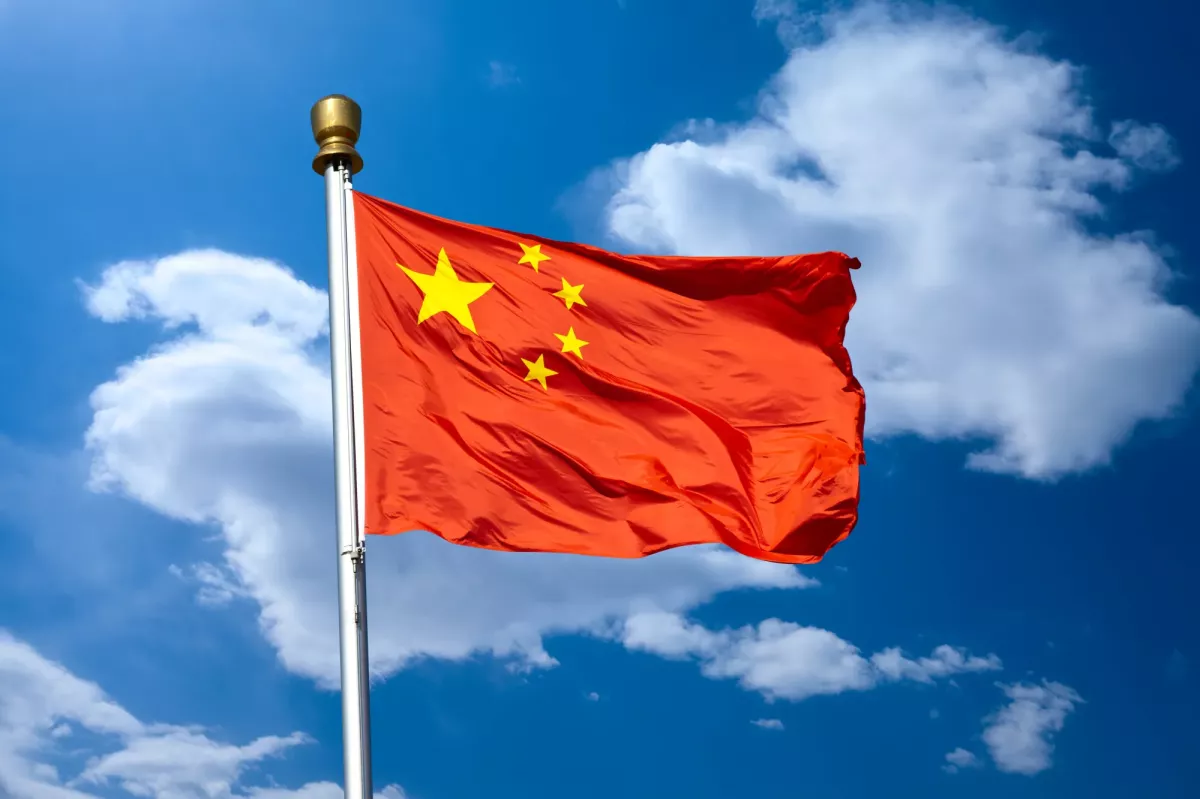
In Zhongnanhai, Türkiye’s deep cultural, linguistic and historical ties with the Turkic republics of Central Asia and Caucasus are viewed with suspicion, raising concerns that Ankara’s growing influence could gradually challenge China’s long-term positioning in a region it considers critical to its Eurasian ambitions.
As geopolitical uncertainty grows, Central Asian countries are once more hedging their bets, and the Belt and Road itself is evolving in the region from infrastructure connectivity to critical minerals exploitation and green energy cooperation. In this respect, climate change is becoming a powerful driver of China’s influence in Central Asia. Beijing is leveraging environmental cooperation to strengthen its partnerships and expand its strategic footprint.
On the other side, Türkiye is moving aggressively to consolidate its position as the gateway for Eurasian transit. Before Russia’s invasion of Ukraine, more than 85% of Eurasian freight travelled through the Northern Corridor across Russian territory. As sanctions and political risk diminished the appeal of routes crossing Russia, cargo volumes along the Middle Corridor surged more than 70%.
The Iran war strengthens Türkiye’s strategy
Today, Washington’s confrontation with Tehran is producing even deeper consequences. The closure of the Strait of Hormuz is reshaping the strategic geography of the Middle East, disrupting global supply chains and placing additional strain on already fragile energy markets. In an increasingly fragmented world, maritime chokepoints and overland corridors are once again becoming instruments of geopolitical power rather than merely channels of commerce.
The conflict involving Iran has also disrupted the internal routes that once connected Central Asia to the Persian Gulf. It is precisely in this context that Türkiye has accelerated its Eurasian connectivity strategy.
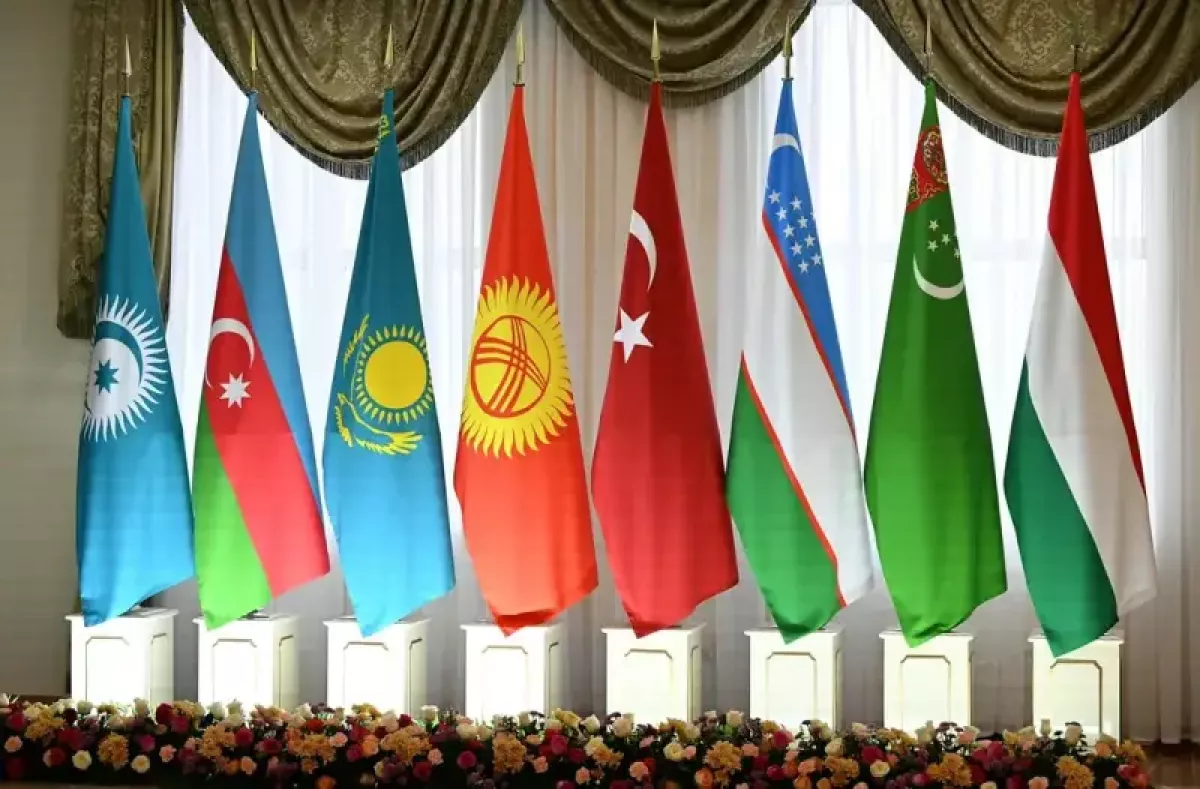
Working closely with Azerbaijan, Georgia and the countries of Central Asia, Ankara is strengthening the Middle Corridor through a variety of regional platforms, most notably the Organization of Turkic States.
Working closely with Azerbaijan, Georgia and the countries of Central Asia, Ankara is strengthening the Middle Corridor through a variety of regional platforms, most notably the Organization of Turkic States. At a summit of member states held in Baku on 2 April, leaders emphasised the resilience of Turkic infrastructure networks and their growing strategic potential.
The symbolism was reinforced just days later when Turkish diplomacy marked a rapprochement with Armenia through the reopening of a bridge. The gesture carried a clear geopolitical message: preventing renewed instability in the Caucasus. As momentum behind the corridor grows, Türkiye aims to transform the route into both a geopolitical lever and a magnet for foreign investment.
Türkiye — a key player in the political arena
Not only that, Erdoğan’s strategic network extends far beyond the Caucasus and Central Asia. Türkiye’s ties with the Middle East and North Africa are expanding rapidly.
In Syria, Ankara has positioned itself as a central actor in the country’s stabilisation after years of civil war. A similar pattern can be seen in Libya, where Türkiye has become a key power broker in Tripoli and across Somalia and parts of Central Africa, where Ankara is steadily building influence through a combination of investment, military partnerships and security cooperation.
However, here the geopolitical equation differs markedly from Central Asia. In these key theatres, it is Beijing — not Ankara — that often benefits most from the other’s reach. Türkiye’s growing influence frequently complements Chinese economic interests, helping create the stability and access that allow Beijing to expand its commercial and strategic presence while avoiding the burdens of direct intervention.
Editor’s note: The author of the article, Alessandro Arduino, is a visiting lecturer at the Lau China Institute, King’s College London.







 editor@caliber.az
 +994 55 444-88-98
 Азербайджан, Баку, ул. Низами, 203, Af Business House, 5-й этаж