










Sheikh Juneyd Mausoleum: a memory preserved in stone A historical overview by Caliber.Az
The Azerbaijani land is rich in unique monuments that reflect centuries of history and the wealth of cultural heritage. Among this diversity, mausoleums occupy a special place, combining architectural expressiveness with profound spiritual meaning. One such monument is the mausoleum of Sheikh Juneyd, which attracts attention with its historical significance and restrained beauty. Its architectural appearance was shaped by traditional construction techniques characteristic of its time and region.
Sheikh Juneyd was an outstanding religious figure of the 15th century, the fifth head of the Safaviyya order, the son of Sheikh Ibrahim, the father of Sheikh Haydar, and the grandfather of Shah Ismail I. Having assumed leadership of the order after his father’s death in the mid-15th century, he became the figure from whom a new stage in its development began. His name is associated with the gradual transformation of the order into an influential centre that united followers and strengthened its significance in the region. These changes gave the movement a more active character and expanded its role beyond the purely religious sphere.
The life journey of Sheikh Juneyd came to an end in one of the battles on the banks of the Samur River in 1460, where he suffered defeat in a fierce clash against the combined forces of Shirvanshah Khalilullah I and the ruler of the Qara Qoyunlu state, Jahan Shah.
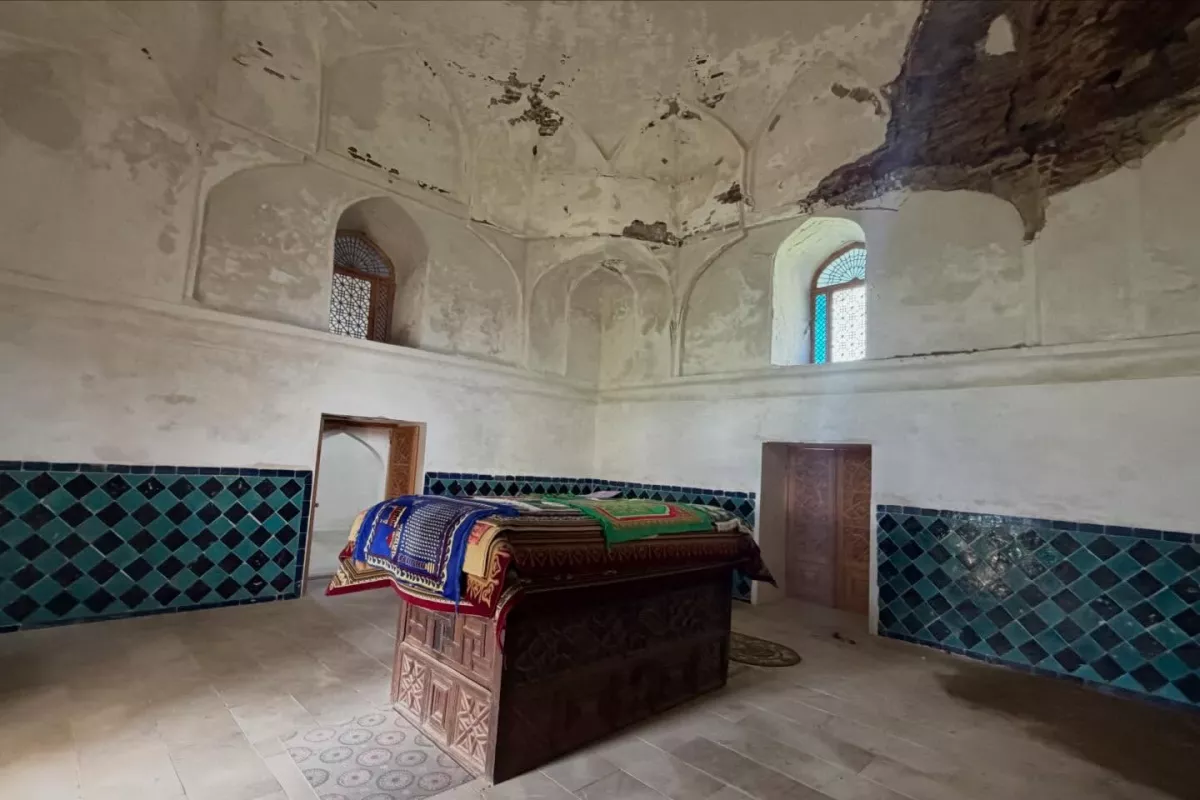
He was laid to rest in the village of Hazra, and this place became the guardian of his memory. Decades later, in 1544, his grandson — the Safavid ruler Tahmasib I — reburied his remains, transferring them to Ardabil and committing them to his native soil. In memory of Sheikh Junayd, he commissioned mausoleums both in Ardabil and in what is now the village of Hazra in the Gusar district. Craftsmen from Ardabil also took part in the construction of the mausoleum in Hazra.
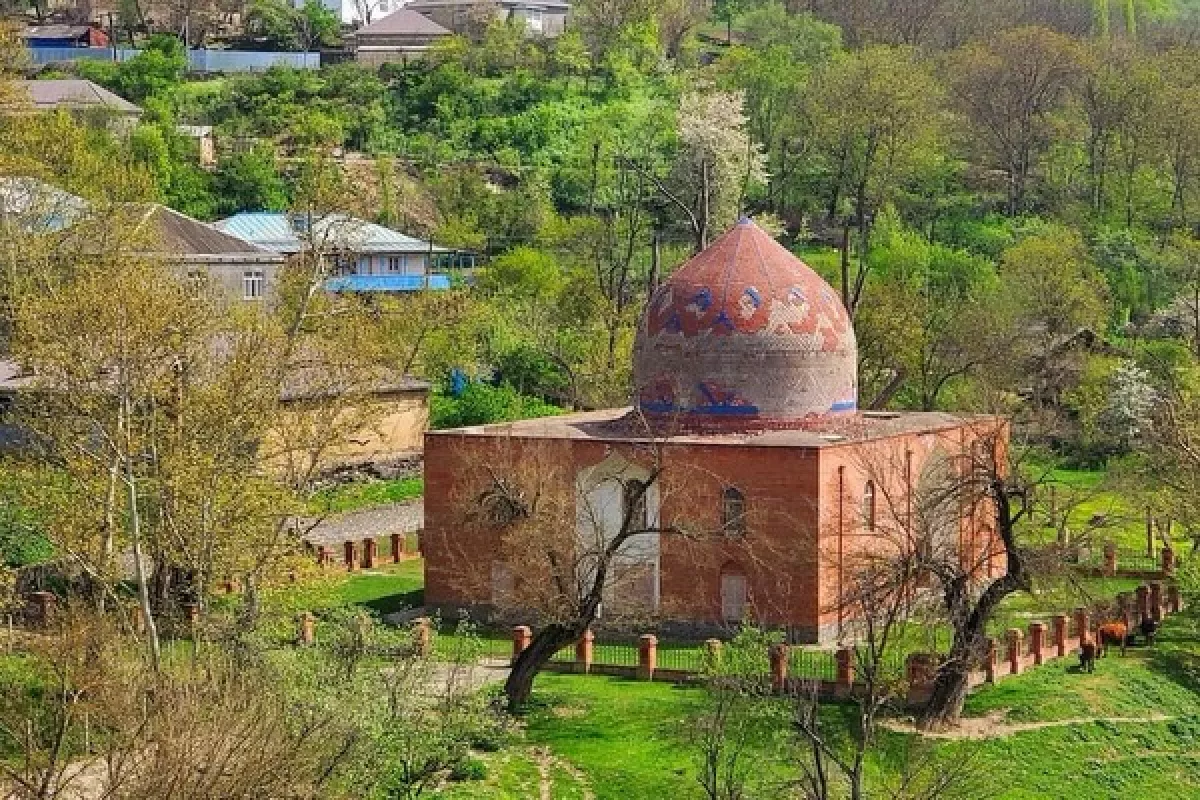
The mausoleum is a large architectural structure built of red fired brick. It is located not far from the Samur River, and its grounds offer a picturesque view of the surrounding landscape, lending the monument an atmosphere of seclusion and grandeur.
The composition is based on a clear and harmonious structure: a central square chamber is surrounded at the corners by small auxiliary rooms — cells. Entrances are located on all four sides of the mausoleum, emphasising its symmetry and the thoughtful nature of its layout.
The interior space is distinguished by its refined architectural design. The transition from the main structure to the dome is achieved through a system of muqarnas vaulting, creating the effect of a smooth, almost weightless ascent upwards.
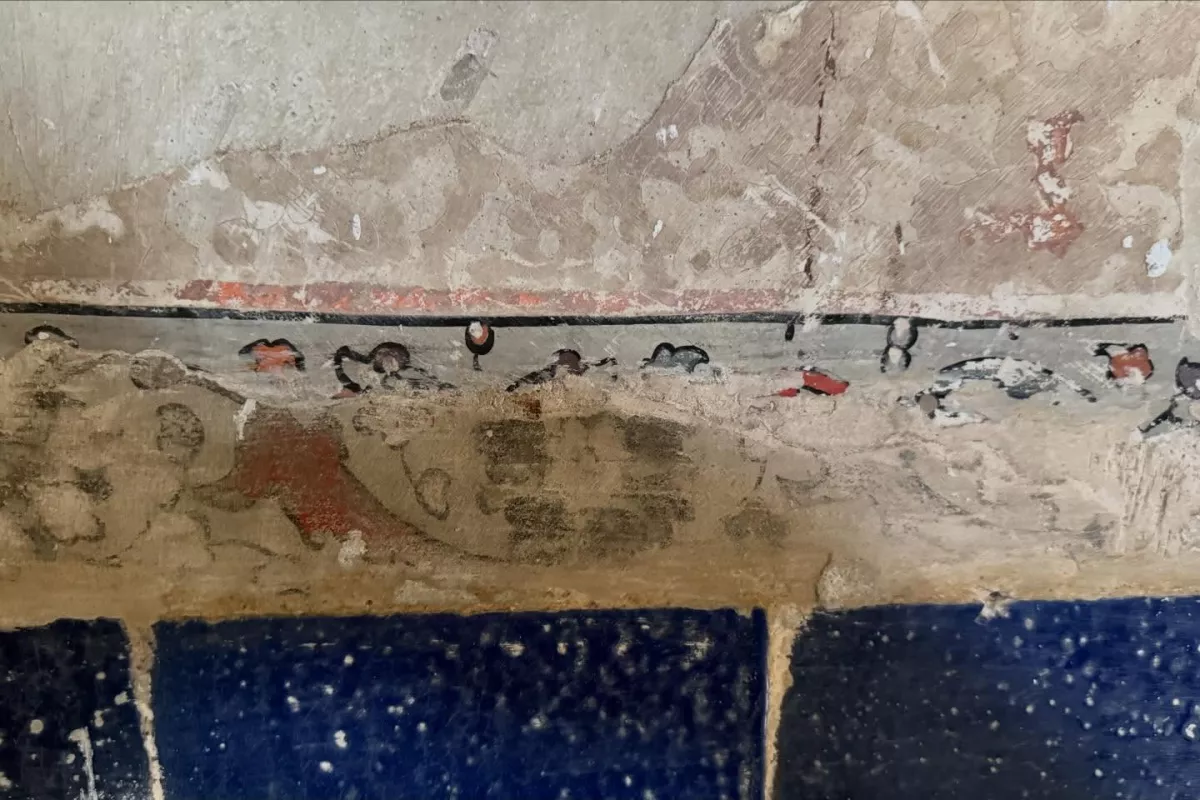
The walls of the mausoleum were once richly adorned with ornaments and intricate decorative compositions, as well as faced with decorative tiles featuring floral motifs. Only fragments of this embellishment have survived to the present day, allowing visitors to imagine its former splendour.
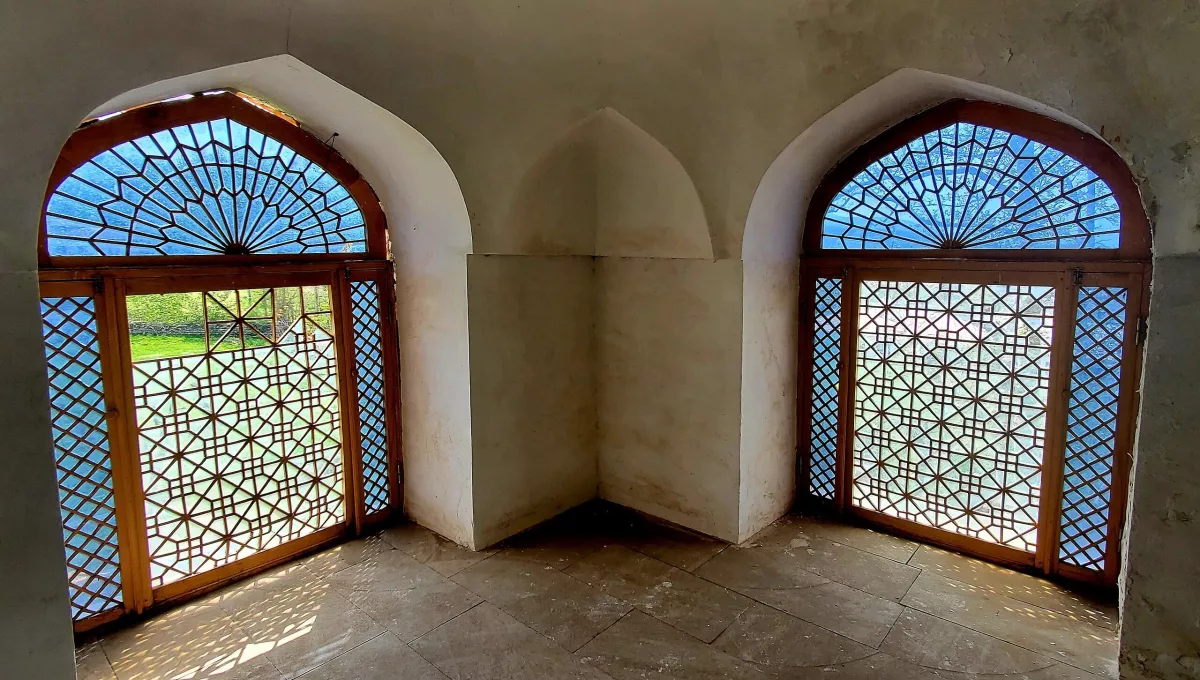
Inside the mausoleum there is a small mosque where religious rites were performed. This space organically complemented the overall concept of the structure, emphasising not only its memorial but also its spiritual purpose, making it a place of living religious presence.
On the exterior, the dome has partially preserved elements of its decorative design — traces of cladding made of coloured glazed elements in shades of blue, which lend the structure expressiveness and artistic depth.
Following its construction, the mausoleum became not only a place of veneration, but also an important spiritual and cultural centre. Religious figures of the time gathered here, discussions were held, knowledge was passed on, and a unique environment of spiritual enlightenment took shape.
In essence, it functioned as a madrasa — a centre of religious education and spiritual life. This is also evidenced by the ancient cemetery located behind the mausoleum, where religious figures from different eras are buried. Among them are respected theologians and spiritual mentors who made a significant contribution to the development of religious thought and the spiritual traditions of the region.
During the Soviet era, the mausoleum, like many religious monuments, was closed amid the anti-religious campaigns and lost its original purpose. It was used as a storage barn, and it was during this period that the interior suffered its greatest losses: a considerable part of the paintings and ornaments was destroyed — some were chipped away, others painted over, while much was lost forever.
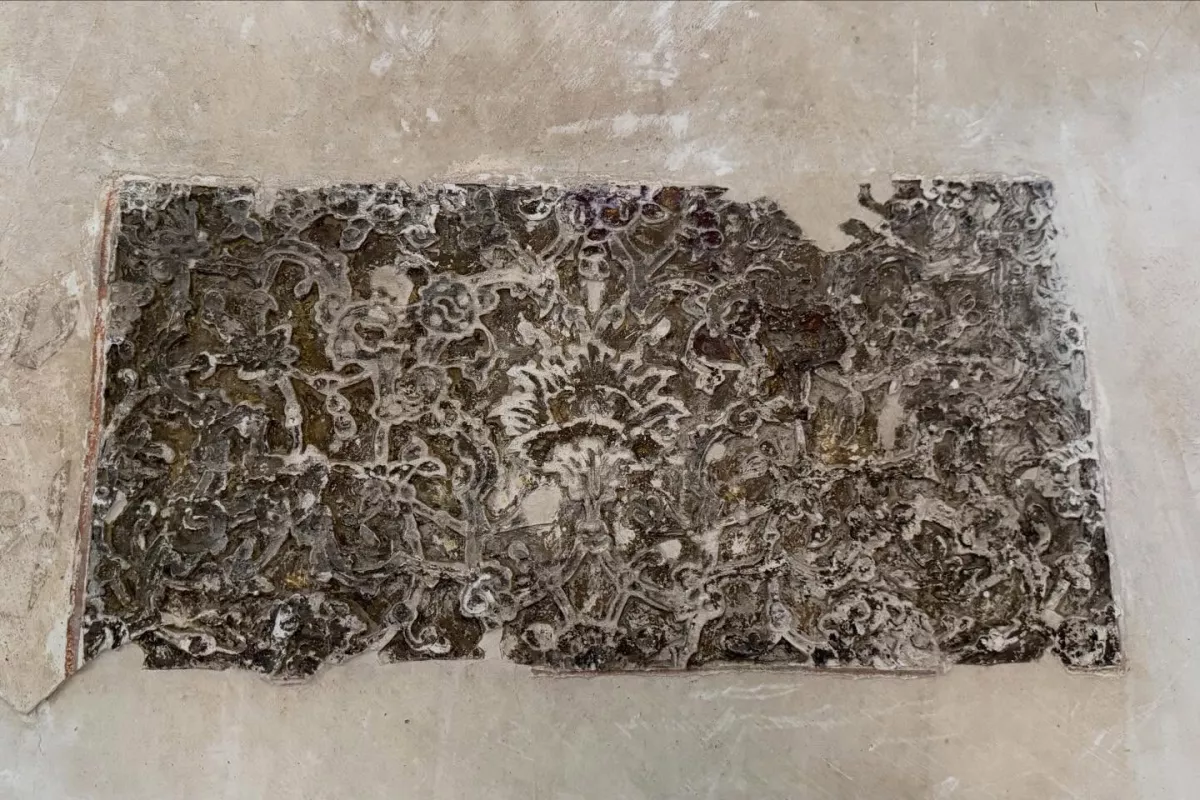
Later, during the Soviet period, restoration work was carried out, but it failed even approximately to restore the monument’s original artistic richness and the subtlety of its decoration. Moreover, during the same period, a crude iron roof was installed over the structure, concealing the monument’s authentic architectural appearance and undermining its historical expressiveness.
In 2006, the mausoleum underwent restoration: work was carried out to strengthen the structure and partially restore the building. However, despite these efforts, a significant portion of the original decorative ornamentation has not survived to the present day. Nevertheless, the measures taken made it possible to preserve the architectural appearance of the monument and emphasise its historical value.
The mausoleum of Sheikh Juneyd is an invaluable example of Azerbaijani architecture, combining artistic mastery, spiritual heritage, and historical memory. Its preservation remains an important task, making it possible to pass on to future generations an authentic testament to the rich culture and traditions of the past.







 editor@caliber.az
 +994 55 444-88-98
 Азербайджан, Баку, ул. Низами, 203, Af Business House, 5-й этаж