










Juma Mosque of Sabunchu: a timeless jewel of Absheron architecture A historical insight on Caliber.Az
On the Absheron Peninsula, there are numerous beautiful mosques built in the refined traditions of the Shirvan–Absheron architectural school, known for its strictness, nobility, and remarkable harmony. One of these mosques is located in Sabunchu — a settlement with a rich history and particular significance for Baku.
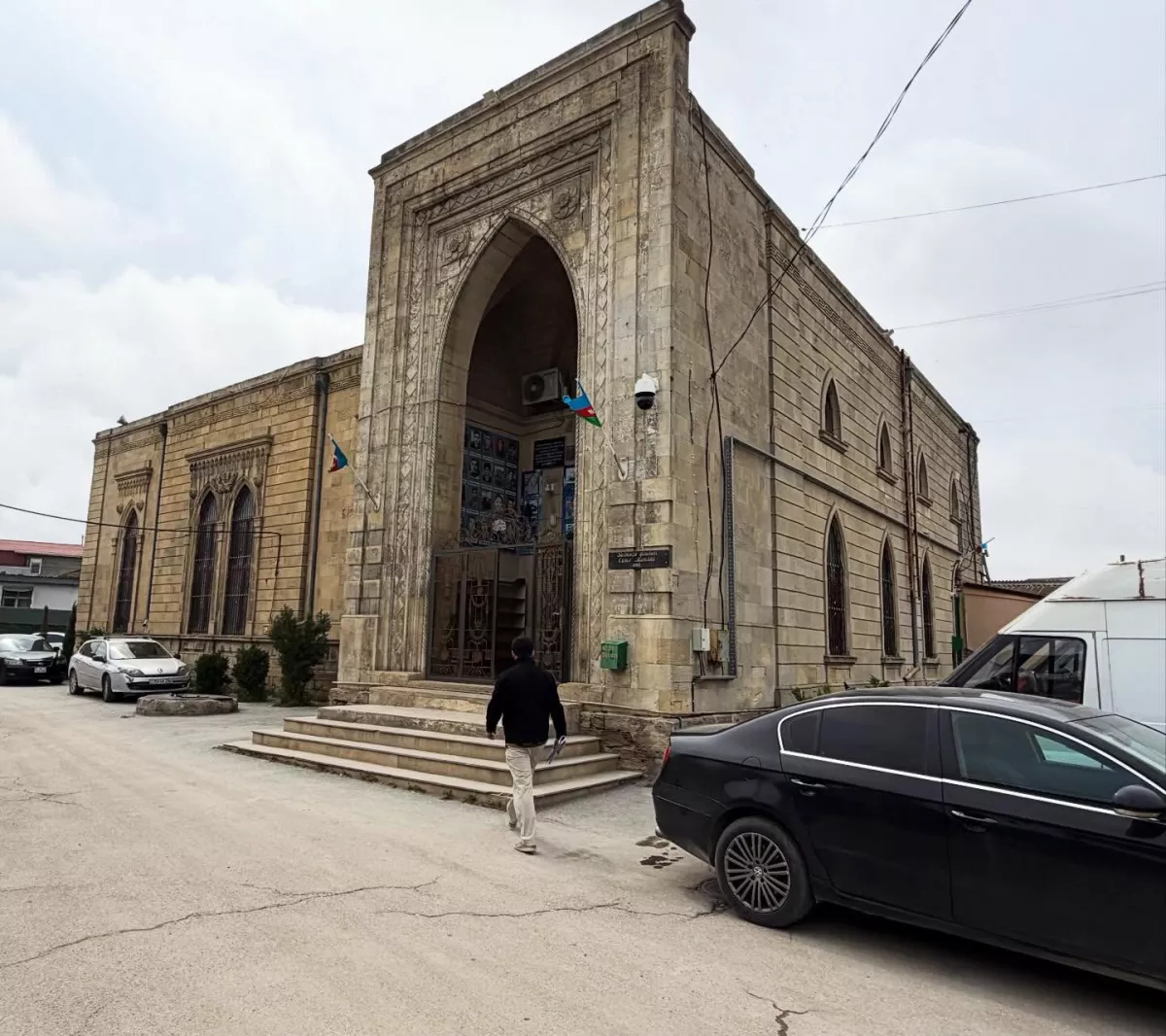
Sabunchu gained particular prominence during the oil boom, becoming one of the key centres of oil production, attracting people from all over the Russian Empire. An important role in the development of the settlement was also played by the first narrow-gauge railway, originally intended for transporting oil to urban refineries, which transformed Sabunchu into a vibrant, dynamic, and multicultural hub. It was precisely in this historically rich environment that the mosque acquired a special place, serving not only as a religious building but also as a cultural landmark.
The mosque was built by Bashir Bey Ashurbeyov in 1897. It became an expressive example of architecture in which restrained monumentality, clear geometric forms, and finely balanced decorative details are harmoniously combined. According to some researchers and architectural historians, the project may have been designed by the architect Mashadi Suleymanov, whose name is associated with several significant buildings of that period.
The building has a clearly defined rectangular form, emphasising its strict geometry and functional character.
Particular attention is drawn to the main entrance, designed as a tall pointed arch portal. It highlights the central axis of the composition and serves as a key element of the façade. The portal is framed by austere yet expressive stone surfaces with decorative elements.
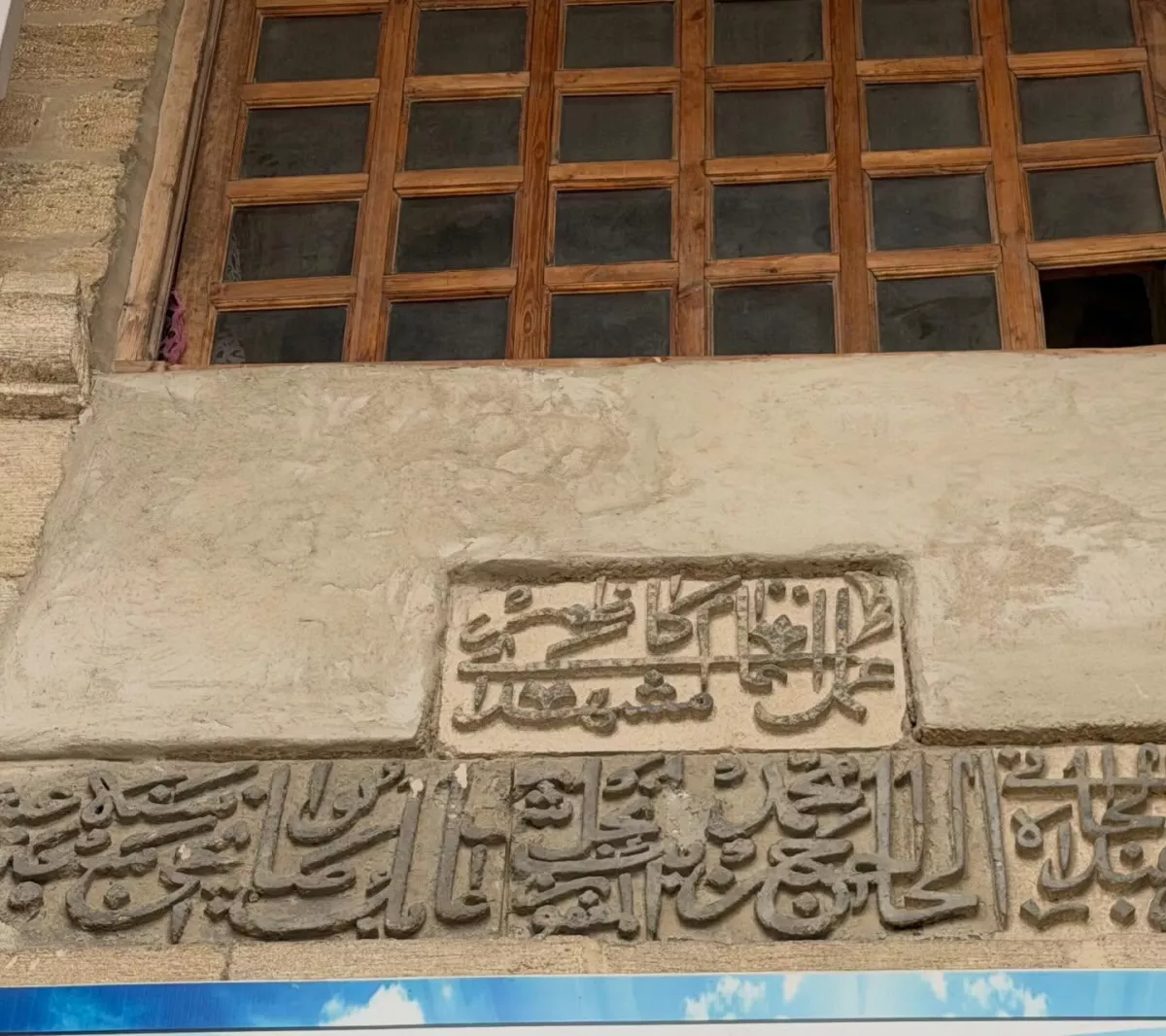
The entrance is further accentuated by a monumental kitab — an epigraphic inscription that not only carries informational content but also serves as an important artistic feature, setting a ceremonial tone for the entire structure.
The façades of the building are designed in a laconic and balanced manner. Their composition is based on the rhythm of elongated window openings with pointed tops, which give the walls a sense of vertical dynamism. Clear lines, restrained decoration, and carefully considered symmetry create an architectural image in which functionality and aesthetic austerity are harmoniously combined. At the same time, this restraint does not exclude subtle decorative refinement: the façades are adorned with delicate stone carvings featuring traditional motifs — geometric ornaments, floral patterns, and medallions, all carefully integrated into the overall wall composition.
The building is constructed from local limestone, which gives it a warm, soft hue and allows it to blend organically into the traditions of regional architecture, reflecting its uniqueness and artistic culture.
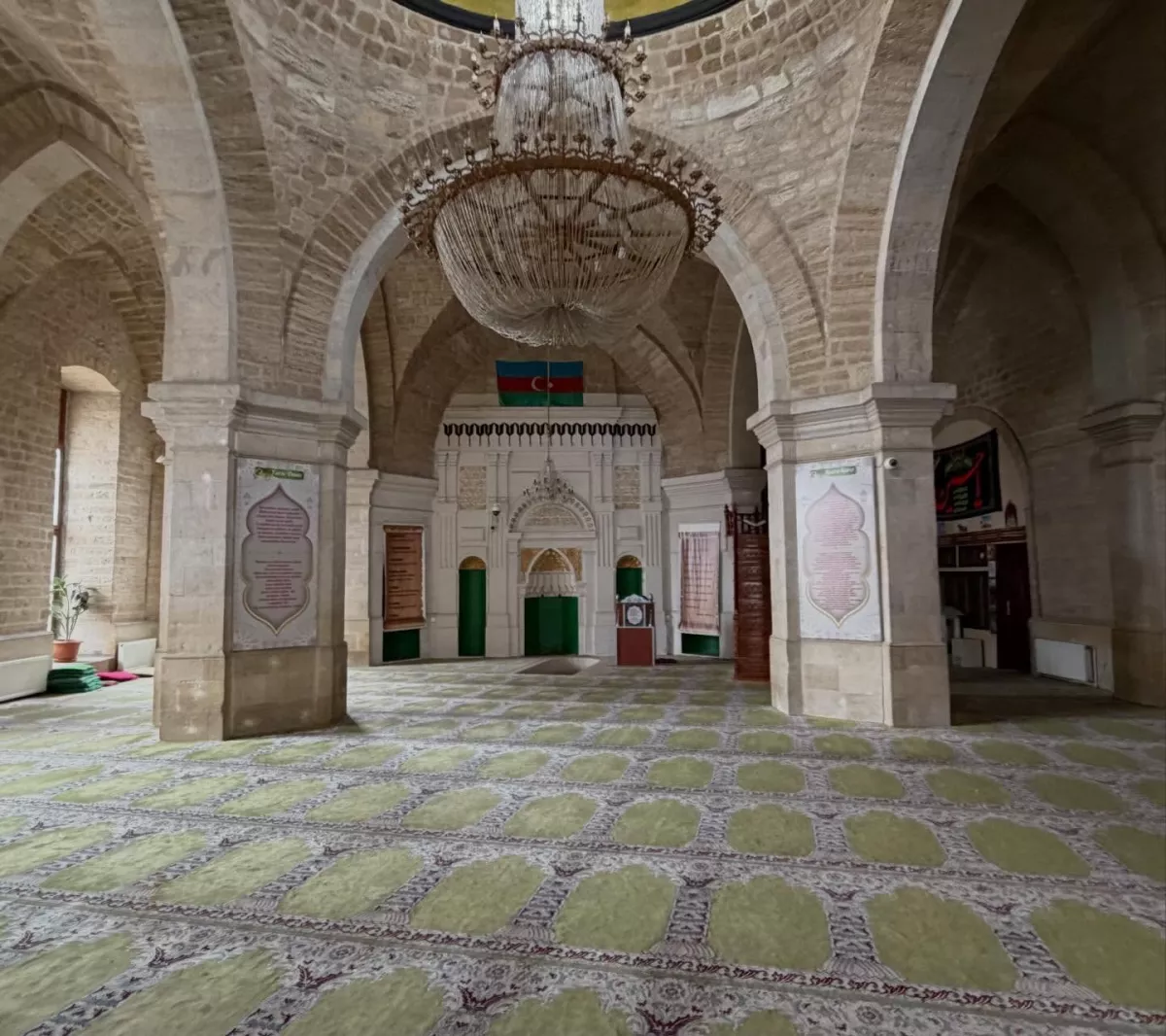
The interior space is distinguished by carefully considered proportions. The thick walls, reaching about one meter in width, give the structure a sense of reliability and solidity. Stone vaults resting on massive arches create a clear rhythm and add depth and solemnity to the interior.
The total height of the building up to the dome is approximately 10 meters, while the dome itself, quite large in scale with a diameter of about 6 meters, dominates the silhouette of the structure and emphasises its sacred significance.
The interior of the mosque creates the impression of a bright and open hall, where architecture is subordinated to the idea of harmony and spiritual peace. The layout is designed in such a way that throughout the day, sunlight gently enters through the tall windows, evenly illuminating the space. This produces a sense of lightness and elevation, enhancing the spiritual atmosphere.
A distinctive feature of the mosque is the presence of five mihrabs — a rare and symbolically significant solution associated with Shiite tradition. Also noteworthy is the recessed area in front of the mihrab. This space has not only spiritual but also functional importance: its level corresponds to the ground level outside the mosque. Thanks to this, on days of large gatherings, when part of the worshippers remains outside, the akhund (or another religious figure leading the service) can stand in this niche at the same level as those praying outside, creating a sense of unity and equality among all participants in the prayer. This architectural solution demonstrates a deep understanding of both the religious and social aspects of communal life.
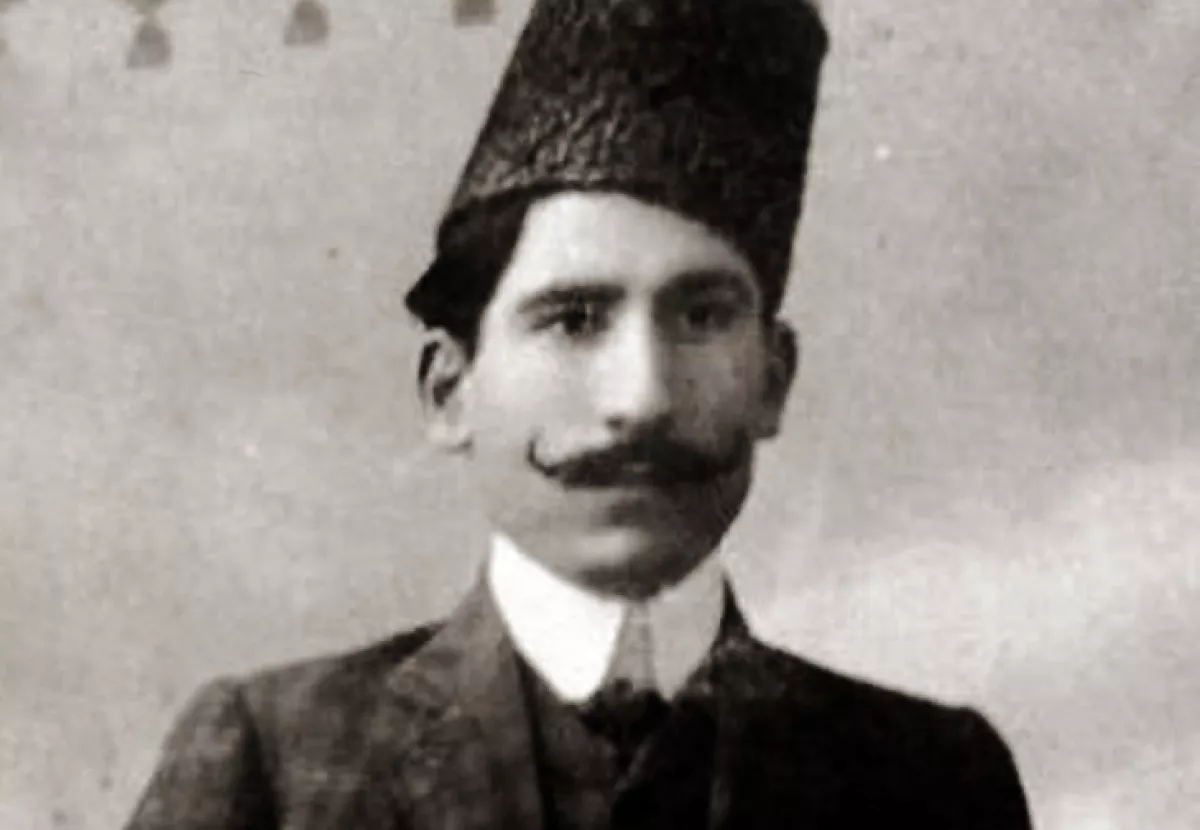
Another interesting fact is related to the features of this mosque: like many religious buildings of Absheron, it does not have a minaret. For the purpose of the adhan — the call to prayer — Bashir Bey Ashurbeyov purchased a nearby house, whose roof was used for this function.
During the Soviet period, from 1937 to 1992, the building lost its original purpose and was used as a storage and industrial facility. Only in the years of Azerbaijan’s independence did the mosque once again regain its true function, opening its doors to worshippers and restoring its spiritual significance, while still preserving its status as an invaluable architectural gem.
According to the Cabinet of Ministers Resolution of the Republic of Azerbaijan No. 132 dated August 2, 2001, it was included in the list of immovable monuments of local historical and cultural significance, which confirmed its special historical and cultural value at the state level.
The Sabunchu Mosque is not only a place of worship but also an outstanding architectural monument reflecting the spirit of its era, the characteristics of local building traditions, and the worldview of society in the late 19th century. It is a truly priceless heritage that requires careful attention and preservation. Such monuments are not merely expressions of stone and form, but an important part of the cultural code — a living thread connecting the past, present, and future.
By Vahid Shukurov, exclusively for Caliber.Az







 editor@caliber.az
 +994 55 444-88-98
 Азербайджан, Баку, ул. Низами, 203, Af Business House, 5-й этаж