










The ghost of the missile crisis: what’s stopping Washington from military action against Cuba? Analysis by Matanat Nasibova
Despite the ongoing military confrontation in the Middle East, speculation that the United States is preparing to launch a military operation against Cuba continues to circulate in both the global media landscape and political circles.
This is reflected, in particular, in reports by leading international media outlets. For example, CBS News, citing several U.S. officials, recently reported that the Pentagon is examining various contingency plans involving Cuba, including an amphibious assault: “Military planners have in recent weeks examined a range of options for possible action against the island, including an Army-led air assault involving thousands of U.S. soldiers to be carried out by the 101st Airborne Division, the only unit trained for such a task.” Earlier, CBS News also reported that Cuba had been discussed during a routine military briefing, while emphasizing that this in no way indicates that either the U.S. president or the Pentagon has made a final decision to carry out an operation against the Island of Freedom.
At the same time, in recent months the Trump administration has continued its efforts to pressure Havana into changing its political course. For example, Washington has imposed sanctions on Cuba and effectively placed the country under what has been described as an "energy blockade," triggering a severe energy crisis across the island.
In addition, U.S. sanctions have targeted Cuban President Miguel Díaz-Canel, his wife, and other key figures within the Cuban political establishment. Explaining the rationale behind these measures, Secretary of State Marco Rubio stated that those sanctioned “direct or fund the regime and its efforts to mobilize its radical revolutionary movements in the United States and around the world."
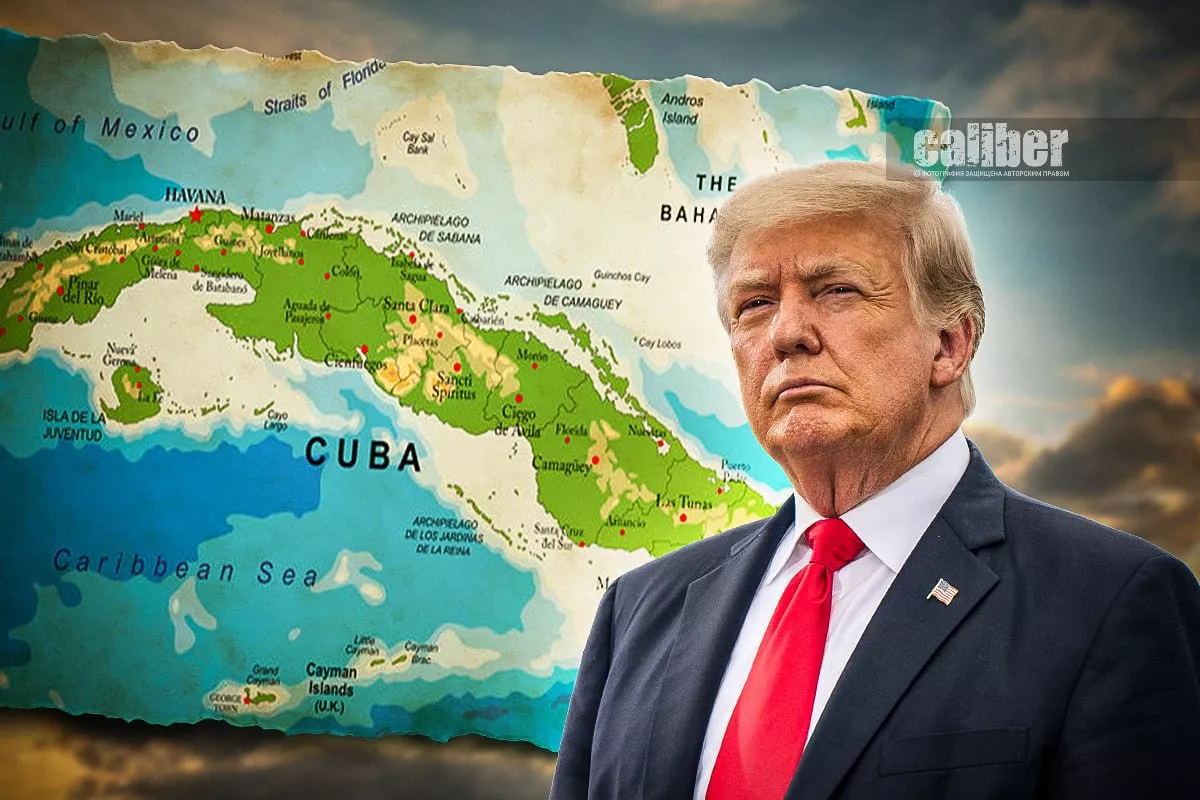
At the same time, the White House's rhetoric toward Cuba has been considerably more dramatic. In June, for example, President Donald Trump said in an interview with the U.S. news outlet Axios that he would not rule out an operation aimed at replacing Cuba's leadership, similar to the one that led to the overthrow of Venezuelan President Nicolás Maduro. That statement was further reinforced by Trump's Independence Day speech delivered at Mount Rushmore—a symbolic venue in itself—which was permeated by a distinctly anti-communist tone and could easily be interpreted as a pointed jab at Cuba.
Havana, for its part, did not ignore these developments. President Miguel Díaz-Canel responded with a series of sharp statements, noting, among other things, that America's "political blindness complements the punitive measures imposed against the country in recent weeks, which are intended to harm the Cuban people and could lead to an escalation of the conflict between Cuba and the United States." "The aggression and perverse policies of the U.S. government will be met with our determination," he wrote on X.
As history has repeatedly shown, exchanges of rhetoric between opposing sides are often followed by a stage in which weapons begin to speak instead. With this historical reality in mind, let us examine the likelihood of the United States actually carrying out a military operation against Cuba.
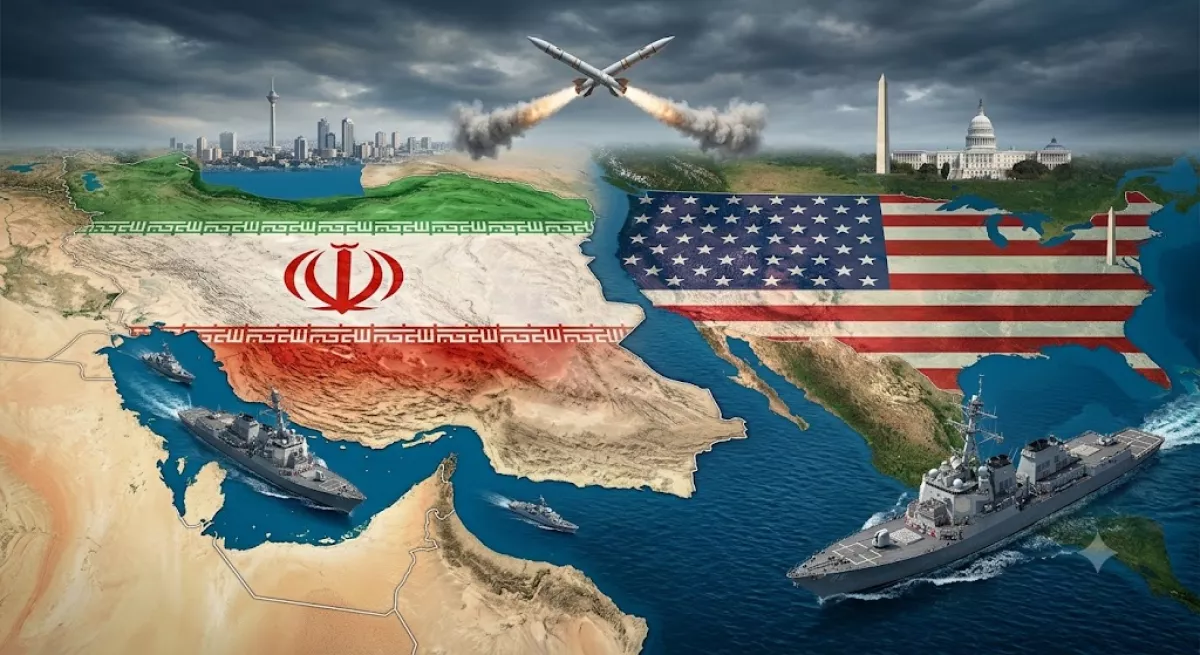
First of all, it should be noted that, at present, the United States appears to prefer relying on pressure and sanctions rather than military force in its approach toward Havana. This choice is presumably driven by the fact that a significant portion of U.S. military resources is already committed to the Middle East. NBC News, citing internal Pentagon documents, reported that Washington's direct military expenditures related to operations against Iran have already reached an estimated $100 billion.
Experts, meanwhile, argue that the actual costs incurred by the Pentagon are likely to be three times higher than the officially disclosed figures, particularly given the intensity of the strikes and the naval blockade. In addition, the U.S. defense budget has sustained substantial losses due to the destruction of F-15E fighter jets and Reaper drones.
At the same time, analysts point to the rapid growth of the U.S. national debt, which has surged amid the war and the federal budget deficit. Coupled with higher refinancing rates, this has significantly increased the cost of servicing the country's debt obligations. A second important consideration is that a U.S. military intervention on the island could trigger strong condemnation from most Latin American countries, as well as from Washington's European allies, dealing a serious blow to the United States' international standing.

The third aspect appears to be of paramount importance, as it projects the situation into the geopolitical sphere and therefore requires closer examination. In 1962, following the Cuban Missile Crisis, the United States and the Soviet Union reached an understanding under which Washington pledged not to invade Cuba, while in return Moscow agreed to withdraw its nuclear missiles from the island. The only circumstance that could justify the U.S. side violating these arrangements would be a direct threat to America’s national security emanating from Havana.
Put simply, the United States could consider these understandings null and void only if Cuba were to independently, or with the support of third countries, deploy nuclear warheads and ballistic missiles on its territory. However, since there have been no such moves from the Island of Freedom, a U.S. military operation against Cuba would, from the perspective of international law, be viewed as a blatant violation of existing agreements and an act of intervention. This could draw third parties into a hypothetical U.S.-Cuban confrontation, given that Havana has maintained close ties with Russia and China since the Cold War era.
Thus, taking all these factors into account, the likelihood that the United States will pursue a military scenario against Cuba in the near or medium term is virtually zero. However, predicting how events will unfold after Washington concludes its “Iran campaign” remains extremely difficult, as the global situation is changing almost by the hour.







 editor@caliber.az
 +994 55 444-88-98
 Азербайджан, Баку, ул. Низами, 203, Af Business House, 5-й этаж