










The National: Trump Route could unlock Nakhchivan’s potential
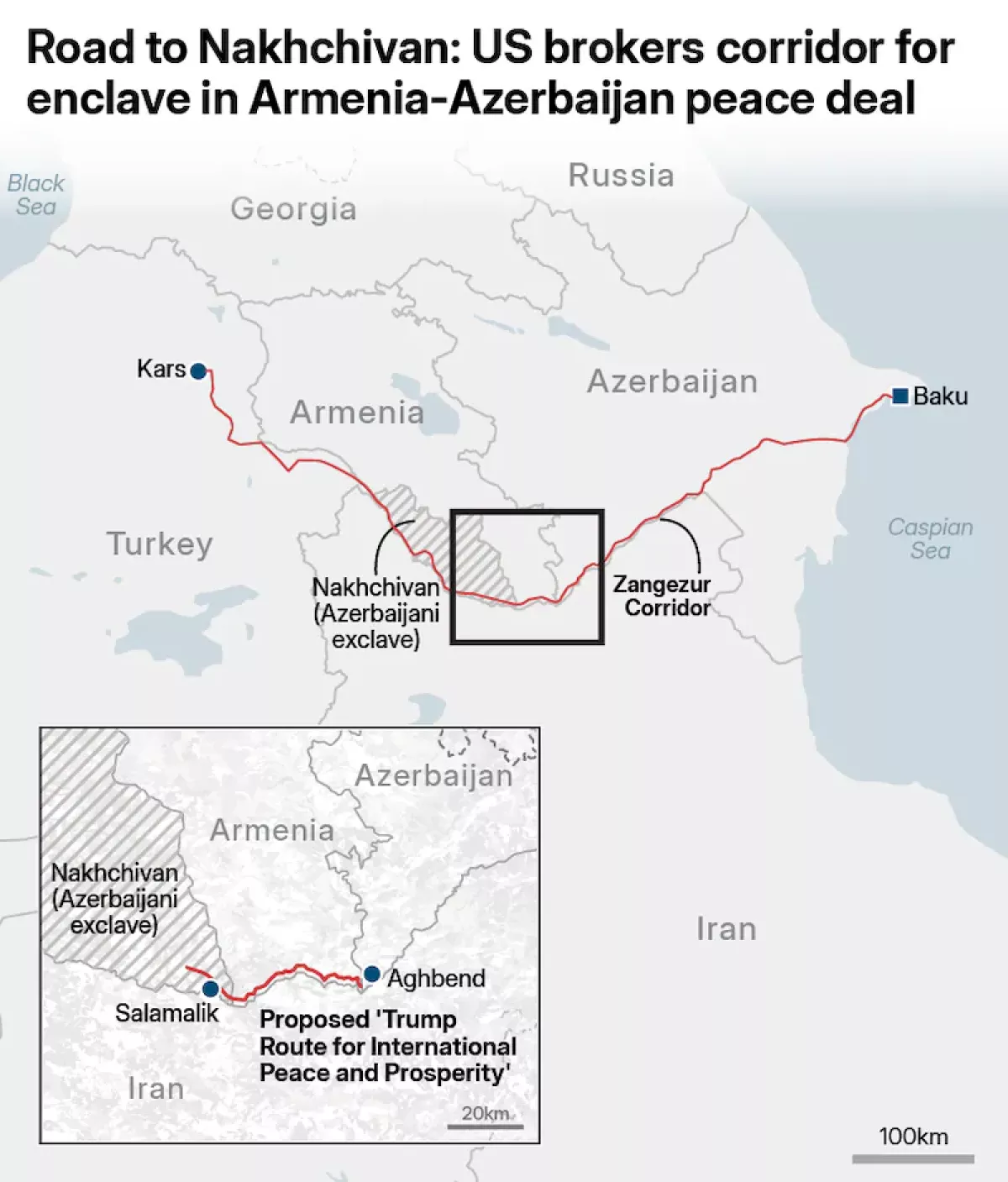
Sandwiched between Armenia, Iran and Türkiye, and home to around 470,000 people, wild, mineral-rich Nakhchivan is currently only accessible from the rest of Azerbaijan by air or a circuitous route through Iran, The National writes.
That may change if a major geopolitical shift in the South Caucasus continues to gather pace. Nakhchivan’s connection to the rest of Azerbaijan hinges on the development of transport links through Armenia, across a short but geostrategically crucial portion of its land.
“Of course, it will help the region to develop. If you have good connections, if you have business, of course, it will help people to live a happy life,” said a local resident, reflecting the optimism surrounding the project.
This connection is part of a tentative peace deal between Azerbaijan and Armenia that, if sustained, could end over three decades of conflict. Last year, US President Donald Trump claimed the conflict was one of eight global wars he had ended. While Armenia and Azerbaijan only initialled, but did not sign, a peace treaty, economic impetus, a pivot to the West, and conflict fatigue have brought the two countries closer than ever to normalising ties.
Besides initialling the peace treaty, Azerbaijani President Ilham Aliyev and Armenian Prime Minister Nikol Pashinyan signed a declaration to allow Yerevan to work with Washington to develop the so-called “Trump Route for International Peace and Prosperity” (TRIPP) through about 40km of southern Armenian territory, connecting Azerbaijan to Nakhchivan.
The declaration included pledges to advance towards “a bright future not bound by the conflict of the past”. In classic Trump style, it promises economic development and private-sector involvement as an alternative to war.
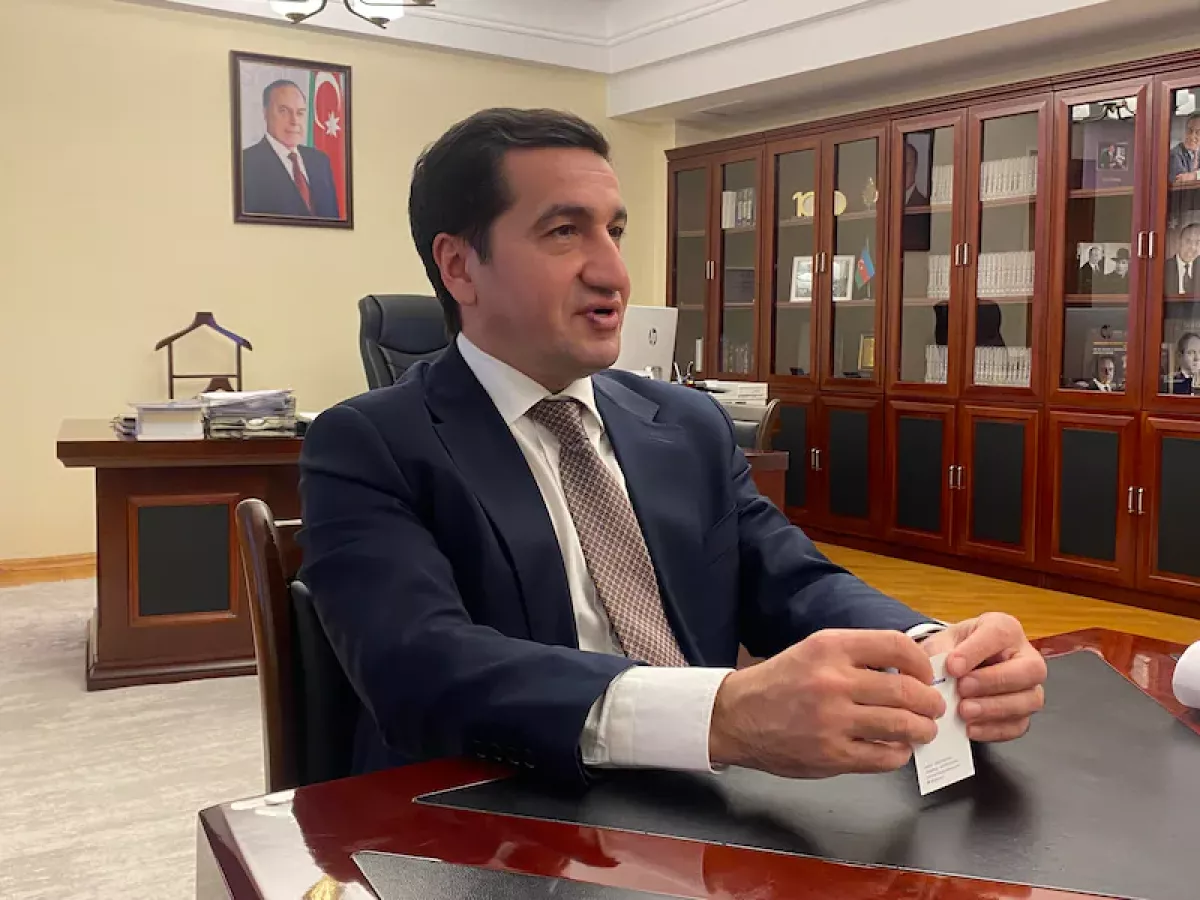
The US involvement was “crucial” in pushing the peace process and transport routes forward, according to Hikmet Hajiyev, head of foreign policy affairs for Azerbaijan’s presidency.
“First, President Trump put his own personal political weight behind the document,” he told The National. “Then he put American engagement behind the document. Along with that, the Tripp corridor issue is also a win-win and a geopolitical game changer in our region.”
The route is part of a broader shift towards the West and away from Russia and Iran. Improved ties with Türkiye may also lead to the opening of Armenia’s currently closed border with the neighbouring NATO member. Beyond the South Caucasus, the link through Armenia to Nakhchivan will connect to Europe via Türkiye, forming part of a global trade corridor linking China to western markets while avoiding heavily sanctioned Russia and Iran.
At Salamalik, metres from Nakhchivan’s border with Iran, rehabilitation work is ongoing on a Soviet-era railway that will eventually connect to TRIPP in Armenia and onwards to Türkiye. “Of course, [this railway route] makes access to Nakhchivan easier, once you leave behind three decades of being isolated from the mainland of Azerbaijan,” said Fuad Shahbazov from Azerbaijan Railways. “Once you get the chance to be connected by railway, it seems more convenient, so I think I can say it is a positive dynamic.”
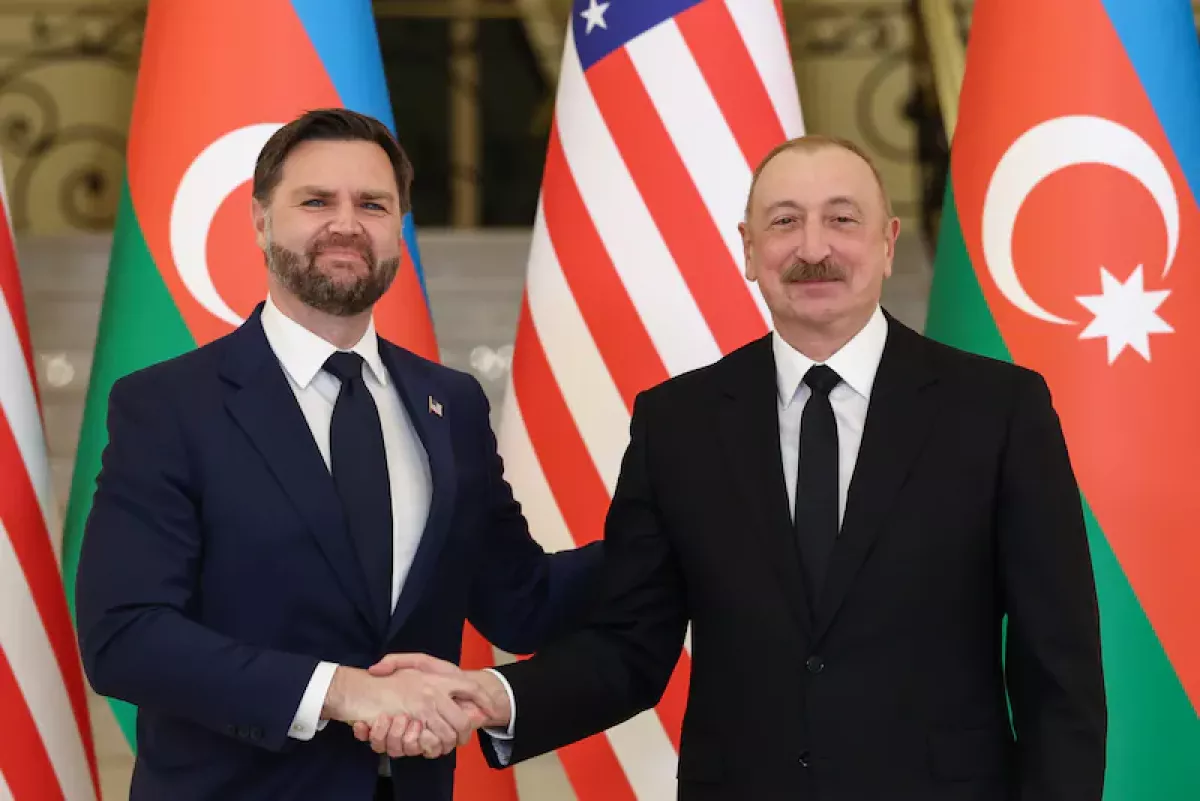
US Vice President JD Vance and Azerbaijani President Ilham Aliyev recently signed a US-Azerbaijan strategic partnership focused on “regional connectivity”, economic investment and security co-operation. Vance also visited Armenia, praising the TRIPP project and highlighting opportunities for investment. Armenia confirmed plans to purchase V-BAT drones and install an AI data centre with US-backed Nvidia chips, while both sides concluded negotiations over a civil nuclear co-operation agreement worth billions in potential exports and support.
Building the TRIPP involves establishing the “Tripp Development Company”, initially US-majority-owned, with exclusive rights to plan, build, and operate rail, road, energy networks, and fibre-optic cables along the route, while Armenia retains full control over its territory. “The greater significance is the economic interdependence that it represents, where for the future, the calculus of renewed fighting or military attack by Azerbaijan is much less,” said Richard Giragosian, director of the Regional Studies Centre in Yerevan.
For Azerbaijan, boosting its position as a key node in global trade routes is part of economic diversification. “Everybody understands that as soon as we restore all links and all kinds of connectivity between our neighbours, it will give tremendous opportunities for growing our economy,” said Rahman Hummatov, deputy minister of digital development and transport. Construction work on roads, tunnels and railways is already underway, with significant investment committed regardless of Armenia’s progress.
Progress on the Trump route is not necessarily contingent on a fully signed peace deal. Azerbaijan highlights ongoing cooperation in fuel exports and power-grid connections as evidence that regional development is moving forward. “We are not making the entire regional development hostage to just one issue,” said Hajiyev.
By Aghakazim Guliyev







 editor@caliber.az
 +994 55 444-88-98
 Азербайджан, Баку, ул. Низами, 203, Af Business House, 5-й этаж