










The spiritual heritage of Lankaran: The Kichik Bazar Mosque A journey into history on Caliber.Az
Azerbaijan has been renowned since ancient times for its religious diversity and traditions of tolerant coexistence among different faiths. For centuries, temples, mosques, and monasteries were built on its territory, creating a rich spiritual and cultural heritage. Among the many architectural monuments, the elegant mosques that adorn the cities and villages of the country stand out in particular. These structures not only served religious functions but also became centers of community life. One such mosque is the Kichik Bazar Mosque in Lankaran, which has preserved its historical and architectural significance to this day.
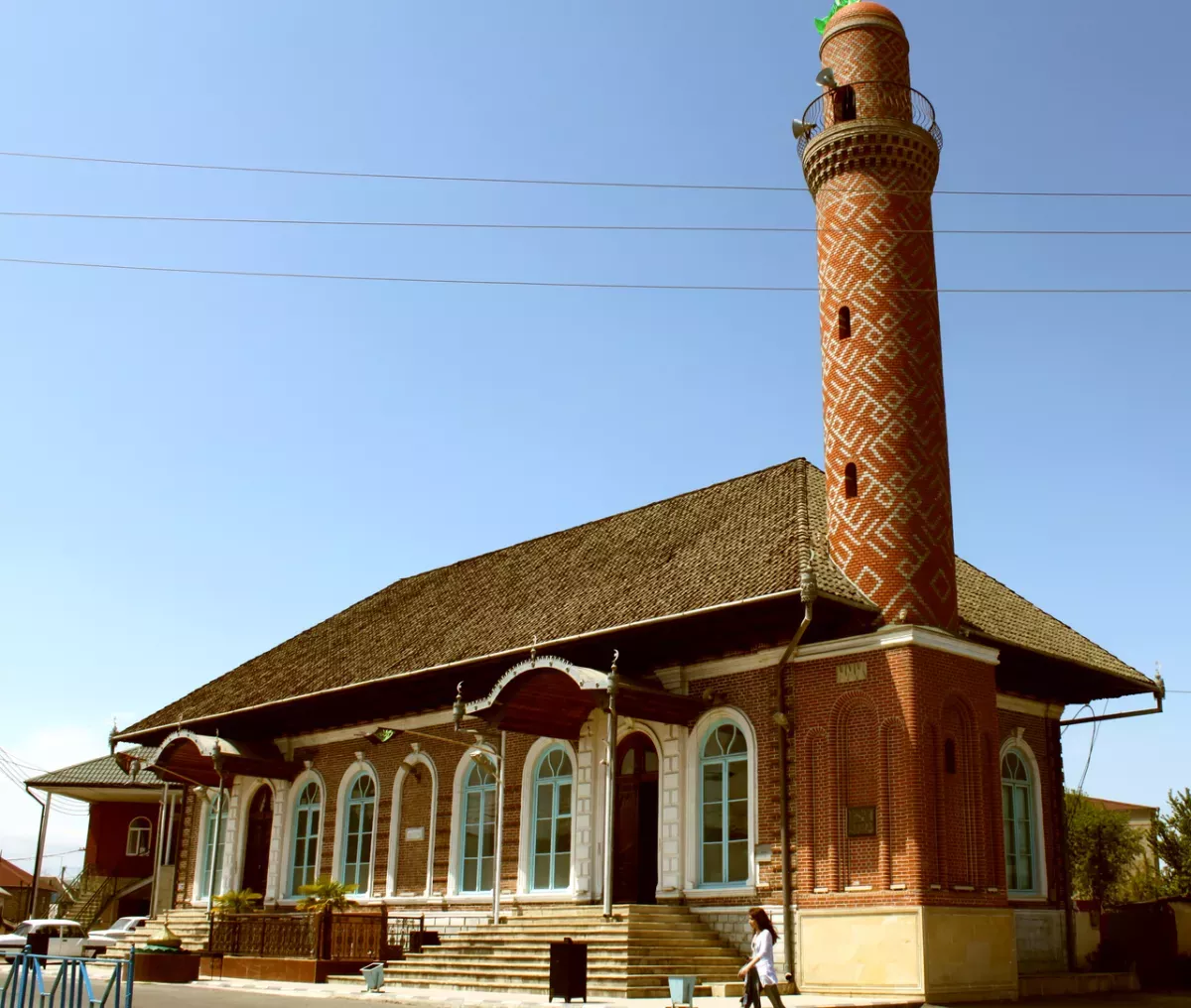
The mosque was built in 1904 and is located in the historic Kichik Bazar district, becoming a significant part of the city’s architectural landscape. Its construction was made possible through the initiative and contributions of Taghi Bey, Agha Bey, Molla Nasir, and the city’s residents, who sought to create a place for communal prayer and spiritual gathering.
The mosque represents a striking example of regional religious architecture, where traditional forms are harmoniously combined with a carefully considered spatial composition. The elongated rectangular volume of the building and its calm architectural lines integrate seamlessly into the surrounding urban environment. The proportions of the structure are meticulously calculated. The façades are designed with restraint, yet the rhythmic alternation of arched windows gives the building expressiveness and visual lightness. Wooden window shutters add warmth to the mosque’s façade, creating a picturesque accent.
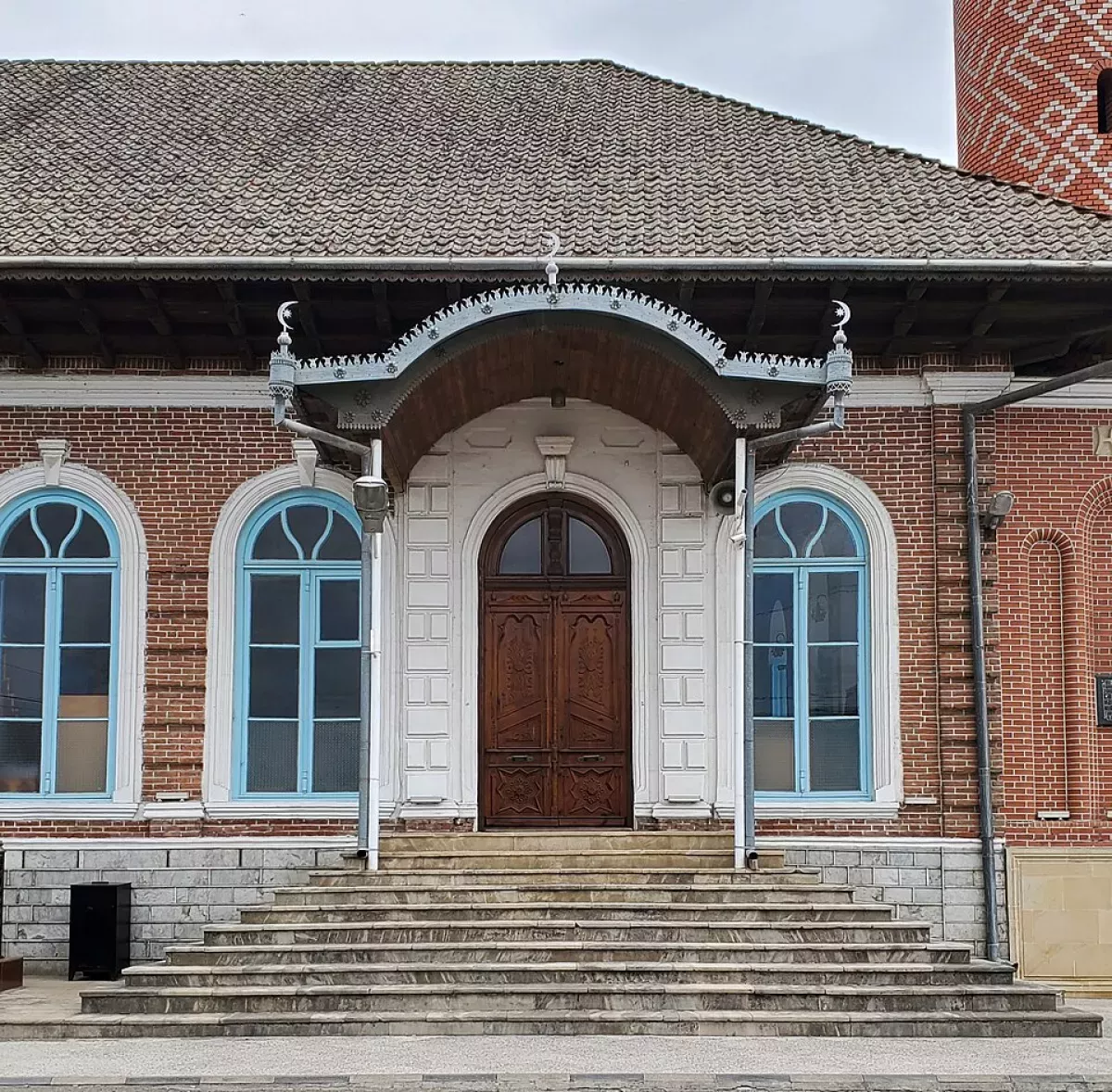
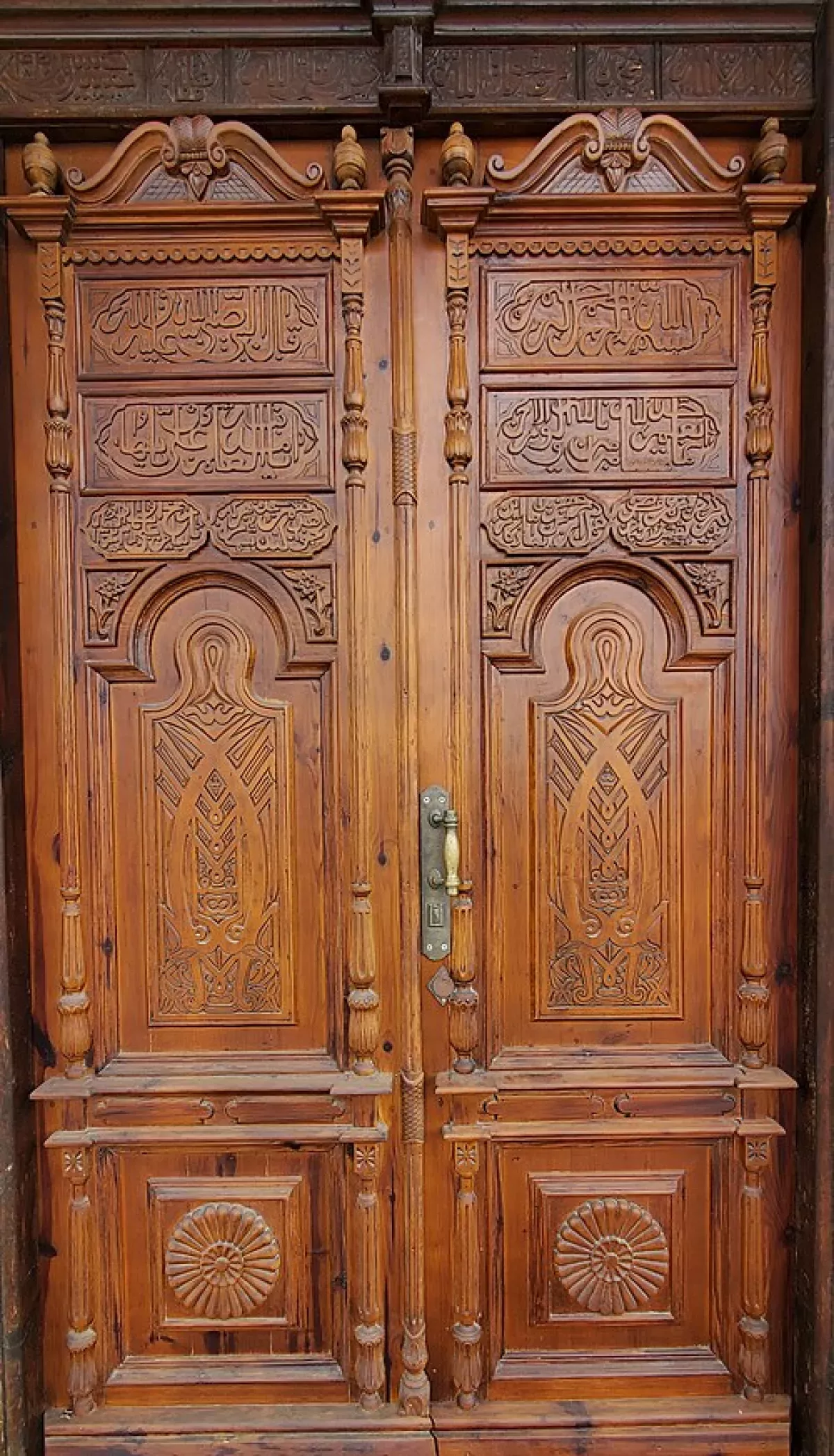
The mosque’s entrance is particularly striking. The central portal is highlighted by an elegant canopy and a decorative arched composition, creating an impression that is both solemn and welcoming. The wooden entrance door, crafted from local timber, features a refined texture and is beautifully adorned with carvings and ornaments that reflect traditional artisanal craftsmanship. This portal provides a striking and ceremonial transition from the urban environment into the sacred space of the mosque.
The roof of the building is covered with ceramic tiles, giving the structure a characteristic historic appearance and reinforcing its connection to local construction traditions.
The brickwork deserves special attention for its high level of craftsmanship. The alternation of bricks and geometric ornaments creates a visually expressive decorative surface that requires no additional embellishment. This technique is also characteristic of the region’s architectural traditions and demonstrates a remarkable level of building artistry.
Particular attention is drawn to the slender minaret, located at one corner of the building, which forms the vertical focal point of the entire composition. The minaret is elegantly adorned with the repeated inscription of the word “Allah.” At its upper part is a balcony, or sherefe, with a delicate railing, from which the call to prayer was traditionally issued.
Thanks to its height and expressive ornamentation, the minaret is clearly visible from a distance. It should be noted that the current minaret is a reconstructed structure.
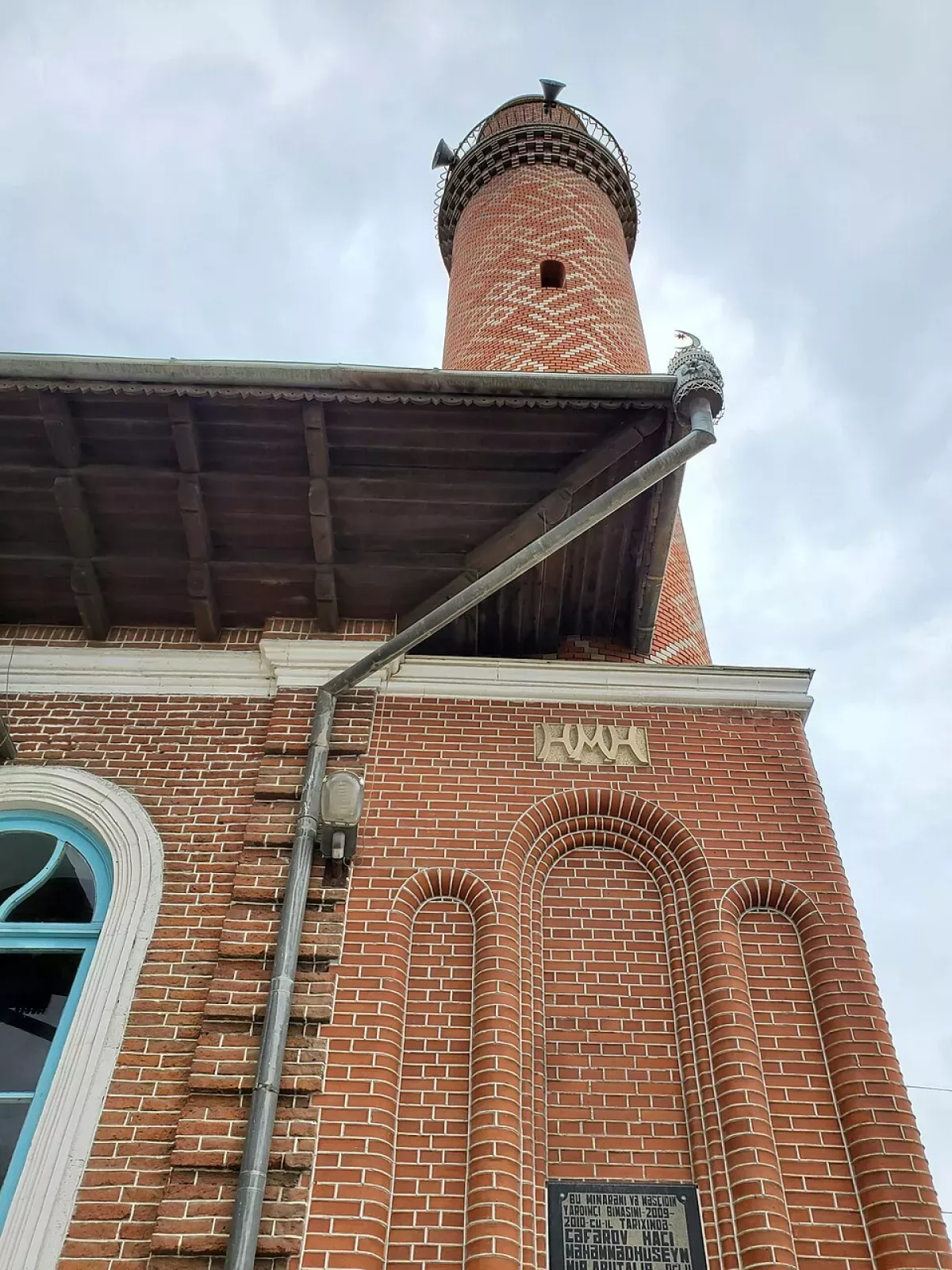
The historic minaret, once known as Guldeste, was destroyed during the Soviet period. In 2010, thanks to the initiative of local residents, the minaret was fully restored and raised to a height of 24 meters.
The massive walls, about one meter thick, give the building a sense of strength and solidity. The interior space is designed to accommodate 250 worshippers, allowing it to maintain an intimate atmosphere while providing sufficient capacity for the congregation.
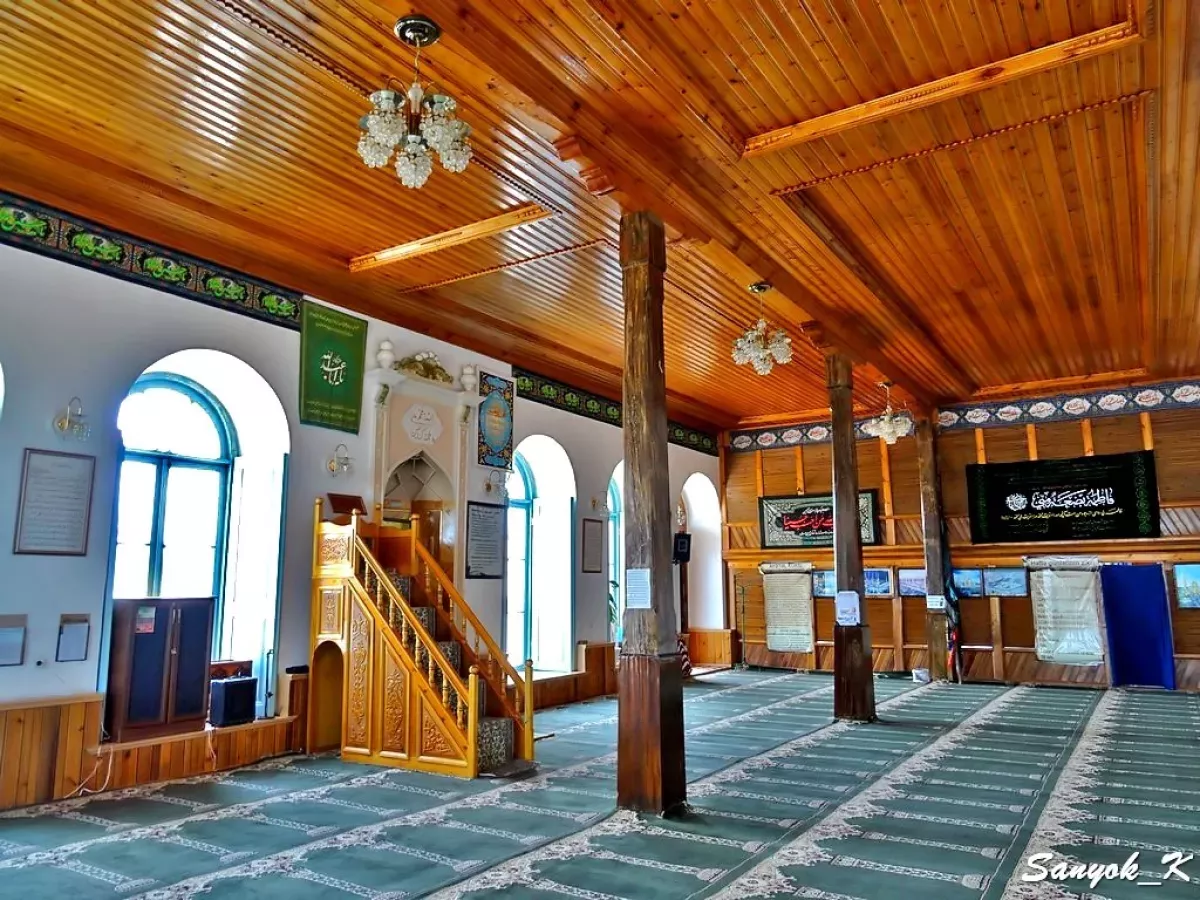
During the Soviet era, the Kichik Bazar Mosque was closed, and its sacred space lost its original purpose. For many years, the building was used as a warehouse, silently witnessing the course of historical changes.
Today, the Kichik Bazar Mosque is open to all believers. It has been officially recognized as a monument of local historical and cultural significance, according to the decree of the Cabinet of Ministers of the Republic of Azerbaijan dated August 2, 2001, No. 132.
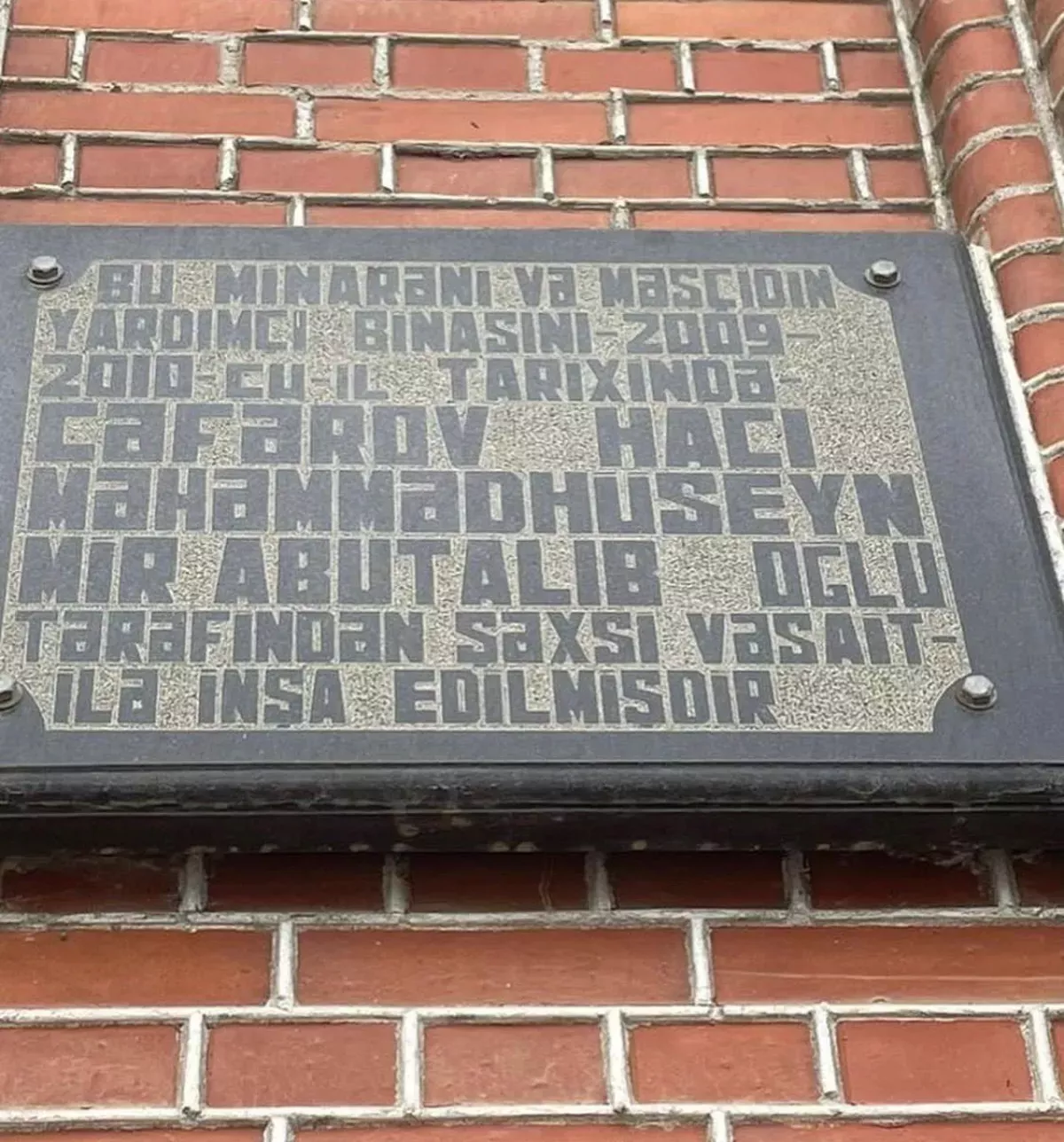
Nowadays, the Kichik Bazar Mosque serves not only a religious function but also plays an important role in shaping the historical character of the district. It is a significant part of Lankaran’s historical heritage and a testament to the region’s centuries-old spiritual traditions. Monuments like this allow us to gain a deeper understanding of the country’s past and preserve the connection between generations through architecture and culture. Their appearance reflects a unique cultural code, in which faith, craftsmanship, and remembrance of ancestors are intertwined.
The preservation of such structures is especially important, as they help form the historical environment and ensure that Azerbaijan’s rich heritage is passed on to future generations.
By Vahid Shukurov, exclusively for Caliber.Az







 editor@caliber.az
 +994 55 444-88-98
 Азербайджан, Баку, ул. Низами, 203, Af Business House, 5-й этаж