










Ukraine–Türkiye–Syria: A new arc of influence Plans and prospects
Ukrainian–Syrian relations have had a complex history. In 2016, due to crimes committed by the regime of then-President Bashar al-Assad against the Syrian people, Ukraine closed its embassy in Damascus, and in 2018, the Syrian embassy in Kyiv was also shut down. Later, in June 2022, Ukraine’s Ministry of Foreign Affairs announced the severance of diplomatic relations with Syria in response to Damascus's recognition of the “independence” of the temporarily occupied territories of the Donetsk and Luhansk regions.
However, after the overthrow of the Assad regime, relations between the two countries began to warm. On December 27, 2024, a representative of Ukraine’s foreign ministry, Heorhii Tykhyi, announced that Kyiv had established contact with the new Syrian authorities and was ready to restore ties with Damascus if the policies of the new government differed from the previous course. Then, on December 30, Foreign Minister Andrii Sybiha visited Syria and presented President Ahmed al-Sharaa with a traditional embroidered shirt (vyshyvanka) as a gift. At the same time, the national flag was raised over Ukraine’s consulate in Damascus.
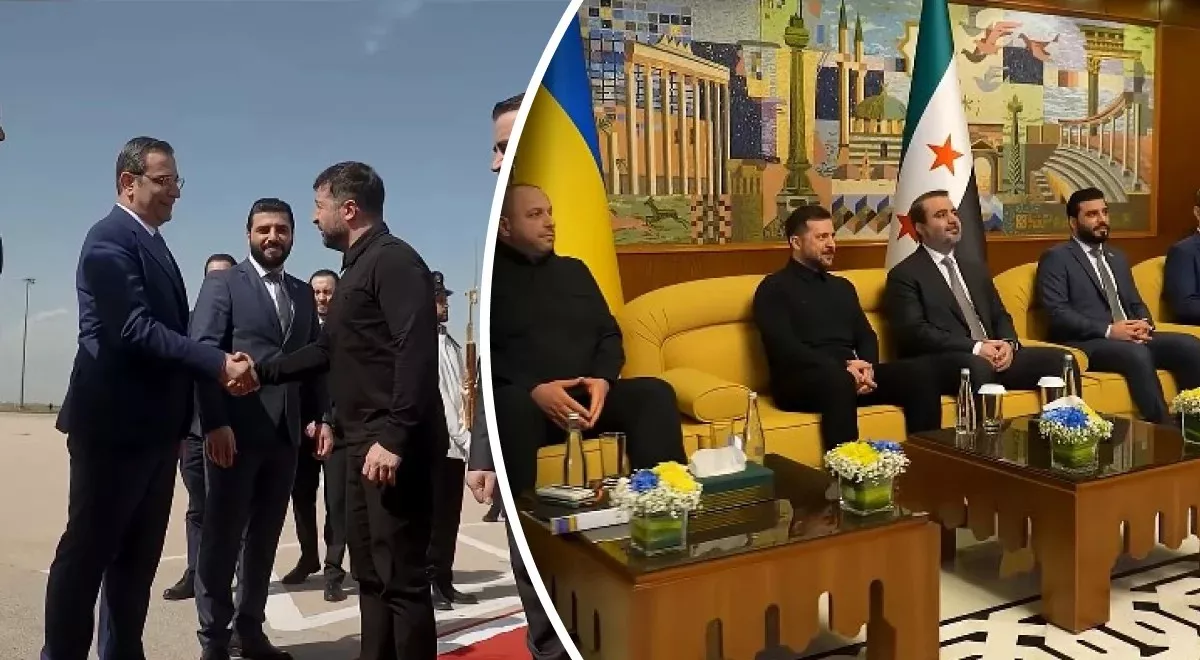
Recently, Volodymyr Zelenskyy paid his first official visit to Syria since the fall of the Assad regime and the restoration of diplomatic relations, where he met with Ahmed al-Sharaa. The Ukrainian delegation also included Andrii Sybiha, Secretary of the National Security and Defence Council, Rustem Umerov, and Chief of the General Staff of the Armed Forces of Ukraine, Andrii Hnatov.
During the meeting between the two presidents, the parties discussed security issues, the development of cooperation, the regional situation in the context of the ongoing war, the exchange of experience, and the strengthening of interaction across various sectors, the Ukrainian president reported on his Telegram channel.
“We agreed to work together to provide greater security and more opportunities for the development of our societies. We discussed the situation in the region and the prospects for improving it. We also discussed the circumstances of Russia’s war against Ukraine. There is a strong interest in exchanging military and security experience. Thank you for the words of respect for our people,” the Ukrainian leader wrote.
Volodymyr Zelenskyy also reported that, in addition to his meeting with Ahmed al-Sharaa, negotiations were held in Syria involving both the Ukrainian and Syrian delegations, as well as a trilateral meeting between representatives of Ukraine, Syria, and Türkiye.
At the same time, Andrii Sybiha, in a post on the social network X, described his talks with Syria’s Foreign Minister Asaad al-Shaibani. During the meeting, a number of key areas and initiatives were discussed, primarily related to security, as well as logistics issues—particularly the development of trade and maritime routes, food security, bilateral trade and opportunities for its further expansion, and humanitarian and educational cooperation.
“Finally, we agreed to reopen embassies in Kyiv and Damascus in the near future — an important step in strengthening our partnership,” he emphasised.
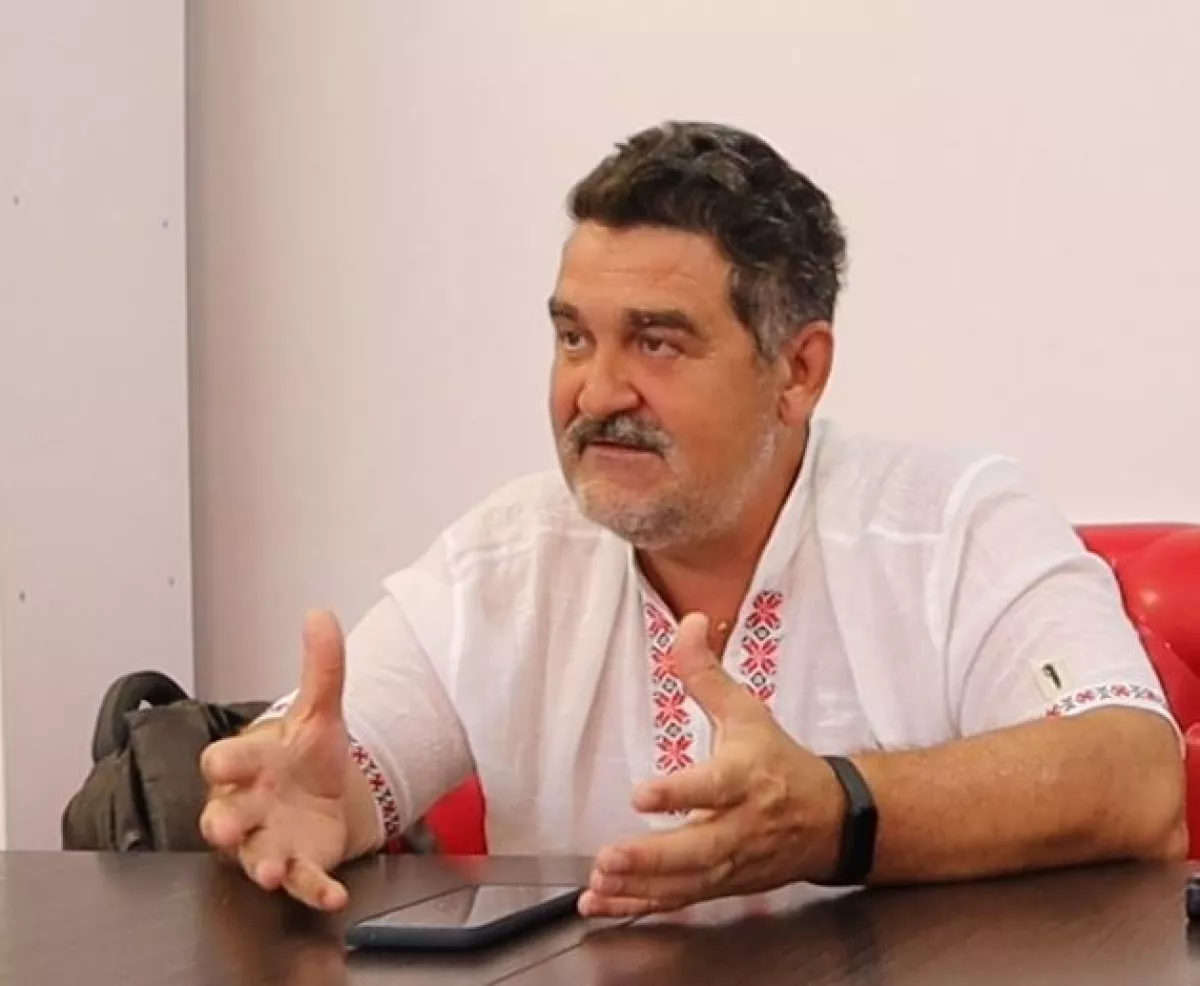
As we can see, the discussions covered a wide range of issues, highlighting the significance of the visit by high-ranking representatives of the Ukrainian state to Syria. In turn, the Director of the Center for Middle Eastern Studies, Ihor Semyvolos, explained on his Facebook page why this visit is important for Ukraine.
In his opinion, in the near future, Syria could become a promising market for Ukraine and a shared platform for cooperation. He also noted that this visit marked the final leg of Volodymyr Zelenskyy’s regional tour, which had been ongoing since late March, during which he visited Saudi Arabia, the United Arab Emirates, Qatar, and Jordan, and announced the achievement of “concrete agreements.”
“Türkiye yesterday, Syria today—this is the logical completion of the arc. The Ankara–Damascus sequence is highly illustrative. Recep Tayyip Erdoğan is the main external patron of the new Syrian authorities. Volodymyr Zelenskyy effectively arrived in Damascus with Turkish backing, which significantly increases the status of and trust in this visit on the part of Ahmed al-Sharaa,” the expert emphasised, adding that at this stage a political triangle of Ukraine–Türkiye–Syria is taking shape.
“First, there is the security dimension. Ahmed al-Sharaa stated that he is doing everything possible to keep Syria out of the current conflict between the United States, Israel, and Iran, and is analysing the situation with maximum caution. This means that Damascus needs a reliable security partner that is not pulled into any of the blocs. Ukraine is a unique partner: it has real experience in countering Russian expansion, yet does not carry the ‘political baggage’ of NATO or obligations to Israel,” Semyvolos wrote.
He also noted that while trilateral negotiations between Ukraine, the United States, and Russia are on pause due to the war in the Middle East, Volodymyr Zelenskyy is shaping an alternative architecture of influence.
“Pushing Russia out of Syrian ports is part of this logic. This represents a break from the geopolitical pattern, and it is not happening spontaneously, but rather as the final point of a well-thought-out regional tour built around the Kyiv–Ankara–Damascus triangle,” concluded Ihor Semyvolos.
To add to the remarks by the director of the Center for Middle Eastern Studies, it is worth noting that the formation of this geopolitical triangle is indeed a promising step. Its key objective is to create an alliance that links security in the Black Sea region with the situation in the Middle East. It is also notable that Türkiye serves as the main connecting link in this arc, strengthening its role on the global stage during such an unstable period for the world.







 editor@caliber.az
 +994 55 444-88-98
 Азербайджан, Баку, ул. Низами, 203, Af Business House, 5-й этаж