










Idols with feet of clay How myths about “wartime heroes” are crumbling in Ukraine
The full-scale Russian-Ukrainian war shows no sign of ending anytime soon. At the same time, another process is unfolding in Ukraine, which continues to face daily Russian missile and drone attacks of growing intensity: public trust is once again eroding in figures whom propaganda—and, at times, remarkable public credulity—has elevated to the status of “heroes of wartime.”
Let us start with Kyrylo Budanov, head of the Office of the President of Ukraine, whose name has surfaced in materials related to a high-profile corruption investigation conducted by the National Anti-Corruption Bureau of Ukraine (NABU) and the Specialised Anti-Corruption Prosecutor’s Office (SAPO). The investigation centres on Budanov’s former deputy, Iryna Mudra, and has been given the code name “Forrest Gump.”
More specifically, NABU has released audio recordings of intercepted conversations between Mudra and her partner, former MP Maksym Mykytas. In those recordings, as well as in the investigators’ motion seeking a measure of restraint, names such as “Kyrylo” and “Kyrylo Alekseevich” are mentioned repeatedly.
According to the anti-corruption authorities, Mudra was allegedly part of a criminal organisation involved in the takeover of high-value real estate and the laundering of illicit funds. Investigators are examining the possibility that the collection of UAH 150 million ($3.3 million) in bail for another defendant in the case, former Energy Minister German Galushchenko, may have been coordinated “from above,” with the head of the Office of the President also mentioned in the investigative materials.
Meanwhile, journalists and experts claim that NABU is examining Budanov’s possible role as the organiser or overseer of the alleged scheme. For his part, he responded to questions from journalists about the developments by saying: “Let the court figure out who is mentioned where. You know, there are a lot of things mentioned in a lot of places.”
Time will indeed put everything in its proper place. But one thing is already clear: the scandal is likely to have a serious negative impact on Budanov’s standing. Until very recently, he had been widely regarded as one of the main potential challengers to incumbent President Volodymyr Zelenskyy.
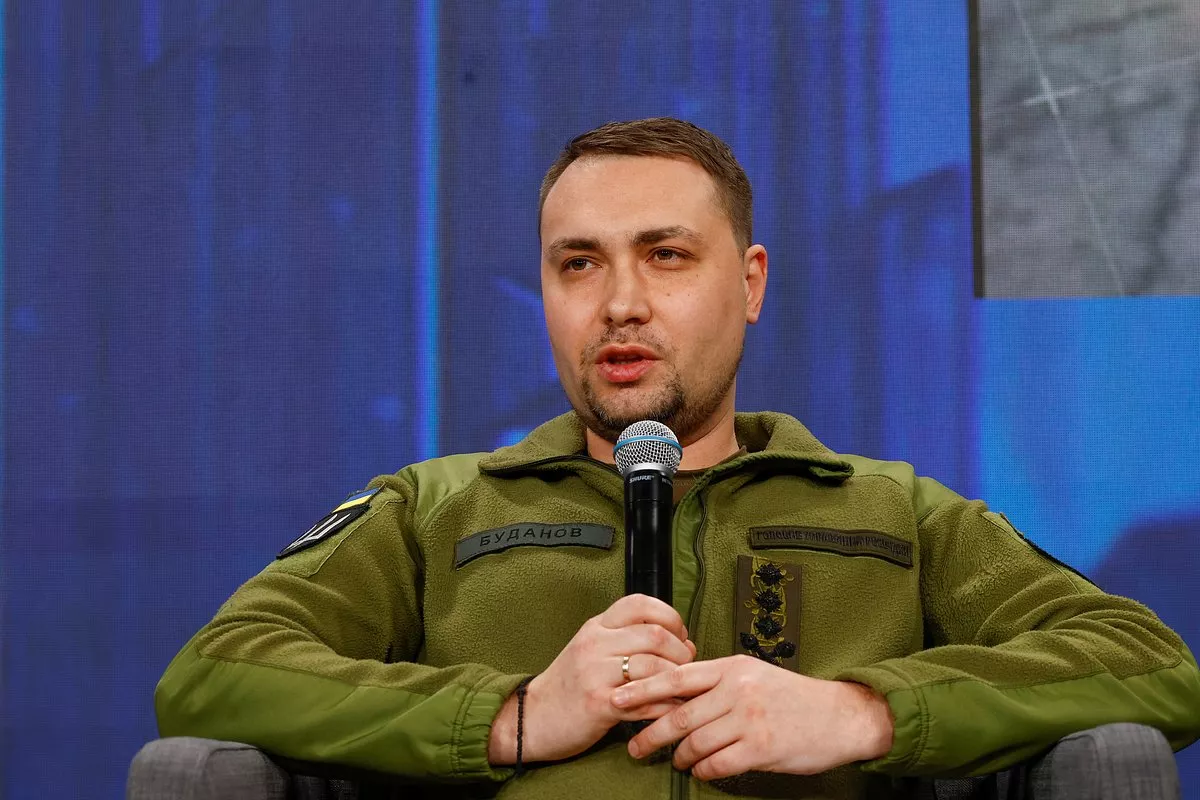
And this is precisely the kind of case that raises the question of how Budanov became so popular in the first place, given the number of promises he made that ultimately went unfulfilled. For example, he claimed that Ukrainian forces would enter Crimea by the end of spring 2023. His symbolic promise to “have a coffee in Yalta after the de-occupation of Crimea” was also widely quoted in the media. In August 2023, he acknowledged that his prediction had failed to materialise: “Yes, we fell behind schedule. Yes, unfortunately, we have to admit that events are developing more slowly than they should according to all calculations.” As we can see, his ability to produce predictions—and then explanations for why they failed to materialise—is truly remarkable.
Budanov also repeatedly told Ukrainian and Western media in interviews that 2023 would be a year of victory and that, by the end of the year, Ukrainian forces would reach the country’s internationally recognised 1991 borders. Once again, the prediction proved false, yet there were no apparent consequences for the person who made it.
Moreover, as the former head of Ukraine’s Main Intelligence Directorate, Budanov may now face questions that have acquired particular significance following the appearance of his name in the so-called “Mudra tapes.” One question, in particular, stands out: did Ukrainian intelligence have information about Timur Mindich’s activities and connections? And if such information was available, why did it not prompt appropriate action long before the NABU investigation?
However, there are other figures on Ukraine’s political scene who have been elevated to a pedestal of public adoration for reasons that are difficult to understand. One such example is former Defence Minister Mykhailo Fedorov, who accepted an offer from Italian Defence Minister Guido Crosetto to serve as his adviser on innovation. In other words, someone who had access to state secrets—including highly sensitive military, operational, intelligence, defence-industrial and military-technical information—will now work not merely for a foreign government institution, but directly under the defence minister of a NATO member state.
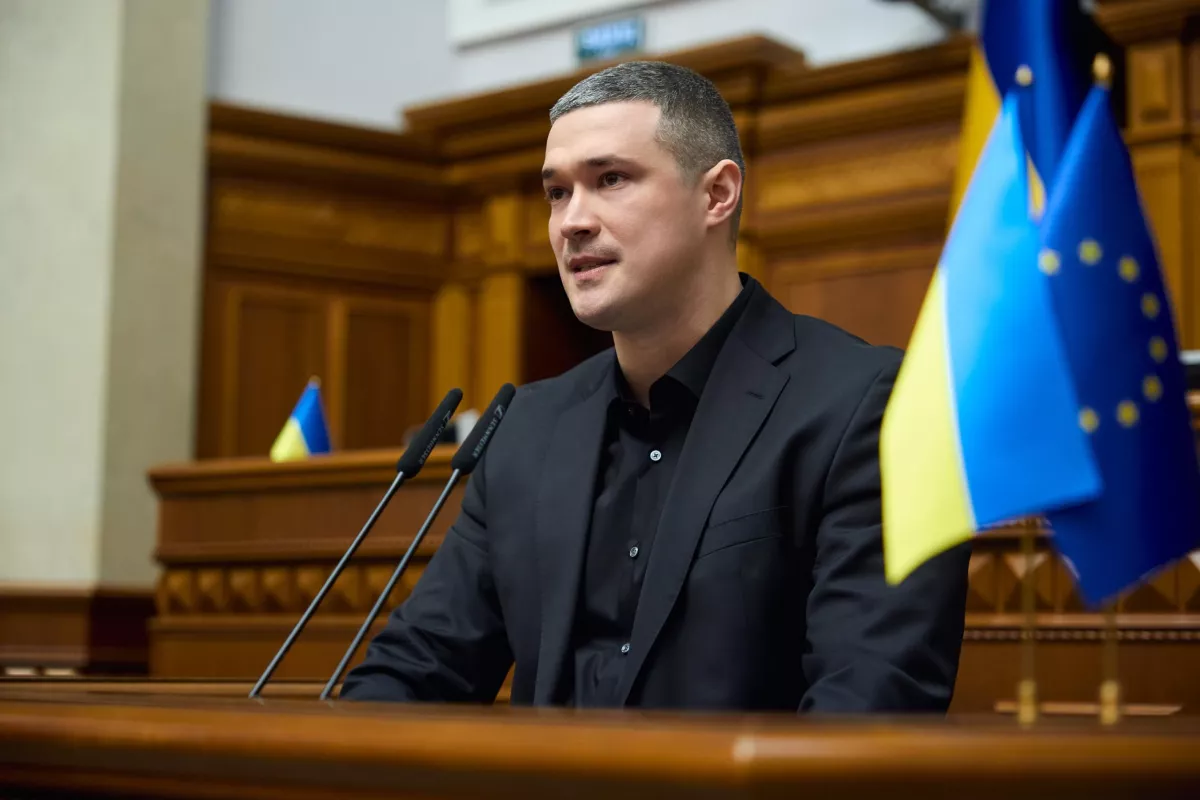
But there is more. Fedorov actively promoted the idea of Ukrainian citizens signing 14-month contracts for infantry assault units, promising “the highest salary for an assault soldier in the world.” Yet what did he do personally after losing his post as defence minister? No, he did not join the infantry or volunteer for an assault unit. Instead, he quickly secured an exemption from mobilisation, with a reservation reportedly arranged for him through the charitable foundation “Eastern Europe.”
Under these circumstances, those who took to the streets of Ukrainian cities demanding Fedorov’s return as defence minister look rather absurd today. The same could be said of the sociologists who rushed to measure the former minister’s approval rating and elevated him almost to the status of a potential presidential contender. Thus, yet another myth of a new “saviour of Ukraine” has burst.
And the list of questionable figures who have been elevated to the status of crowd idols in Ukraine could be extended almost indefinitely. Take Serhii Sternenko, for example, who has once again reinvented himself as a volunteer after previously serving as an adviser to Defence Minister Fedorov. This is despite the fact that in November 2024, he paid a fine at a Territorial Centre of Recruitment and Social Support (TCR) and underwent a military medical examination after being placed on a wanted list for failing to report in response to a draft summons.
But that is far from the only detail relevant to his public record. In November 2017, a criminal case was opened in which Sternenko and his associates were accused of facilitating the organised illegal distribution of drugs. He was later charged, together with Ruslan Demchuk, with the abduction of Serhiy Shcherbich, a deputy of the Kominternivskyi District Council in Odesa Region, as well as unlawful deprivation of liberty, robbery and illegal possession of weapons.
On February 23, 2021, the Primorskyi District Court of Odesa initially sentenced Sternenko to seven years and three months in prison, along with the confiscation of half of his property. However, the verdict was substantially amended on appeal. On May 31, 2021, he was sentenced to three years in prison, with the sentence replaced by one year of probation. The cassation court subsequently overturned the ruling concerning the weapons charge, while the ruling on the kidnapping charge remained in force. And yet, despite such a record, Sternenko was appointed an adviser to Ukraine’s defence minister.
At the same time, since the start of the full-scale war, Serhii Sternenko and his foundation have reportedly raised UAH 4.7 billion ($103.4 million) in donations through Monobank to support the Armed Forces of Ukraine. In other words, Ukrainians have been sending vast sums of money to a man with a criminal record. Before the war, his declared income was remarkably modest—for example, just UAH 1,766 ($39) for the entire year of 2021. From 2022 onward, however, his officially declared income rose sharply: more than UAH 18 million ($396,000) in 2022, over UAH 25.93 million ($570,460) in 2023, and, by mid-2026, more than UAH 105 million ($2.31 million) in total declared income during the war.
And Sternenko is far from the only person to have amassed considerable wealth during the years of the full-scale Russia-Ukraine war while receiving extensive media attention, yet not serving in the Armed Forces of Ukraine. Meanwhile, personnel from Ukraine’s Territorial Recruitment and Social Support Centres (TCRs) continue to carry out forcible mobilisation raids targeting men of conscription age—a practice that has itself triggered a series of scandals.
One such scandal followed the release of a recording of a meeting in which Kristina Fedorchuk, head of the Obolonskyi District TCR, is heard using crude and profane language as she demands that her staff step up efforts to meet their assigned mobilisation targets. She reportedly threatens her subordinates that, if the targets are not met, she will “lock everyone in the barracks.” Despite the controversy surrounding the recording, Fedorchuk was not dismissed from her post.
This is the reality in which Ukraine, a country at war, finds itself. Under such circumstances, those who are genuinely defending their country’s freedom and independence with weapons in their hands often remain out of the spotlight, while public attention and acclaim are directed toward figures accused of avoiding military service and pursuing personal wealth or career advancement.
And perhaps the most troubling part is that this situation has been enabled by a Ukrainian society that repeatedly elevates people to the status of idols who, by any reasonable measure, have done little to justify such adulation.







 editor@caliber.az
 +994 55 444-88-98
 Азербайджан, Баку, ул. Низами, 203, Af Business House, 5-й этаж