










Azerbaijan’s insurance market: growth, reforms and new horizons Review by Khazar Akhundov
In recent years, Azerbaijan’s insurance companies have demonstrated strong growth dynamics and have absorbed the risks associated with the global economic slowdown, inflation, and other adverse developments affecting the country’s financial market with relative ease. Over the past four years alone, the domestic insurance market has nearly doubled in size. At the same time, sectoral reforms implemented by the country’s Central Bank, the introduction of digital mechanisms, and the development of a new insurance market strategy provide grounds for expecting broader market penetration. These and other issues were discussed in Baku at the 11th Azerbaijan International Insurance Forum (AIIF 2026).

Domestic insurance companies, like all segments of the financial sector, endured a difficult period during the manat devaluations, the banking non-payment crisis of 2015–2017, and, several years later, the economic downturn caused by the pandemic. As a result, the weakest players exited the market, with the number of insurance companies declining from 27 a decade ago to 15 today.
Nevertheless, this challenging experience laid the groundwork for the reforms implemented by the Central Bank of Azerbaijan to strengthen the sector. The regulatory and legal framework was reinforced, prudential indicators improved, and the adoption of advanced international standards enhanced reinsurance coverage and increased reserve requirements. Together, these measures have strengthened the market and enabled local insurers to better mitigate risks in the event of potential future shocks and force majeure circumstances.
As noted by First Deputy Chairman of the Central Bank of Azerbaijan, Aliyar Mammadyarov, in his address at the 11th Azerbaijan International Insurance Forum (AIIF 2026), “the capitalisation of Azerbaijan’s insurance sector has strengthened significantly, with the aggregate capital volume now exceeding the regulator’s minimum capital requirement by a factor of two.”
According to him, insurance premiums increased by 23% in 2024–2025, reaching AZN 1.5 billion ($880 million), while the sector’s assets grew by 18% to AZN 2.1 billion ($1.2 billion). The Central Bank official also stressed that these figures demonstrate that the insurance sector is on a path of healthy development and that its financial stability has become even stronger.
According to experts, the local insurance market also owes much of its success to improved market conditions, growing demand for insurance services, and the implementation of large-scale insurance literacy initiatives carried out in recent years by the Central Bank of Azerbaijan and market participants themselves.
In this regard, Chairwoman of the Supervisory Board of the Azerbaijan Insurers Association, Ulviyya Jabbarova, stated at AIIF 2026 that the market’s development has been made possible by the strategic objectives set by the state, the reforms implemented by the Central Bank, and the joint efforts of industry participants.

It is worth recalling that, under Azerbaijan’s Socio-Economic Development Strategy for 2022–2026 and the country’s National Priorities for Socio-Economic Development through 2030, the insurance market was expected to grow by 10% annually. However, over the past four years, the sector’s performance has consistently outpaced these strategic targets.
The most notable years for the insurance market were 2022 and 2023, when premium volumes increased by 15% and 26%, respectively. Total insurance premiums exceeded AZN 1.353 billion (approximately $796 million) in 2024, marking growth of 10.7%, while the trend strengthened further in 2025, when domestic insurers collected more than AZN 1.504 billion (approximately $885 million) in premiums, up 11.2% year-on-year.
Yet this is far from the sector’s full potential. Alongside maintaining strong premium growth, Azerbaijani insurers now face another equally important challenge: increasing insurance penetration and raising the ratio of gross written premiums to the country’s GDP. According to international practice, these indicators are closely linked to the volume of private-sector bank lending and household income levels—the higher these are, the greater the share of insurance premiums relative to gross domestic product.
In North America, Europe, as well as in China and Japan, these indicators are several times higher. In the United Kingdom and the United States, for example, insurance premiums account for nearly 12–12.5% of GDP.
By comparison, Azerbaijan’s insurance sector still records relatively modest figures. According to data published by the regulator a year ago, the share of insurance companies’ assets in the overall assets of the country’s financial system increased from 3.2% to 3.8% over the preceding three years. However, insurance penetration in Azerbaijan was estimated at just over 1.1% of GDP—a figure that, clearly, remains insufficient and highlights the significant room for further market expansion.
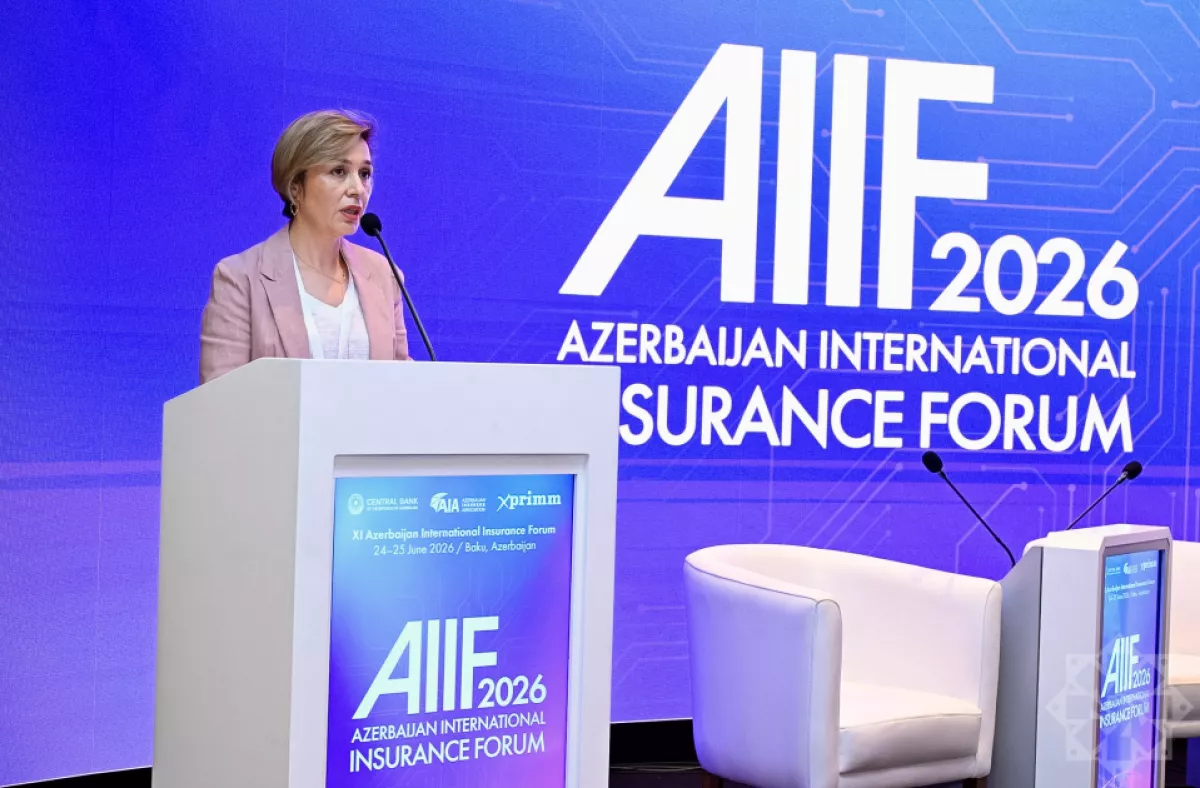
The need to strengthen the position of the insurance sector within the country’s financial system was also highlighted during AIIF 2026.
“Despite the progress achieved, the market still possesses substantial potential for further growth. Azerbaijan has ample opportunities to increase insurance penetration, and our objective is to fully unlock this potential,” noted Ulviyya Jabbarova. “Our primary goal is to ensure that insurance plays a more significant role in people’s lives and makes an even greater contribution to the sustainable development of society and the economy.”
According to her, in today’s increasingly turbulent world, risks are multiplying while consumer expectations continue to evolve. As a result, the global insurance industry is actively seeking new approaches to risk management, requiring market participants to become more flexible, develop innovative products, and respond more rapidly to changing demand.
In this context, the key priorities for insurance-sector development have been incorporated into the State Programme for Expanding Financial Inclusion for 2027–2030. These priorities include improving access to insurance services, expanding digital solutions, promoting voluntary insurance products, and creating broader opportunities for the use of financial services.
The adoption of advanced international practices is expected to support the development of these new areas. During AIIF 2026, some 400 participants—including representatives of international financial institutions, insurance and reinsurance companies, banks, and brokerage firms from around 20 countries across Europe, Türkiye, Central Asia, the Caucasus, and Russia—discussed the latest trends shaping global insurance markets, while also identifying opportunities for cooperation and the exchange of expertise.
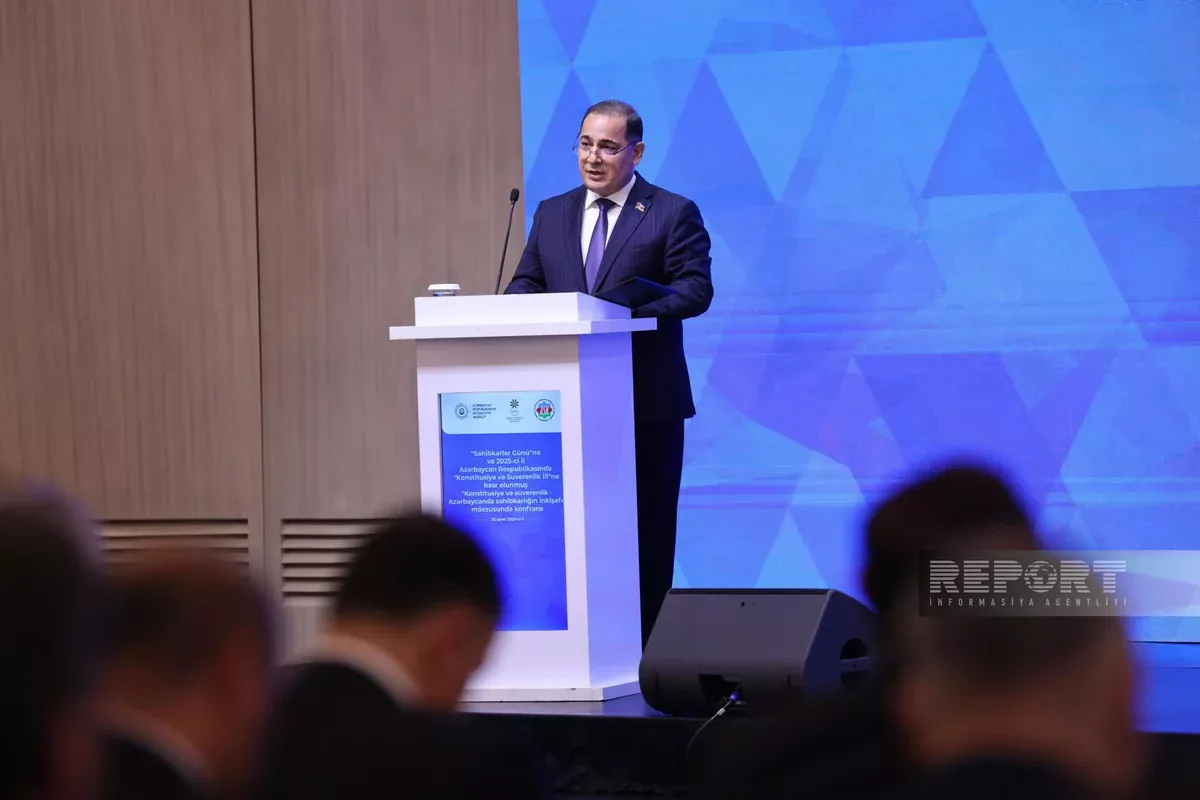
This experience is also highly relevant for Azerbaijan, where prudential regulations are being strengthened and legislative reforms in the sector are ongoing. Among other initiatives, as announced during the forum by Azer Amiraslanov, Chairman of the Milli Majlis Committee on Economic Policy, Industry and Entrepreneurship, Azerbaijan plans to develop a new strategy that will define the next stage in the development of the national insurance market.
“Today, the insurance market is undoubtedly demonstrating growth. There is a clear vision, a well-defined approach, and an existing strategy, while a new strategy is expected to be formulated for the next phase. In essence, this will serve as a sectoral roadmap,” he said.
The chairman of the parliamentary committee also stressed that both ordinary citizens and, at times, business representatives often view insurance costs as unnecessary expenses. Therefore, there remains a pressing need in the country for greater public awareness and educational efforts regarding the insurance market, as well as the importance and necessity of insurance as a mechanism for risk management and ensuring long-term stability.
At the same time, Azerbaijan faces the challenge of maintaining the stability of the insurance market. In January–May 2026, insurers’ claim payments increased by 30.1% year-on-year, while premium income grew by only 1.85%. This imbalance has become particularly evident in the compulsory motor third-party liability insurance (MTPL) segment.
In January–April 2025, insurers collected AZN 57.5 million (approximately $33.8 million) in MTPL premiums, while claim payments reached AZN 51.7 million (approximately $30.4 million). As a result, the claims-to-premiums ratio in this segment climbed to 89.9%, making MTPL one of the least profitable lines of business in Azerbaijan’s insurance industry.

In this regard, Director General of the Central Bank of Azerbaijan, Vusal Gurbanov, stated during the forum that the country is considering revisions to coverage limits for several types of compulsory insurance, including mandatory personal accident insurance. Legislative amendments to the compulsory motor third-party liability insurance (MTPL) framework are also being prepared.
At the same time, according to First Deputy Chairman of the Central Bank of Azerbaijan, Aliyar Mammadyarov, new approaches to comprehensive motor insurance (CASCO) will be introduced. These changes are aimed at aligning regulations with international insurance principles, clearly defining the rights and obligations of all parties, and enhancing consumer satisfaction.
Further improvements are also planned in the field of compulsory property insurance. The proposed measures are expected to reduce the impact of catastrophic risks, provide more adequate insurance coverage, and facilitate faster and more accurate damage assessments.
Thus, the key priorities for Azerbaijan’s insurance market in the coming years include refining compulsory insurance mechanisms, raising public awareness of voluntary insurance products, strengthening the sector’s human capital, expanding digital infrastructure, and adopting international best practices to accelerate the integration of insurance products into the national economy.







 editor@caliber.az
 +994 55 444-88-98
 Азербайджан, Баку, ул. Низами, 203, Af Business House, 5-й этаж