










Economy defies turbulence: IMF, ING forecast growth of Azerbaijan’s GDP Review by Khazar Akhundov
During the first half of 2026, most countries around the world experienced a slowdown in GDP growth, driven by tariff wars, trade barriers, and the energy crisis resulting from the conflict in the Middle East. Azerbaijan also felt the impact of these external challenges at the beginning of 2026. However, in the following months, the country managed to improve its economic performance.
As a result, the updated global economic outlook recently released by the International Monetary Fund (IMF) notes that the countries of the South Caucasus and Central Asia are expected to continue developing under the influence of favourable growth factors. Meanwhile, economists at the ING Group banking conglomerate forecast continued growth of Azerbaijan’s economy both in 2026 and 2027.
Before the outbreak of the large-scale war in the Middle East, leading analytical centres around the world—including the expert community of the World Economic Forum (WEF)—had already identified deep-seated divisions undermining the cohesion of the global economy. Among the clearest manifestations of this geoeconomic confrontation was the escalation of tariff disputes.
Taken together, these factors contributed to a decline in global trade and investment, weakening supply chains, restricting access to natural resources, and reducing industrial output. In many cases, advanced economies had imposed export restrictions on key commodities, terminated existing contracts, tightened controls over capital flows, and exerted direct pressure on the energy sectors of developing countries.
The cherry on the global “recession cake” was the military standoff in the Middle East, which led to the blockade of the Strait of Hormuz, resulting in rising oil and gas prices and an unprecedented fuel crisis.
Against the backdrop of such turbulence, the IMF revised its forecasts in April 2026, lowering its projection for global economic growth in 2026 by 0.3 percentage points compared with last year's forecast, to 3.4 per cent. At the same time, according to the IMF's April World Economic Outlook report, Azerbaijan's GDP growth was projected at 2.2 per cent in 2026, while the forecast for 2027 was even raised to 2.5 per cent. Thus, according to the Fund's estimates, Azerbaijan's economy is expected to grow at an average annual rate of 2.35 per cent over the next two years.
This naturally raises the question: What was the IMF's optimism regarding Azerbaijan's economic performance in the current and coming years based on? The answer lies in the fact that the Fund's positive scenario is primarily built on the assumption that the global energy and transport crises of recent months have had little impact on Azerbaijan, as well as on the countries of Central Asia. On the contrary, the Caspian region has emerged as one of the principal beneficiaries of rising global energy prices.
The Fund recently reaffirmed its positive outlook in its updated global economic forecast, according to which the economic growth projection for the South Caucasus and Central Asia in 2027 was revised upward by a further 1.9 percentage points compared with its April forecast. The report also notes that the countries of the region possess considerable potential to expand trade and investment ties. However, IMF experts argue that achieving this objective will require further structural reforms.
In particular, during a recent virtual discussion presenting the report, titled “Strengthening Economic Cooperation among the Countries of the Gulf Cooperation Council, the South Caucasus, and Central Asia,” IMF economist François Painchaud emphasised that the key priorities for strengthening regional cooperation are improving logistics and transport connectivity, reducing trade barriers, and enhancing the conditions for attracting foreign direct investment.
Equally importantly, according to the Fund's estimates, the potential increase in foreign direct investment (FDI) in Azerbaijan and other South Caucasus countries is expected to amount to approximately 0.7 per cent of GDP.
At the same time, when preparing its country-specific forecasts, the IMF also takes into account developments in the non-oil economy, improvements in fiscal sustainability, the reduced dependence of the fiscal sector on oil revenues, and the decreasing influence of the hydrocarbons sector on the country's broader macroeconomic framework. In this regard, particular importance is attached to the fact that, as Azerbaijan's economic development model has evolved, the traditionally dominant extractive industries in foreign trade have been gradually giving way to an export-oriented non-oil sector.
In this respect, the results recorded during the first four months of the current year are quite encouraging. Non-oil budget revenues exceeded the forecast by approximately 77 million manats ($45.3 million), representing a 5 per cent increase compared with the corresponding period of 2025.
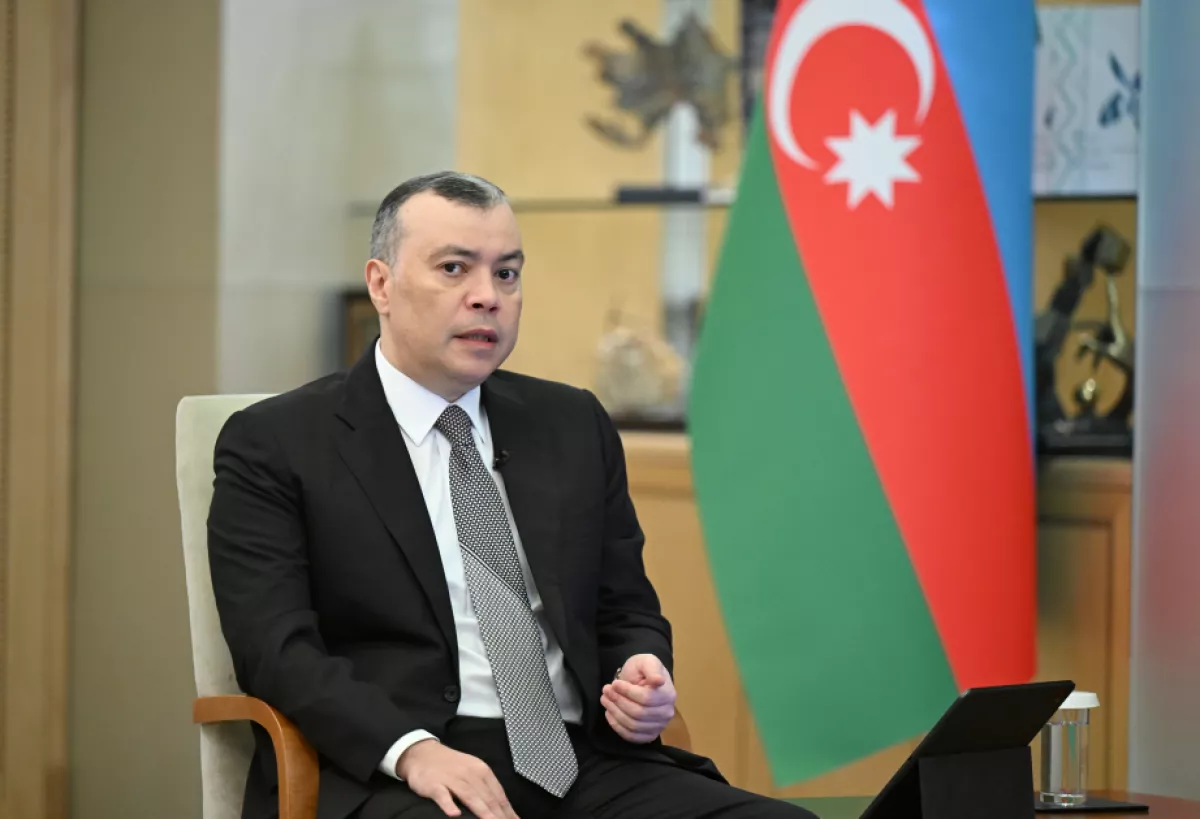
As Azerbaijan's Minister of Finance, Sahil Babayev, noted in his exclusive interview with AZERTAC and AZTV in May, "while oil accounted for 48 per cent of the state budget in 2025, we expect this share to decline to 42–43 per cent this year [the official forecast stands at 42.6 per cent]. By 2030, we plan to reduce it to just 30 per cent. This represents a profound transformation of the state budget, as the share of oil revenues will fall from 48 to 30 per cent within only five years, meaning that 70 per cent of the state budget will subsequently be financed by non-oil revenues."
For its part, Fitch Ratings noted in a recent report that "the persistently high global energy prices observed since March have also had a positive impact on Azerbaijan's external and public finances and could contribute to faster economic growth in 2026 by strengthening the country's twin surpluses." Analysts at the international credit rating agency forecast that the current account surplus will remain at 4.5 per cent of GDP this year, while the consolidated budget surplus is expected to reach 2.1 per cent of GDP.
Meanwhile, at the end of June, the Netherlands' largest banking group, ING Group, released its projections for Azerbaijan's economic growth. According to the bank's estimates, GDP growth is expected to reach 2.0% in 2026, accelerate to 3.0 per cent in 2027, and moderate to 2.3 per cent in 2028. As a result, Azerbaijan's average annual GDP growth over the 2026–2028 period is projected at approximately 2.43 per cent.
The gradual improvement in Azerbaijan's economic performance is also reflected in data released by the State Customs Committee (SCC) and the Central Bank of Azerbaijan (CBA), both of which indicate that the country's external sector continues to demonstrate strong fundamentals. According to SCC statistics, Azerbaijan's foreign trade surplus reached $1.4 billion in the first quarter of 2026, representing a 93.3 per cent increase compared with the January–March period of the previous year.
The CBA has likewise revised its forecast for the country's current account surplus, projecting it to reach $5.5 billion by the end of 2026, compared with $3.5 billion recorded in the previous year.
Despite these improvements in foreign trade and broader macroeconomic indicators, Azerbaijan's key economic institutions remain cautious in their GDP growth expectations. According to the Ministry of Economy's updated forecast, the country's GDP is expected to expand by 1.7 per cent in 2026. The non-oil sector is projected to grow by 3.7 per cent, while the oil and gas sector is expected to contract by 3.3 per cent. Meanwhile, the Central Bank forecasts GDP growth of 1.1 per cent in 2026, accelerating to 3.2 per cent in 2027.
Nevertheless, regardless of differences in growth projections, the strategic priority for Azerbaijan in the coming years will remain the continued diversification of its non-oil economy.
In this regard, the government's ongoing reforms are intended to reduce the country's dependence on hydrocarbons and ensure sustainable long-term economic growth. This objective is expected to be achieved primarily through expanding exports of agricultural and industrial products, strengthening Azerbaijan's role as a regional logistics hub, and increasing exports of green energy and high-value-added IT products.







 editor@caliber.az
 +994 55 444-88-98
 Азербайджан, Баку, ул. Низами, 203, Af Business House, 5-й этаж