










Price of Macronism: France sinks deeper into debt Analysis by Artem Kirpichenok
At the beginning of the 21st century, the French Fifth Republic ranked as the third most financially stable country in the European Union, serving as the principal pillar of European stability after Germany. Owing to this status, financial markets long turned a blind eye to the country's economic and political problems, convinced that its stability as one of Europe's great powers was unshakable. This confidence, however, rested not only on economic fundamentals but also on political assumptions that today appear increasingly questionable.

And then, in May, the public debt of the French Republic reached €3.536 trillion, amounting to 117.5 per cent of GDP. To repay it, Paris would have to sell off its entire gold reserve, securities, and state holdings in companies such as EDF, Engie, Airbus, and others, as well as all government-owned real estate. However, according to auditors' estimates, even such measures would be mathematically insufficient to meet these obligations, making the risk of debt strangulation a genuine threat to the national budget.
These conclusions are by no means exaggerated—the situation is indeed extremely dire. France's economy has slowed: according to revised figures from the National Institute of Statistics and Economic Studies (INSEE), GDP contracted by 0.1 per cent in the first quarter of 2026. Meanwhile, the Bank of France revised its annual growth forecast downward to 0.5 per cent, 0.4 percentage points below its March projection of 0.9 per cent.
The media and experts are virtually unanimous in speaking of a "triple blow": an energy shock triggered by the war in the Middle East and the blockade of the Strait of Hormuz, a financial shock, and a tax shock. Against the backdrop of a massive budget deficit—projected to exceed 5 per cent of GDP—the government has been forced to implement strict fiscal consolidation measures and curb public spending. All of this has prompted a sharp revision of macroeconomic forecasts: the Bank of France has raised its average annual inflation forecast to 2.5 per cent.
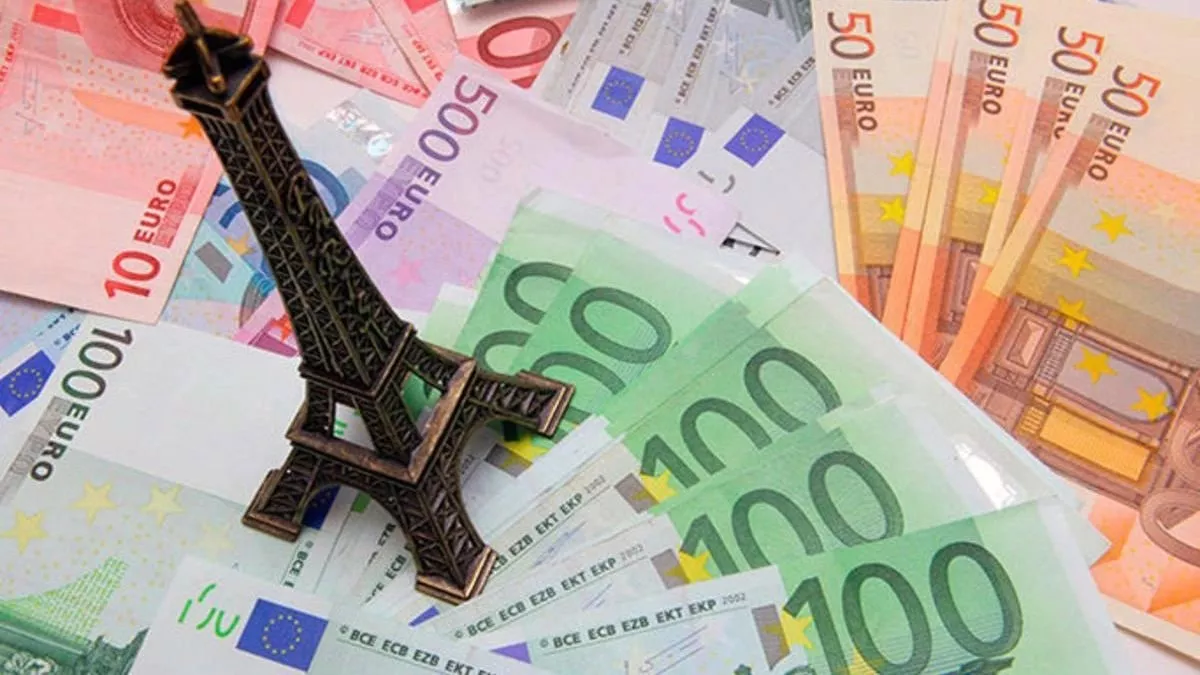
In an effort to bring the budget deficit under control, the government has extended emergency corporate levies on the country's largest companies with annual revenues exceeding €1.5 billion. As a result, the effective corporate income tax (CIT) rate for some major corporations has risen to 36.3 per cent. At the same time, social spending has been left largely untouched to avoid triggering public protests, with the deficit instead being financed through additional tax measures, including a 20 per cent minimum tax on the ultra-wealthy. The outcome has been predictable: business leaders and the banking sector warn that these extraordinary tax measures are undermining France's competitiveness and prompting investors to move their capital abroad.
The debt picture is equally bleak. France's external debt is estimated at $8.5–9 trillion, or approximately 245–261 per cent of GDP, while the country's total economy-wide debt—including government, non-financial corporations, households, and the financial sector—stands at 319 per cent of GDP. Among advanced economies, only Japan posts higher figures. There is, however, a fundamental difference: Japan's public debt is held predominantly by domestic investors, whereas in France nearly 60 per cent of government bonds are owned by non-residents, leaving the country far more vulnerable to external market conditions and foreign pressure.
For her part, Carine Camby, Senior Auditor and Acting Head of France's Court of Audit (Cour des comptes), describes the situation as a structural crisis, arguing that the country's excessive debt is constraining both the financial capacity of the Fifth Republic and its political decision-making. As she puts it: "Suffocation under debt is not a risk, it is a reality of our public finances."
The picture is further darkened by stark fiscal indicators: the budget deficit exceeds 5 per cent of GDP, well above the EU's 3 per cent ceiling. This has eroded France's long-standing reputation as one of the eurozone's most creditworthy borrowers, reflecting declining investor confidence and raising questions about whether the country may eventually need to rely on the European Central Bank's emergency support mechanisms.
The gravity of the situation is perhaps best captured by former Prime Minister François Bayrou, who has repeatedly addressed the issue in his public commentary, including in his book Alerte sur la France qui vient ("A Warning About the France to Come"). As he writes, "France's economy is a swamp in which the country is sinking ever more rapidly."

History shows that major powers confronted with unsustainable public debt have often resorted to monetary sovereignty: inflation generated through money creation eroded the real value of outstanding liabilities, effectively shifting the burden from borrowers to creditors. This option has long been available to countries with their own national currencies. Modern France, however, no longer has that lever at its disposal.
Since the introduction of the euro, France has been unable to inflate away its debt. The only apparent alternative is assistance from the European Central Bank (ECB), which, in theory, can purchase sovereign bonds on an unlimited scale if it deems such intervention necessary to preserve price stability or safeguard the integrity of the monetary union. Yet ability and willingness are not the same thing. Previous ECB interventions were presented as exceptional measures tied to fiscal discipline and structural reforms, whereas providing Paris with open-ended financial support would be an entirely different matter.
On the other hand, investors have long since stopped expecting the Élysée Palace to deliver meaningful progress in tackling the financial crisis. Since coming to power, Emmanuel Macron has overseen an unprecedented expansion of the public sector: by 2024, government spending had reached 57 per cent of GDP, one of the highest levels among advanced economies.
When Macron took office in 2017, France's public debt-to-GDP ratio exceeded the eurozone average by 11 percentage points. By 2024, that gap had widened to 25 percentage points, pointing to a sustained deterioration in the country's fiscal position.
Importantly, the financial instability of the Fifth Republic cannot be separated from the country's political turmoil. In less than two years, France has seen five prime ministers come and go, with each successive government proving weaker than its predecessor, unable to secure a stable parliamentary majority or present a coherent economic strategy.
Macron has consistently portrayed himself as a pragmatist, seeking to reconcile market efficiency with social protection and national sovereignty with European integration. Yet behind this rhetoric of pragmatism lies a clear determination to preserve the existing economic order—one in which market confidence takes precedence over social cohesion, fiscal rules outweigh political consensus, reform often translates into cuts to social protections, and competitiveness is achieved through wage restraint rather than broader structural change.
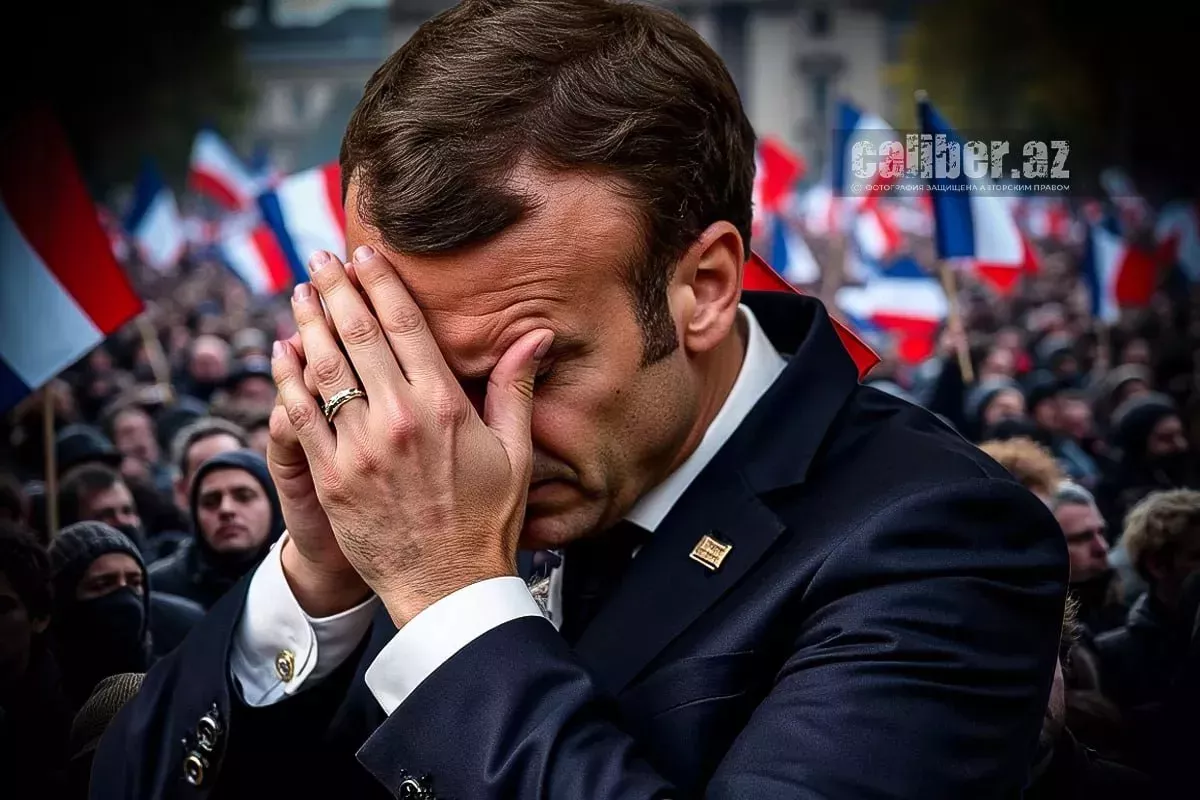
As living standards have declined, public services have deteriorated, and the cost of living has continued to rise, public trust in state institutions has steadily eroded. In the first quarter of 2026, unemployment reached 8.1 per cent, its highest level in five years.
Under such conditions, political radicalism becomes not the cause but a driving force of instability, creating a self-perpetuating vicious cycle. Each failure of the authorities deepens public cynicism, further fragments the political landscape, and fuels support for more radical alternatives. Rather than stabilising the system, Macronism has, in practice, accelerated its deterioration.
Meanwhile, France's crisis has already outgrown its national dimensions, posing a threat to the very institutional architecture of the eurozone and the role of the ECB within it.
As journalist Julien Chevalier observes, "The eurozone will be the first to suffer from this situation. Weakness in the euro area's second-largest economy will affect every European country. The continent is already experiencing a period of profound instability, as the globalisation on which the European Union was built is unravelling. The interdependence of member states could have repercussions across the board: first, for European banks burdened with French debt; second, for the euro's exchange rate, Europe's economic growth, market confidence in the European Union, and even the stability of its institutions."
Thus, burdened by an enormous public debt, deprived of monetary sovereignty, and hampered by a fragmented political centre, the French Republic has evolved into a systemic risk for the European Union as a whole. European policymakers, who have long sought to avoid confronting this issue, are now compelled to address a fundamental question and make a difficult choice: should the Fifth Republic be allowed to fail, or must it be rescued at any cost?







 editor@caliber.az
 +994 55 444-88-98
 Азербайджан, Баку, ул. Низами, 203, Af Business House, 5-й этаж