










Sea of new threats: Russia and China focus on countering drones
The recently concluded "Maritime Interaction-2026" joint Russian-Chinese naval exercises in the Yellow Sea have once again attracted the attention of observers around the world.
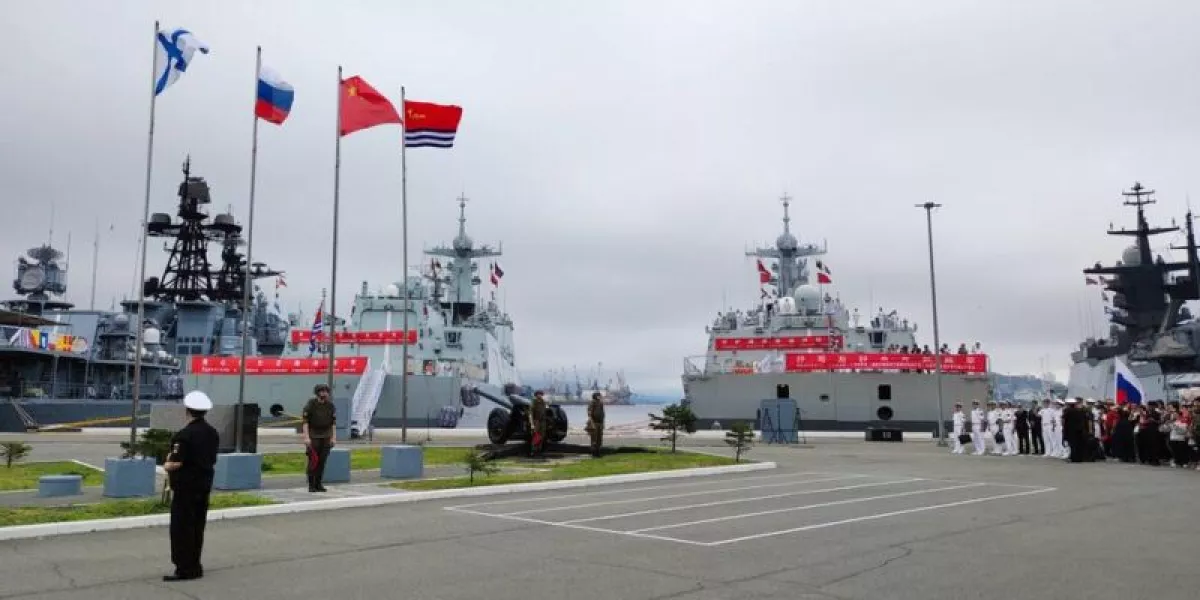
In 2026, Russian and Chinese naval personnel practised a wide range of tasks, including air defence, anti-submarine warfare, repelling attacks by unmanned aerial vehicles and uncrewed boats, joint manoeuvring, as well as rescuing the crew of a simulated distressed submarine. After the main phase of the exercises concluded, several ships continued joint patrols in the Pacific Ocean.
The main feature of this year's drills was the focus on new threats at sea. While the emphasis previously was on countering ships, aircraft, and submarines, unmanned technologies are now playing an increasingly important role. Therefore, practising defence against aerial and maritime drones became one of the key elements of the program. Another distinctive feature was the absence of a rigid scenario.
According to the Chinese side, commanders made decisions during the execution of the tasks based on the evolving situation. This approach brought the exercises closer to real conditions and made it possible to test not only the capabilities of the equipment but also the effectiveness of joint command.
The exercises, which have been held since 2012, have long been part of the annual plan for Russian-Chinese military cooperation. Regular drills help improve coordination between the two navies, facilitate the exchange of experience, and enhance interoperability in carrying out complex maritime operations. At the same time, they have become part of the broader strategic partnership between the two countries. 2026 exercises confirm a long-term trend: Moscow and Beijing are steadily expanding their practical cooperation, adapting it to new conditions and contemporary challenges.
At the same time, there are still no grounds to speak of the creation of a full-fledged military alliance. Despite their close cooperation, Moscow and Beijing are not bound by a collective defence treaty, do not have a unified military command, and retain independence in making decisions on security matters.

Accordingly, most Western experts do not believe that the Russian-Chinese exercises have already created a military counterweight to the U.S. alliance system in the Asia-Pacific region. The level of cooperation between Moscow and Beijing still falls short of what the United States has achieved with Japan, South Korea, Australia, and other allies: Russia and China do not have a unified command, common command-and-control standards, or decades of experience in conducting joint combat operations.
Nevertheless, their regular joint naval exercises are becoming an important factor in regional security.
For Washington, this means the need to take into account not only the capabilities of the Chinese Navy but also the possibility of coordinated operations with Russian forces, which complicates military planning, requires the allocation of resources across multiple directions, and increases the importance of anti-submarine warfare, intelligence, and the protection of maritime lines of communication.
Although such exercises do not, by themselves, alter the balance of power, they increase uncertainty for a potential adversary and become one of the elements of strategic deterrence in the western Pacific.







 editor@caliber.az
 +994 55 444-88-98
 Азербайджан, Баку, ул. Низами, 203, Af Business House, 5-й этаж