










Stubb on global stability and Azerbaijan’s signals What the world can learn from Baku
Discussions continue across various political circles worldwide regarding the article by Finnish President Alexander Stubb, published on 2 December in Foreign Affairs.
Many analysts, when examining individual points raised by Stubb, react as if encountering them for the first time. This only highlights how inattentive a significant portion of the Western expert community has been to ideas that have long been consistently voiced on international platforms in Azerbaijan.
A review of Azerbaijani President Ilham Aliyev’s speeches at major international forums in recent years, as well as his interviews with leading global media, makes it clear that Baku has consistently and clearly articulated key issues on the global agenda and proposed concrete solutions to crises.
But let’s take it step by step.

Returning to Stubb’s article, it should be noted that he observes the world is in a state of chaos and that the so-called liberal world order, established after World War II, is undergoing a deep crisis. Multilateral cooperation is giving way to multipolar competition, where opportunistic deals increasingly take precedence over adherence to international rules.
Stubb roughly divides the modern world into a “triangular contest” between the global West, the global East, and the global South. He identifies the growing rivalry between the United States and China as the key trend in international politics.
The global West, traditionally led by the U.S., according to Stubb, comprises around 50 countries — including Australia, Japan, South Korea, and several others.
The global East, numbering roughly 25 countries, forms a bloc led by China. According to Stubb, it primarily includes Iran, North Korea, and Russia, which seek to jointly “reduce the power of the global West.”
The global South — the largest group, with about 125 countries — encompasses most developing nations and middle-income states in Africa, Latin America, South and Southeast Asia, as well as several middle powers such as Brazil, Indonesia, Saudi Arabia, South Africa, India, Kenya, and Mexico.
Stubb believes that the global South will be the decisive factor, determining whether the geopolitics of the next era will lean toward cooperation, fragmentation, or a new form of domination.
In this context, Stubb argues that Western countries face a “last chance” to convince the rest of the world of their ability to engage in dialogue rather than monologue; to act consistently rather than apply double standards; and to pursue partnership rather than domination.
From this follows the need to build a world order based not only on the rule of law but also on respect for the cultural, religious, and political particularities of different regions. According to Stubb, the countries of the global West should set an example and support their partners, rather than lecture them, treating cooperation as engagement among equals.
Stubb believes that only “a new symmetry of power among the global West, East, and South would produce a rebalanced world order.” This underscores the need to reform the UN, WTO, IMF, and World Bank to prevent chaos and fragmentation from becoming enduring trends in global politics.
He emphasises that it is unacceptable for the UN Security Council to lack permanent representatives from Africa and Latin America, while the entirety of Asia is effectively represented solely by China.
Stubb acknowledges that multipolarity carries risks: it may lead “to ad hoc and opportunistic behavior” and the formation of unstable alliances based solely on short-term interests. Multilateralism, by contrast, creates order. Today, therefore, there is a clash between supporters of a multilateral approach based on the rule of law and proponents of multipolarity.
In this situation, Stubb stresses, special responsibility rests with the global West — the architect of the fading world order and still the most powerful economic and military coalition. How the West bears this “mantle” is crucial, for, as Stubb writes, “this is our last chance.”
Separately, he underscores the need to uphold the fundamental principles of international law: the sovereignty and territorial integrity of states, the prohibition of the use of force, and respect for human rights and fundamental freedoms.
Alexander Stubb has indeed highlighted key geopolitical realities. However, he does not clarify where, in his view, the fundamental line lies between “multilateralism” and “multipolarity.” Moreover, Stubb overlooks a point that is particularly evident for the South Caucasus: if the international community had, at the time, firmly insisted on the enforcement of international law in the context of Armenia’s occupation of Azerbaijan’s sovereign territories — at the very least through implementation of the four UN Security Council resolutions demanding the withdrawal of occupying forces — many states would have been far more cautious in taking aggressive actions against independent countries.
Now, let us turn to the key messages of Azerbaijani President Ilham Aliyev, which he has consistently conveyed to the international community over recent years.
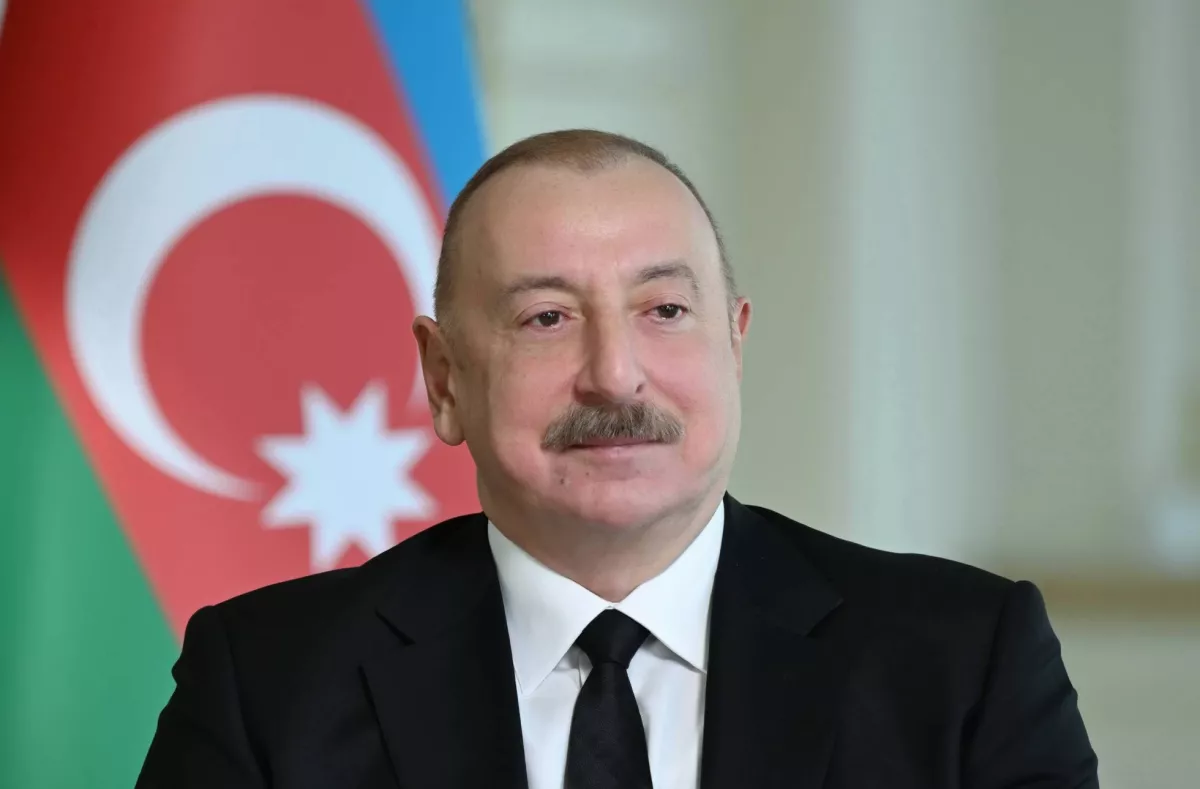
In 2020, he described the development of peace in a multipolar format as inevitable and a positive factor, providing a foundation for global stability.
Two years later, noting that international law was effectively failing and that the “power factor” had again prevailed, President Aliyev stated: “We want to live freely. We want no one to interfere in our work from now on. There is no need for that.”
In 2023, the head of state returned to the topic of UN reform, calling the Security Council “reminiscent of the past” and proposing to expand the composition of the “P5” to include permanent representatives from the Non-Aligned Movement, the Organisation of Islamic Cooperation, and the African Union, granting them rotational veto rights.
At COP29 in 2024, President Ilham Aliyev emphasised that, as chair of the conference, Azerbaijan would strive to build consensus between developed and developing countries, fostering dialogue between the global South and the global North. He also called on developed states, particularly those with a colonial legacy, to provide tangible financial and technical support to small island states.
At the beginning of 2025, the president noted that if every country focused on its own agenda and refrained from interfering in the affairs of others, there would be fewer conflicts and wars. Yet states with an imperialist past continue to seek domination and dictate.
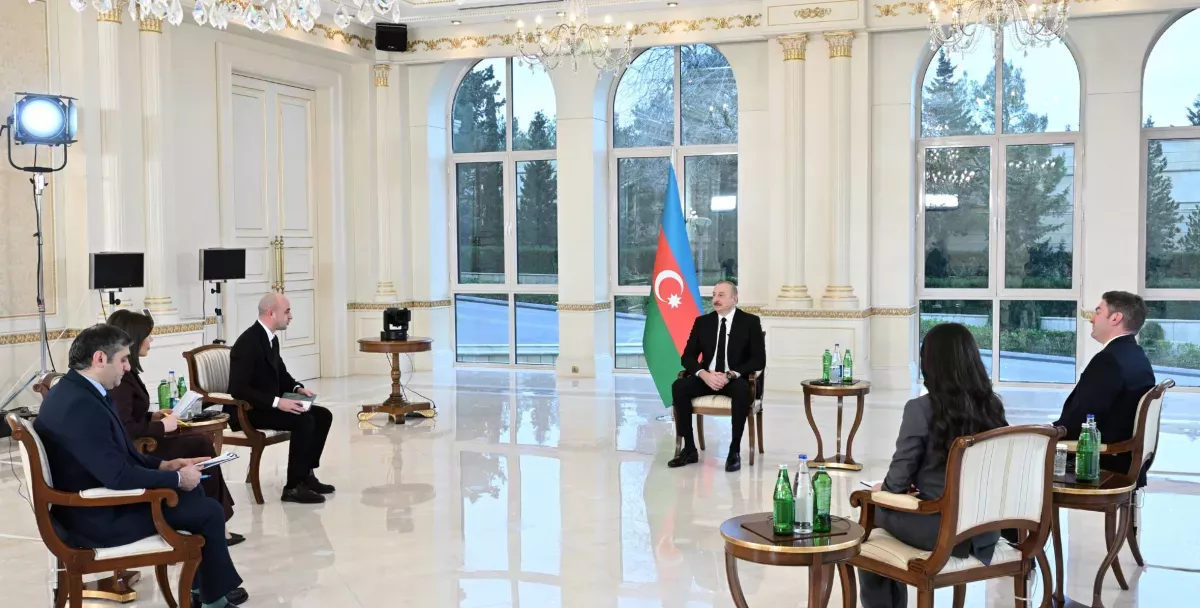
Azerbaijan has been able to protect itself from interference in its internal affairs, Aliyev added, but not every country possesses such potential. Therefore, the world needs new actors capable of shaping a serious international agenda — such as the OIC or D8.
Earlier this year, highlighting Baku’s role as a bridge between the global South and the global North, President Aliyev emphasised that many key problems facing global South countries stem from the neocolonial policies of certain Western states. Azerbaijan, by contrast, has consistently supported interfaith, intercivilisational, and intercultural dialogue — recognising that only joint efforts can ensure a bright future and a just world order.
In the autumn of this year, Ilham Aliyev once again stressed the need for more active participation of global South countries in shaping a fair architecture for international relations.
Thus, over recent years, the President of Azerbaijan has clearly and consistently communicated to the international community the essence of ongoing processes and emerging trends. No further comment is needed: perhaps Western political leaders should pay closer attention to the signals that Baku is sending to the world.







 editor@caliber.az
 +994 55 444-88-98
 Азербайджан, Баку, ул. Низами, 203, Af Business House, 5-й этаж