










Tensions in the Caribbean Is Cuba next for US action?
Recently, discussions have increasingly suggested that Cuba could be the United States’ next target after Iran. Senator Lindsey Graham has declared, “Cuba’s next. They’re gonna fall. This communist dictatorship in Cuba? Their days are numbered.” The Trump administration is indeed considering the possibility of a military operation against Havana, carefully examining recent actions in Venezuela and Iran, according to The Atlantic.
On February 27, the U.S. president told journalists at the White House that Washington does not rule out a so-called “friendly takeover” of Cuba — particularly in light of the escalating crisis on the island.
It should be clarified right away that this is less about Trump’s personal ambitions and more about America’s longstanding desire to eliminate the communist regime located just a few dozen kilometres off the coast of Florida. Socialist Cuba is like a thorn in the side of the White House—a symbol of defiance against its influence in the Western Hemisphere. And, according to the frequently cited Monroe Doctrine, Washington views this region as a zone of exclusive U.S. interests.
The United States has encountered the Cuban factor more than once—most notably during the failed Bay of Pigs Invasion in 1961, when the landing of exiles ended in disaster. At the time, it was a painful blow to American pride. It seems that the current president has set out to systematically “deal with” every country that has ever challenged the United States: Venezuela—for nationalising its oil, Iran—for the 1979 embassy seizure, and Cuba—for the humiliation at the Bay of Pigs. This is, of course, a somewhat poetic simplification, but it helps capture the emotional undercurrent driving the geopolitical objectives of the 47th U.S. president.
Meanwhile, Cuba is surviving under severe economic conditions. To operate normally, the country needs about 100,000 barrels of oil per day. It produces only a portion of this amount domestically, with the rest previously supplied by Venezuela. After the U.S. operation against Caracas, that flow was cut off. Cuba tried to compensate for the shortfall with shipments from Mexico, but these were also halted under pressure from Washington.
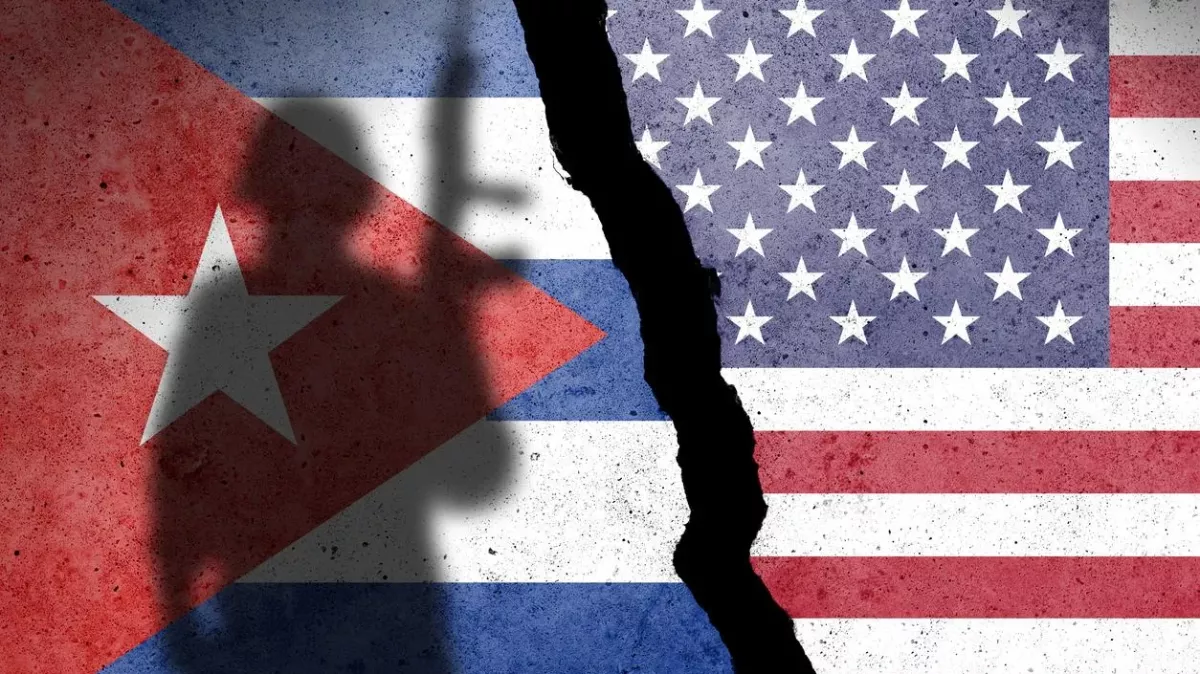
Against this backdrop, the U.S. is seeking to exert influence not only from the outside but from within Cuba as well. Washington is actively reaching out to members of the Cuban elite whom it considers open to negotiations, offering them support for a change of power in exchange for favourable cooperation afterward.
A military operation is not ruled out, but the final decision will likely depend on the outcome and timing of the American campaign in Iran. The White House recognises that the U.S. currently does not have the resources to handle two conflicts simultaneously, with the majority of military forces concentrated in the Middle East.
While a potential invasion is still some way off, the White House is betting on Cuba’s internal crisis. Trump appears to be counting on the island “maturing” for change on its own, driven by economic hardship, public discontent, and divisions within the elite. In this context, the threats issued by Washington regarding an invasion currently serve mainly as a deterrent.
Modern Cuba has three signature “brands”: healthcare, cigars, and regime survival. It is the last of these that now faces unprecedented challenges.







 editor@caliber.az
 +994 55 444-88-98
 Азербайджан, Баку, ул. Низами, 203, Af Business House, 5-й этаж