










The new world order in plain English America’s vision for a multipolar era
The new U.S. National Security Strategy (NSS) is a document of historic significance, one that could very well become a monument of the era. And it should be read in the context of the characteristics of this era.
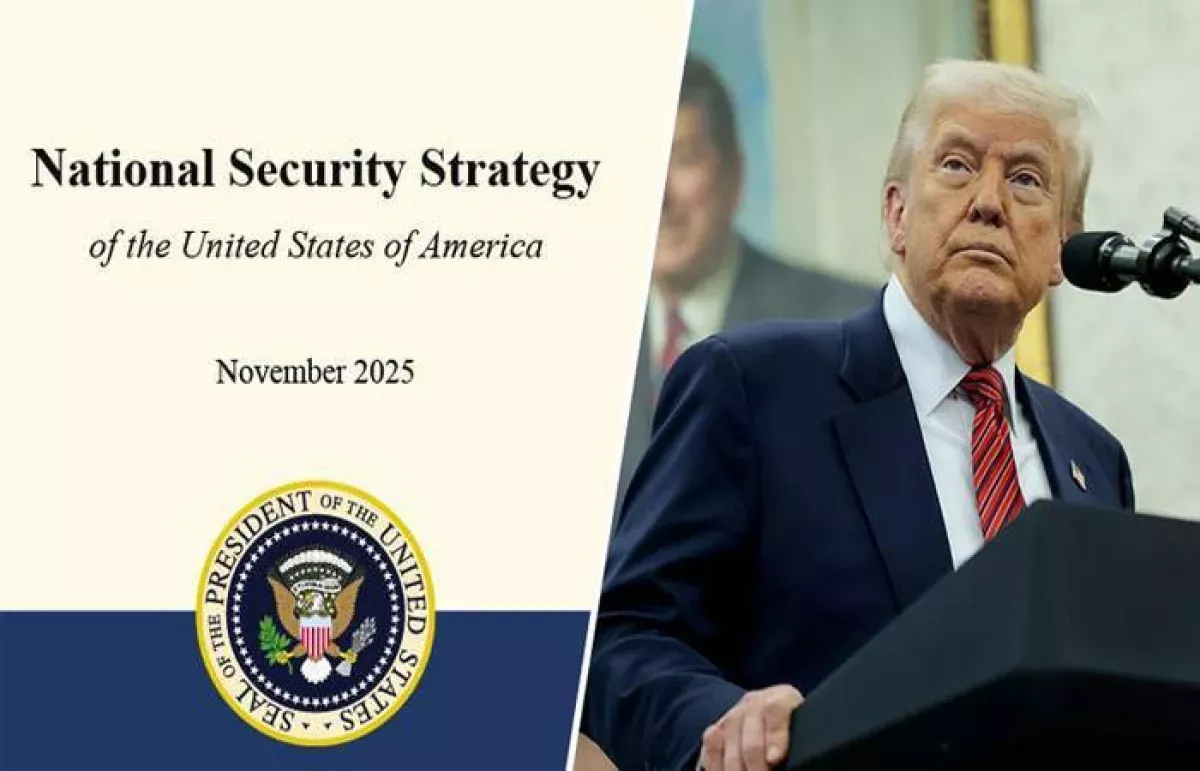
Passions and heated debates over the new edition of the U.S. National Security Strategy show no signs of subsiding—neither within the United States itself nor in various corners of the globe. And this is hardly surprising. The released strategy is not merely the most important doctrinal document of the world’s strongest power. It is a fascinating document that, in a literal sense, appears as a vivid reflection of an era—or rather, a reflection of the change of an era that is unfolding before our eyes.
Few documents, especially if they are not large-scale international treaties, can claim universal historical significance or the symbolism of global and historical scale. The newly released American strategy, however, undoubtedly can. At least, that is the impression it leaves right now.
In this document, it is not so much the specific thematic blocks and the emphasis placed within them that matter, but rather its overall spirit. The Trump administration’s strategy is interesting precisely as a symbol—or even a monument—of a historical era. Therefore, what is most remarkable about it is how the U.S. executive branch perceives the world and itself within that world.
Turning a page in US foreign policy
The new U.S. National Security Strategy is, in every sense, very different from what we are used to seeing in similar documents, including American ones. It appears unusual both in content and style. Everything in it is truly Trumpian: straightforward, without unnecessary politeness or convoluted nuances. In other words, everything is unambiguous, plain and clear in classic American fashion.
Like many statements and actions of the Trump administration, the document gives the impression of breaking with established norms, of turning every possible page, of starting many processes from scratch. This perception is not 100% accurate, yet in many ways it is indeed justified. It is clear that the strategy’s authors themselves intended to create exactly this impression.
Right from the very beginning, the authors emphasize: “American strategies since the end of the Cold War have fallen short—they have been laundry lists of wishes or desired end states; have not clearly defined what we want but instead stated vague platitudes; and have often misjudged what we should want.” Moreover, the new edition of the strategy boldly states that the doctrinal documents of the U.S. in recent decades did not meet the requirements of strategy at all. According to the current administration, their numerous predecessors ignored the sacred core of strategic analysis: they simply failed to align their goals with the resources available to Washington.

As a result, “American foreign policy elites convinced themselves that permanent American domination of the entire world was in the best interests of our country.” Because of this, “they overestimated America’s ability to fund, simultaneously, a massive welfare regulatory-administrative state alongside a massive military, diplomatic, intelligence, and foreign aid complex.’’ In the end, “They allowed allies and partners to offload the cost of their defense onto the American people, and sometimes to suck us into conflicts and controversies central to their interests but peripheral or irrelevant to our own.”
It is clear that the Trump administration disagrees with this state of affairs and intends to radically change Washington’s policy in this regard. In fact, it had already been pursuing such changes even before the release of the new National Security Strategy, and now it is doctrinally cementing these approaches.
Here, the most important point should be noted. This critique of past U.S. foreign policy reflects not only the worldview and sense of what ought to be that currently dominate the corridors of American power, but even more so it reflects the radically new global conditions under which the Trump administration received its mandate to govern the country.
In this sense, one could argue that the criticism directed at the predecessors in the document is somewhat unfair. After all, the Trump administration’s predecessors navigated the American state ship through the oceans of global politics under entirely different structural realities. Put simply, the world today and in previous decades are two very different things.
The former American drive for total global dominance and presence everywhere—every corner of the planet and in solving every problem—was natural. Not in the sense that it was right, but in that it reflected a certain historical pattern in the behavior of great powers. When such powers achieve the status of a hegemon, it becomes very difficult for them to restrain their own ambitions for expansion and pervasive dominance. Especially considering that the American “unipolar moment” after the end of the Cold War was a hegemony on a planetary scale. It rested on an objective structural reality in the world and, let’s be honest, on a very skillfully formulated and theoretically attractive ideology of liberal internationalism. For a long time, no one even thought aloud about questioning the legitimacy of maintaining all-encompassing American hegemony.

Today, however, the “unipolar moment” is over. This is already a fact recognized everywhere, including in Washington itself. The United States remains the number-one power, but it is no longer a total hegemon. Rather, it is “first among equals,” as political scientist Emma Ashford aptly described the new structural reality. The world has moved away from unipolarity and is groping toward some new form of multipolarity, even if it is not yet very clear
And this is exactly what makes the newly released U.S. National Security Strategy so remarkable and historic. It unambiguously and straightforwardly records the new global realities while emphasizing that Washington, in principle, accepts them—but intends to vigorously defend its own interests and its unique position in the new world. The most important point here is that these are not simply the personal views of Trump and his team, who suddenly decided to turn a page in American foreign policy. Rather, it is a rational response to the new reality from a strategic perspective, one that requires a sober alignment of objectives with available resources.
Realism, by the book
This is precisely where the conceptual basis of the new strategy manifests itself. It can clearly be attributed to the ideas about world order and effective foreign policy long known as realism in international relations.
The authors of the document emphasize that “President Trump’s foreign policy is [...] realistic without being ‘realist’.” In other words, they mean that it reflects global realities, but does not formally align itself with the school of political realism. The intention behind these words is easy to discern: the current administration does not want to be associated with any ideological or academic frameworks.
Yet practically everything in the new strategy points to a fundamentally realist view of the world. Even the paragraph that denies an association with realism, almost like sheet music, outlines the key tenets of this theoretical school: “President Trump’s foreign policy is pragmatic without being ‘pragmatist,’ realistic without being ‘realist,’ principled without being ‘idealistic,’ muscular without being ‘hawkish,’ and restrained without being ‘dovish.’ It is not grounded in traditional, political ideology. It is motivated above all by what works for America—or, in two words, ‘America First’.”
And the main realist consequence of all this is the emphasis on the need to meticulously set priorities in U.S. foreign policy and to focus resources and efforts specifically on the key priorities. This is the leitmotif of the entire document—the empire is concentrating. It does so not simply to abandon its geopolitical interests and claims to global primacy, but to protect them most effectively in an increasingly complex multipolar world.
Regional priorities and the European shock
This is clearly reflected in the regional priorities outlined in the document. Even during the strategy’s drafting stage, when certain provisions leaked to the media, there were surprised voices: how could it be that China receives relatively little attention while the focus is on the Western Hemisphere?
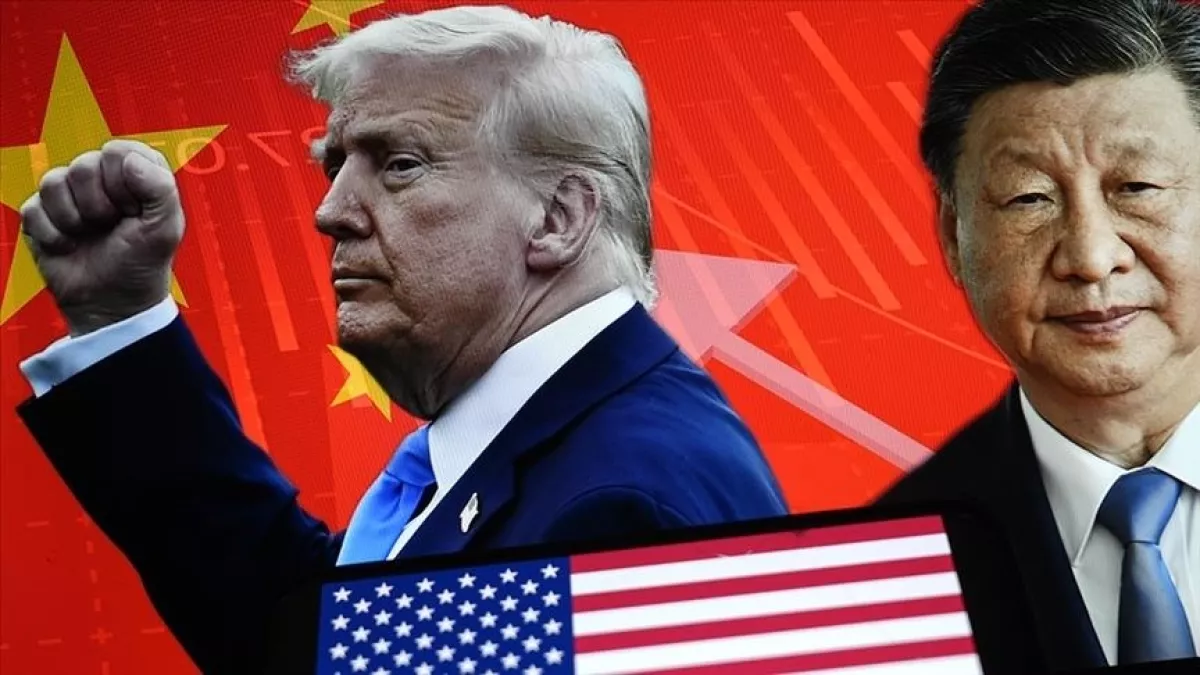
First, this is not the case. The Chinese challenge is clearly central in the new U.S. strategy. Even in passages where China is not mentioned explicitly, numerous references point directly to Beijing.
Second, the return to the Monroe Doctrine and the absolute priority of the Western Hemisphere for Washington is entirely logical. The first step in preparing for a major geopolitical confrontation is the need to secure and fully control one’s own “rear” from the influence of key geopolitical competitors. And for that, all means are considered acceptable. This is why, in the Middle East, the Trump administration refrains from imposing a democratic agenda on traditional regimes not ready for it, while in Latin America it openly demonstrates a willingness to intervene in the internal affairs of any state.
By the same logic, the new strategy’s deliberately cautious approach to Russia becomes clear. The last thing the U.S. needs amid growing competition with China is to escalate conflict dynamics with Moscow and thereby push it closer to Beijing. The same applies to Europe, from which no one in Washington intends to fully withdraw. Summing up the intentions expressed in the strategy regarding Europe, they boil down to the aim of maintaining and even strengthening American influence and control—but increasingly through the hands of, and most importantly, the funds of, Europe itself.







 editor@caliber.az
 +994 55 444-88-98
 Азербайджан, Баку, ул. Низами, 203, Af Business House, 5-й этаж