










When the world watches one man The first year of Trump’s second term
Today, January 20, marks exactly one year since Donald Trump returned to the White House for his second presidential term after a four-year hiatus. Traditionally, he marked this milestone in his own way: boldly, confidently, and with his characteristic charisma. At rallies and on social media, Trump repeatedly highlighted his achievements in making America “great again” and summed up his first year as “tremendous.” However, if one sets aside the usual rhetoric typical for such occasions, the factual picture is far more complex and multifaceted.
Trump’s domestic policy continued the course of combating the so-called “deep state.” The president set about reducing the size of federal agencies, eliminating certain departments and programs whose effectiveness he questioned. Special attention was given to ideological directions: funding for USAID and other organisations promoting a liberal agenda abroad was frozen. The DEI policy (“Diversity, Equity, Inclusion”), which had become a symbol of social transformation over recent decades, was completely abolished in federal institutions, sending a strong signal of the administration’s intention to reassess established social norms.
A legislative breakthrough of the administration was the “Big Beautiful Bill,” passed by Congress under a Republican majority. It cut social programs, introduced tax breaks, increased defence spending, but at the same time led to the highest growth in national debt in recent years — a combination that sparked intense debates among economists and politicians.
A separate and highly notable aspect of Trump’s policy was his stance on migration. On Inauguration Day, he signed a declaration of a national emergency on the southern border, tightened rules for entry and citizenship, authorised mass ICE raids, and organised the deportation of undocumented migrants.
The economic situation in 2025 reflected the contradictions of Trump’s policies. Industry, the defence sector, and energy received substantial support: contracts, tariffs, and administrative lobbying allowed companies to strengthen their positions. At the same time, technology and “green” firms were at a disadvantage: subsidies were cut, and investors moved toward more traditional sectors. U.S. stock markets experienced sharp fluctuations: indices would fall and immediately recover depending on Trump’s latest social media statement. Experts note that the administration’s protectionist strategy produces rapid effects but creates instability, making it difficult for businesses to plan even a few months ahead.
Over the past year, Trump launched large-scale trade wars to secure more favourable conditions for the U.S. and bring strategic production back to the country. In April 2025, tariffs were imposed on most countries worldwide, including close allies.
In the early stages of the administration’s economic policy, the growth of prices was slowed to the Federal Reserve’s target of 2%; however, large-scale import tariffs offset this progress. As a result, by the end of 2025, annual inflation reached 2.7%.
Despite impressive GDP growth — 4.3% in the third quarter and a projected 5.3% in the fourth — a Wall Street Journal poll showed that 57% of Americans view the country’s economic situation negatively. Only 9% consider it “excellent,” while 33% rate it as “good.” More than half of respondents (53%) believe that the president devotes excessive attention to foreign policy, often at the expense of the domestic economy, which traditionally remains the top priority for voters.
Trump’s foreign policy was notable for actions better understood in light of the new National Security Strategy released at the end of 2025. The number one goal was containment of China, while the Western Hemisphere — which had seen significant Chinese influence — was declared a zone of exclusive U.S. interests, fully in line with a radical interpretation of the famous Monroe Doctrine. Following this doctrine, Americans made a bold move near the end of Trump’s first year in office by capturing Venezuela’s leftist president Nicolás Maduro. This action served as a kind of “starter move” intended to secure the Latin American “pie” for the U.S. — bringing all countries and governments in Latin America and the Caribbean into a figurative alignment with Washington. How fully this plan will succeed remains to be seen, but the U.S. has made a very serious claim to hegemony in this part of the world.
Throughout the year, the Trump administration sought to build a new security architecture in the Middle East with Israel’s help. Iran, as the main ally of China and Russia in the region, was in this sense destined for a “hard reception.” It received just that last summer, when Israeli air forces destroyed Iran’s entire air defence system, and American bombers struck Iran’s nuclear facilities. Earlier, under the Democrats, the Islamic Republic had already been deprived of its proxies in the Middle East — primarily in Syria and Lebanon.
However, the struggle over Iran continues, and the uncertainty forced Trump to refrain from providing armed support to domestic protests aimed at toppling the clerical regime. It is possible that this caution is not merely situational but, on the contrary, reflects the broader orientation of Trump’s foreign policy for the year ahead.
Despite the sympathies often attributed to Trump toward Vladimir Putin, the American president has taken a pragmatic line in relations with Russia, which is also reflected in the National Security Strategy. What distinguishes him from Biden, however, is his lack of particular deference to Ukraine. In this respect, Trump seeks to influence both Kyiv and Moscow equally to bring about a swift end to hostilities.
The war in Europe hinders Trump’s ability to focus on confronting his main geopolitical rival — China. Yet Moscow, Kyiv, Brussels, London, and, presumably, Beijing, all have somewhat different views on the conditions for ending the war. These divergent perspectives paradoxically create a strong wave of resistance to Trump’s simple desire to make the guns fall silent. The stalling of a peace plan for Ukraine, therefore, can be seen as the main problem — or even the failure — of Washington’s foreign policy.
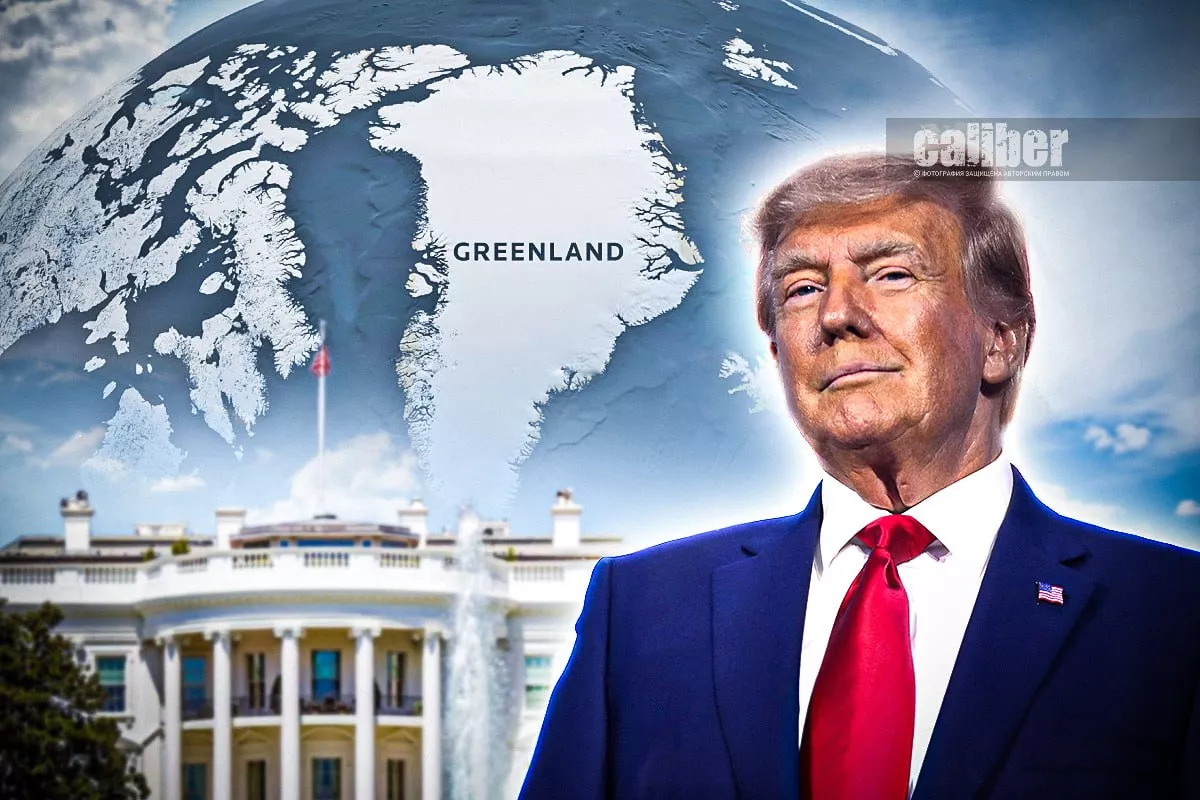
The U.S. claims on Greenland became another assertion of dominance in the Western Hemisphere. It is not entirely clear whether Trump wants the island immediately or is using this discourse as a trigger to unsettle NATO and impose new conditions on Europe. However, this is not particularly important, since both processes are happening simultaneously. Europe, in the aforementioned National Security Strategy, is portrayed by the U.S. as a “sinking ship,” and it can be assumed that in the future the United States will build a security system in the Old Continent through bilateral agreements rather than through NATO — in fact, the strategy never mentions the alliance in the spirit of promoting cooperation. On the contrary, it questions the relevance of NATO’s expansion.
Trump also acts directly on the borders of the U.S.’s only existential rival — China. One need only recall his Asian tour, which included multibillion-dollar contracts, as well as the hardening rhetoric of the Japanese government toward Beijing, which likely occurred with Washington’s approval or even under its direction. In short, containing China both on its near and far borders has been and will remain the United States’ main task. Judging by the outcomes of U.S. policy in Latin America and the Middle East, it can be concluded that the U.S. has managed to seriously swing the pendulum in its favour.
However, the American voter primarily evaluates domestic policy and economic factors. Here, as noted above, the results are mixed. It is worth remembering that the midterm elections for Congress are approaching, where many predict that at least one chamber will go to the Democrats — meaning that Trump’s decisions will face a new layer of resistance.
In light of all this, it can be cautiously assumed that this year, domestic affairs in Trump’s policy will somewhat push foreign policy activity into the background. Perhaps, anticipating this, Trump demonstrated maximum geopolitical activity over the past year — aiming to lay the necessary groundwork while he could.
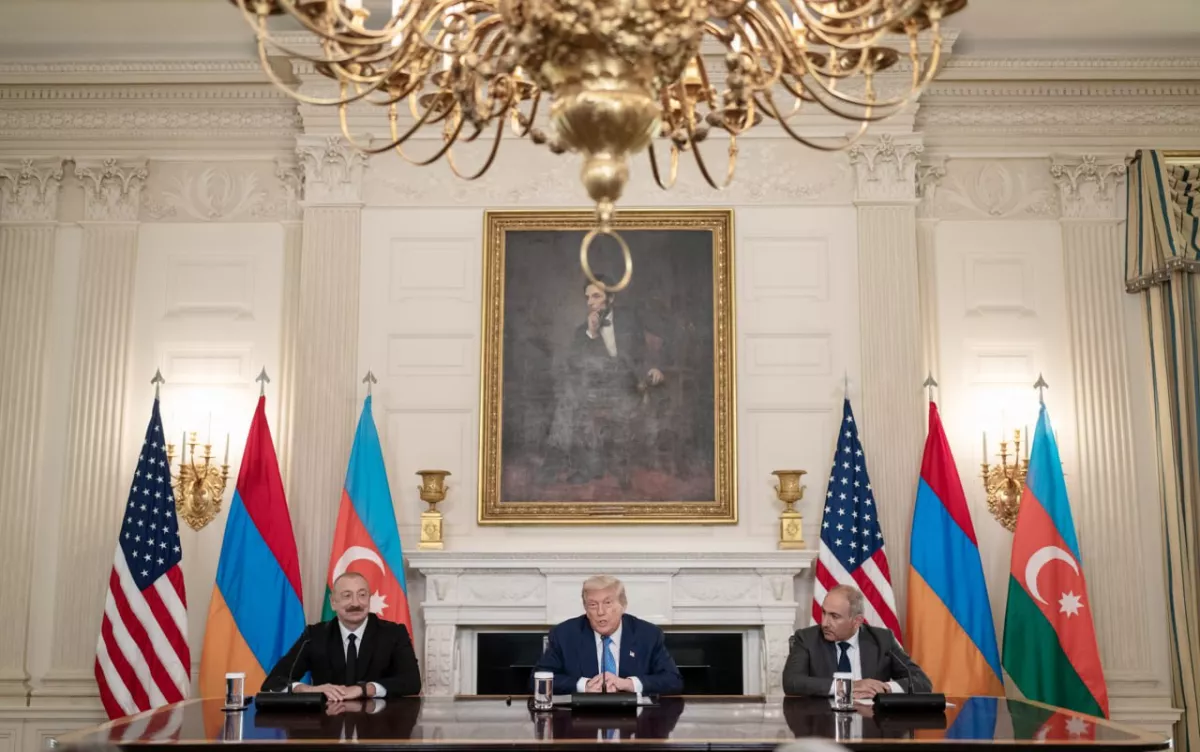
This global activity also includes the U.S. leader’s peacekeeping initiatives. As Trump himself emphasises, he helped resolve eight conflicts in various parts of the world. It is also necessary to note the role of the 47th U.S. president in achieving a tangible breakthrough in the Armenia–Azerbaijan settlement, expressed in the Washington Declaration of August 8, 2025 and the initialling of a peace agreement project by the foreign ministers of Azerbaijan and Armenia.
Summing up all of the above, one very important factor cannot be overlooked. No matter how contradictory or, conversely, consistent Donald Trump’s actions may have been, he ensured that the world spent the entire past year talking — and continues to talk — exclusively about him. In this sense, Trump inherits the great tradition of the American show. Is this not an example of America’s soft power, and is it not the main weapon of the 47th occupant of the White House?







 editor@caliber.az
 +994 55 444-88-98
 Азербайджан, Баку, ул. Низами, 203, Af Business House, 5-й этаж