










Azerbaijan 2025: economic resilience, corridor expansion, and record investments Year-end review on Caliber.Az
The development of the non-oil sector of the economy, the revival of Karabakh, the engagement of new partners in the Southern Gas Corridor (SGC), and the growth of cargo transit along the Trans-Caspian route—these are the key features that, overall, characterize Azerbaijan’s economic results in the concluding year of 2025.
The year will also be remembered for the successful countering of external inflationary and monetary risks, the strengthening of macroeconomic stability, and the growth of gold and foreign exchange reserves. A milestone event was President of Azerbaijan Ilham Aliyev’s visit to Washington in August: as a result, Azerbaijani–American business ties were accelerated, and agreements were reached on the Trump Route for International Peace and Prosperity (TRIPP) project, which expands the potential of the future Zangezur Corridor.
The development of the domestic economy in the current year has been under pressure from a downturn in foreign trade, mainly due to the decline in global energy prices and the ongoing reduction in oil production at a number of Azerbaijan’s offshore fields that has continued for several years. The contraction in foreign trade was also indirectly affected by other issues related to global tariff wars and the depreciation of the US dollar.
All these factors slowed overall economic growth to 1.6 per cent during January–November, with Gross Domestic Product (GDP) for the reporting period slightly exceeding 116.320 billion manats ($68.4 billion). In order to minimize external negative impacts, the country has placed primary emphasis on the development of the non-oil sector, whose share in the structure of the national economy has increased significantly over the past one and a half decades. Thus, while in 2011 the share of non-resource industries in GDP stood at 49 per cent, by early 2025 it had reached 68 per cent, and according to government forecasts, it may rise to 70 per cent by 2029.

To achieve the stated goals, a wide range of industrial parks, industrial quarters, and agro-parks are being rapidly developed across the country, and the Alat Free Economic Zone (AFEZ) has been established, offering a regime of fiscal and other incentives that attract investors, including foreign ones.
This year, Azerbaijan’s industrial clusters expanded at a fast pace, with new manufacturing facilities opening in the Aghdam Industrial Park and the Sumgayit Chemical Industrial Park, while exports of products with a high value-added products continued to grow. Chinese and Turkish investors have been the most active in financing the country’s manufacturing sector. At present, Chinese investments have reached $950 million, with almost the entire amount directed toward green energy and transport, the digital economy, smart logistics, industrial digitalization, technological innovation, and related areas.
Meanwhile, the cumulative contribution of Turkish investors to the real sector of the national economy has reached $18 billion. The number of companies with Turkish capital operating in Azerbaijan has also steadily increased, reaching 7,000 by the end of 2025, the overwhelming majority of which operate in non-oil sectors.
Notably, in recent years there has been an explosive surge in foreign direct investment (FDI) in the renewable energy sector. The vast majority of projects in Azerbaijan’s renewable energy industry are being implemented with foreign capital, and over the next couple of years their total volume is expected to exceed $2.8 billion. In particular, during the current year the foundations were laid for a number of solar and wind power plants, and small hydropower plants were commissioned in the Karabakh region. It is expected that by 2027 the country’s power system will gain an additional 2 GW of green generation capacity, thereby increasing Azerbaijan’s export potential.
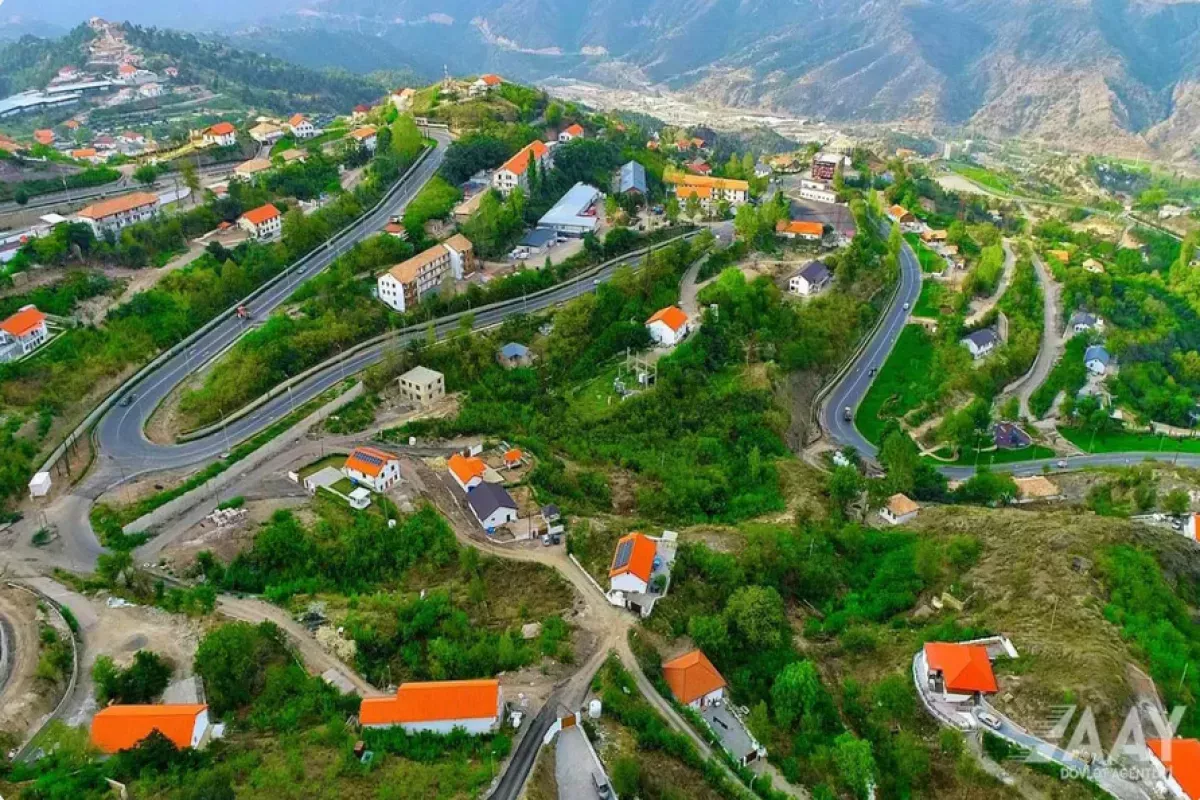
Another important factor driving the development of Azerbaijan’s non-oil sector has been the large-scale construction effort in the Karabakh region. Domestic construction, transport, and design companies, as well as building materials manufacturers, are being widely engaged in contractor works financed from the state budget.
This year, as in previous ones, the lion’s share of government funding and investment was directed toward the implementation of large-scale infrastructure, social, housing, and other projects aimed at the revival of the Karabakh and East Zangezur economic regions. Overall, more than 20 billion manats ($11.7 billion) in budgetary investments have been allocated to the development of the territories liberated from occupation over the past five years, and in 2026–2029 an additional 13.5 billion manats ($7.94 billion)in public funds are planned to be directed to the same purposes.
Boosting the pace of development of the non-oil sector remained a key objective of the government in the current year as well. Given that over the first eleven months of this year value added in the non-oil sector increased by 3.2 per cent, additional efforts are required to support entrepreneurs—such as expanding bank financing for the real sector of the economy and easing conditions for the growth of private foreign investment in the country’s regions, among other measures.
According to figures presented during the budget planning process, all efforts are aimed at a noticeable acceleration in the growth of non-resource industries in the coming and subsequent years. Thus, for 2026 the government has set a target of raising the country’s total GDP to 134.1 billion manats ($78.9 billion), while the share of the non-oil sector in the structure of gross domestic product could reach 101.7 billion manats ($59.8 billion).
Notably, having achieved tangible success in diversifying the non-oil sector of the economy, Azerbaijan maintained macroeconomic stability throughout 2025, even amid external shocks such as imported inflation and monetary instability among key trading partners. As a result, despite an acceleration of inflation in the first half of the year, both actual and projected inflation for the year are being kept within the target range (4 ± 2 per cent).
The effectiveness of the regulator’s efforts is confirmed by the October review of the International Monetary Fund (IMF), Global Economy in Flux, Prospects Remain Dim, which projects Azerbaijan’s average annual inflation in 2025 at 5.7 per cent. It further forecasts a decline to 4.5 per cent in 2026 and a reduction to 4 per cent by 2030. This, along with the transmission effects of monetary policy, significantly contributes to the resilience of the country’s monetary policy against both external and internal stresses. This is also reflected in the December decision by the Central Bank of Azerbaijan to lower the key policy rate by 0.25 percentage points to 6.75 per cent in order to increase the inflow of financing into the economy.
Maintaining stable macroeconomic conditions in the country, along with fiscal surpluses, low public debt, and an optimal monetary and credit policy, are key prerequisites for attracting investors. Moreover, Azerbaijan is steadily increasing its strategic foreign exchange reserves—their volume reached $82.5 billion in January–October 2025, a rise of 16.2 per cent.
The country’s gold and foreign exchange reserves still significantly exceed internationally recognized benchmarks, covering 37 months of imports of goods and services and roughly 17 times the size of the external public debt. These achievements were recently recognized at the highest level by the international rating agency Moody’s, which for the first time upgraded Azerbaijan’s sovereign credit rating to “Baa3” and assigned the country an investment-grade rating.
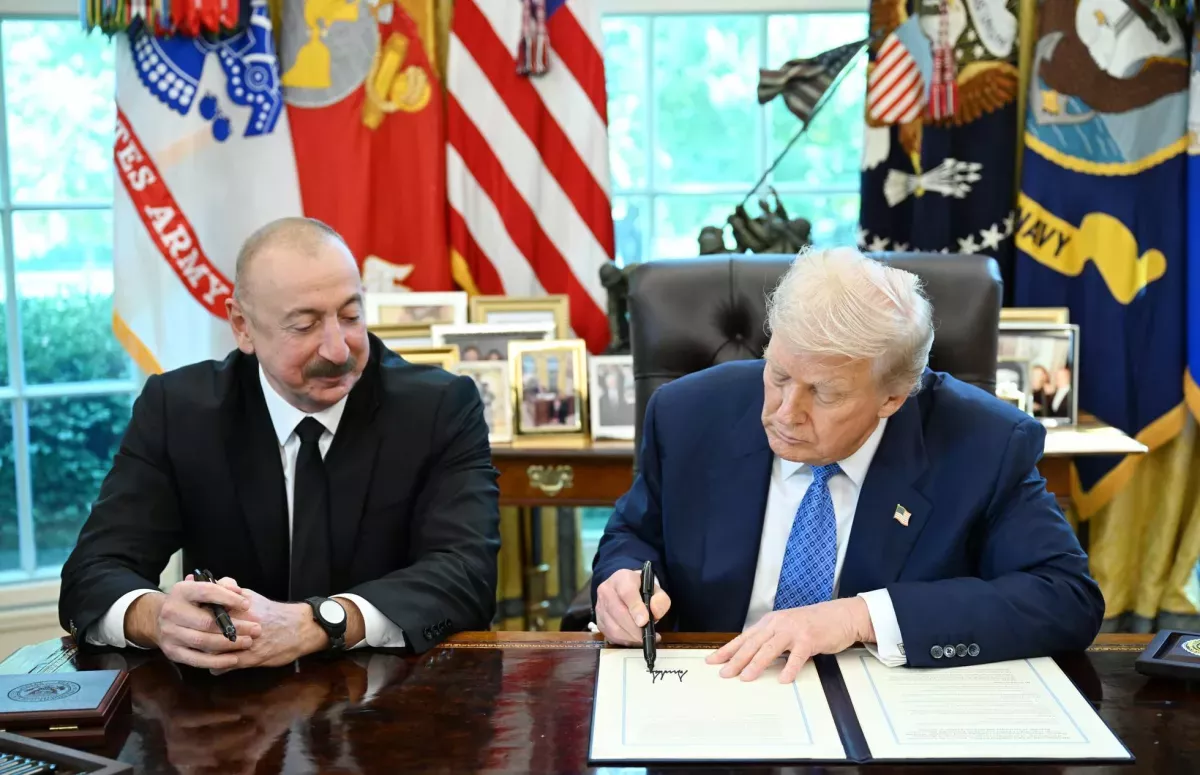
Among the landmark events of 2025 was President of Azerbaijan Ilham Aliyev’s August visit to Washington, which marked a starting point for accelerating Azerbaijani–American business relations. Several initiatives are now underway in this direction, including new Azerbaijani–American projects in transport and logistics, green and hydrocarbon energy, finance, IT technologies, and defense.
A “Charter on Strategic Partnership” is being developed between the two countries to expand business projects and trade. In addition, a memorandum of cooperation was signed between the State Oil Company of Azerbaijan (SOCAR) and the American company ExxonMobil for joint work to develop a major hydrocarbon field in Azerbaijan. At the same time, prospects for Azerbaijani–ExxonMobil collaboration in the field of renewable energy are being discussed.
In Washington, full support for the development of the Middle Corridor was expressed, and considering the potential involvement of American companies in creating the infrastructure of the TRIPP, the development of railway infrastructure for the cross-border Zangezur Corridor from Azerbaijan to Türkiye has taken on concrete form and timelines.
Already this year, Azerbaijan achieved record levels of transit along the Middle Corridor: over the first eleven months, cargo handling at the Alat port reached 7.547 million tons, while container throughput at the port hit a record high of 100,000 TEU for the first time. During the same period, JSC Azerbaijan Railways (ADY) received 350 block trains via the Middle Corridor, a 34 per cent increase compared to the same period in 2024.
Another area strongly supported by the U.S. government is the expansion of the SGC. Azerbaijan is deepening cooperation with countries in Southern and Eastern Europe on gas supplies. Thanks to the modernization of compressor stations and gas distribution networks, as well as the construction of new interconnectors, pilot deliveries of Azerbaijani natural gas are being carried out within the upgraded “Solidarity Ring” (STRING) system.
This year, Azerbaijan’s pool of gas partners expanded to 12 European countries, while the number of companies registered to transport gas via the Trans Adriatic Pipeline (TAP) rose from 3 to 46. As a result, in addition to Italy, Greece, Bulgaria, Romania, Hungary, and Serbia, Azerbaijani gas deliveries have been established to Slovenia, Croatia, and Slovakia. Pilot shipments to Ukraine via the Trans-Balkan pipeline began in July 2025.
It is planned that from January 2026, TAP’s long-term capacity will increase by 1.2 billion cubic meters per year, and by the end of the following year, gas exports to Albania are expected to be launched. At the same time, SOCAR is preparing to participate in a hybrid gasification project in North Macedonia.







 editor@caliber.az
 +994 55 444-88-98
 Азербайджан, Баку, ул. Низами, 203, Af Business House, 5-й этаж