










Azerbaijan in the spotlight: securing Europe’s energy future Overview by Khazar Akhundov
For several decades, European countries and Azerbaijan have steadily strengthened cooperation in oil and gas supplies. Recent geopolitical upheavals have only increased the importance of the Southern Gas Corridor (SGC) and boosted demand for expanding its infrastructure to export Azerbaijani gas. The EU considers these measures a crucial component of its own energy security.
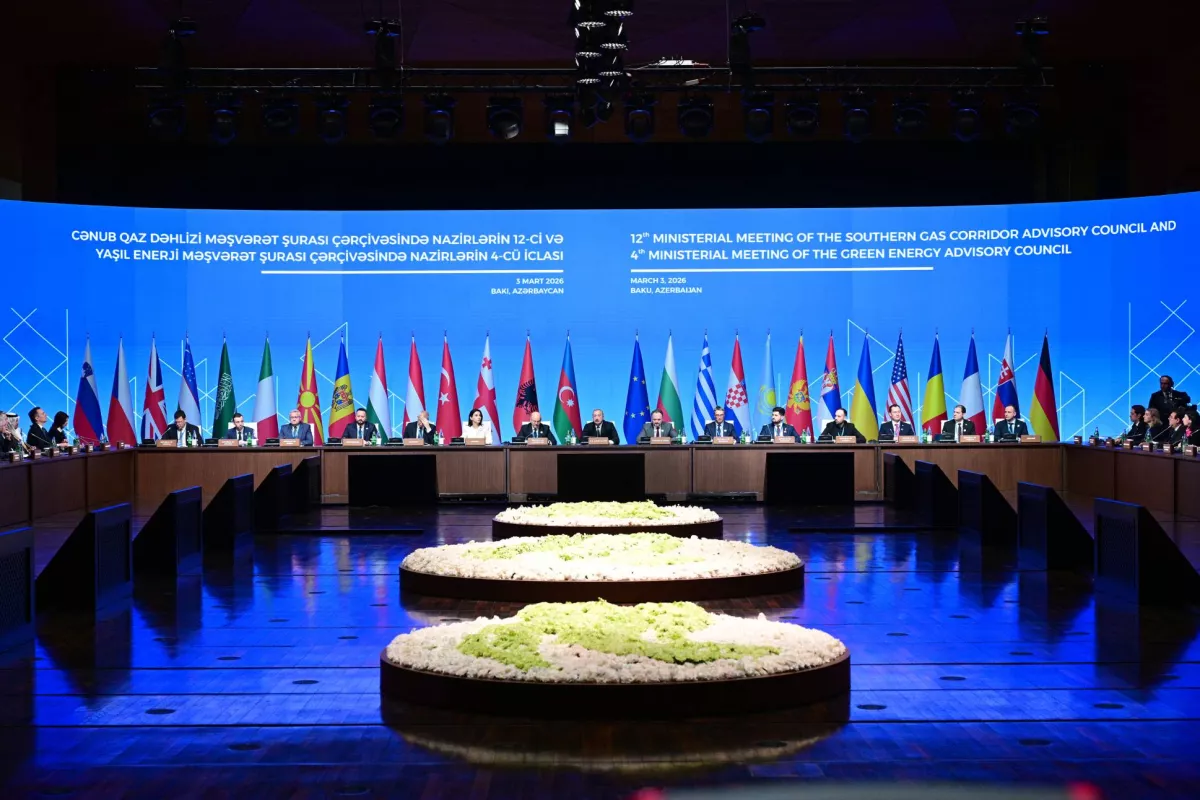
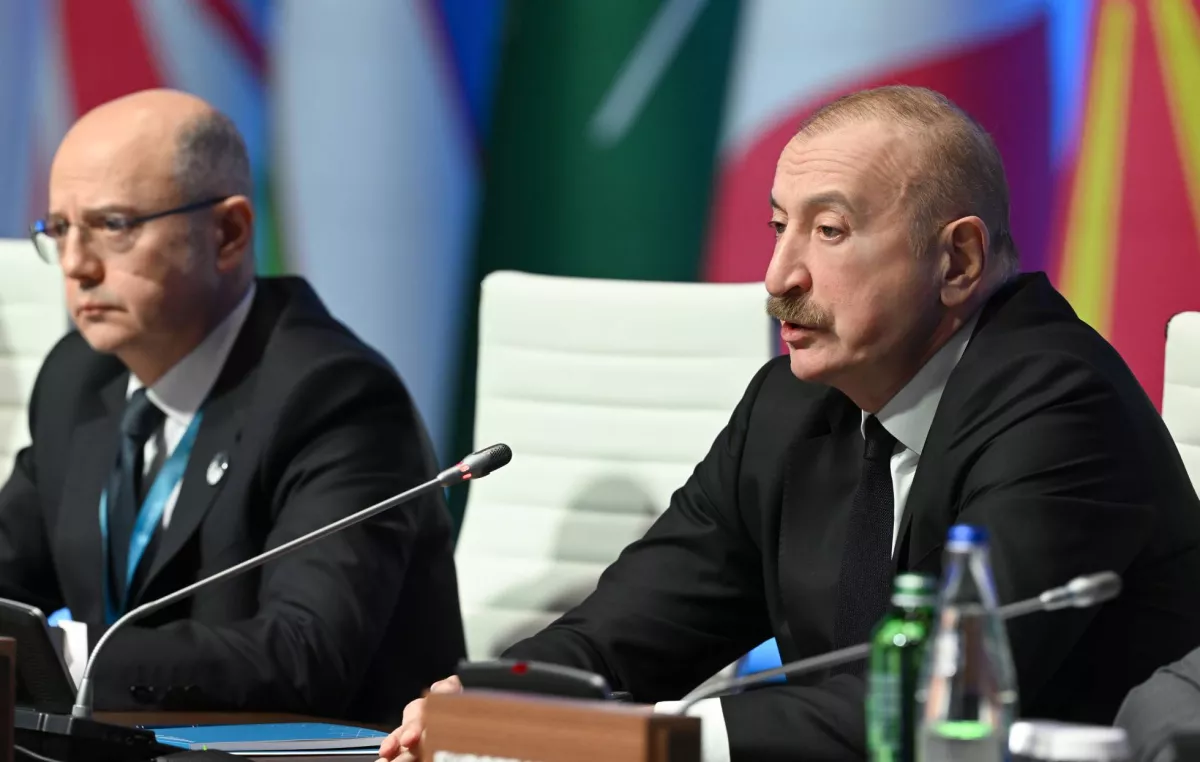
These priority areas were discussed on Tuesday in Baku during the 12th Ministerial Meeting of the Southern Gas Corridor Advisory Council and the 4th Ministerial Meeting of the Green Energy Advisory Council. President Ilham Aliyev of Azerbaijan participated in the forum.
The signing in Baku in July 2022 of the Memorandum of Understanding on Strategic Energy Partnership between Azerbaijan and the EU marked the beginning of new ambitious initiatives in the gas sector. The document envisages doubling Azerbaijani “blue” fuel exports to more than 20 billion cubic metres by around 2027–2028.
To achieve this, work is underway to increase gas production in Azerbaijan, while the capacity of the SGC pipeline system is being expanded, particularly its key component—the Trans Adriatic Pipeline (TAP). In several areas, Azerbaijan’s partners have made significant progress in recent years: compressor stations and gas distribution networks have been modernised in South and Eastern European countries, and the construction of new interconnectors has been accelerated.
In particular, last year saw a significant increase in the pool of Azerbaijan’s partners in the gas sector, and the number of companies registered to transport gas through the TAP system has grown from 3 to 46 in recent years. On the European route, in addition to Italy, Greece, Bulgaria, Romania, Hungary, and Serbia, Azerbaijani gas supplies were established two years ago to Slovenia, Croatia, and Slovakia. Through the Trans-Balkan Pipeline, pilot deliveries to Ukraine began in July 2025, while SOCAR is also participating in a hybrid gasification project in North Macedonia.
At the beginning of 2026, gas exports to Germany and Austria commenced, with plans to start exports to Albania the following year. To support the growing demand for Azerbaijani gas, the long-term capacity of TAP is scheduled to increase by 1.2 billion cubic metres per year starting in 2026.
To coordinate efforts on expanding the Azerbaijan–Europe gas corridor, ministerial meetings of the SGC Advisory Councils have been held annually since February 2015, while prospective initiatives in the field of renewable energy (RE) are also aligned. These topics were discussed at the 12th ministerial meeting, held yesterday at the Baku Congress Centre, which was attended by representatives from 27 countries, 11 international financial institutions and other organisations, as well as 49 global energy companies, government officials, and other high-ranking figures from Azerbaijan and EU member states.
The meeting was organised in the format of a Ministerial Session, along with plenary sessions titled “Southern Gas Corridor Session: Sustaining Success and Driving the Next Phase of Development ” and “Green Energy Projects.” Within the framework of the Advisory Council, an Investment Roundtable on Azerbaijan–EU Green Connectivity also took place.
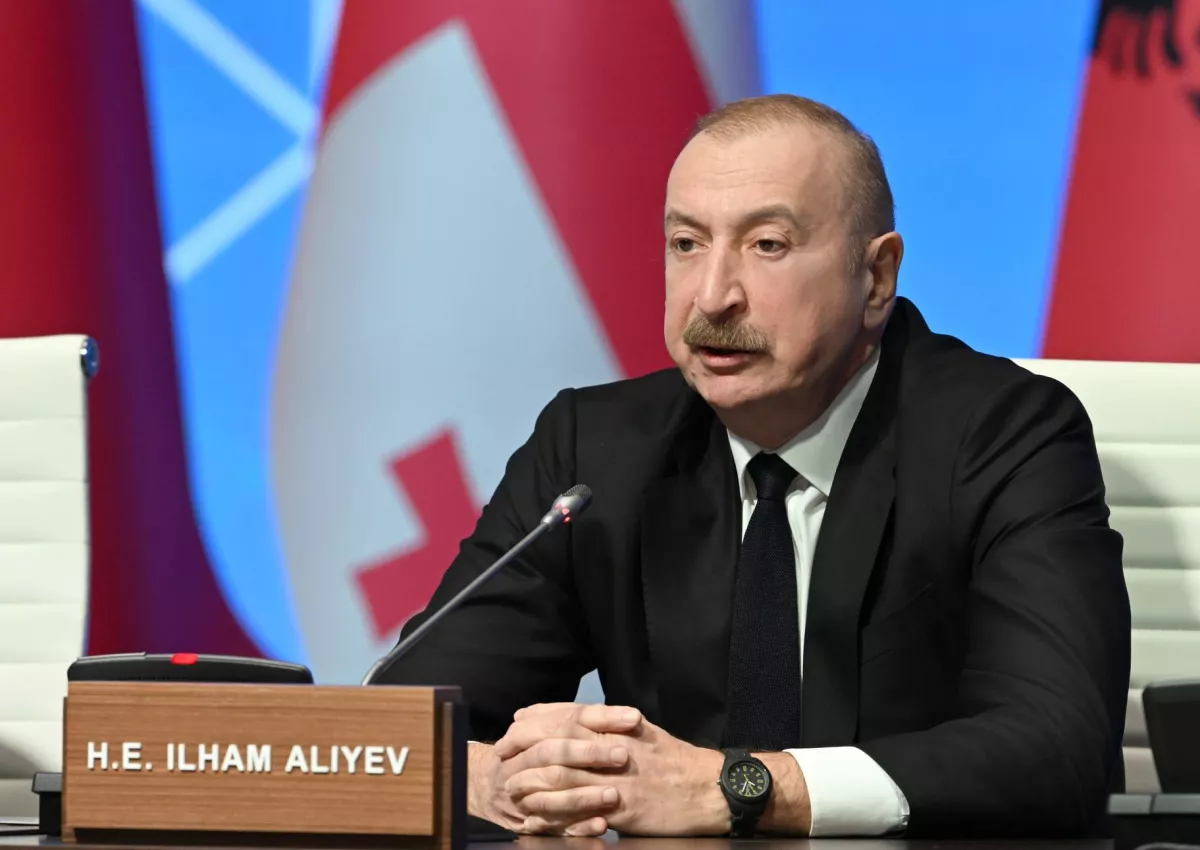
Attending the 12th ministerial meeting of the SGC Advisory Council, President Ilham Aliyev particularly emphasised the progress made over the past year in strengthening partnership cooperation on energy security and expanding the geography of gas supplies. The head of state noted that in just the past year, the number of countries receiving Azerbaijani gas increased from 12 to 16, placing Azerbaijan first in the world in terms of the number of countries supplied with pipeline gas. Last year also saw the beginning of gas deliveries outside Europe, with around 1.5 billion cubic metres sent to Syria to address acute electricity shortages.
“With respect to our plans, yes, we want to increase our presence in the European energy market. We have already started to supply two more countries in Europe — Germany and Austria. Thus, today, 10 members of the EU receive gas from Azerbaijan. In the coming years, with respect to the new production of gas from Azerbaijani fields, we may increase the output. But for that, definitely — and we spoke about that last time — we need to think about the expansion of the existing gas transportation infrastructure, because today the Southern Gas Corridor is already fully packed. We are looking for other extensions and interconnections in order to be able to supply as much as the market needs and probably will need even more, taking into account the current situation in the world, and in order to be able to export as much as we can,” President Aliyev stated.
Azerbaijan has the potential for this, said the head of state. This year, gas production is expected to begin from the deepwater section of the Azeri-Chirag-Guneshli (ACG) field, and within two to three years, full-scale development of the Absheron field will commence, tripling its gas output. In addition, gas production is expected to start under the second phase of the Umid field development.
Furthermore, in 2028, production is anticipated to begin under a new phase of development at Azerbaijan’s main natural gas source—the Shah Deniz field. Notably, by 2029–2030, the Shah Deniz Compression (SDC) platform project, covering the Shah Deniz Alpha and Shah Deniz Bravo platforms, will be completed, and the Sangachal terminal infrastructure will also be expanded.
“ All these gas production profiles will allow us, at the maximum level of production, to reach an additional 10 to 15 billion cubic meters of gas. As I said earlier, for that we will need new markets, expansion of the existing pipeline system, and of course, we need to look at how to diversify our gas distribution network,” President Aliyev stated.
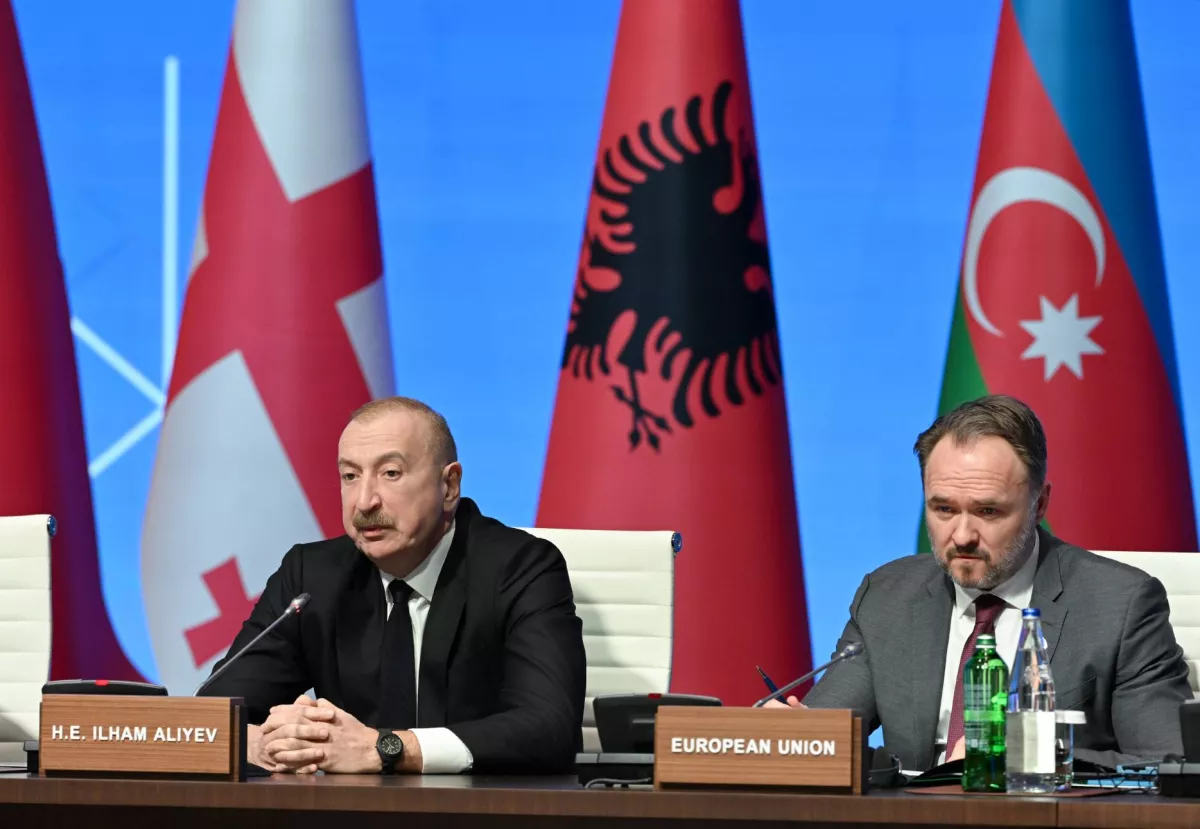
In the long term, gas production in Azerbaijan could increase significantly with the planned commissioning of the Shafag-Asiman block, as well as large gas-condensate fields such as Umid-Babek and Karabakh, whose combined capacity—including the Absheron reserves—according to SOCAR specialists, is estimated to exceed 1 trillion cubic metres of gas.
Sustained demand for Azerbaijan’s “blue” fuel continues in Europe, as highlighted by a participant of the 12th ministerial meeting, EU Commissioner for Energy and Housing Dan Jørgensen.
“Since late 2020, the Trans-Adriatic Pipeline has already delivered more than 50 billion cubic metres of Caspian gas to Europe [...], and the importance of our partnership with Azerbaijan will increase, bringing benefits for Europe's energy security and Azerbaijan's economy,” the Commissioner noted.
“Since the Trans-Adriatic Pipeline started commercial deliveries, Azerbaijan has earned around 24 billion euros in natural gas export revenues from EU buyers through 2024. My visit today is an opportunity to make it very clear. Azerbaijan's gas supplies will remain an important backbone of the EU's energy security. The EU will remain a reliable purchaser of Azerbaijani gas for the foreseeable future, underpinning structural transformation in the Azerbaijani economy.”
Oil and gas exports remain an important industrial sector and a significant source of revenue for Azerbaijan. At the same time, in recent years, the country has attracted hundreds of millions of dollars in foreign investment for large-scale renewable energy (RE) projects and participates in international initiatives to create infrastructure for electricity exports. A separate plenary session within the Advisory Council was dedicated to the development of green energy, where Parviz Shahbazov, Minister of Energy, noted that the world is rapidly entering an era of renewable electricity, driven by artificial intelligence, data centres, and digitalisation.
Azerbaijan has established partnerships with numerous specialised companies from the Gulf region, China, Türkiye, and European countries, investing in the development of renewable generation capacities. By 2027, investments in the construction of 10 solar and wind power plants are expected to exceed $2.7 billion, increasing the country’s power system by an additional 2 GW. By 2030, around 6 GW of solar, wind, and hydro energy is projected to be integrated into the national power system, rising to 8 GW by 2032.
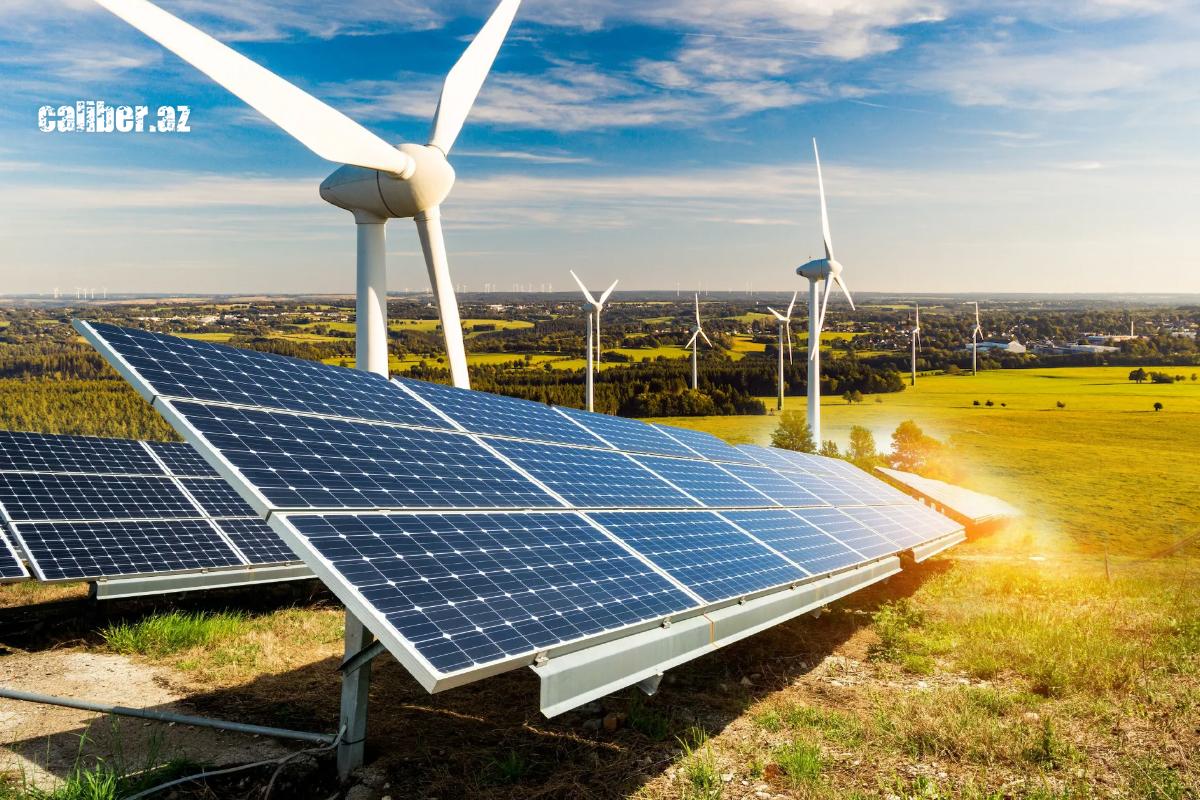
The head of state particularly emphasised the role of Masdar from the UAE and ACWA Power from Saudi Arabia, which have built solar and wind power plants in Azerbaijan with a combined capacity of 470 MW. He stressed that several other projects, including hydropower plants, are already under development, with new renewable energy generation capacities expected to come online in the coming years.
“We need to work jointly on energy cables, including the energy cable stretching from Azerbaijan to Europe across the Black Sea and the energy cable from Central Asia to Azerbaijan. Both agreements have been signed. The feasibility study has almost been completed for one project and will be completed for the other,” President Aliyev said.
“We recently acquired one of the biggest power stations in Türkiye — 870 megawatts. Last month, a contract was signed with Serbia to build a 500-megawatt power station there,” he added.
The development of the renewable energy (RE) sector will also help conserve gas for domestic consumption, further increasing Azerbaijan’s exports of “blue” fuel.
“I know that Azerbaijan also foresees electrification as a catalyst to reduce domestic fossil fuel consumption, therefore opening additional opportunities for gas export revenues. Moreover, I know that there is enormous potential for electrification throughout the whole region, especially when it comes to heating in households and industries,” said EU Commissioner Dan Jørgensen, highlighting his support for plans to establish cross-border electricity interconnectors, which have been announced in recent years.
A common theme among European participants at the Advisory Council was support for initiatives to create Caspian–Black Sea corridors and interregional green energy connections: Azerbaijan–Türkiye–Europe, the Trans-Caspian and East–West corridors, and projects for direct interconnections from Nakhchivan. It was emphasised that through these interregional energy links and electricity initiatives, Azerbaijan will further strengthen its role in Europe’s energy security.







 editor@caliber.az
 +994 55 444-88-98
 Азербайджан, Баку, ул. Низами, 203, Af Business House, 5-й этаж