










Azerbaijan–Lithuania partnership: unlocking Baltic potential Review by Khazar Akhundov
In recent years, Azerbaijan has been expanding its trade, economic, and transport ties with the countries of Eastern Europe and the Baltic region. A key priority in cooperation with this region is the mutual attraction of investment, the implementation of advanced practices and know-how in industry and infrastructure, and joint production in the non-oil sector.
Promising avenues for enhancing Azerbaijani–Lithuanian business cooperation were discussed during the official visit to Azerbaijan by Lithuanian Prime Minister Inga Ruginienė, as well as during her meetings with the President of Azerbaijan Ilham Aliyev and Prime Minister Ali Asadov.
The intensification of intergovernmental and interstate contacts between Lithuania and Azerbaijan in the post-pandemic period has had a positive impact on the advancement of bilateral economic relations. This cooperation is built on pragmatic and mutually beneficial principles, under which Lithuanian business circles view Azerbaijan as the economic leader of the South Caucasus and a key energy partner of the European Union.
In turn, Baku has traditionally regarded Vilnius as a partner in transport and logistics operations in the Baltic region of Europe, a supplier of high-quality food products, and a platform for exporting Azerbaijan’s non-oil goods.
Over the years, the two countries have established a solid legal and regulatory framework, having signed more than forty bilateral documents across various fields, including the business sector. Importantly, Lithuania has been one of Azerbaijan’s closest partners in EU twinning programmes: between 2007 and 2022 alone, Lithuanian institutions took part in 26 Azerbaijani tenders for twinning projects, winning 17 of them.
Trade relations between Azerbaijan and Lithuania developed most intensively in 2022–2024. In 2022, bilateral trade increased by nearly one-third, approaching $33 million. In 2023, it reached $56 million, marking a 69.7% rise, while in 2024 trade turnover climbed to almost $65.96 million, reflecting a further 17.79% increase.
Unfortunately, these positive trends were not sustained last year. In particular, Azerbaijani–Lithuanian trade turnover fell to $28.77 million, declining by more than half. Notably, the lion’s share of bilateral trade is accounted for by Lithuania, primarily comprising food products, consumer goods, and furniture, with a smaller share made up of machinery, electrical equipment, and chemical products. Due to changes in the external market environment and a reduction in Azerbaijan’s imports from many European countries, supplies from Lithuania have also decreased.
As for Azerbaijan’s share in bilateral trade, it is significantly smaller. It mainly consists of exports of petrochemical products, as well as fresh and preserved fruits and vegetables, wine products, and construction materials. Nevertheless, against the backdrop of the war in the Persian Gulf and rising prices for energy resources, fuel, petroleum products, and nitrogen fertilisers, demand for Azerbaijani exports is expected to grow noticeably in 2026. This, in turn, will have a positive impact on the dynamics of Azerbaijani–Lithuanian trade relations.
At the same time, in recent years, the interests of business circles in both countries have expanded far beyond traditional trade. Today, Lithuanian and Azerbaijani businesses are exploring new investment opportunities and projects, especially given the considerable and still underutilised potential for cooperation. These promising avenues were at the centre of discussions during the official visit to Azerbaijan by Lithuanian Prime Minister Inga Ruginienė and her talks with President Ilham Aliyev.
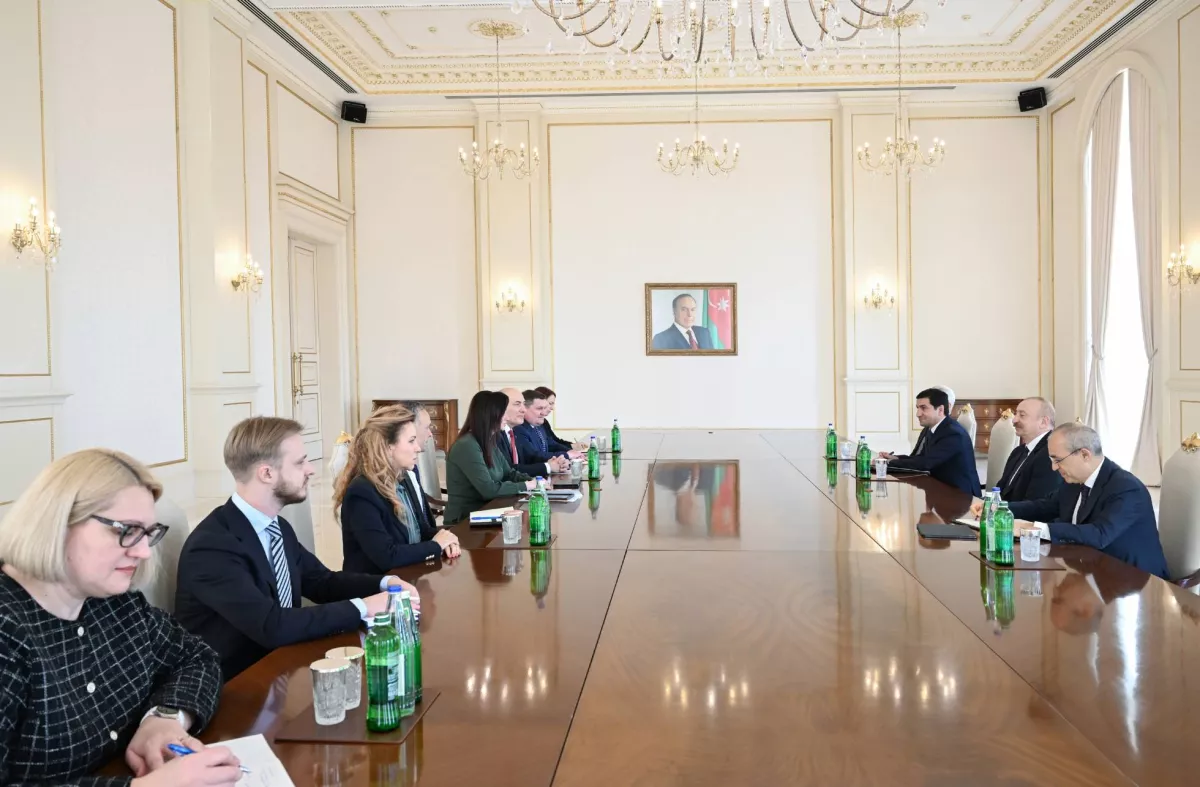
During the meeting, the head of state expressed hope that the visit of the Lithuanian Prime Minister to Azerbaijan would be productive and would contribute to the development of bilateral relations. The discussions highlighted strong prospects for further expanding trade and economic ties between the two countries, covering cooperation in energy, investment, education, agriculture, and other sectors. The importance of organising mutual visits by delegations to advance bilateral relations was also emphasised. In turn, Lithuania’s important role in supporting the development of Azerbaijan’s relations with the European Union was underscored.
Productive talks continued at the Cabinet of Ministers of Azerbaijan, where the meeting between the two prime ministers placed particular focus on prospects for cooperation in the energy sector, interaction within the Middle Corridor and other international transport routes, as well as on stimulating investment.
The potential in this area is considerable: in recent years, Azerbaijan’s economy—striving for diversification and backed by strong energy and transport capabilities—has been attracting Lithuanian businesses interested in cooperation in IT, logistics, industrial production, agriculture and the food industry, as well as tourism.
In this regard, Prime Minister Inga Ruginienė, in an interview with local media, emphasised that Lithuania supports all of Azerbaijan’s initiatives aimed at developing the infrastructure and logistics of the Trans-Caspian International Transport Route (TITR), as this and other routes within the Middle Corridor provide alternative and sustainable connectivity with Central Asia and China.
In this context, Lithuanian partners see strong potential in increasing cargo flows and integrating the Port of Klaipėda as a kind of “gateway” to the Baltic and Northern European markets with Azerbaijani logistics hubs along the TITR. This, in turn, contributes to the growth of transit, trade, and business cooperation between the two countries.
There is already solid groundwork for such cooperation. Since 2016, the Azerbaijani company Karvan Logistics has been involved in Lithuania’s “Viking” transit route. Over the same period, active cooperation has been maintained between ADY Express, a subsidiary of Azerbaijan Railways, and Lithuanian Railways.
According to the Lithuanian Prime Minister, the establishment of direct flights would also contribute to the development of business ties, tourism, and broader people-to-people contacts: “These decisions depend on market conditions and the interest of airlines, but from a political standpoint, we view direct connectivity as a positive and promising step.”
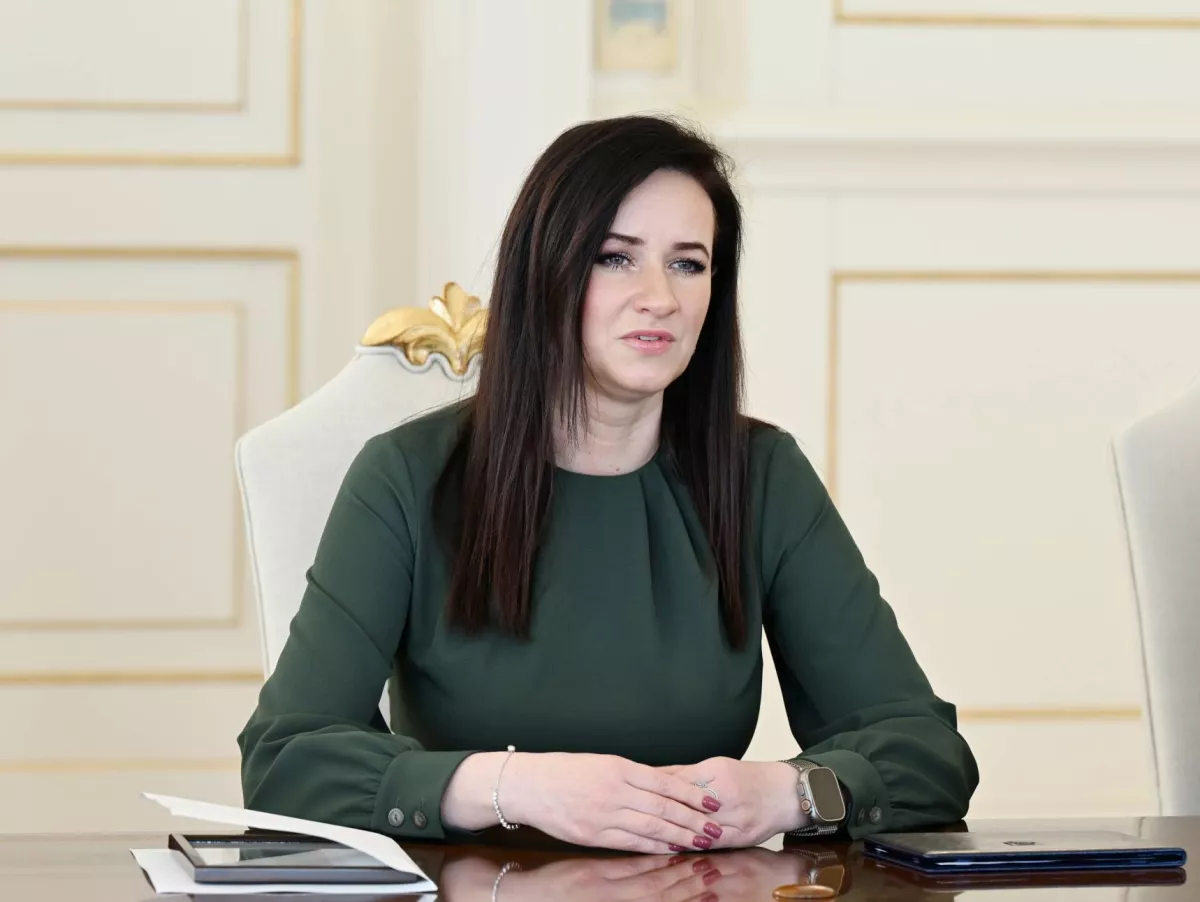
In turn, Lithuanian companies are ready to offer their expertise in digitalisation, efficient public services, green technologies, water resource management, engineering solutions, as well as in the agricultural sector—particularly in high-quality meat and dairy production. Specifically, Lithuanian firms can provide solutions in solar energy, clean technologies, digital systems, and know-how in sustainable infrastructure, as well as municipal and industrial energy efficiency.
On the other hand, Lithuania welcomes the expansion of Azerbaijani investments in sectors where it can offer strategic access and a stable business environment—primarily in logistics and transport, industrial production, tourism, and certain innovative industries. In this regard, the two countries have accumulated a degree of investment experience over the years of independence: around twenty commercial entities with Lithuanian capital operate in Azerbaijan, particularly in transport, construction, trade, and services, with Lithuanian investors having invested about $9 million in the Azerbaijani economy. At the same time, Azerbaijani investors have been considerably more active—over the past three decades, investments from Azerbaijani businesses in Lithuania have exceeded $38 million.
Overall, it appears that the investment potential between the two countries remains far from fully realised and is significantly greater than the figures suggest. In this context, Azerbaijan is ready to cooperate with Lithuania as co-investors in promising projects, including potential partnership initiatives within the framework of the economic revival of the Karabakh region.







 editor@caliber.az
 +994 55 444-88-98
 Азербайджан, Баку, ул. Низами, 203, Af Business House, 5-й этаж