










Can NATO survive without the United States? Europe’s strategic reality check
Despite recurring disagreements between Washington and Brussels, Europeans still seem unable to see a viable way to ensure their security without support from across the Atlantic.
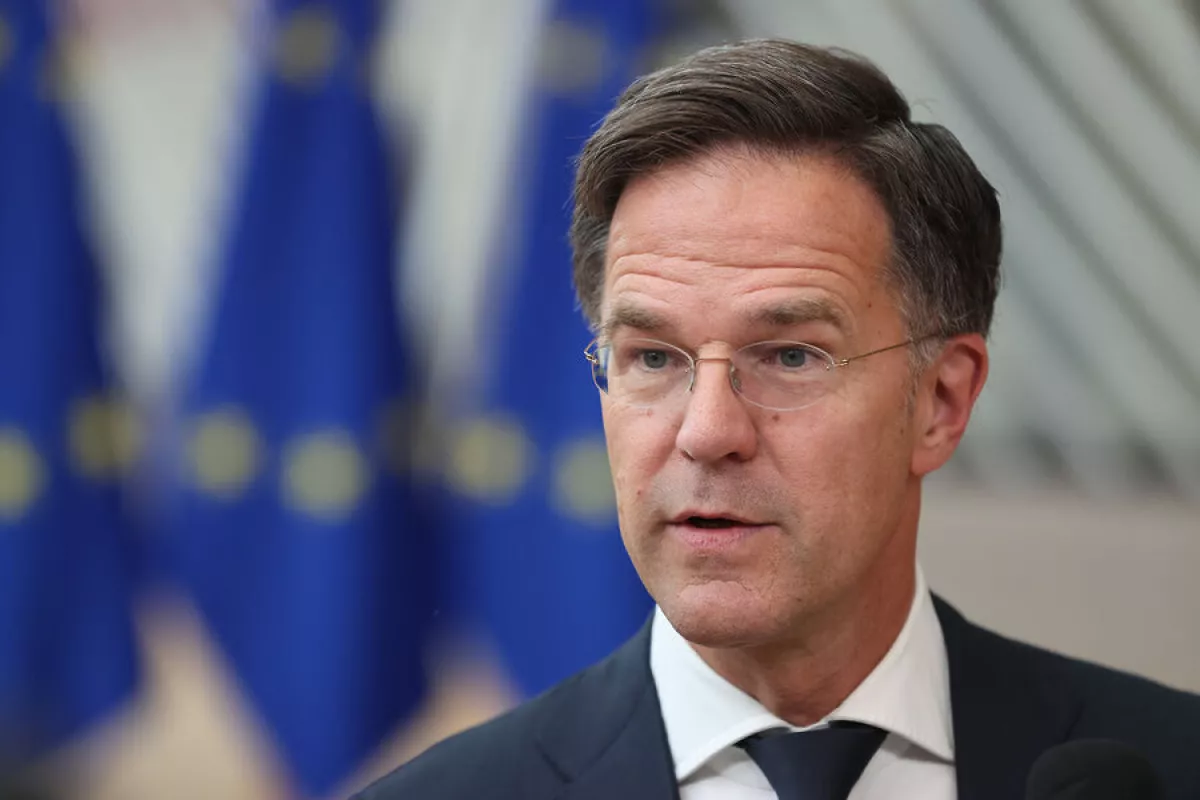
Confirmation of this thesis came in a recent statement by NATO Secretary General Mark Rutte, who noted that despite all the disputes with Donald Trump, the North Atlantic Alliance will maintain its commitment to the partnership with the United States. Moreover, according to him, the U.S. National Security Strategy prioritises a strong alliance and a secure Europe.
Notably, European politicians had assured their voters that Europe would be even better off without American support and would easily cope with external challenges. According to The Military Balance 2025, compiled by the British International Institute for Strategic Studies (IISS), European armies represent a significant force: Türkiye’s armed forces are the largest in NATO after the U.S., numbering 355,200 personnel, followed by France (202,200), Germany (179,850), Poland (164,100), Italy (161,850), the UK (141,100), Greece (132,000), and Spain (122,200).
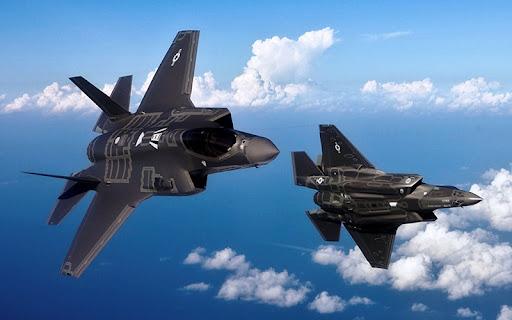
Some alliance members possess modern weapons systems that are on par with their American, Russian, and Chinese counterparts. For example, Russia has only one ageing aircraft carrier, whereas the United Kingdom operates two modern aircraft carriers capable of launching F-35B stealth fighters. According to The Military Balance 2025, France, Italy, and Spain also have aircraft-carrying or amphibious assault ships capable of launching fighter jets. Meanwhile, the French Republic and the United Kingdom maintain nuclear forces, with both countries relying on ballistic missile submarines.
European NATO member states also field large numbers of fighter and attack aircraft, many of which are cutting-edge military platforms. Their ground forces include the latest German Leopard tanks and British Challenger tanks. European countries within NATO can also deploy powerful cruise missiles, such as the jointly developed French-British SCALP/Storm Shadow, which has proven its effectiveness in Ukraine.
The Military Balance 2025 report also notes that Europe is taking steps to strengthen its military independence from the United States. In 2024, four European countries joined forces on a project to develop ground-launched cruise missiles, implemented measures to expand ammunition production capacity, and diversified supply chains by turning to countries such as Brazil, Israel, and South Korea as new suppliers of military equipment.
However, as the saying goes, “the devil is in the details”: it is one thing to have soldiers and aircraft, and quite another to conduct joint combat operations. Despite ongoing discussions about creating a unified European army, it remains unclear how numerous different states could work together to coordinate all aspects of a fully fledged military alliance—from defence procurement to combat operations. During NATO exercises, commanders have often stated that alliance forces operate cohesively when each country deploys elite units. Yet soldiers from regular units have spoken of difficulties at the basic level, such as language barriers. It is also worth recalling that in all previous conflicts involving the North Atlantic Alliance, it was the U.S. armed forces that formed the main striking force engaged in combat, while Europeans largely provided bases and logistical support.
Another serious problem concerns military spending. The United States has demanded that each member state of the alliance allocate 5 per cent of its gross domestic product (GDP) to defence, whereas most NATO countries spend around 2 per cent of GDP on defence, and several states have not yet reached even that level. For example, Europe’s largest economy, Germany, is only now catching up in terms of military expenditures with the most militarised “frontline” states of the Baltics and Poland.
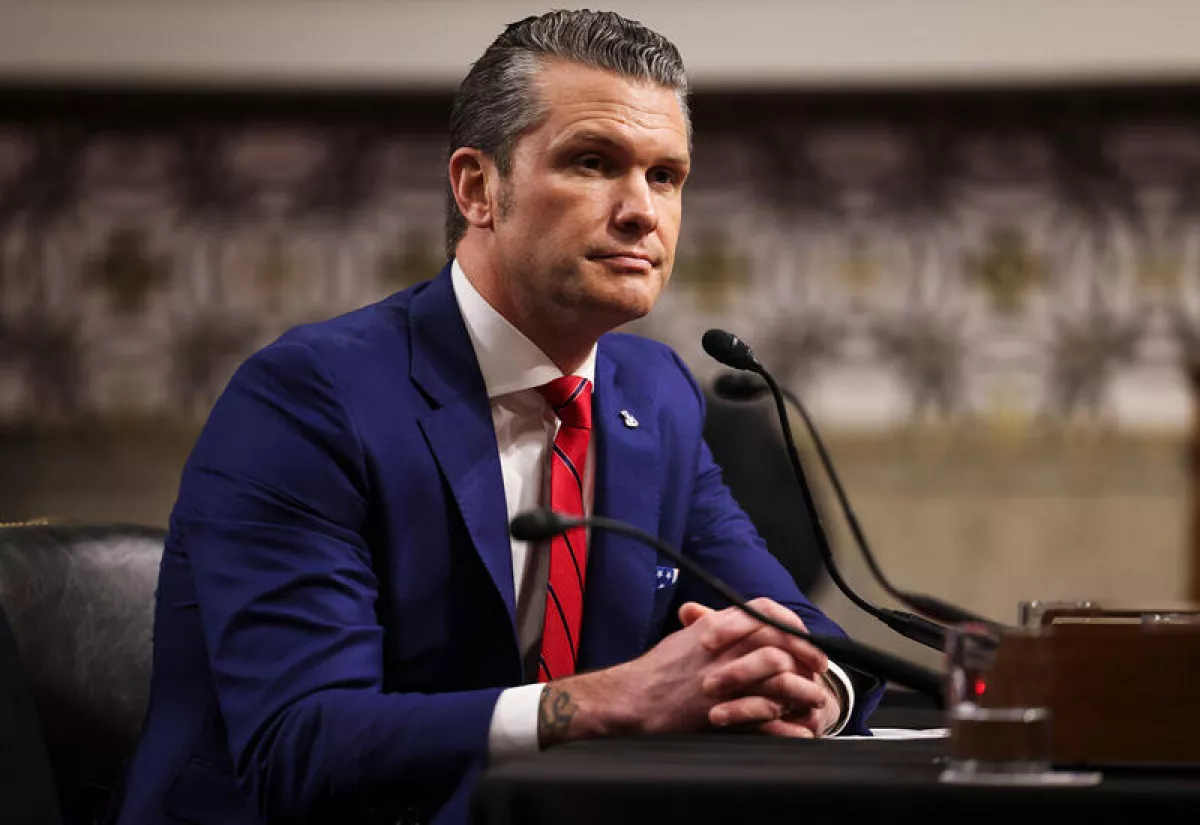
European officials avoid discussing the 5 per cent target, although Mark Rutte has stated that defence spending above 3 per cent is the right benchmark. For his part, Pentagon chief Pete Hegseth said during a visit to Brussels that Europeans must “firmly” adhere to Article 3 of the North Atlantic Treaty. This refers to the provision in the alliance’s founding document that obliges each country to “maintain and develop their individual and collective capacity to resist armed attack.”
In addition, the U.S. provides Europe with costly military technologies and infrastructure. According to Ed Arnold, a senior research fellow at the UK-based think tank the Royal United Services Institute (RUSI), America’s contribution goes beyond the supply of combat equipment and also includes the provision of supporting capabilities. These include intelligence, aerial refuelling, and logistics. “All of that is really expensive,” Arnold noted.
He added that many U.S. assets may now be redeployed to the Indo-Pacific region to counter China, which means Europe will have to pay for military transport, intelligence, and other support functions itself. A recent example is the Steadfast Dart exercise: although U.S. armed forces did not take part in it, the manoeuvres would simply not have taken place without support from the Pentagon.
Another problem is weapons production. European Commission President Ursula von der Leyen has been forced to acknowledge the following reality: “We know that Russia's military complex is outproducing ours. If we look at military expenditure in real terms, the Kremlin is spending more than all of Europe combined. Europe's production is still on a lower order of magnitude.” According to IISS data, Russia’s total defence spending in 2024 amounted to the equivalent of $462 billion in purchasing power parity terms, while the combined spending of the EU and the United Kingdom stood at $457 billion.
As a result, Brussels has called on Europeans to tighten their belts and make any sacrifices necessary for victory. However, voters suffering from the consequences of the economic downturn are not ready to share the politicians’ enthusiasm.
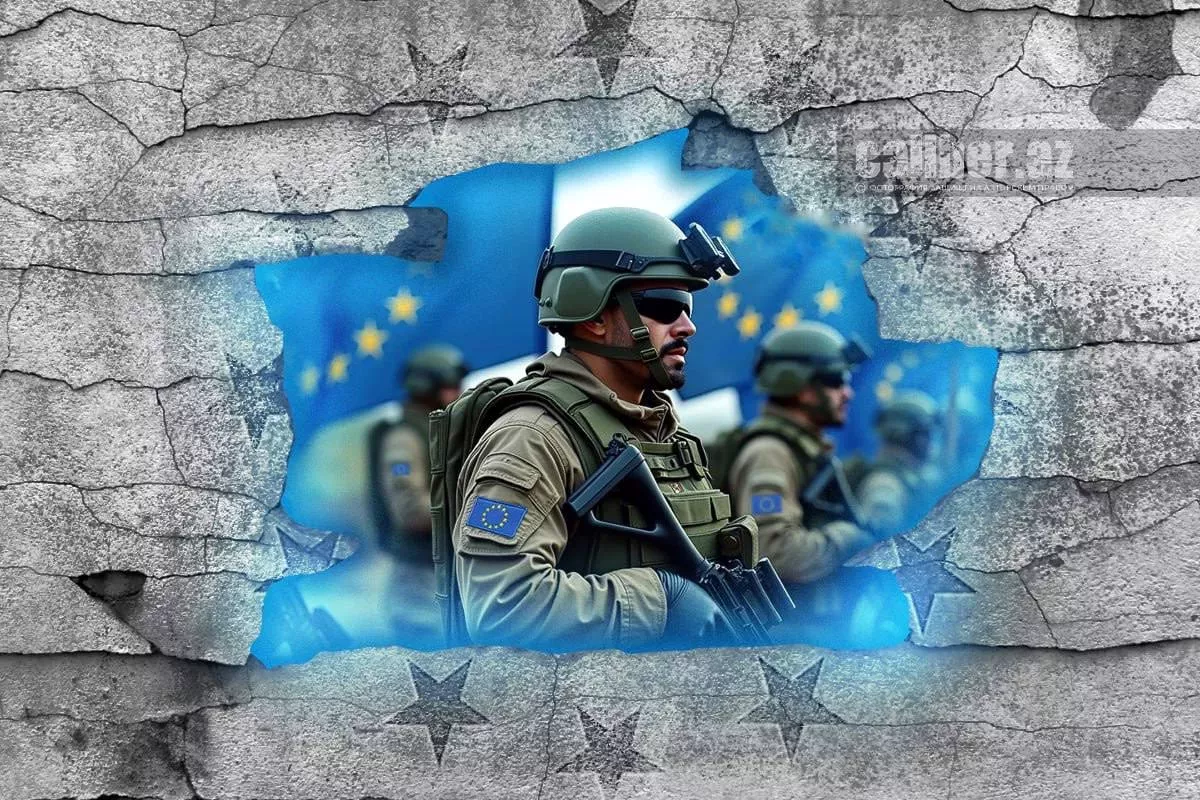
At the same time, despite a relative parity in conventional weapons, Russia enjoys absolute superiority over Europe in nuclear arms. The number of nuclear warheads possessed by the United Kingdom and France does not amount to even one-tenth of Russia’s nuclear arsenal. In addition, EU politicians have also designated China as a potential adversary, and confronting it without American support would be sheer madness.
Thus, Europe will in fact remain fully dependent on the American military umbrella for decades to come, even if Brussels manages to create—and, crucially, to coordinate—its own military machine.







 editor@caliber.az
 +994 55 444-88-98
 Азербайджан, Баку, ул. Низами, 203, Af Business House, 5-й этаж