










Diplomacy of duality Yerevan’s split between peace and revanchism
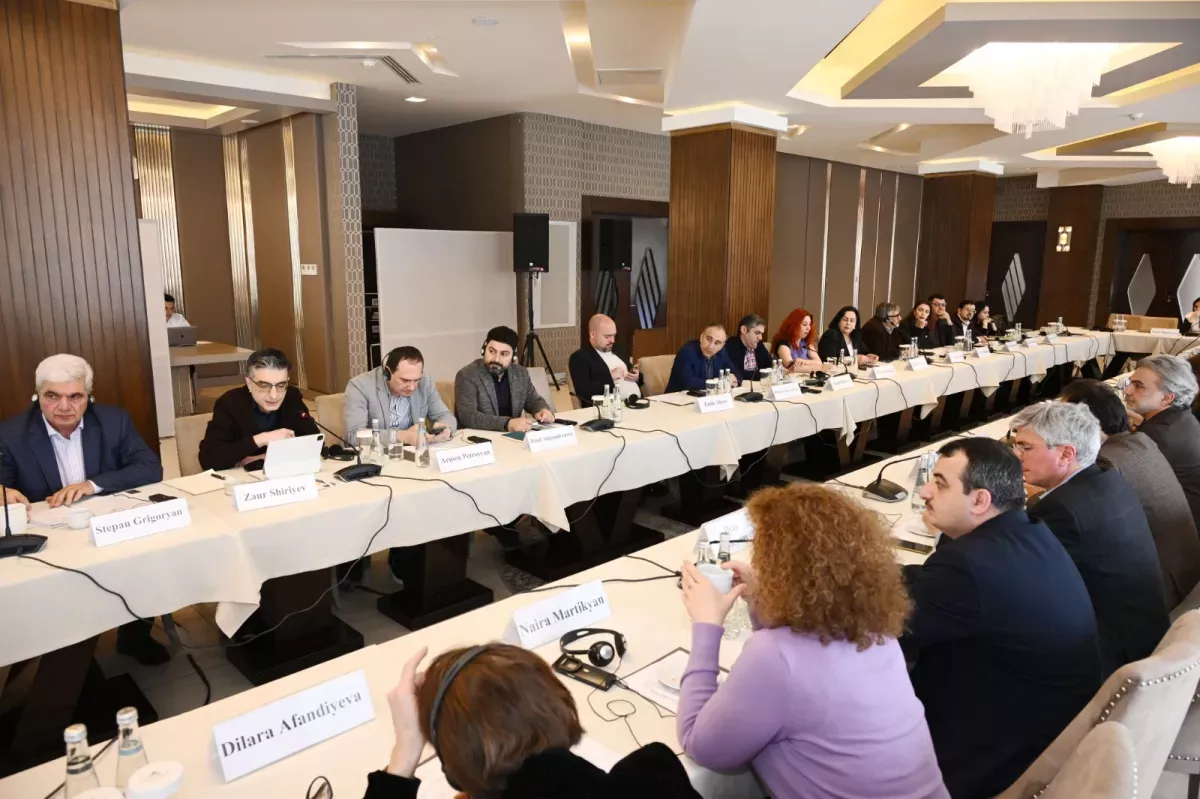
On the very day a delegation of twenty representatives of Armenian civil society arrived in Gabala to take part in another round of the “Bridge of Peace” initiative—April 10, 2026—the Armenian Foreign Ministry published a statement on social media that could undermine everything these people had crossed the land border between the two countries for. The statement was devoted to the events of April 1992 in a settlement that Armenian diplomacy persistently refers to as the “Armenian village of Maragha,” and it contained the full set of accusatory formulations drawn from the arsenal of the “miatsum” ideology.
The chronological coincidence of these two events—a gesture of civil reconciliation in Gabala and an aggressive diplomatic outburst on social media—exposes a fundamental contradiction embedded in the very architecture of current Armenian politics.
First, it is necessary to clarify the facts. The Armenian Foreign Ministry refers to Maragha as an “Armenian village,” appealing to the ethnic composition of the population at the time of the collapse of the Soviet Union. The settlement, located in the Aghdara district of Azerbaijan, took its name from the Iranian city of Maragheh, from where, following the signing of the Treaty of Turkmenchay in 1828, the first two hundred Armenian families were resettled. This is evidenced by the “Maragha-150” monument installed in the village in 1978 to mark the 150th anniversary of this resettlement. The monument, with an inscription in the Armenian language, was destroyed by Armenians in 1988, when their territorial claims to Azerbaijan began. However, the very fact of its existence is a telling acknowledgment that the Armenian presence in this area was the result of organized colonial migration, and by no means of “indigenous settlement.”
To call this village “Armenian” in a territorial-historical sense is to deliberately distort the facts, substituting the demographic situation of the late twentieth century for “centuries-old historical belonging.” It should also be noted that, by decision No. 428 of the Milli Majlis (parliament) of the Republic of Azerbaijan dated December 29, 1992, this settlement was renamed Shikharkh.

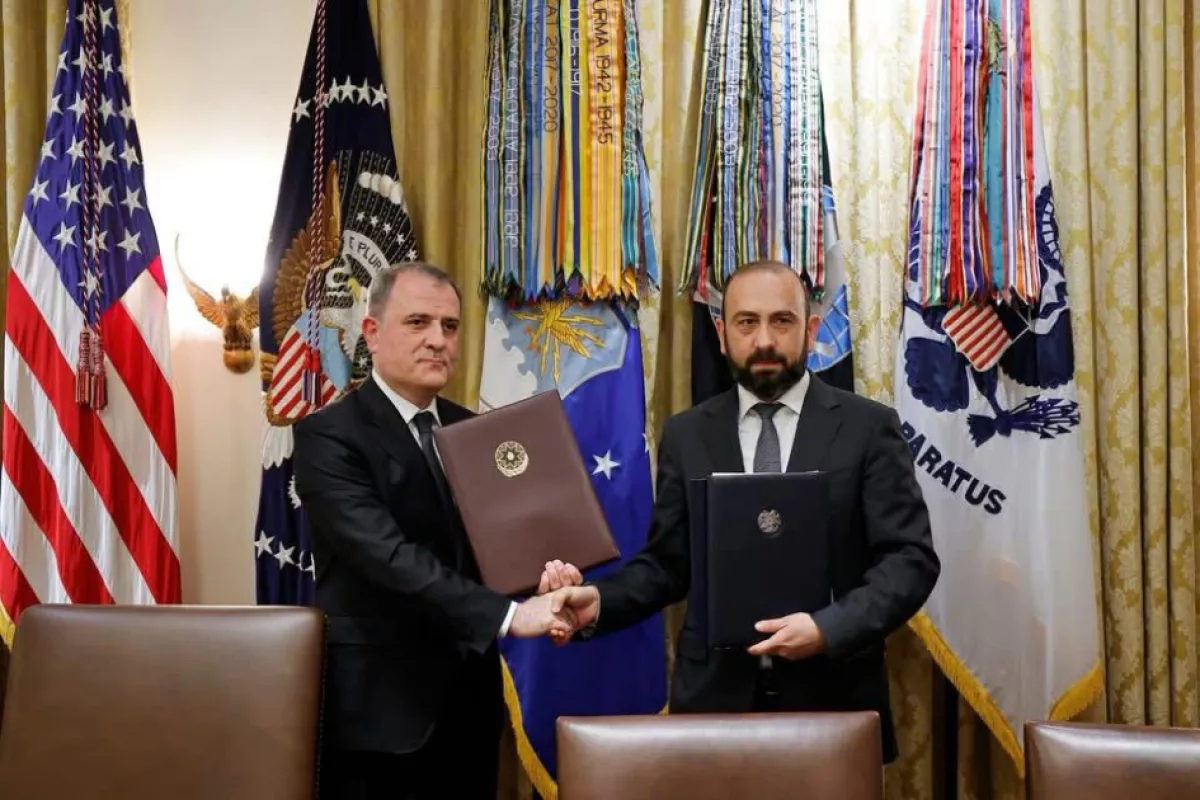
However, the issue is not even about toponymy or disputes over a distant past, but rather the fact that such statements are being made by a foreign ministry whose head, on August 8, 2025, in Washington, signed the initialed text of the “Agreement on Establishment of Peace and Inter-State Relations between the Republic of Azerbaijan and the Republic of Armenia,” which became perhaps the first real breakthrough in more than thirty years of conflict.
The sides agreed to dissolve the OSCE Minsk Group, began the process of border delimitation, and launched the Trump Route for International Peace and Prosperity (TRIPP) transport corridor project. Twelve kilometers of the border have already been delimited. Azerbaijan has started supplying fuel to Armenia, and trade channels that had not functioned for decades have been reopened. Within the framework of the “Bridge of Peace” initiative, representatives of Azerbaijani and Armenian civil societies have already met several times on the territories of both countries, discussing concrete steps to strengthen trust.
And against this backdrop, the Armenian Foreign Ministry publishes a text in which the events of 1992 are described as a “continuation of systematic violence previously manifested during the pogroms in Sumgayit, Kirovabad, and Baku.” This is a formulation from a completely different era. It is the language of confrontation, not reconciliation. It is a deliberate construction of causal chains that lead not to peace, but to the endless reproduction of mutual accusations.
The statement concludes with a phrase about a “commitment to preventing the recurrence of such crimes” and a call for an “environment free from rhetoric of hostility.” And the irony lies in the fact that this very statement itself becomes an example of hostile rhetoric, effectively aimed at inciting anti-Azerbaijani sentiment.
At the same time, the Armenian Foreign Ministry demonstratively ignores the broader context. The statement says nothing about the fact that April 1992 marked the culmination of a full-scale armed conflict unleashed by Armenia, which occupied the ancestral territories of Azerbaijan. It does not mention that on April 8, 1992, Armenian armed units attacked the settlement of Aghdaban in the Kalbajar district of Azerbaijan and with particular brutality killed dozens of civilians, including elderly people, women, and young children; part of the population was taken hostage. It makes no reference to the hundreds of thousands of Azerbaijanis expelled from their homes in Armenia.
The Armenian Foreign Ministry also omits the fact that the “peaceful” Armenians in Maragha possessed several BMP-1 and BMP-2 infantry fighting vehicles and one tank. Nor does it mention the Khojaly genocide of February of the same year, which became one of the bloodiest episodes of the conflict. Armenian diplomacy habitually extracts isolated episodes from the broader mosaic of the war and presents them as acts of unilateral violence, while completely ignoring the suffering of the Azerbaijani people.
We are consciously not entering into a discussion about the events that the Armenian Foreign Ministry refers to as “pogroms”—who organized them, what their true nature was, and what objectives were pursued. Caliber.Az has devoted many materials to this topic. But one thing immediately stands out.
The Armenian Foreign Ministry mentions the “pogroms in Kirovabad”—that is, it uses the Soviet-era name of a city that has not existed on the map of Azerbaijan for thirty-seven years. The city has borne its historical name, Ganja, since 1989. The use of the toponym “Kirovabad” is a refusal to recognize the realities of the modern Azerbaijani state. For decades, Armenian diplomacy has used alternative toponymy as an instrument for delegitimizing Azerbaijani sovereignty, and the fact that this continues in official statements by the Foreign Ministry after the Washington agreements says a great deal.
However, it would be naive to view this statement as an isolated incident. It fits into a consistent pattern of behavior by Armenian diplomatic missions that has not undergone any fundamental changes after Washington. The most illustrative example in this regard is Tigran Balayan, the Ambassador of Armenia to Belgium and head of Armenia’s mission to the European Union.
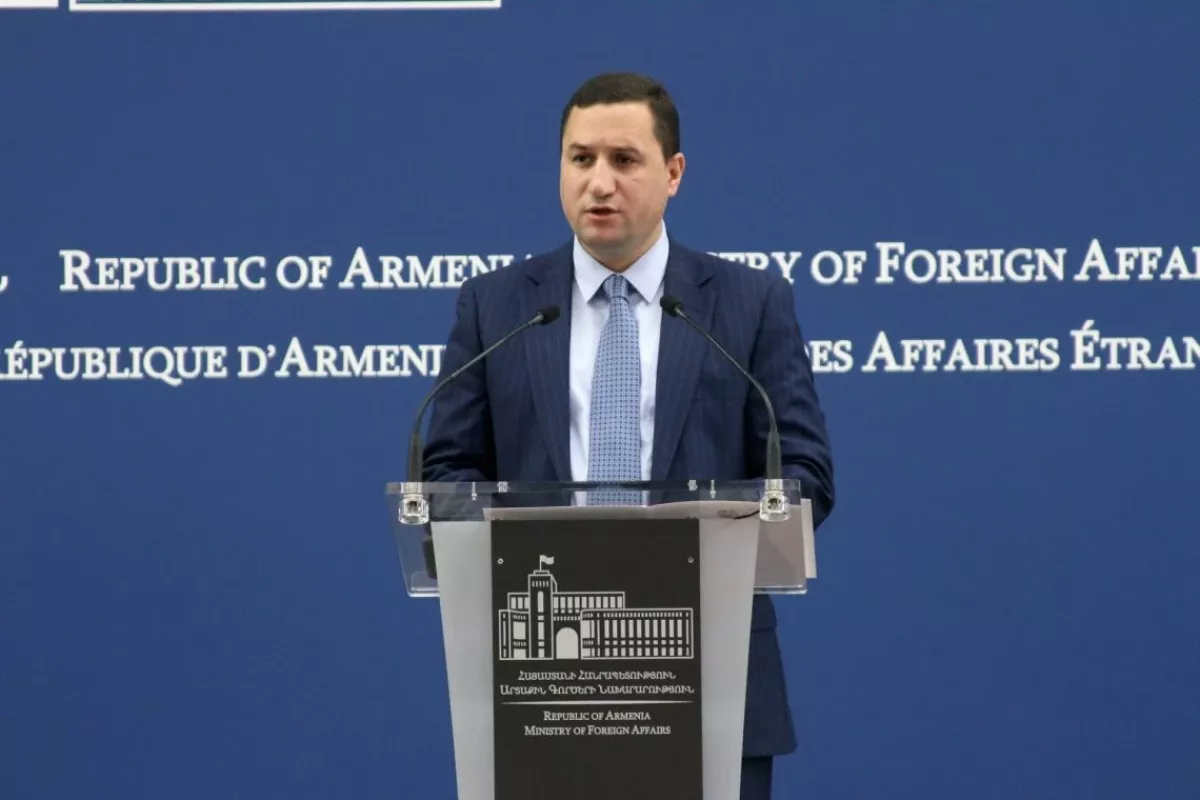
His career is a chronicle of systematic anti-Azerbaijani activity, which he has carried out consistently in every position he has held. While serving as ambassador to the Netherlands, Balayan actively lobbied the Dutch parliament to adopt resolutions calling for sanctions against Azerbaijan. In 2021, in an interview with a Dutch publication, he accused Baku of “ongoing war crimes.” Since 2023, after moving to Brussels, Balayan has intensified this activity. He has publicly called on the European Union to impose sanctions against Azerbaijan, claimed the “inevitability of an attack on Armenia,” accused President Ilham Aliyev of preparing a “new aggression,” and described Baku’s actions as a “challenge to the authority of the EU.” All of this has been done methodically—through interviews with Western media, speeches at European platforms, and activity on social media.
In April 2024, he gave an interview to The Moscow Times, in which he emphasized the failures of the Collective Security Treaty Organisation (CSTO) and the need for European protection of Armenia from Azerbaijan, effectively positioning his country as a victim in need of rescue rather than a full participant in the peace process. The Armenian embassy in Brussels under Balayan has turned into a full-fledged headquarters of information warfare operating on a European stage. And this is the work of a man who represents a country that is supposedly committed to peace.
The activities of Armenian diplomatic missions in Europe are generally built according to a single template. At every convenient opportunity—whether anniversaries of wartime events, meetings of European institutions, or even simple social media posts—Armenian diplomats inject narratives into the information space that directly contradict the spirit of the peace process.
Thus, the peace agenda is declared at the level of Prime Minister Pashinyan, while the conflict-driven narrative is implemented at the level of the diplomatic apparatus, as if the left hand does not know what the right hand is doing. Or, more likely, it knows perfectly well.
Returning to the events of April 10, 2026, the Armenian delegation arrived via the land border, passing through passport and border control at a delimited section. In Gabala, journalists, experts, and civil society representatives from both countries sat at the same table, discussing the current state of the peace process and practical steps to strengthen trust. Among them were representatives of the Yerevan Press Club, Public Television of Armenia, as well as foundations focused on democracy development and peacebuilding.
And on that very same day, the Armenian Foreign Ministry published a text that devalues the very fact of their presence in Gabala—speaking in the language of hostility at the very moment these people are trying to speak in the language of peace. It is difficult to imagine a more vivid illustration of the fact that Armenian policy suffers from a severe form of institutional schizophrenia, in which official statements by one branch of government completely negate the efforts undertaken under the auspices of another. And Baku has repeatedly drawn the Armenian leadership’s attention to this problem.
The Azerbaijani side is consistently fulfilling its obligations under the Washington agreements: carrying out delimitation, ensuring trade supplies, and creating conditions for civil contacts. At the same time, every provocative statement by the Armenian Foreign Ministry does not go unnoticed and adds to the arguments of those who, on the Azerbaijani side as well, remain skeptical about the sincerity of Armenian intentions. Yerevan risks the most valuable asset it currently has—the credit of trust that was so difficult to earn in Washington.







 editor@caliber.az
 +994 55 444-88-98
 Азербайджан, Баку, ул. Низами, 203, Af Business House, 5-й этаж