










EU as a geopolitical football of Trump, Putin, and Xi Analysis by Serhey Bohdan
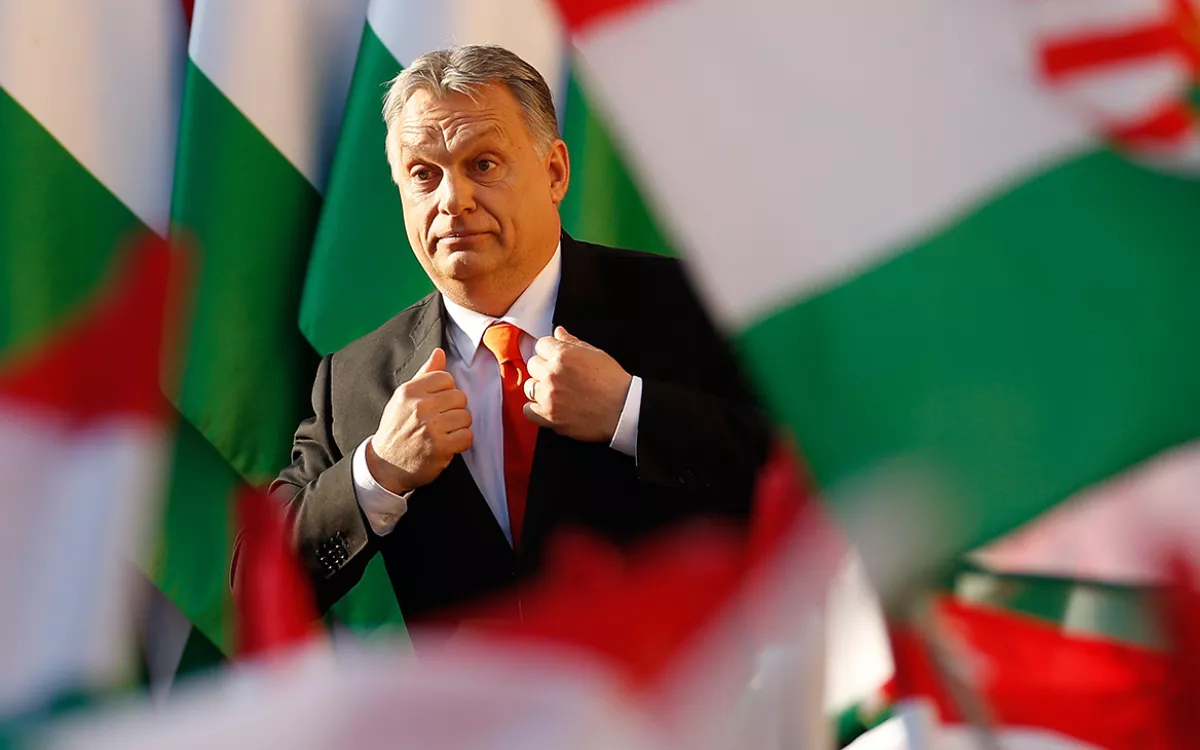
Parliamentary elections are taking place in Hungary today. Liberal elites across Europe are determined to topple Orbán’s government. The American president is intent on preventing them from achieving this goal, especially after EU countries sabotaged his war with Iran. Within the European Union, there is growing fear of American influence, which could help non-liberal political forces gain strength in member states and within the bloc itself. As a result, current European leaders are taking increasingly risky steps — from exerting pressure on Hungary to discussing the possibility of limiting the sovereignty of countries within the EU. Given Europe’s economic and political situation, such measures are unlikely to strengthen the union.
The EU would not withstand another war
The European Union has avoided involvement in the Middle Eastern conflict. Moreover, it is pursuing its own strategy towards Iran. This is particularly evident in French actions. In the midst of the hostilities, covert separate negotiations between Europeans and Tehran became noticeable — indications of this included the passage of a French vessel and France blocking the adoption of a UN Security Council resolution. These efforts continued with new steps this week.
On Monday, Paris and Tehran exchanged prisoners, and Paris withdrew its lawsuit against Iran at the International Court of Justice. According to The Jerusalem Post on Friday, all this, along with the French government’s softer stance toward Hezbollah — Iran’s ally in Lebanon — has led Israel to refuse to allow France to participate in Lebanon-related negotiations in Washington. The EU and its key member states are now clearly seeking to once again play a leading role in shaping a new “grand bargain” with Iran, attempting to replicate what the so-called “E3” — Germany, France, and the United Kingdom — successfully achieved during negotiations over Iran’s nuclear programme in the late 2000s and early 2010s.
At first glance, the EU’s policy in this war appears successful. However, in assessing the European stance toward a US–Iran war, one should not exaggerate the boldness of the EU’s liberal leaders. In the event of an American war with Iran, they were placed in a no-win situation. Participation in another major conflict, in addition to the war with Russia, is, to put it mildly, a questionable prospect for the European Union and its member states in the current circumstances.
After all, the situation is serious: since the mid-2010s, the economic position even in the EU’s strongest countries, such as Germany, has steadily deteriorated. In simplified terms, the average German today effectively has about a third less purchasing power than at the beginning of the 2010s. Nominal wages have risen somewhat, but prices have increased far more sharply; food alone is roughly a third more expensive than even on the eve of the pandemic. The healthcare and education systems are visibly eroding. And these are not subjective impressions — they are also reflected in published statistics.
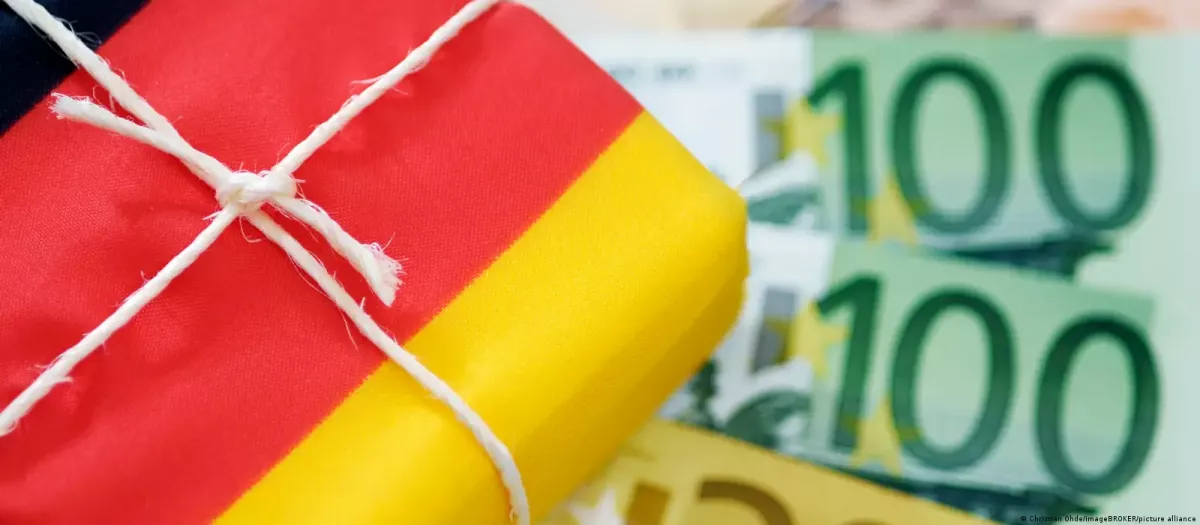
On April 7, it was officially confirmed that “Germany closed 2025 with a record budget deficit.” It amounted to €127.3 billion, which is €22.9 billion more than in the previous year. Importantly, in the case of a federal state where responsibilities are divided among three levels of government, all three levels recorded deficits for the first time.
Overall, the German economy has been hit by the severing of ties with Moscow, as access to cheap resources, important markets, and transit routes has been lost. By breaking relations with Russia and Iran, Europeans could have built alternative routes into the interior of the continent via the Caspian region, but they chose not to do so, presumably hoping to recover all losses through a Ukrainian victory, with the EU investing in that war effort for reasons that go far beyond ideology.
The cumulative consequences of these ruptures and the dismantling of infrastructure are still to be fully assessed. What can already be evaluated, however, are the emerging effects of investments in militarisation, which have resulted from a bet on a military “final solution” to the so-called “Russian question.” This can be seen more clearly by reading the official communiqué on Germany’s budget deficit.
First, it turns out that the bulk of the deficit falls on the federal authorities, which are responsible for war and foreign policy. Their shortfall amounted to €85.4 billion. It is officially acknowledged that “the cause was reliance on debt financing — through special funds for the Bundeswehr, infrastructure, and climate protection, fully funded by credit.” It should be noted that part of infrastructure spending is also related to war preparations, while climate programmes have in recent years been scaled back, so the main driver of the deficit is indeed military expenditure. Even the German establishment itself describes defence procurement as a “key growth factor,” since it increased by 23.4%, reaching €39 billion.
This deficit would have been even larger if not for certain nuances.
First, the government managed to reduce spending on interest payments on government securities. This was achieved not by reducing debt — there is no question of that — but through a “change in accounting practices” by the federal government. As the saying goes, everything is fair in the wizard Suleiman’s world: sleight of hand and no fraud.
Second, unlike the federal government, the federal states — which are responsible for organising everyday life for citizens on the ground — managed to cut their deficits by more than half, down to €8.7 billion, naturally by reducing basic public services for citizens.
Third, the deficit of the social security system, including health insurance, was reduced tenfold to €1.3 billion. This was achieved through a 9% increase in insurance contributions, particularly for health insurance, and cuts in the scope of reimbursable services. Incidentally, even these reimbursable services are becoming increasingly difficult to access due to staff shortages. Add to this rising prices, wage stagnation, deteriorating infrastructure, an increase in crime and drug trafficking — and the bleak consequences of the policies of both the national government and EU leadership in Germany are felt everywhere.
As a result, political systems in several European countries increasingly resemble mushrooms on thin stems, where swollen party structures rest on a minimal base of public support. A new opposition is coming to power, and liberal European elites are forced to contain it at the limit of their capacity and through controlled media — even though election results long ago suggested that new political forces should be integrated both at the national level and within the EU framework itself.
This week, new public opinion polls were published in Germany. Gradually, the question of the regime’s very legitimacy is coming into focus, as 53% of respondents say they do not trust any political party.
Chancellor Friedrich Merz’s unpopularity has reached new record levels, with 78% expressing dissatisfaction with him. The new opposition party, Alternative for Germany, has drawn level in popularity with the ruling Christian Democrats. While in last year’s elections the Christian Democrats received 28.5% of the vote and, in coalition with the left-liberal Social Democrats, managed to form a government, their current support has fallen to 26%. The Alternative for Germany has also reached 26%, despite receiving 20.8% in the election.
The “new opposition” in Germany is questioning the government’s policy line towards the United States and Russia. This is elevating domestic political disputes to the international level, creating opportunities for the United States in terms of the reconfiguration of Europe.
The American–EU struggle for Budapest
Although it currently appears that the EU has managed to manoeuvre in relation to the American war against Iran, it is still too early to draw conclusions. Much depends on future developments, in particular the outcome of the confrontation with the United States. The escalation of tensions between Euro-liberal elites and the US is not limited to disputes within NATO. This week, reports and statements about Donald Trump’s plans to withdraw the United States from the bloc have continued to circulate.
For the EU, this would only be part of the problem, as it would then have to build a new security architecture with limited time, resources, and political will.
Much more important is the fact that the escalation of the conflict between the Euro-liberal establishment and President Trump has intensified antagonisms within the EU itself. In Germany as well, the opposition Alternative for Germany is not only calling for an end to the war with Russia and closer ties with Trump; it has for some time maintained good relations with the current US administration. At a certain point, the White House may move from criticising the EU and Germany’s overall democratic deficit to taking practical steps — supporting such allies within the EU.
And this week it became clear that Washington is indeed preparing to do exactly that, having grown weary of dealing with liberal European leaders. The entire week was filled with reports of clashes between the United States and the EU over elections in Hungary. Initially, both sides exchanged accusations of election interference; now they have moved on to openly backing different candidates.
At the beginning of the month, the Hungarian government stated that cash found by Hungarian police in March in Ukrainian armoured cash transport vehicles consisted of freshly printed banknotes. This raised questions as to whether these funds were being transported for the Hungarian opposition on behalf of European leaders calling for Orbán’s overthrow, or the EU establishment itself. In Budapest, suspicions have already been voiced that the Hungarian opposition receives funding from Ukraine. But even more intriguing is the question of where this money originates, given that Kyiv itself does not have it — and what role Brussels may be playing in the entire affair. Clearly, it is a case in which the interests and capabilities of Ukraine and the EU intertwine in relation to efforts to remove the Hungarian prime minister.
Seeing this liberal and democratic “free-for-all,” Washington was unwilling to abandon its ally in Budapest, against whom the Euro-liberal forces have mobilised all their strength. At the beginning of the week, US Vice President J. D. Vance visited Hungary, during which he expressed American support for Orbán. It should be recalled that in March, Secretary of State Marco Rubio also travelled to Hungary to reassure Orbán of Washington’s friendly position. The American leadership is signalling that it will not accept attempts to manipulate elections. This week, polls were published suggesting that the opposition is comfortably ahead of Orbán’s party. Such publications are needed so that later — if Orbán begins to win in the elections — allegations of fraud can be made and a “Maidan”-style scenario triggered. For this reason, the American side is sending signals to the EU that it will not allow such scenarios in Hungary. On Friday, for example, Trump openly stated: “I was proud to endorse Viktor for Re-Election in 2022, and am honored to do so again.” Given that Hungary is a relatively large EU country located in the very centre of the Union, such a “battle for Hungary” between the US and the EU clearly demonstrates the state of the European Union, which is being forced to intervene in a heavy-handed and uncompromising manner in the internal processes of its supposedly already integrated member states. It also demonstrates the United States’ new ambitions, as it is no longer willing to tolerate Euro-liberal regimes in the EU and is even prepared to settle scores with these “allies” over the problems arising during the war with Iran.
A German solution to the EU’s problems: more discipline
Euro-liberal leaders are uncertain about the outcome of their clash with Trump. Moreover, they understand that even in the event of a change of power in Hungary, there are other EU countries — such as Slovakia — that do not accept the imposed directives and insist on preserving sovereignty. Therefore, the current focus is on tightening discipline within the EU.

As part of the debate over Hungary’s veto on a new loan for Kyiv last week, German Foreign Minister Johann Wadephul called for an end to the principle of unanimity in EU decision-making. He proposed a shift toward qualified majority voting. While Wadephul spoke specifically about applying majority voting in the areas of foreign policy and security, such a move — given the ongoing securitisation — would inevitably affect a wide range of other issues.
Rumours of such changes have circulated before, with these ideas often attributed to the current European Commission led by Ursula von der Leyen. And not without reason: on Wednesday, a representative of Germany’s ruling Christian Democrats and, at the same time, the head of the European Parliament’s largest faction — the European People’s Party — Manfred Weber supported the German minister’s initiative and likewise called for abandoning unanimity. Otherwise, he warned, “Europe will become a football for Trump, Putin and Xi [Jinping].”
For clarity, von der Leyen, Wadephul, Merz, and Weber are not only all German — within domestic politics, they all belong to the same party, the Christian Democrats. In fact, it was Weber who helped secure strong backing for his party colleague Ursula in her position as President of the European Commission.
Although Euro-liberal elites repeat the ritual formula that “Putin and Xi are a threat to the EU,” the new initiative is in fact more directed at confronting Trump. Serious discussion of it did not begin when Orbán started criticising the EU’s Ukraine policy and blocking transfers of funds to Kyiv back in 2022, but rather last year, when Hungary — amid Trump’s political comeback — began diverging from Brussels, Berlin, and Paris on relations with Washington.
That Orbán is not being targeted primarily over Russia or Ukraine becomes clear from a couple of comparisons. Like Hungary, much of Southern Europe has largely refrained from providing military assistance to Ukraine. In 2025, the combined share of Portugal, Spain, Italy, Malta, Cyprus, and Greece in such European aid amounted to about 1%. At the same time, the combined GDP of two major countries in this group — Italy and Spain — stands at $4.25 trillion, comparable to Germany’s economy. Another country in this group, Greece, has for years continued transporting Russian oil on its tankers. During the most critical period of 2022–2023, it accounted for up to 60% of Russia’s seaborne oil shipments, during which time Moscow also developed its “shadow fleet.” Yet none of these countries faces the same level of criticism as Hungary.
One can also look at recent months, when Orbán has been criticised for blocking €90 billion in funding for Ukraine. At the same time, bilateral assistance to Ukraine from previously active Eastern European states, such as Poland, has also dropped to minimal levels. This suggests that the main grievances against Hungary are not about Russia or Ukraine, but rather about ideological differences and Hungary’s relations with the United States under Trump. It is precisely American influence that Euro-liberal elites seek to neutralise in Hungary.
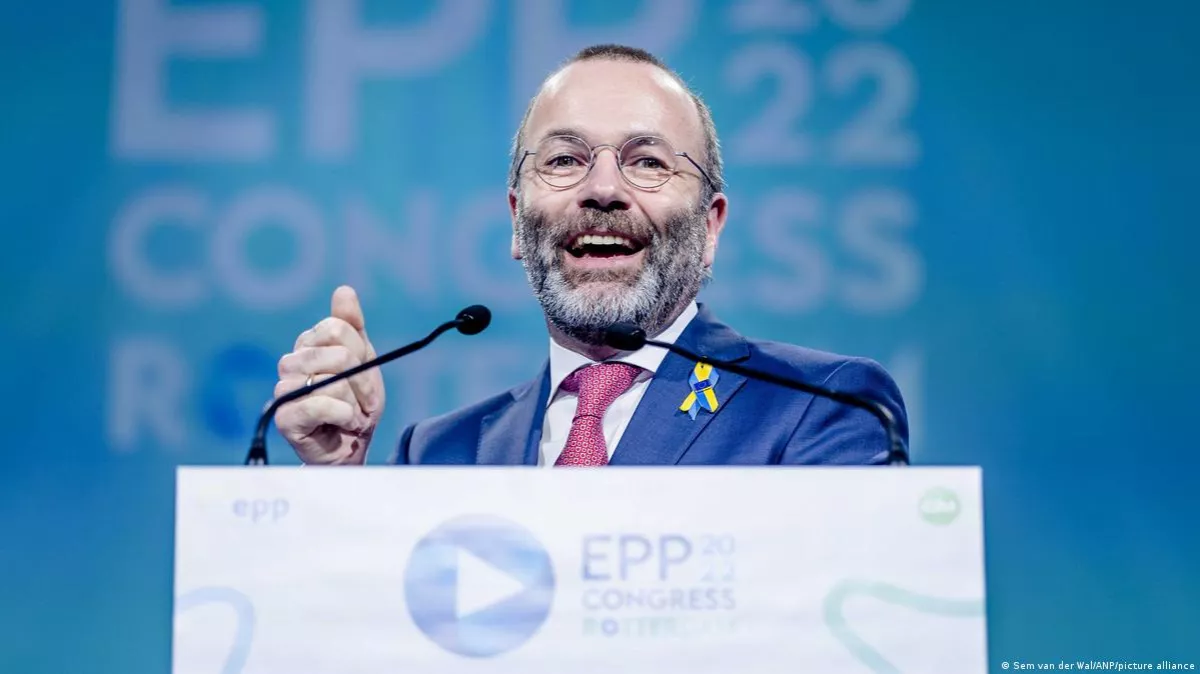
In fact, no one is even trying to conceal this. Manfred Weber himself justifies the need to reduce sovereignty within the EU and limit the influence of dissenting member states by referring to other clashes with the Americans, declaring: “The Greenland crisis showed how strong Europe is when we act quickly, cohesively and unanimously, resolutely defending our interests.” Such reasoning points to dangerous illusions at the top of the EU. In recent months, the only thing demonstrated is that European countries have been unwilling to challenge Trump over Greenland, instead hoping that other issues would distract him — which they did. Yet the issue remains unresolved, and Washington has made it clear that it will return to it in due course.
German politicians in Berlin and Brussels are attempting to resolve the EU’s problems through tougher measures. They are no longer willing to tolerate internal diversity, fearing that Trump-aligned forces in Europe will continue to gain strength and that the current elites could simply be swept away in the next electoral cycle. But will this new disciplinary policy from Brussels be accepted by EU member states? Given that it is being driven by German politicians, it is likely to arouse suspicion among Germany’s neighbours. And if, in the near future, its proponents fail to broaden support for building a more uniform European Union, these new trends may ultimately contribute not to consolidation, but to the EU’s fragmentation.







 editor@caliber.az
 +994 55 444-88-98
 Азербайджан, Баку, ул. Низами, 203, Af Business House, 5-й этаж