










Gas, IT, joint defence projects and more Following President Aliyev’s visit to Slovakia
In recent years, Azerbaijan has been actively strengthening business ties with Eastern European countries, with Slovakia emerging as a key partner. At the heart of this cooperation is the energy sector: in December last year, under the “Solidarity Ring” (STRING) initiative, pilot deliveries of Azerbaijani natural gas began to Slovakia’s largest energy company, SPP.
Beyond energy, Baku and Bratislava are exploring expanded collaboration in non-oil sectors, including manufacturing, transport, digitalisation, and the defence industry. These prospects for deeper bilateral cooperation were highlighted during Azerbaijani President Ilham Aliyev’s official visit to Slovakia.
During his visit to Bratislava on 8–9 December, Azerbaijani President Ilham Aliyev held an expanded meeting with Slovak President Peter Pellegrini. “Indeed, we have entered an active phase of relations between Slovakia and Azerbaijan.
Today, relations between our two countries are in an active phase and have reached the level of strategic partnership. Last year, we signed a Declaration on Strategic Partnership, which elevated our relations to the highest level. Today, these relations have reached the level of a strategic partnership. Last year, we signed the Declaration on Strategic Partnership, which elevated our relations to the highest level,” Ilham Aliyev said during the meeting. “Over the past years, our relations have developed considerably and now cover a wide range of areas. You mentioned the energy sector. Last year, we began supplying gas to Slovakia, and we are ready to continue doing so whenever appropriate. Our cooperation in the field of defence and the defence industry holds tremendous potential for the future.”
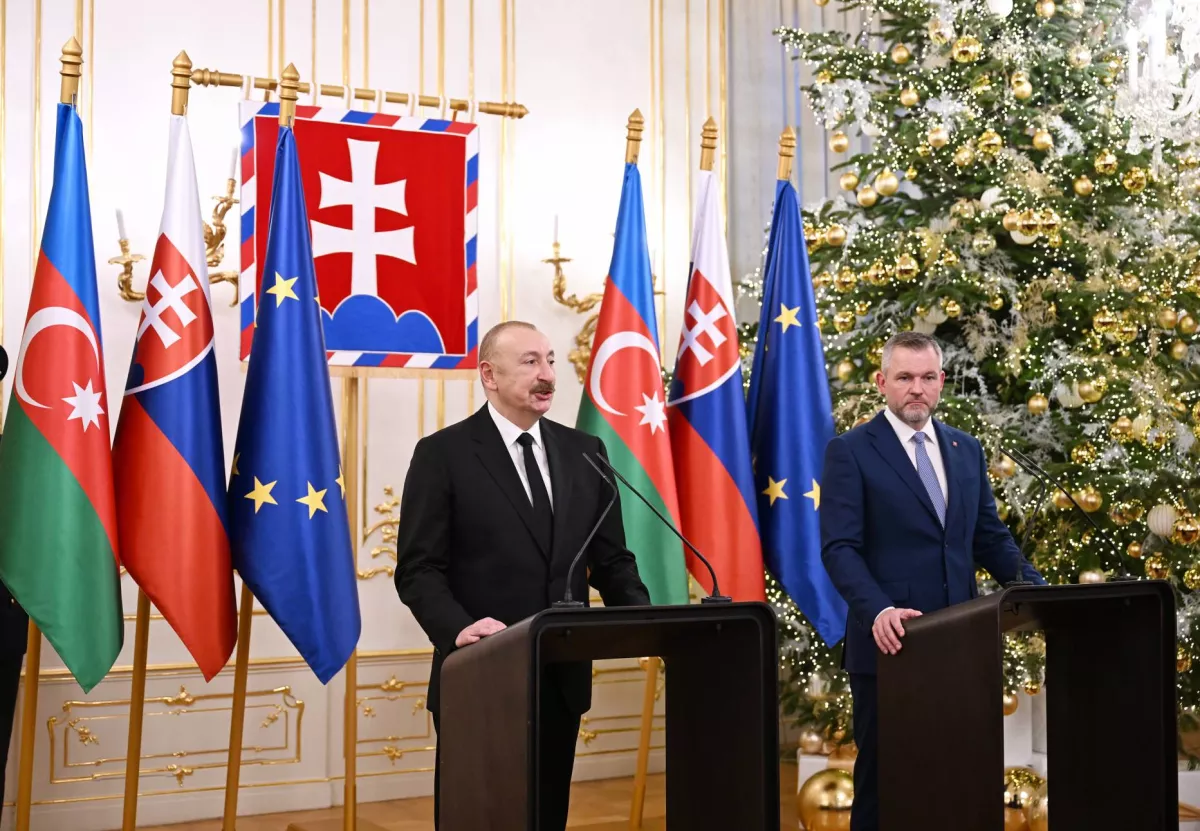
The Slovak President expressed satisfaction with the participation of Slovak companies in the reconstruction of the village of Bash Garvand in Azerbaijan’s Aghdam district, liberated from occupation, based on the “smart village” concept. He also highlighted the successful cooperation between the two countries in energy, transport, and the defence industry. It was further noted that Slovakia fully supports the development of Azerbaijan’s relations with the European Union.
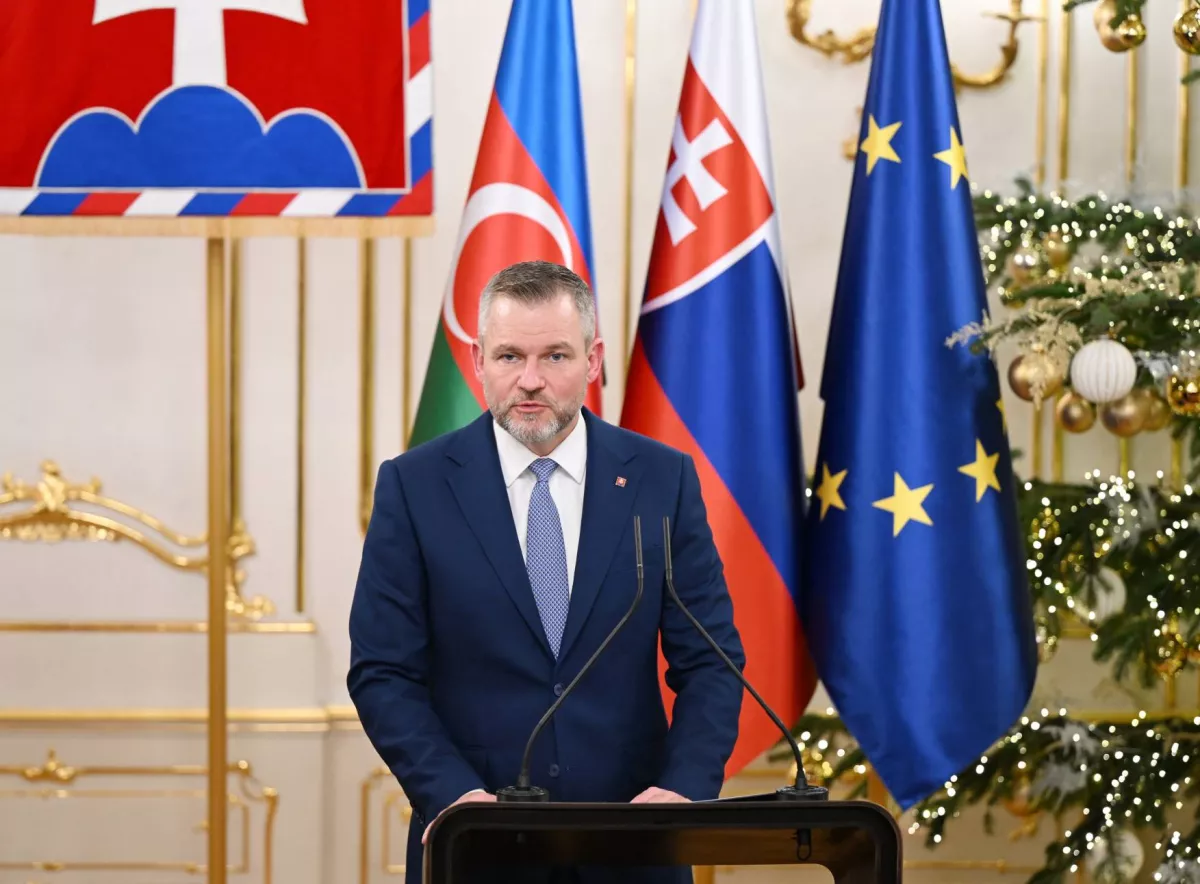
“The European Union has decided to completely ban the imports of Russian gas into Slovakia, a decision made on behalf of all 27 member states. There is very little time,” said President Peter Pellegrini. “Slovakia is currently in a challenging situation. We see that Azerbaijan can be part of the long-term solution for us […] I am very glad that you have included the president of SOCAR in the delegation, which allows us to have a very concrete conversation.”
Following the signing of the “Memorandum of Understanding on Strategic Partnership in the Energy Sector between Azerbaijan and the EU” in Baku in July 2022—which aims to double Azerbaijani gas exports by 2028—projects have been launched to expand the capacity of the Southern Gas Corridor (SGC) and the Trans Adriatic Pipeline (TAP).
In recent years, significant progress has been made: compressor stations and gas distribution networks across Southern and Eastern Europe have been modernised, and the construction of new interconnectors has been accelerated. These developments enabled Slovakia to join Azerbaijan’s gas partner pool in December last year, becoming the 12th European country to receive gas via the SGC.
Initial deliveries were carried out under a short-term pilot contract between SOCAR and Slovensky Plynarensky Priemysel (SPP). Overall, Azerbaijan’s gas exports to Slovakia are progressing within the framework of the “Solidarity Ring” (STRING) initiative.
In April 2023, a Memorandum of Understanding was signed to strengthen cooperation between SOCAR and its partners—the gas transmission system operators of Bulgaria (Bulgartransgaz), Romania (Transgaz), Hungary (FGSZ), and Slovakia (Eustream). The memorandum outlined areas of collaboration for supplying additional volumes of Azerbaijani gas to Europe through the upgraded STRING initiative.
The participating countries, including Slovakia, have extensive underground gas storage facilities and pipeline networks to receive and store Azerbaijani gas. As highlighted in May 2024 by Richard Kvasňovský, Executive Director of the Slovak Gas and Oil Association (SGOA), Azerbaijani gas supplies to Europe could reach 5 billion cubic metres per year in future phases of the STRING project.
Bratislava’s interest in deepening gas cooperation with Baku has grown significantly, particularly after the European Union approved in October a plan to phase out Russian energy supplies, with the European Council and European Parliament agreeing last week to implement the transition step-by-step by 2027.
Slovakia currently holds a contract with Gazprom valid until 2034, under which Russia is obliged to supply gas to Slovakia, including covering transit fees up to the Slovak border. While Slovakia and Hungary have expressed readiness to challenge this decision at the Court of Justice of the EU (CJEU), the prevailing geopolitical situation leaves little likelihood of a favourable legal outcome.
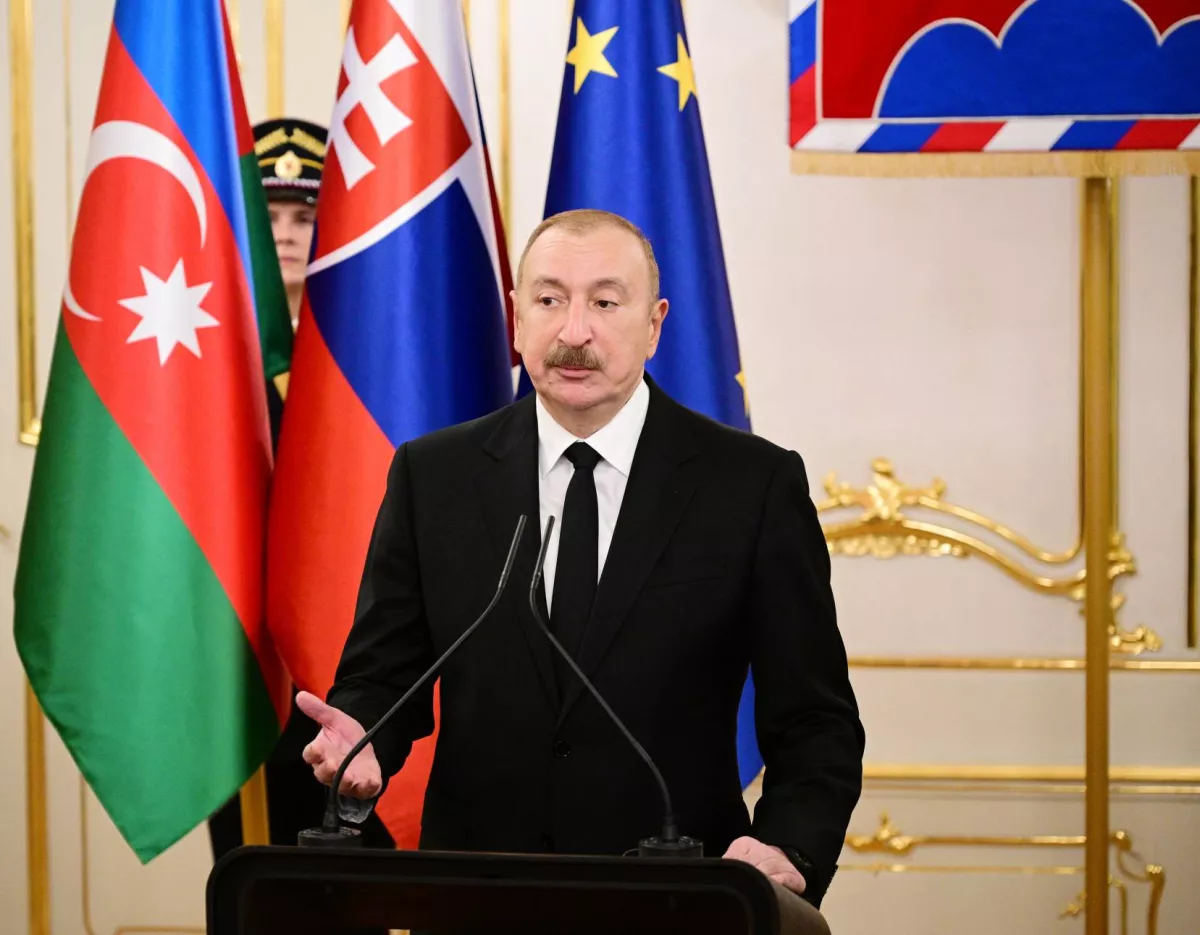
In this context, it is highly significant that Azerbaijan is ready to support its Slovak partners amid sanctions-related tensions in Europe. “Last year, Azerbaijani gas was supplied to Slovakia for the first time. In fact, Azerbaijan can provide Slovakia with any volume of energy resources it may need,” said President Ilham Aliyev. “Our rich gas fields have enabled us to export natural gas to many countries of the world today. The number of countries that purchase Azerbaijani gas has already reached 14.” The head of state noted that total Azerbaijani gas exports currently amount to 25 billion cubic metres, half of which is transported to European countries, and today eight EU member states ensure their energy security by importing Azerbaijani gas.
Beyond energy, the partnership between the two countries is proving highly productive in the defence sector. Last year, Slovakia delivered a batch of 155mm L-45 DITA self-propelled howitzers to Azerbaijan. Moreover, as Slovak President Peter Pellegrini noted recently, his country is ready not only to supply defence products but also to participate in technology transfer: “We also have extensive experience in self-propelled artillery systems, ammunition, and other products. We can work with Azerbaijan on technology transfer, the use of Azerbaijani financial resources, and joint production, and we can sell jointly manufactured products to third countries.”
Cooperation in energy and defence is undoubtedly a key driver of Azerbaijan-Slovakia relations. However, both countries are seeking to diversify their business ties, expanding into non-oil sectors and other areas.
In recent years, the bilateral legal framework has been significantly expanded, with more than a dozen agreements signed. Notably, in October 2021, an intergovernmental agreement on economic cooperation was signed, covering industry, construction, transport, logistics, investment promotion, energy, mining, tourism, small and medium-sized enterprises, agriculture, and other areas. Last year, the two countries also signed an agreement on the elimination of double taxation, which came into effect on January 1, 2025.
As for bilateral trade, it remains relatively modest and does not reflect the potential of the two countries. According to the State Customs Committee of Azerbaijan, domestic exports to Slovakia from January to October 2025 amounted to $564,780, while imports into Azerbaijan reached approximately $36.139 million.
Today, Azerbaijan-Slovakia business relations are planned to focus on expanding trade turnover and investment cooperation. Bratislava sees Baku as a key partner in the South Caucasus for collaboration in trade and economic affairs, transport, transit, investment, as well as in innovation and the IT sector. In the past, the two countries have cooperated successfully in establishing Next Generation Network (NGN) optical networks; for example, the Slovak company Iskratel provided equipment for building the NGN on the Absheron Peninsula.
Partnership in the IT sector appears to remain a priority: during a meeting on December 8 between the Slovak Association of Critical Infrastructure delegation and specialists from Azerbaijan’s Ministry of Digital Development and Transport, aspects of cooperation in cybersecurity, transport, and telecommunications were discussed. Baku and Bratislava are also developing collaboration in “green” energy: Slovak companies export heat pumps to Azerbaijan, helping reduce emissions when using low-carbon electricity.
In recent years, the Hungarian low-cost airline Wizz Air has facilitated an air bridge between the two countries. However, plans are now underway to launch direct services between Bratislava and Baku airports, aiming to increase the number of flights.
Meanwhile, speaking to the press recently, the Azerbaijani president highlighted several promising areas for Azerbaijan-Slovakia business cooperation, including the Middle Corridor project, the development of renewable energy sources (RES), and the establishment of a data centre hub.







 editor@caliber.az
 +994 55 444-88-98
 Азербайджан, Баку, ул. Низами, 203, Af Business House, 5-й этаж