










GCSP: EU can anchor peace and connectivity in South Caucasus through TRIPP
The European Union is reassessing how it can more effectively shape peace and connectivity in the South Caucasus, positioning itself not as a rival to Washington but as a sustained strategic partner with distinct strengths. According to a new analysis by the Geneva Centre for Security Policy (GCSP), Brussels has the capacity to play a proactive yet complementary role alongside the US in advancing long-term stability, regional transport links, and economic integration in the region.
The article argues that while the EU should not attempt to challenge Washington’s leadership, passivity on the part of Brussels is equally unacceptable. The author notes that amid the US focus on short-term outcomes and uncertainty over its long-term regional engagement, the EU’s comparative advantages lie in institutional continuity, patience, and a wide array of political and financial instruments.
In seeking to define a clearer role alongside Washington, Brussels is exploring new diplomatic formats to entrench its involvement. Within this context, European Commissioner for Enlargement Marta Kos has proposed the creation of a four-party transport connectivity format involving Azerbaijan, Armenia, Türkiye, and the EU. She emphasised that sustainable progress is only possible if peace is preserved.
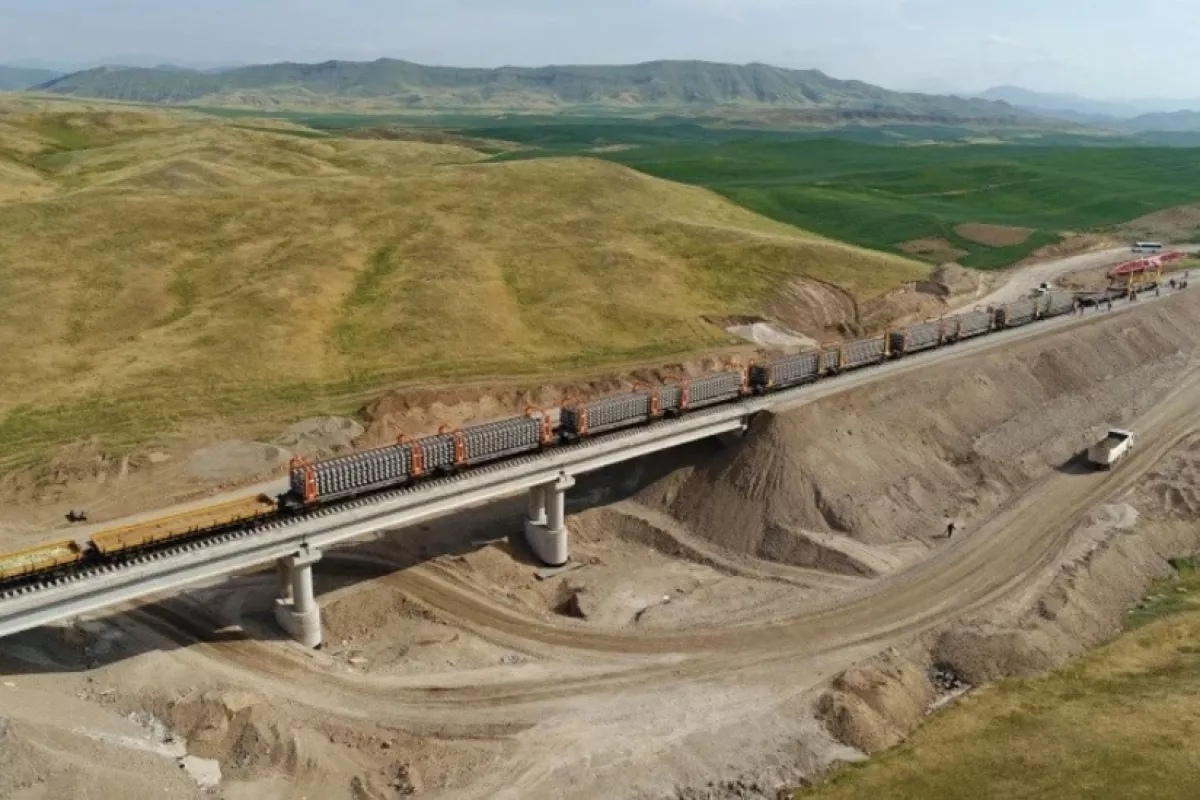
The article suggests that the EU could integrate the TRIPP initiative — the “Trump Route for International Peace and Prosperity” — into a broader security and connectivity agenda, ensuring coordinated high-level political backing. The TRIPP project includes, among other components, the construction of a 42-kilometre segment of the Zangezur Corridor on Armenian territory.
Potential EU actions could include appointing a special high-level envoy or establishing a trilateral coordination mechanism involving the EU, the US, and regional partners. At the same time, the author stresses that Brussels’ political engagement must remain balanced and impartial, maintaining equal interaction with all parties in order to preserve trust and avoid the missteps associated with earlier unilateral initiatives.
The article highlights that the momentum generated by the Washington agreements has triggered concerns in Russia and Iran, which may seek to obstruct TRIPP’s implementation. In this environment, Armenia and Azerbaijan will require sustained political backing from both the EU and the US to withstand external pressure and remain committed to the normalisation process. The author cautions Brussels against pressuring the sides into concluding a symbolic peace agreement, arguing that the priority should be the establishment of a “working peace.” This would be achieved through confidence-building measures, phased implementation of agreements, and the creation of tangible peace dividends, including improved connectivity, expanded trade, and local development.
Special attention is given to the EU’s potential technical contribution. According to the author, at the request of the parties, Brussels could offer neutral expertise in cartography and digital border mapping by deploying tools such as the Copernicus program, the INSPIRE spatial data infrastructure, and GIS technologies. “These resources can ensure transparent, data-driven border delimitation, reduce disputes and strengthen trust between Armenia and Azerbaijan with full respect for their sovereignty,” the article states.
The analysis also points to the EU’s capacity to promote TRIPP through research support and targeted investments under the Global Gateway initiative. The European Investment Bank and the European Bank for Reconstruction and Development could assist in preparing feasibility studies, conducting security assessments, and optimising routes along the Nakhchivan–Armenia–Azerbaijan corridor. At the same time, the author emphasises that the new route should be viewed as a complementary link to the existing Middle Corridor running through Azerbaijan and Georgia, rather than a replacement.
According to the article, the restoration of regional transport links could significantly reduce trade costs and delivery times, delivering benefits to all parties involved. Armenia, in particular, could gain from the resumption of overland transit, which would help overcome regional isolation by restoring direct trade links with key partners such as Russia and Iran and improving access to Central Asian markets. Over time, normalisation between Armenia and Azerbaijan could also create conditions for discussing additional regional openings, including the Armenian–Turkish track.
TRIPP, the author concludes, would strengthen Azerbaijan’s transit and strategic position by reinforcing its role as a key hub between Europe and Asia and supporting the EU’s efforts to diversify transport routes away from Russian corridors. In this context, Brussels could support the development of both “hard” infrastructure — including railways, roads, ports, and logistics hubs — and “soft” infrastructure, such as logistics management systems, transport security, and cross-border regulatory frameworks.
By Tamilla Hasanova







 editor@caliber.az
 +994 55 444-88-98
 Азербайджан, Баку, ул. Низами, 203, Af Business House, 5-й этаж