










Kyiv vs Minsk: A game of escalation Analysis by Limansky
Recently, former Foreign Minister Dmytro Kuleba and adviser to the Ukrainian Presidential Office Mykhailo Podolyak gave interviews to media outlets in which they once again launched attacks against the Belarusian state, as well as against certain representatives of the Trump administration.
Sanctions in “a friendly manner”
Against the backdrop of some improvement in relations between Belarus and the United States, critical statements and threats toward Minsk have recently resurfaced in Kyiv.
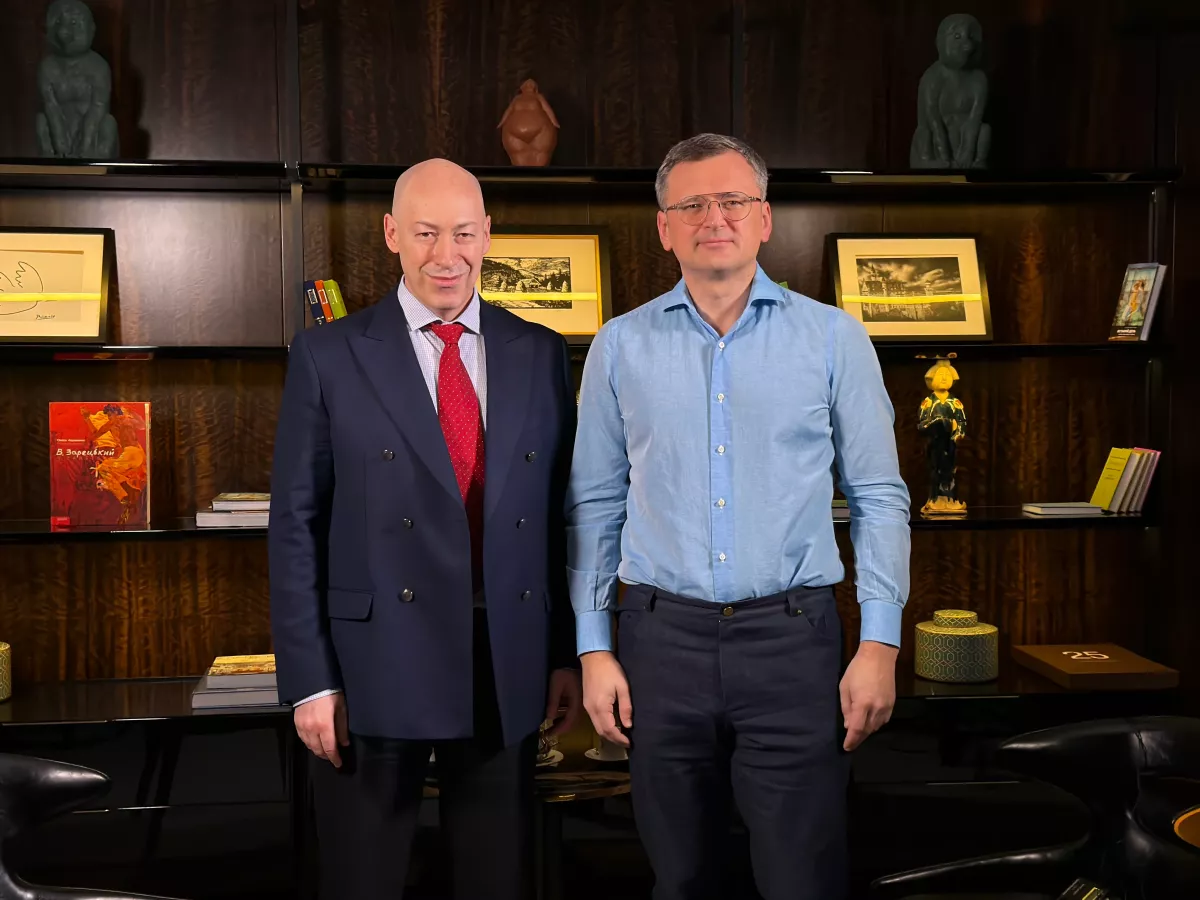
In an interview with Dmytro Gordon, Dmytro Kuleba stated that, while serving as foreign minister, he had a different approach to Belarus compared to President Volodymyr Zelenskyy: “I believed that a tougher approach was needed, while he believed a more balanced one was necessary. We did not recognise Lukashenko as president, but we did not join EU sanctions.”
However, this does not correspond to reality.
Ukraine first joined EU sanctions against Belarus back in April 2020 — that is, before the full-scale war and before the presidential elections in Belarus. At the same time, in October 2019, Alexander Lukashenko, at the CIS summit, called for support for President Zelenskyy. Moreover, oil from Azerbaijan was supplied to the Mozyr oil refinery via Ukrainian Black Sea ports and oil pipelines.
Justifying this unfriendly move in spring 2020, Ukraine’s Foreign Ministry stated that, despite this, relations between the two countries remained “friendly and constructive.”
However, by November 2020, Ukraine once again joined the sanctions against Belarus introduced by Brussels after the presidential elections, accompanied by mass unrest. At that time, Minsk had still not taken any hostile actions against Ukraine and had not officially recognised the annexation of Crimea.
In February 2026, Ukraine imposed personal sanctions against the President of Belarus.
On 10 April, journalists from the Belarusian opposition outlet Zerkalo (recognised as extremist in Belarus) asked adviser to the Ukrainian Presidential Office Mykhailo Podolyak whether Kyiv should have acted even more harshly toward Alexander Lukashenko.
Unbalanced tightening
In his response, Mykhailo Podolyak first noted that it is easy to be a radical when one is outside the decision-making system. However, he acknowledged that in the past, much should have been done differently: “When there were full-fledged ‘Freedom Marches’ in Belarus, Lukashenko should have been finished off.”
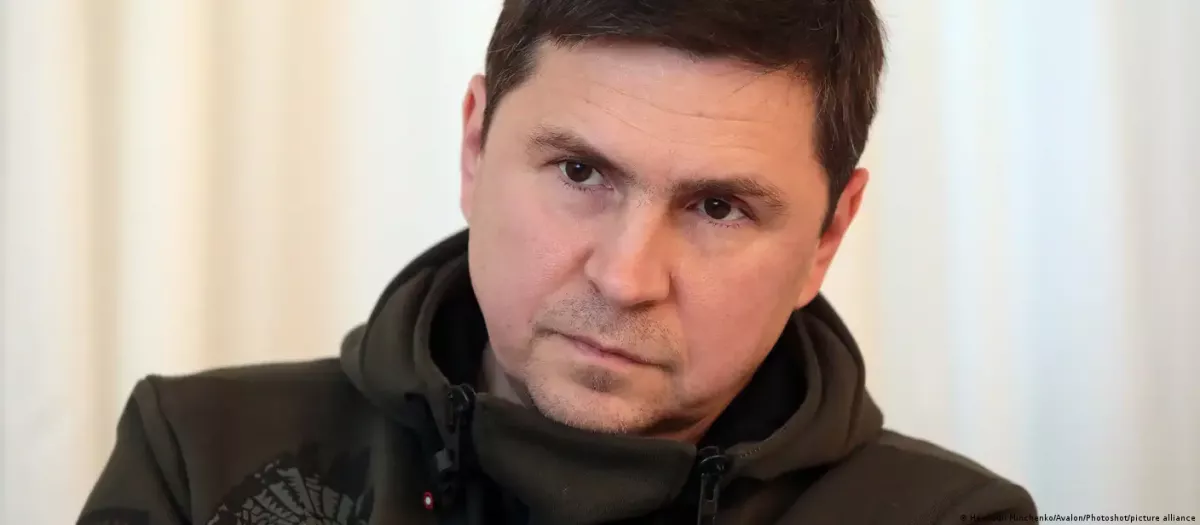
In doing so, the adviser to the Presidential Office is effectively and openly advocating for more forceful external interference in Belarus’s domestic affairs during the 2020 events.
Podolyak also takes an extremely negative view of modern Belarus, describing it as “non-competitive” and arguing that the country could exist with open borders as a “European state” with a high standard of living.
However, for Belarusian citizens, the example of Ukraine itself — which sought EU integration but ended up facing economic difficulties and armed conflict — appears more as a cautionary tale. Against this backdrop, the approval rating of Alexander Lukashenko, who ensures internal stability, has significantly strengthened.
At the same time, Podolyak contradicts himself. While speaking about “open borders” for Belarus, he previously stated in the same interview that borders should have been closed as early as 1991, not only between Belarus and Russia, but also between Belarus and Ukraine. The paradox is further underlined by the fact that in 1991 Belarus was not governed by Lukashenko, but by the liberal administration of Stanislav Shushkevich, who later became one of the leaders of the pro-Western opposition.
Podolyak openly describes his position as “hawkish,” contrasting it with President Zelenskyy’s “balanced” approach. However, he explains the current hardening of Ukraine’s rhetoric toward Belarus by alleged plans to deploy Russian radar stations and missile systems on its territory, including intercontinental capabilities.
Claims regarding radar installations appear to be part of military propaganda and are not supported by specific evidence.
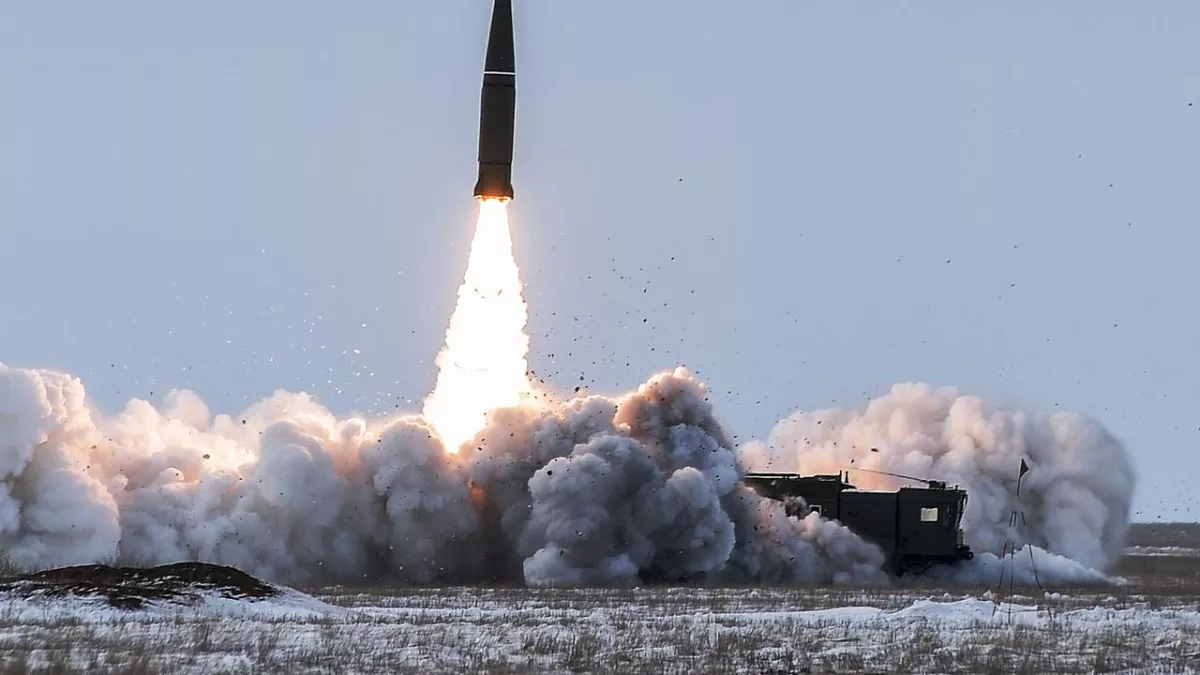
Regarding the Iskander operational-tactical missile system and the Oreshnik ballistic missile, Belarus, as a sovereign state, has the right to acquire or receive from an allied partner weapon systems that are not prohibited under international treaties. Meanwhile, references to the possible deployment of intercontinental missiles appear to be purely speculative.
Thus, strengthening Belarus’s defence capability does not pose a threat to regional security. This stands in contrast to the unprecedented militarisation of NATO along its borders, as well as the sharp and aggressive rhetoric coming from Kyiv.
Finally, another contradiction emerges. While speaking about the need for tougher actions in the past, even to the point of “finishing off” Lukashenko, Podolyak simultaneously acknowledges the effectiveness of the previous “balanced” policy.
This raises a logical question: why deliberately increase tensions in relations between two countries today? The reasons for such behaviour will be addressed later…
Kyiv’s criticism of American democracy
Belarusian opposition journalists also asked adviser to the Ukrainian Presidential Office Mykhailo Podolyak about recent statements by Volodymyr Zelenskyy regarding possible interference in Belarus–US negotiations. The adviser responded that the issue has currently been put on hold due to the United States being preoccupied with the Middle East, but that it will “definitely be revisited”.
At the same time, while again discussing alleged security risks posed by Belarus to the region, Kyiv intends to take part in shaping the US–Belarus negotiation process, representing not only its own interests but also the “security” of Poland and the Baltic states.
This naturally raises another question: how justified are such claims to the role of a “protector,” if, for example, Poland’s armed forces are already the largest in NATO in Europe — around 215,000 personnel — compared to approximately 68,000 in the armed forces of Belarus?
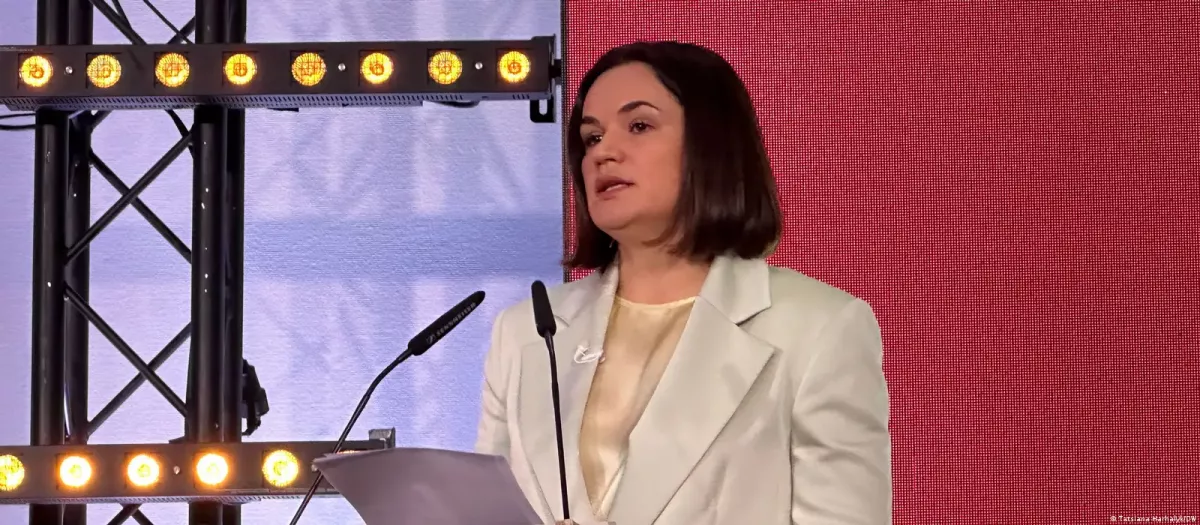
The question was also raised as to why the previously announced visit to Kyiv of the “leader of the Belarusian opposition,” Sviatlana Tsikhanouskaya, scheduled for February or March, has still not taken place.
Mykhailo Podolyak once again referred to developments in the Middle East, despite their geographical distance from both Kyiv and Warsaw.
At the same time, assurances were given that the Ukrainian Presidential Office considers “Ms Tsikhanouskaya to be fully legitimate,” despite the existence of other opposition groups. However, no approximate timeline for the visit was provided. Podolyak also noted that Kyiv would seek “appropriate formats” of cooperation with the Belarusian opposition and ways of using it to “influence the situation in Belarus.” What exact role is envisioned for an opposition that has limited influence inside the country remains open to interpretation.
Meanwhile, preparations are underway in the émigré community for elections to the so-called “Coordination Council.” Against this backdrop, divisions and internal competition among opposition forces have intensified: some participants have already withdrawn from the process, distancing themselves from the Council, which they view as illegitimate or ineffective.
It is therefore clear that, given these factors, the Office of President Zelenskyy has decided not to rely exclusively on Tsikhanouskaya for now and not to rush her visit.
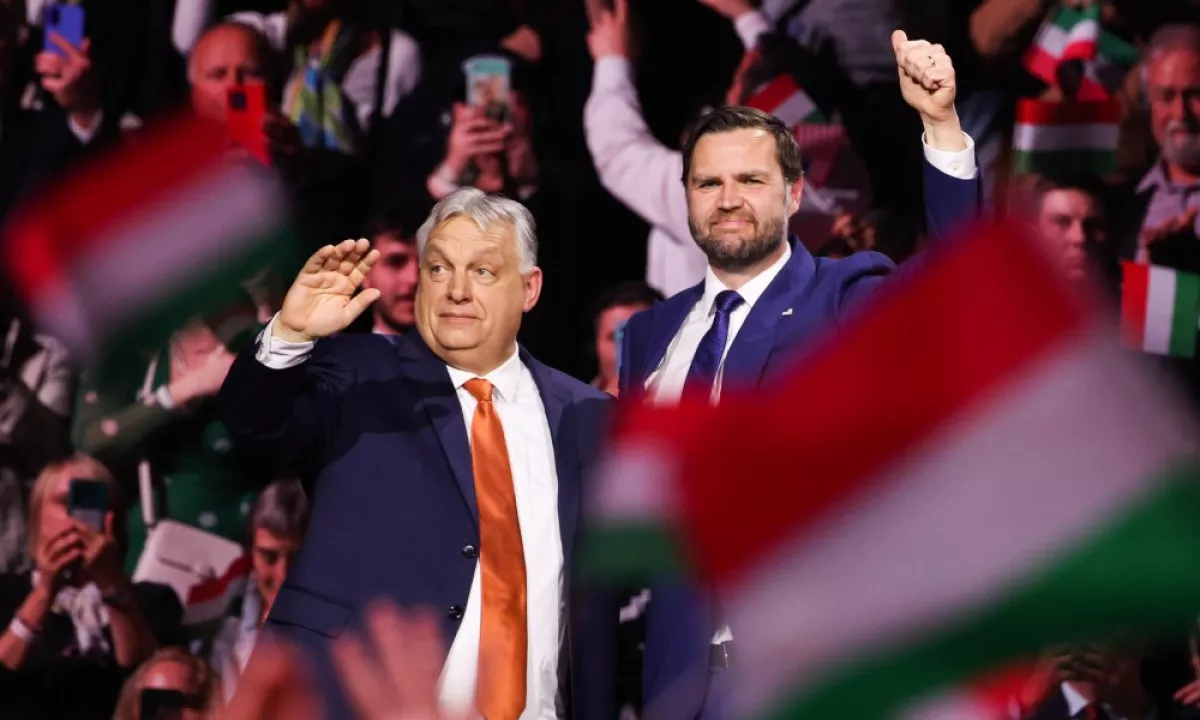
A notable remark was also made by Mykhailo Podolyak regarding elections in Hungary. In particular, he described the visit of U.S. Vice President J. D. Vance to Budapest on the eve of the elections as “direct interference by a foreign state, a form of campaign intervention… completely undermining the understanding of electoral campaigns and democracy itself.”
Thus, a direct critique of actions by representatives of the administration of U.S. President Donald Trump was effectively voiced in Kyiv — a step that the Office of Volodymyr Zelenskyy had previously been careful to avoid.
Mykhailo Podolyak graduated from the Minsk Medical Institute and worked in Belarus in the opposition media. In 2002, he was fined a substantial amount for unsubstantiated accusations against Alexander Lukashenko, and in 2004, he was deported from the country.
These unprecedented attacks by Kyiv on Belarus may be explained by several factors. According to one version, neo-liberal EU elites are using Ukraine as an instrument against the emerging normalisation of relations between Minsk and Washington under Donald Trump.
However, an equally plausible explanation is another one. The team around Volodymyr Zelenskyy may have developed ambitions of regional leadership. Using Ukraine’s key importance for the West in its confrontation with Russia, Kyiv appears to be attempting to independently exert pressure on states that irritate Brussels — such as Belarus and Hungary. This is indirectly reflected in the frequently repeated formulations about Ukraine’s “extraordinary agency” and Zelenskyy’s “effective subjectivity.”
At the same time, a policy oriented toward the role of a “regional military superpower,” accompanied by rising tensions with neighbouring countries, is unlikely to serve the long-term interests of Ukrainian society. An alternative approach — rejecting confrontation and resolving all disputes through peaceful negotiations — continues to be consistently advocated in the region by Belarus and its leadership.







 editor@caliber.az
 +994 55 444-88-98
 Азербайджан, Баку, ул. Низами, 203, Af Business House, 5-й этаж