










Russia, US and China fight over Central Asia Who benefits from the destabilization of the region?
It seems the war in Ukraine amid the protracted confrontation between Russia and the West may last for a long time. According to many experts, this could affect the security of those regional states that are constantly in the sphere of interest of the world powers. And the Central Asian states (CA) in this respect are the most vulnerable in the entire Eurasian space because they are in the limelight of influence and attention of several centers of power - Moscow, Washington, China, and NATO countries.
Foreign politicians and political technologists do not undertake to predict the exact timing of the end of the Russian-Ukrainian crisis, but taking into account the active struggle of global elites for the redistribution of the world, they do not exclude the possibility of expanding the geography of this war to the former Soviet Union, including the Central Asian region.
If we analyze external risks for Central Asian countries coming from world actors, the geopolitical picture may look as follows.
What are Russia's interests?
The Central Asian region has always been within Russia's sphere of influence. After the collapse of the Soviet Union, the post-Soviet Central Asian countries have had a rather difficult path to independence compared to the Caucasian or Baltic republics. This is largely due to the fact that strong russification has weakened the national traditions and political consistency of the local peoples. However, many Central Asian countries - Kazakhstan, Tajikistan, and Kyrgyzstan - are participants of exactly Russian Eurasian projects, which by and large indicates Moscow's direct interest, and which allows it to control any processes in the region quite easily. At the same time, membership of Central Asian states in the CSTO gives Russia the right to participate in crisis developments in them, often in opposition to the United States and the West.
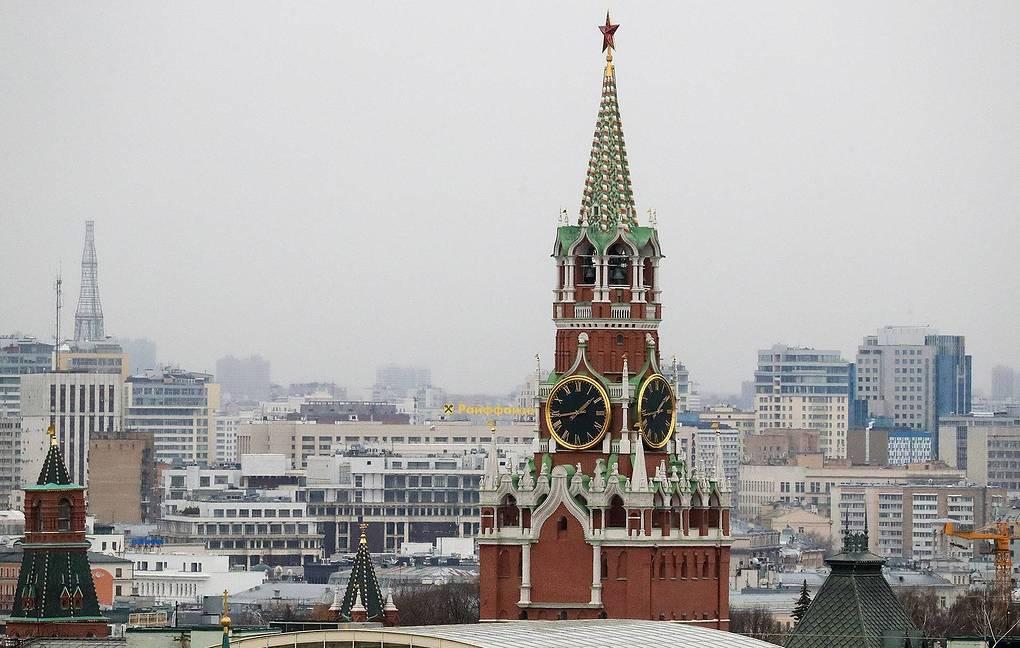
Accordingly, any indirect influence of the collective West in the region irritates Russia and creates certain risks for these very countries, but from the Kremlin. Suffice it to recall the January events of this year in Kazakhstan, when Moscow engaged the CSTO mechanism to "defuse" tensions in the country. By intervening in the internal problems of a CSTO ally, Russia showed the United States and the West its military-political advantage. As for economic expediency, Russia's cooperation with Central Asian countries is not that much of an advantage because of the overall geo-economic conjuncture in the region and the world.
However, another nuance is worth noting. Moscow has received a significant political bonus from the consolidated unwillingness of the Central Asian countries to join the anti-Russian sanctions of the West and the United States. As we can see, interaction with the countries of Central Asia brings Russia much more political bonuses than economic ones, which, however, is very relevant in the context of the growing confrontation with the Western world. Now more than ever, Russia is seeking to increase its political influence in the region and the world and is unlikely to be limited to Ukraine alone, as some Russian political technologists have recently been more and more confidently stating. At the same time, in the near future, Moscow hardly needs new hotbeds of tension in the region, which is already in the focus of its interests. Nevertheless, Moscow will continue to strengthen its presence in Central Asia and will try to further strengthen its position there. It is likely that during the Russian president's recent tour to Tajikistan and then to Turkmenistan, issues related to the security of Central Asian countries, of which Russia is the guarantor, were high on the agenda.
Does the US want to blow up Central Asia?
In Russia, the US was said to be trying to destabilize Central Asia after the withdrawal of its military contingent from Afghanistan, literally on the eve of this event, which shocked the whole world. The main concern of the Russian side was the alleged deployment of NATO military bases on the territories of some Central Asian states. Moscow even proposed modernizing and rearming the armies of Central Asian countries, as well as increasing its military activity in the region. As a consequence, Russia announced the advance alert status of Russian military bases in Tajikistan and Kyrgyzstan in order to respond promptly to crisis situations.
At the same time, in order to open "the second front" against Russia in Central Asia, the USA and the West could use the factor of Islamic extremism from the territory of Afghanistan. It is not excluded that due to the weakening of its presence in the region and against the background of the growing influence of China and partially Russia, the West can destabilize the situation in Central Asia with the expectation of involving its countries in a new conflict near the borders with Afghanistan.
Does China need a war?
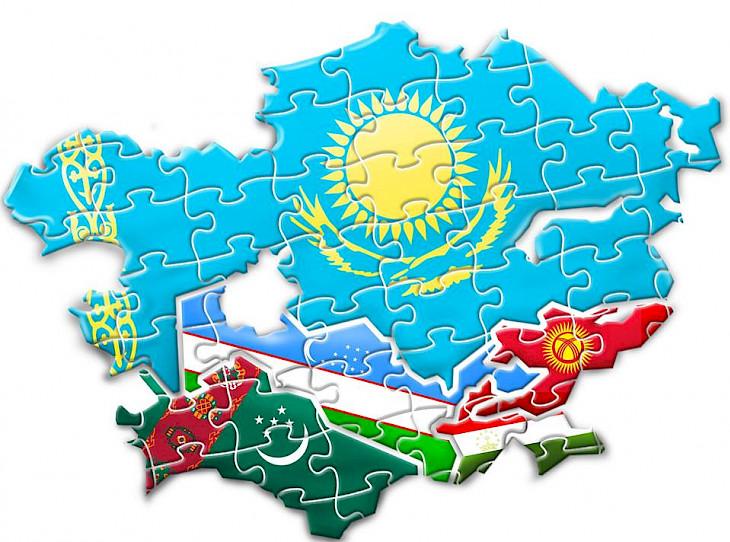
There is no doubt that Central Asia is also one of China's foreign policy priorities. Over the past decade, Beijing has noticeably strengthened its presence in this region, especially against the backdrop of confrontation with the United States. Therefore, China will continue to increase its influence in Central Asia, because the region is a source of energy resources and is conveniently located along the main East-West axis, which gives Beijing the opportunity to cooperate with neighboring countries under the "One Belt, One Road" initiative. On the other hand, China is building a fairly even and pragmatic relationship with Russia and does not support Western sanctions against Moscow. If we take China's "soft power" policy as a basis, then, most likely, Beijing will continue to integrate its economy, expanding its sphere of influence, including in the Central Asian countries. Whether Beijing will face challenges from the United States and the West due to the growth of the Chinese factor specifically in the Central Asian region is difficult to say. However, the involvement of China in a possible military conflict in Central Asia is also doubtful, in case the US or the West decide to test another hotbed of tension with the expectation of involving key actors claiming leadership in this region.
Thus, summarizing all of the above, it is obvious that the Central Asian region is becoming one of the most confusing geopolitical knots on the political map of the world.







 editor@caliber.az
 +994 55 444-88-98
 Азербайджан, Баку, ул. Низами, 203, Af Business House, 5-й этаж